Horror Film Review: Bram Stoker’s Dracula (dir by Dan Curtis)


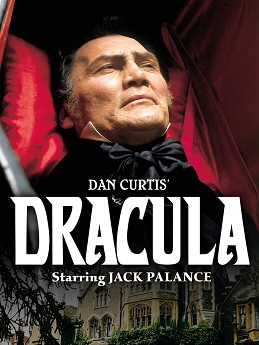
1974’s Bram Stoker’s Dracula opens with a familiar sight.

British solicitor Jonathan Harker (Murray Brown) is in Transylvania, where he has an appointment with a mysterious man named Dracula.  The local villagers are superstitious and seem to be frightened of Dracula’s very name.  When Harker reaches Dracula’s castle, he discovers that Dracula (Jack Palance) is a courtly but enigmatic man.  When Dracula sees a photograph of Jonathan’s fiancée, Mina, and her best friend, Lucy, something about it seems to capture his attention.  Later, that night, Jonathan is attacked by several female vampires.  After Dracula saves Jonathan’s life, he forced Jonathan to write a letter home, saying that he will be staying in Transylvania for month.  Jonathan attempts to escape but is instead dragged off to the crypt, where Dracula’s brides await….

Soon, Dracula is in England.  Lucy (Fiona Lewis), who looks exactly like Dracula’s long-dead wife, is taken mysteriously ill and dies.  Dr. Abraham Van Helsing (Nigel Davenport), called in when Lucy was showed signs of being sick, suspects that there is a vampire at work.  Lucky’s fiancé, Arthur Holmwood (Simon Ward), doesn’t believe it until he sees, with his own eyes, Lucy raised from the dead and calling for him to come and join her….

Not to be confused with the Francis Ford Coppola film, 1974’s Bram Stoker’s Dracula was directed by horror impresario Dan Curtis.  It’s a rather loose adaptation of Bram Stoker’s novel.  For one thing, Jonathan Harker does not return to England.  Dracula is, from the start, more interested in Lucy than in Mina.  Lucy’s other suitors — Quincy Morris, John Seward — are not present.  And Dracula himself does not get younger as the result of drinking blood.  In fact, it’s such a loose adaptation that it’s actually difficult to justify calling it Bram Stoker’s Dracula.  (In fact, the film is also known as Dan Curtis’s Dracula, which is a far more appropriate title.)

That said, it’s still an entertaining vampire movie.  Jack Palance, who previously worked with Dan Curtis in The Strange Case of Dr. Jekyll and Mr. Hyde, gives a properly intense performance as Dracula.  He doesn’t try to adopt any sort of Eastern European accent or anything like that.  Instead, he delivers his lines through clenched teeth (or, perhaps, fangs) and he fixes his victims with a powerful stare that hints at the animalistic urges behind his controlled demeanor.  Palance plays Dracula as being arrogant and convinced that no mere mortal can defeat him.  At the same time, there’s a vulnerability to Palance’s Dracula.  Watch how his face briefly lights up when he sees Lucy’s picture and is reminded of his long-dead wife.  Watch his fury when he discovers that Van Helsing and Arthur have gotten to Lucy before him.  His love for his wife is the one shred of humanity that Dracula still has within him.  When he loses her a second time (in the form of Lucy), he’s prepared to go to war.

Bram Stoker’s Dracula was originally meant to air in October of 1973 but the showing was pre-empted by the announcement that Vice President Spiro Agnew had resigned.  As a result, this film — so clearly meant for Halloween — did not air until February of 1974.  That doesn’t seem fair.  Poor Dracula.
Horror Film Review: The Strange Case of Dr. Jekyll and Mr. Hyde (dir by Charles Jarrott)


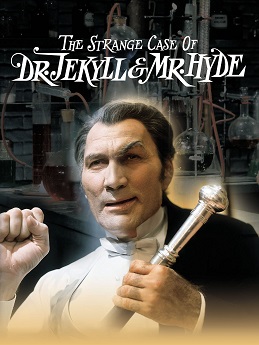
First released in 1968, The Strange Case of Dr. Jekyll and Mr. Hyde is a somewhat loose adaptation of the famous novella by Robert Louis Stevenson.

Jack Palance stars as Dr. Henry Jekyll, a mild-mannered and respected doctor who lives in Victorian-era London and who is convinced that there is a good and dark side lurking in every single person.  The dark side is what forces people to break the law and fight with each other.  Jekyll feels that his experiments will allow people to get closer to their dark side and, in doing so, defeat it.  When Dr. Jekyll explains his theories to a medical association, he is violently jeered and booed.  Jekyll returns to his home, enters his laboratory, and takes a drink of the serum that he’s been developing.

The next morning, Dr. Jekyll wakes up with a hangover and no memory of how he spent the previous night.  Trying to retrace his steps, Jekyll finds himself in a dance hall where everyone is talking about a well-dressed but ugly man named Edward Hyde.  Hyde showed up the previous night, spent a lot of money on a woman named Gwyn (Billie Whitelaw), and then got into a fight with two men.  Hyde broke a window to make his escape.  Jekyll, sensing what must have happened, pays for the window on behalf of his “friend,” Edward Hyde.

Jekyll continues to drink the serum and he continues to indulge in all of the forbidden vices as Edward Hyde.  Eventually, we get to see Palance as Hyde.  Unlike a lot of other actors who have played the role, Palance uses a minimum of makeup to suggest his transformation.  Instead, he hunches over, scrunches up his face, and he has a unibrow.  One of the stranger things about this production is that we are continually told that Hyde looks nothing like Jekyll but we know that’s not true.  Instead, Hyde looks exactly like Jekyll making a funny face.

Palance gives one of his more eccentric performances as Jekyll and Hyde.  Somewhat surprisingly, he’s far more convincing as the kindly and troubled Dr. Jekyll than as the villainous Mr. Hyde.  (As Hyde, Palance is often trying to so hard to maintain his facial paralysis that it’s hard to understand exactly what it is that he’s saying.)  With each drink of the serum, Jekyll becomes a bit more confident in himself.  However, he also finds himself losing the ability to control the transformations.  One morning, he wakes up in his bed and is shocked to discover that he is still Hyde.  That same morning, he learns that Hyde is suspected of committing a senseless and brutal murder.  Jekyll has no memory of it but he knows that Hyde is guilty.  And if Hyde is guilty, so is Jekyll.  (Those who make the argument that Dr. Jekyll and Mr. Hyde is ultimately about drug addiction will find plenty to back up that argument in this production,)  Jekyll’s anguish as he realizes what he has become is rather poignant to watch.

Produced by horror impresario Dan Curtis, The Strange Case of Dr. Jekyll and Mr. Hyde can seem a bit creaky today.  It was apparently highly acclaimed when it first aired but, seen today, it can feel rather stagey and talky.  That said, the film has a strong supporting cast, with Denholm Elliott especially giving a good performance as Jekyll’s best friend.  Jack Palance’s performance is so bizarre that it transcends the usual standards used to determine good and bad.    It’s definitely a film worth watching.

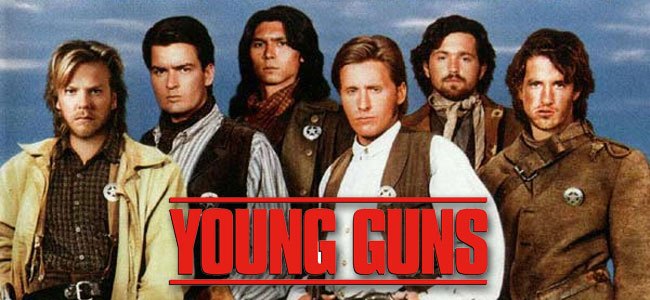
#MondayMuggers presents YOUNG GUNS (1988) starring Emilio Etevez, Kiefer Sutherland, Lou Diamond Phillips, and Charlie Sheen!


Every Monday night at 9:00 Central Time, my wife Sierra and I host a “Live Movie Tweet” event on X using the hashtag #MondayMuggers. We rotate movie picks each week, and our tastes are quite different. Tonight, Monday May 19th, we are showing YOUNG GUNS (1988) starring Emilio Estevez, Kiefer Sutherland, Lou Diamond Phillips, Charlie Sheen, Dermot Mulroney, Casey Siemaszko, Terence Stamp, Jack Palance, Terry O’Quinn, Brian Keith, and Patrick Wayne.

This movie focuses on a group of young gunmen, led by Billy the Kid (Emilio Estevez), who become deputies to avenge the murder of John Tunstall (Terence Stamp), the rancher who took them in, gave them jobs, and taught them how to read. But when Billy takes their authority too far, they soon find themselves to be the outlaws and the ones being hunted down.

Join us tonight for #MondayMuggers and watch the extremely fun YOUNG GUNS! It’s on Amazon Prime. The trailer is included below:

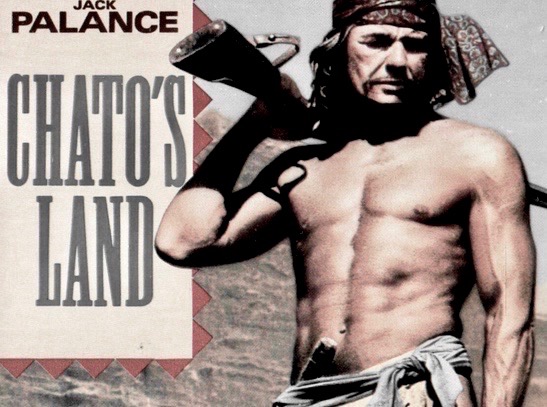
CHATO’S LAND (1972) – Jack Palance leads a posse after Charles Bronson!


One of the most enjoyable things about being a dad is introducing your favorite things to your kids. I taught my son Hank the sports of basketball, baseball, and golf, and even now there’s nothing we enjoy doing more together than playing a round of golf. Of course, as one of the world’s biggest Charles Bronson fans, I’ve introduced him to many films starring my cinematic hero. It seems that two movies have stood the test of time and have gone on to become two of his favorite movies. The fact that THE DIRTY DOZEN (1967) is one of his favorites isn’t a big surprise as he’s always enjoyed playing video games set during World War II. The other, CHATO’S LAND (1972), was more of a surprise. A few years ago, when Hank was home from college, I asked him if there was a movie he wanted to watch. It could have been any movie in the world, and I was honestly a little surprised when he said he’d been wanting to watch CHATO’S LAND again. Needless to say, this dad was very proud. 

Charles Bronson is Pardon Chato, a half breed Apache who’s minding his own business and having a drink in the saloon, when a small-town sheriff decides to give him hell just for being a “breed.” Forced to kill the racist POS in self-defense, Chato heads out of town a day ahead of the posse led by the former confederate Captain Quincey Whitmore (Jack Palance). Whitmore may be leading the posse, but the Hooker Brothers (played by Simon Oakland, Ralph Waite, and Richard Jordan) are just as bigoted as the sheriff who was killed, and they set about bullying their neighbors into joining their hunt for Chato. A couple of the guys who go along because it’s “expected of them” are Joshua Everette (James Whitmore) and Gavin Malechie (Roddy McMillan). When the posse comes across Chato’s home and woman, some of the members decide the wise thing to do is rape her and tie her up as bait. This is clearly not going to work out well for the posse, even those who tried to stop the rape. Using his sneaky Indian skills and the help of a fellow Indian, Chato is able to create a diversion and rescue his woman, but his friend is killed in the process. With his friend murdered and his woman brutalized and raped, Chato is no longer willing to just run away. From this point forward, the hunters will become the hunted as he leads them all further into CHATO’S LAND. 

There are several things that I find interesting about CHATO’S LAND. This is the first of six films that director Michael Winner and Charles Bronson would make together. They would all be financially successful films with THE MECHANIC (1972) and the original DEATH WISH (1974) standing out as true 70’s classics. Charles Bronson’s last number one box office hit would be DEATH WISH 3 (1985), which would also be his final film with Winner. It should also be noted that the character of Chato would be an early precursor of the kind of character Bronson would go on to embody almost exclusively throughout the rest of his career, that of the quiet but deadly man of action. Chato only says 13 lines in the entire movie and most of those are in a Native American dialect. Chato doesn’t have that much actual screen time either, but his presence dominates every scene. He’s like the angel of death hanging over the entire proceedings waiting to strike, and Winner continues to build on this tension as the film moves towards its inevitable conclusion. It’s an incredible, physical performance that can only be delivered by an actor like Bronson. Finally, the film has an outstanding cast, a cast that Winner himself would call “as good a cast as I ever assembled.” In addition to Bronson, Jack Palance is excellent as the confederate captain who’s never gotten over losing the war, and who now finds himself losing the battle to control the men in the posse. James Whitmore and Roddy McMillan are solid as a couple of decent men who went along because they felt it was their duty to their neighbors, who now find themselves caught up in a bad situation with even worse men. And finally, Simon Oakland, Ralph Waite & Richard Jordan are the kind of men you love to hate as the ignorant and bigoted Hooker brothers. It doesn’t hurt your feelings at all to see those guys get what’s coming to them.

Overall, CHATO’S LAND is a very good western, dominated by Bronson’s presence in the same way that JAWS (1975) is dominated by a giant killer shark. It was also a hugely profitable film upon its initial release, guaranteeing that Bronson would continue to get starring roles in films backed by American studios. Bronson liked to work with the same directors once he felt comfortable with them, and his collaboration with Winner would prove to be extremely fruitful and help turn him into one of the biggest box office stars in America. Thanks, Michael! 

Cops and Robbersons (1994, directed by Michael Ritchie)


Chevy Chase is Norman Robberson, a hen-pecked suburban dad who likes to watch cop shows.  When he is informed that his next door neighbor, Horace Obsborn (Robert Davi), is suspected of being a Mafia hitman, he agrees to allow Detectives Jake Stone (Jack Palance) and Tony Moore (David Barry Gray) to use his house as their stakeout location.

Cops and Robbersons is just as terrible as its title.  Norman is basically Clark Griswold without the excuse of a vacation or the holidays to explain away his stupidity.  Jack Palance growls and looks annoyed but without the same comedic flair that he brought to City Slickers.  Dianne Wiest is wasted as Norman’s wife.  Of course, Norman’s daughter develops a crush on Tony while Norman’s son dressed up like Dracula and tries to put the bite on Stone.  Norman keeps getting in the way of the two cops and trying to conduct an investigation on his own.  There has to be an easier way to capture a hitman.  The only thing that really works is Robert Davi’s performance as the hitman.  Davi doesn’t try to be funny, which actually brings out the best in Chase whenever they share a scene.  Chase’s goofy dad shtick works best when he’s dealing with someone who isn’t trying to score laughs of his own.

How did the great Michael Ritchie end up directing movies like this?  Whoever let that happen should be ashamed.


Icarus File No. 17: Che! (dir by Richard Fleischer)


Che Guevara!

By most accounts, Che Guevara epitomized the excesses and the hypocrisies of the extreme Left.  He spoke of the class struggle while remaining an elitist himself.  He oversaw thousands of executions and advocated for authoritarian rule.  In his writings, he frequently revealed himself to be a racist and a misogynist.  By arguing that the Russians should be allowed to bring nuclear missiles to Cuba, he brought the world to the brink of destruction.  However, he also died relatively young and he looked good on a t-shirt.  Decades after he was executed by the Bolivian Army in 1967 (or was it the CIA?), he remains an icon for college students and champagne socialists everywhere.

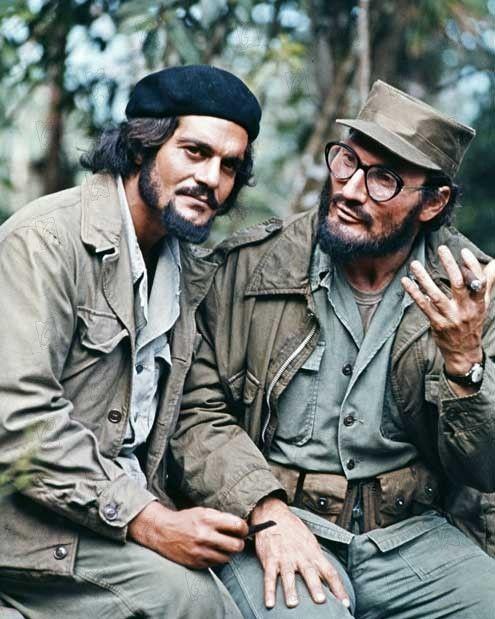
The film about Che! was released in 1969, two years after his death.  Starring the Egyptian actor Omar Sharif as Che Guevara, Che! opens with Guevara already a martyr and then quickly gives way to flashbacks.  Various actors pretending to be Cuban appear and speak directly to the audience, debating Che Guevara’s legacy.  Some describe him as being a violent thug who killed anyone who displeased him.  Others describe him as a visionary doctor who sacrificed his comfortable existence for the people.  It’s a rather conventional opening and one that hints that Che! is going to try to have it both ways as far as Che’s legacy is concerned.  But it’s still effective enough.  A montage of soldiers and rebels creates the proper feeling of a society on the verge of collapse.

And then Jack Palance shows up.

Palance first appears creeping his way through the Cuban jungle with a group of soldiers behind him.  Palance is chomping on a cigar and he wears the intense look of a man on a mission.  My initial reaction was that Palance was playing one of the CIA agents who sent to Cuba to try to assassinate Fidel Castro or to set up the Bay of Pigs invasion.  I kept waiting for him to look at the camera and launch into a monologue about why, for the safety of America, he had been dispatched the topple Cuba’s communist government.  Imagine my shock when Omar Sharif called Palance, “Fidel.”

Yes, that’s right.  Jack Palance plays Fidel Castro!  As miscast as the suave Omar Sharif is as Che Guevara, nothing can prepare one for seeing Jack Palance playing Fidel Castro.  Needless to say, there is nothing remotely Cuban or even Spanish about Jack Palance.  He delivers his lines in his trademark terse Jack Palance voice, without even bothering to try any sort of accent.  (And, needless to say, both he and Sharif speak English through the entire film.)  Anyone who has ever seen a picture of a young Fidel Castro knows that, while he shared a family resemblance with Justin Trudeau, he looked nothing like Jack Palance.  Eventually, Palance puts on a fake beard that makes him look even less like Castro.  When one of our narrators mentions that Castro was a great speaker, the film cuts to a scene of Palance spitting out communist slogans with a noted lack of enthusiasm.  When Castro takes control of Cuba, Palance looks slightly amused with himself.  When Che accused Castro of selling out the revolution, Palance looks bored.  It’s a remarkably bad piece of casting.  Seeing Palance as Castro feels like seeing John Wayne as Genghis Khan.  Thank goodness Hollywood never tried anything that silly, right?  Anyway….

As for the rest of the film, it hits all the expected notes.  The film was made in the very political year of 1969, a time when the New Left was ascendant and many considered Che Guevara to be a hero.  However, since this was a studio production, Che! tries to appeal to both college radicals and their parents by taking a “both sides” approach to Che Guevara.  Here’s Che teaching an illiterate farmer how to read.  Here’s Che overseeing a bunch of dissidents being executed.  Here’s Che getting angry at Castro for not being properly enthusiastic about housing Russian nuclear missiles.  Here’s Che talking about a moral revolution.  Here’s Che trying to start an unwanted war in Bolivia.  Here’s Che talking to Sid Haig — hey, Sid Haig’s in this film!

Like so many mainstream political films of the 60s and today, Che! tries to be political without actually taking any firm positions.  One is tempted to say that is the film’s downfall.  Of course, the film’s real downfall is casting Jack Palance as Fidel Castro.

There’s no way to recover from that.

The TSL’s Horror Grindhouse: Without Warning (dir by Greydon Clark)


1980’s Without Warning opens with a father (Cameron Mitchell) and his gay son (Darby Hinton) on a hunting trip.  The father taunts his son about not being what the father considers to be a real man.  He says that his son would have no chance of surviving in the wilderness.

“Why does it always have to be like this?” the son asks with a sincerity that will break your heart.

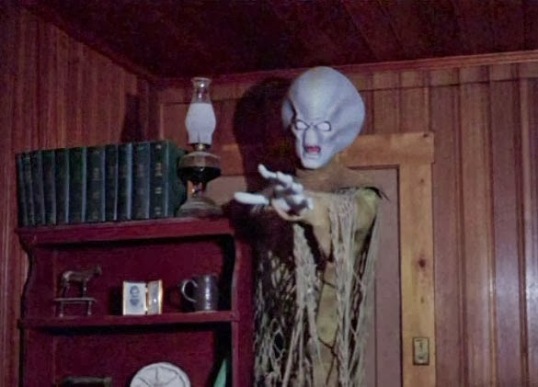
Suddenly, a bloodsucking starfish flies through the air, lands on the father, and starts to suck out his blood with a phallic stinger.  The father dies while his son watches.  The son picks up his rifle and prepares to fight back.  This will be the son’s chance to prove that his father was incorrect.  This is the son’s chance to prove that he can survive in the wilderness and….

Just kidding.  The son forgot to load the rifle and promptly gets a starfish to the eye.

That’s the type of film that Without Warning is.  Characters are introduced.  The majority of them are played by B-actor who have seen better days.  They get a few minutes of character development.  Then, they die and the viewer is left feeling a bit depressed because they all seemed like they deserved just a bit more screentime than they received.  Larry Storch shows up as a boy scout leader who gets a starfish to the back while trying to light a cigarette.  Neville Brand, Ralph Meeker, and Sue Anne Langdon hang out in a bar and refuse to believe that the Earth has been invaded by blood-sucking starfish.  Jack Palance plays a hunter and gas station owner who wants to capture an alien as a trophy.  Martin Landau plays Sarge, an unbalanced Vietnam Vet who has been telling people for years that there are aliens out there.  Everyone laughed at old Sarge but they won’t be laughing for long!  At the time this film was made, Palance was a two-time Oscar nominee.  He finally won his Oscar for City Slickers, a decade after Without Warning.  Martin Landau, for his part, won his Oscar 15 years after Without Warning.  Good for them.  If nothing else, this movie should remind everyone who has dismissed Eric Roberts’s chances that there’s still time!

That said, none of these familiar faces are the stars of the film.  Instead, the majority of the film follows four teenagers on a road trip, Sandy (Tarah Nutter), Greg (Christopher S. Nelson), Beth (Lynn Theel), and Tom (David Caruso).  David Caruso as a sex-crazed teenager sounds more amusing than it actually is.  If anything, the sight of him wearing shorts and t-shirt is almost blinding.  (As a fellow redhead, I sympathize.  We burn but we don’t tan.)  Tom and Beth die early on, leaving Greg and Sandy to try to escape from the alien (Kevin Peter Hall) who is tossing around the starfish.  Both characters are pretty generic but Christopher Nelson is at least likable.

Without Warning has a reputation for being the best film that Greydon Clark ever directed and I would agree that it’s one of his better ones, though I prefer The Forbidden Dance.  Then again, when you consider some of the other films that Clark directed, it’s easy to see that Without Warning didn’t exactly have a huge bar to clear.  Though the script borrows a bit too much from nearly every other horror film ever made, Without Warning is nicely paced and the killer starfish are genuinely frightening and their bloodsucking is almost Cronenbergian in its ick factor.  Just as he would for John Carpenter, cinematographer Dean Cundey gives us some nicely eerie shots of the alien.  Landau and Palance go all out, understanding that subtlety has no place in a film like this.  Without Warning is a dumb B-movie but it’s definitely entertaining.

Without Warning (1980, dir by Greydon Clark, DP: Dean Cundey)

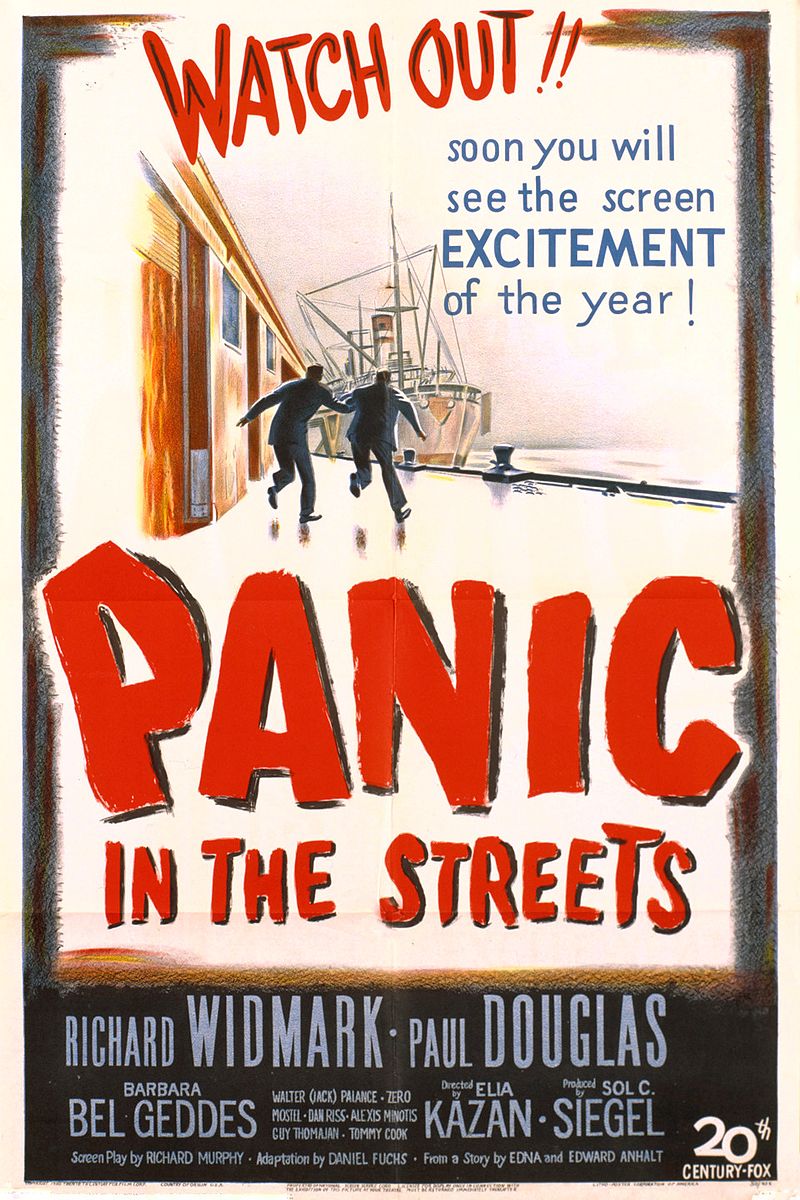
Panic In the Streets (1950, directed by Elia Kazan)


The plague has come to New Orleans.

A dead body is found on the New Orleans wharf.  He’s dead because he was shot several times but an autopsy reveals that he would have died anyways because he was suffering from a form of the bubonic plague!  In order to keep the plague from spreading through the city (and also to hopefully save the lives of anyone who has been infected), Dr. Clint Reed (Richard Widmark) and police captain Tom Warren (Paul Douglas) have to isolate everyone who the man came into contact with.  But first, they’re going to have to discover that man’s identity and also how he came to end up dead on the docks of New Orleans.

What Dr. Reed doesn’t know is that the man was named Kolchak and that he was murdered by a small-time gangster named Blackie (Jack Palance, making his film debut).  Now, Blackie and his associate, Fitch (Zero Mostel) are both infected and are both looking to get out of town.  Of course, if either one of them succeeds in leaving New Orleans, they’ll spread the plague through the entire country.

Largely filmed on location in New Orleans and focusing as much on Dr. Reed as it does on the criminals that he’s pursuing, Panic In The Streets is an effective mix of film noir, medical drama and police procedural.  Seen under normal circumstances, Panic in the Streets is a good thriller.  Seen during a time when the news is dominated by COVID-19 and riots in large cities, Panic in the Streets feels damn near prophetic.

Richard Widmark does a good job playing Dr. Reed, who is portrayed as being a no-nonsense professional.  He’s type of doctor who you want on your side if there’s a plague coming to town.  Not surprisingly, though, the film is stolen by Jack Palance as the smirking Blackie.  This was Palance’s film debut but he already knew how to be the most intimidating man in the room.  Zero Mostel also has some good scenes as Blackie’s associate and his sweaty and fearful performance provides a good contrast to Palance’s more controlled villainy.

One interesting thing about Panic in The Streets is that Dr. Reed and Capt. Warren are actually able to convince a newspaper reporter to delay filing a report about the plague, mostly to avoid a mass panic in the streets.  Though he takes some convincing (and Warren’s methods aren’t exactly Constitutional), the reporter finally agrees to hold off on reporting for four hours.  With the 24-hour news cycle and the dominance of social media, that’s not something that could happen today.

God’s Gun (1976, directed by Gianfranco Parolini)


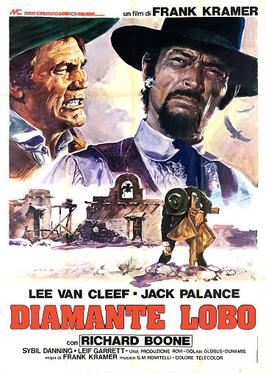
During the dying days of the old west, outlaw Sam Clayton (Jack Palance) ride into the town of Juno City and try to take things over.  Because the sheriff (Richard Boone, who reportedly walked off the film before shooting was complete) is old and ineffectual, it falls to the town priest, Father John (Lee Van Cleef), to chase them off.  Father John is hardly your typical priest.  He’s a former gunfighter who, even though he no longer carries a weapon, still knows how to throw a punch.  Though he manages to put Sam and the gang behind bars, they are all eventually released.  The first thing they do is gun down Father John in front of his own church.

A mute child, Johnny O’Hara (Leif Garrett), flees town to track down Father John’s twin brother, Lewis (also played by Lee Van Cleef).  What Johnny doesn’t know is that Sam, who years ago raped Johnny’s mother (played by Sybil Danning), might actually be his father.  When Johnny finds Lewis, he finally manages to communicate what’s happened.  Lewis and Johnny head back to town so Lewis can get his vengeance  The only catch is that Lewis promised his brother that he would no longer carry a gun so he’s going to have to use his wits to get his revenge.

God’s Gun is a strange film.  It was one of the last of Spaghetti westerns but, though the director was Italian, it was filmed in Israel and it was produced by none other than Menahem Golan.  Golan brings the same producing aesthetic to God’s Gun that he later brought to many Cannon films — a few recognizable veteran actors (Jack Palance, Lee Van Cleef), an up-and-coming star (Leif Garrett), an international sex symbol (Sybil Danning), and a spin on a popular genre.  Like many of Golan’s films, the plot is occasionally incoherent and the entire production feels cheap and rushed but, at the same time, it’s hard to resist the mix of Van Cleef, Palance, and Danning.

Adding to the film’s strange feel is that every actor is dubbed, even the ones with trademark voices like Jack Palance and Lee Van Cleef.  Palance sneers throughout the entire film and could be giving a good performance but every time he starts to speak, you hear a voice that is clearly not Jack Palance’s and it makes it hard to get into the story.  There’s also an annoying squawking sound effect that explodes on the film’s soundtrack whenever someone is shot or whenever Lewis makes an appearance.

It’s not all a loss, though.  The Israeli desert is an effective Western backdrop and there are a few good camera shots.  When Lee Van Cleef and Jack Palance have their final confrontation, the picture starts to spin around and it’s pretty cool.  Finally, if you’re a Van Cleef fan, this is a rare chance to see him playing a traditional hero.  Because he’s dubbed, it’s hard to judge Van Cleef’s dual performances but this film does show that he could do more than just be a smirking killer.  He’s actually a pretty convincing priest.  Who would have guessed?