Horror Film Review: Earth vs. The Flying Saucers (dir by Fred Sears)


In 1956’s Earth vs. The Flying Saucers, the aliens have finally decided that it’s time to land their ships and meet with the Earthlings. Believe it or not, the aliens are coming in peace. They even send a coded message down to Dr. Russell Marvin (Hugh Marlowe) as he’s driving through the desert with his wife, Carol (Joan Taylor).

Unfortunately, that turns out to be a mistake because Russell totally fails to decipher the message. The flying saucers land at a local military base and, instead of being greeted in peace, they’re fired upon by a bunch of soldiers. After the aliens vaporize most of the soldiers, they kidnap Russell’s father-in-law (Morris Ankrum) and they send out another message. The citizens of Earth have 56 days to negotiate a surrender or the planet will be destroyed!

It’s now falls to Russell to not only figure out a way to defeat a superior invading force but to also build the weapon that will save Earth. And really, seeing as how this is all his fault, that’s the least that Russell could do.

Despite the campy name and the low-budget, Earth vs. The Flying Saucers actually takes itself fairly seriously. This movie was made at the start of the big UFO boom, when newspapers were still full of stories about people claiming that they had spotted something strange in the air. The legendary Ray Harryhausen based his UFO designs on actual reports of what people claimed that they had seen in the sky. As a result, this is the film that, for many, first solidified the idea of what a flying saucer should look like.

One of the most interesting things about this film is that the aliens, themselves, are rather reasonable. Oh sure, they end up killing a lot of people and trying to destroy the planet but really, it’s all just a big misunderstanding. The aliens came in peace and, even after they get mad, they still give humanity time to negotiate a surrender. Of course, that being said, we still have to blow them out of the sky because they are trying to conquer the world and, as always seemed to happen in 50s sci-fi films, it’s pretty much up to America to do all the work.

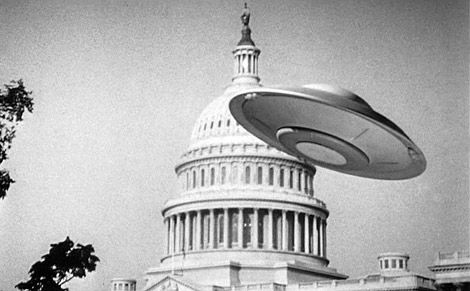
Though director Fred Sears keeps the action moving quickly and both Marlowe and Ankrum give good performances in their stock roles as, respectively, the scientist and the military leader, Ray Harryhausen is the real star of this movie. The stop-motion animation special effects are still a lot of fun to watch today. Plus, if you don’t applaud when that flying saucer crashes into the Capitol dome, there may be no hope for you.

Earth vs. The Flying Saucers is one of the better alien invasion films of the 50s. If nothing else, it’s a film that will inspire you to keep watching the skies!
Horror On The Lens: Earth vs. The Flying Saucers (dir by Fred F. Sears)


For today’s horror on the lens, we’ve got a sci-fi shocked from 1956.

In Earth vs. The Flying Saucers …. well, the plot is right there in the title.  In a semi-documentary style, this film tells the story of what happens when a bunch of flying saucers come to Earth.  Unfortunately, the inhabitants of those flying saucers aren’t looking to open up a new trading route.  Instead, they want to enslave humanity and, as always, it falls to America to save the world.

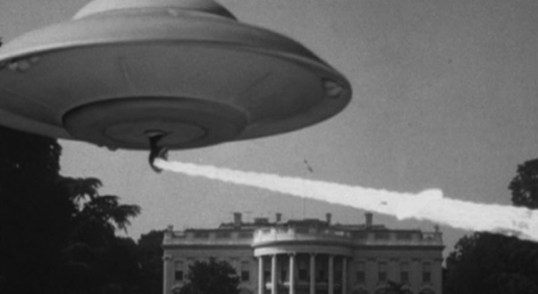
This film is probably best known for the scenes of the flying saucers crashing into monuments and buildings in Washington, D.C.  The special effects were done by Ray Harryhausen.

The film was originally black-and-white.  The version below is colorized.  I’m not a huge fan of colorization in general but I do have to say that they did a pretty good job with Earth vs. The Flying Saucers.  While the film may not be as deeply philosophical as Plan 9 From Outer Space, it’s still pretty enjoyable.

Keep watching the skies!

https://www.youtube.com/watch?v=J-JcWNK-0AE

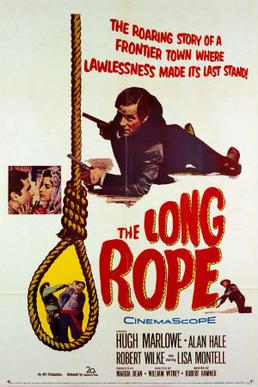
The Long Rope (1961, directed by William Whitney)


The time is the late 19th century and there’s been a murder in the territory of New Mexico.  Someone has gunned down Jim Matthews (Steve Welles) and store owner Manuel Alvarez (John Alonzo) has been arrested.  Everyone in town says that Jim was fooling around with Manuel’s beautiful wife, Alicia (Lisa Montell).  Manuel insists that he’s innocent but Jim was the brother of the town’s most powerful and richest land owner, Ben Matthews (Robert J. Wilke).  Ben is already having a gallows built so that Manuel can be hanged in the town square and it doesn’t look like there’s anything that Sheriff John Millard (Alan Hale, Jr. — yes, the Skipper) can do to stop him.

However, Federal Judge Jonas Stone (Hugh Marlowe) is determined to make sure that Manuel gets a fair trial.  When it becomes obvious that the Matthews family has no intention of letting that happen, Judge Stone launches his own investigation.  Believing Manuel to be innocent, Stone knows that he has to find the real killer before the gallows are built and Manuel is lynched by the mob.

A low-budget western with a 61-minute running time, The Long Rope is a surprisingly adult western, one that comes out strongly and directly against both lynching and the town’s racism.  With the Matthews family representing the brutal “old ways,” and Judge Stone representing a more enlightened and fair system of justice, it’s up to the town to decide who they will follow.  Hugh Marlowe brings a lot of gravitas to his role as the stern but compassionate Judge Stone while Lisa Montell makes a strong impression as Manuel’s rebellious wife.  Robert J. Wilke is an effective villain and even Alan Hale, Jr. gives a good performance once you stop thinking of him as being the Skipper.

One final note of interest: John A. Alonzo, who played Manuel in The Long Rope, went on to become an award-winning cinematographer.  Among Alonzo’s credits, as a cinematographer: Harold and Maude, Chinatown, The Bad News Bears, Black Sunday, Scarface, Norma Rae, and Close Encounters of Third Kind.

Embracing the Melodrama #11: All About Eve (dir by Joseph L. Mankiewicz)


Bette Davis

“Fasten your seat belts, it’s gonna be a bumpy night!” — Margo Channing (Bette Davis) in All About Eve (1950)

If you’re a lover of classic films or even if you’re just someone who occasionally watches TCM, chances are that you already know All About Eve.  It’s one of those films that is endlessly quoted and it features at least two performances — Bette Davis’s turn as aging Broadway diva Margo Channing and George Sanders’ acidic theater critic Addison DeWitt — that serve as frequent inspiration for professional impersonators.  It’s the film that was named best picture of 1950 and it continues to hold the record for both the most Oscar nominations overall and it’s the only film in Oscar history to receive four female acting nominations.

Even more importantly, it’s a film that everyone already knows it great.

So, that brings up the question that every film blogger dreads: how do you review a classic film that everyone already knows about?  I’ve often said that it’s easier to review a bad film than a great one.  It’s easy to pinpoint why a film fails but when it comes time to explain why a film is great, it’s often difficult to put to words the intangible qualities that elevate it.

Eve and Margo

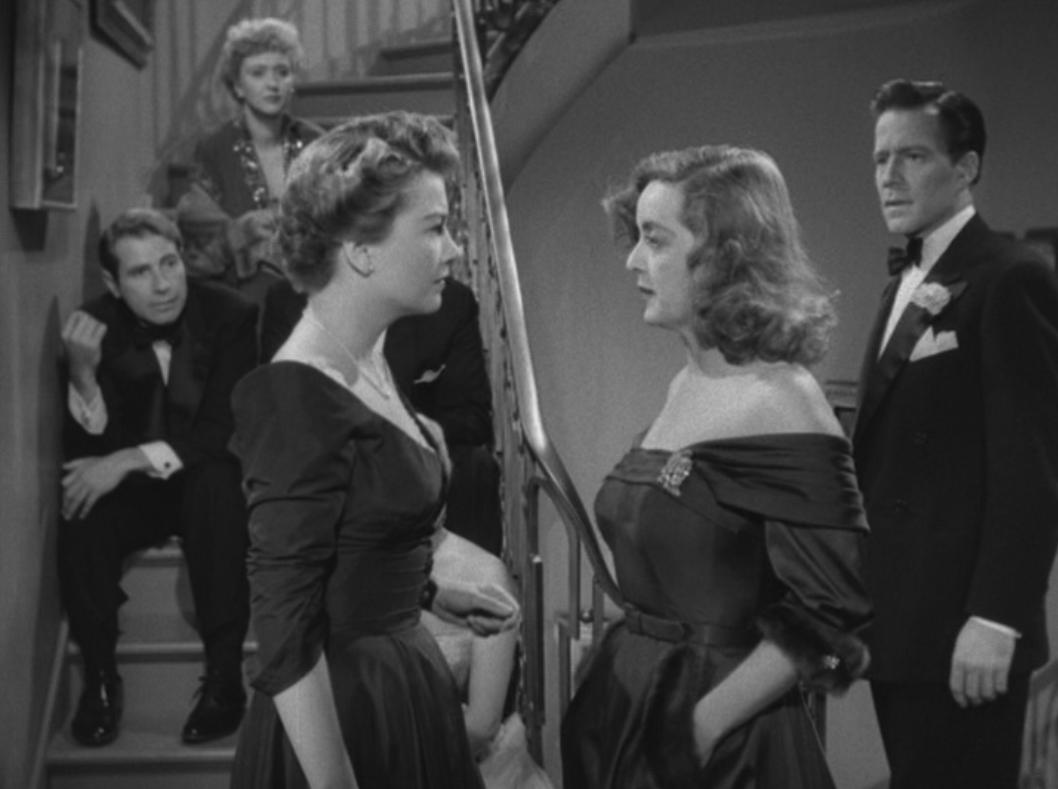
For instance, I could tell you that the film has a fascinating plot but that barely only begins to scratch the surface of everything that’s going on underneath the glossy and melodramatic surface of All About Eve.  The movie tells the story of how scheming young actress Eve Harrington (Anne Baxter) becomes a star with the help of Addison DeWitt and at the expense of the talented but aging Margo Channing.  In telling Eve and Margo’s stories, All About Eve explores issues of female friendship and competition, sexuality, and why older men are celebrated while older women are constantly at risk of being pushed to the side for a newer model.  The complexity and power of All About Eve’s storyline can be summed up by the fact that right now, when I watch the film, I relate to Eve but I imagine that  twenty years from now, I’ll rewatch and I’ll relate to Margo.

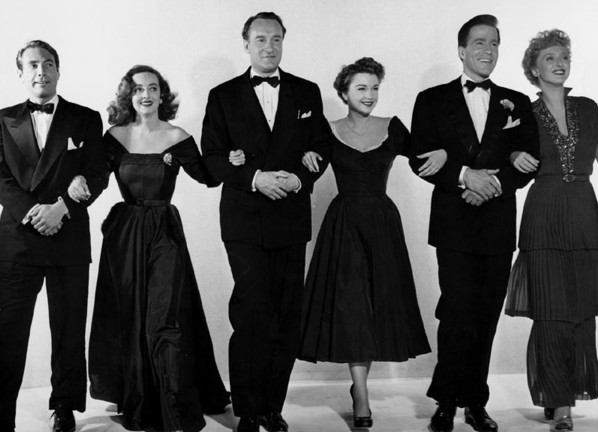
I could tell you that this is a film that is full of bigger-than-life characters and iconic performances but that doesn’t even begin to scratch at the surface of how well-acted and perfectly cast this film is.  Even boring old Hugh Marlowe is a perfect choice for playing boring old playwright Lloyd Richards.  (His wife is played by Celeste Holm.  Reportedly Bette Davis hated working with Celeste Holm but onscreen, their friendship feels very real and poignant and leads to some of the best scenes in the entire film.)  Gary Merrill, who later married Bette Davis, is likable as Margo’s boyfriend and Thelma Ritter is great as Margo’s outspoken assistant, largely because she’s Thelma Ritter and she was always great.  Marilyn Monroe famously makes the most of her minor role in All About Eve, playing an aspiring actress who has a very good reason for calling the butler a waiter.  And then there’s Bette Davis and George Sanders, both of whom are simply brilliant.

My favorite scene from All About Eve

My favorite scene from All About Eve

But to me, the best performance in All About Eve comes from Anne Baxter.  Baxter plays Eve as a perpetually smiling schemer and one of the great pleasures of the film is watching as Eve wrecks passive-aggressive havoc through Margo’s circle of friends.  Just watch the scenes where she deftly manipulates Celeste Holm.  All About Eve is usually referred to as being a vehicle for Bette Davis but if you actually watch the film, you see that the title is absolutely appropriate.  The film really is all about Eve.

And I could always tell you about how wonderfully sardonic the dialogue is but you already know that.  There’s a reason why even people who have never seen the film still quote Margo’s suggestion that everyone fasten their seat belts!

Bette Davis 2

So, in the end, what can I tell you about All About Eve?  Well, all I can really tell you is that it’s a great film and, if you haven’t seen it, you need to make time to learn all about Eve.

AllAboutEvecastpromo