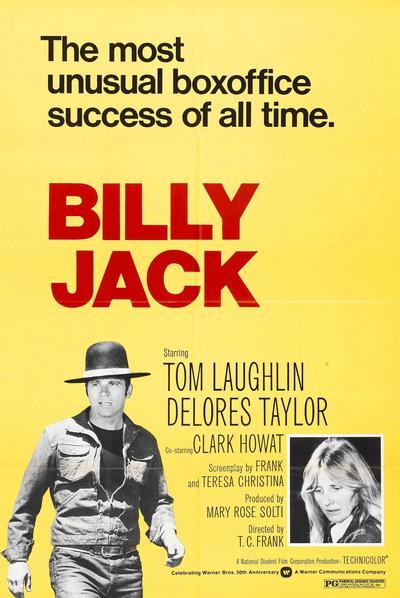
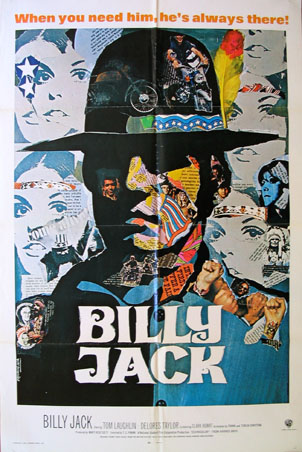
When last we saw Billy Jack, he was dismantling a brood of outlaw bikers in BORN LOSERS . This time around, he’s taking on a whole town’s worth of rednecks as Tom Laughlin’s half-breed ex-Green Beret returns in BILLY JACK, the wildly popular film that combines action with social commentary, and helped kick off the martial arts craze of the 70’s.
BILLY JACK almost never saw the light of day, as Laughlin’s financing was shut off by American-International Pictures. 20th Century-Fox then picked it up, but didn’t think it deserved to be released, so Laughlin went the indie route, under the banner of National Student Film Co. in 1971. Poor distribution and poor reviews caused the film to tank, but the good folks at Warner Brothers saw something in it, and gave it a national release two years later. Young audiences of the day flocked to it in droves, cheering as Billy Jack…
For the past week and a half, I have been on a major Warren Oates kick. The latest Oates film that I watched was Kid Blue, a quirky western comedy that features Warren in a small but key supporting role.
Bickford Warner (Dennis Hopper) is a long-haired and spaced-out train robber who, after one failed robbery too many, decides to go straight and live a conventional life. He settles in the town of Dime Box, Texas. He starts out sweeping the floor of a barber shop before getting a better job wringing the necks of chickens. Eventually, he ends up working at the Great American Ceramic Novelty Company, where he helps to make ashtrays for tourists.
He also meets Molly and Reese Ford (Lee Purcell and Warren Oates), a married couple who both end up taking an interest in Bickford. Reese, who ignores his beautiful wife, constantly praised Greek culture and insists that Bickford take a bath with him. Meanwhile, Molly and Bickford end up having an affair.
Bickford also meets the local preacher, Bob (Peter Boyle). Bob is enthusiastic about peyote and has built a primitive flying machine that he keeps in a field. The town’s fascist sheriff, Mean John (Ben Johnson), comes across Bob performing a river baptism and angrily admonishes him for using “white man’s water” to baptize an Indian.
Bickford attempts to live a straight life but is constantly hassled by Mean John, who suspects that Bickford might actually be Kid Blue. When Bickford’s former criminal partner (Janice Rule) shows up in town and Molly announces that she’s pregnant, Bickford has to decide whether or not to return to his old ways.
Kid Blue is one of a handful of counterculture westerns that were released in the early 70s. The film’s biggest problem is that, at the time he was playing “Kid” Blue, Dennis Hopper was 37 and looked several years older. It’s hard to buy him as a naïve naif when he looks older than everyone else in the cast. As for Warren Oates, his role was small but he did great work as usual. Gay characters were rarely presented sympathetically in the early 70s and counter-culture films were often the worst offenders. As written, Reese is a one-note (and one-joke) character but Warren played him with a lot of empathy and gave him a wounded dignity that was probably not present in the film’s script.
Kid Blue plays out at its own stoned pace, an uneven mix of quirky comedy and dippy philosophy. Still, the film is worth seeing for the only-in-the-70s cast and the curiosity factor of seeing Dennis Hopper in full counterculture mode, before he detoxed and became Hollywood’s favorite super villain.
“Go ahead and hate your neighbor; go ahead and cheat a friend. Do it in the name of heaven; you can justify it in the end. There won’t be any trumpets blowin’ come the judgment day On the bloody morning after, one tin soldier rides away”
— From One Tin Soldier, the theme song of Billy Jack (1971)
Yesterday, we took a look at The Born Losers, the first film to ever feature the character of future U.S. Senator Billy Jack. The Born Losers ended with former Green Beret-turned-gun-toting-pacifist Billy Jack (played, of course, by Tom Laughlin) saving the girl, killing the bad guy, and getting shot in the back by the police. As Born Losers ended, we were left to wonder whether Billy would survive his wounds or would he just be another victim of the establishment.
Well, audiences had to wait five years to find out.
When Laughlin returned to the role in 1971’s Billy Jack, it was revealed that not only had Billy Jack lived but he was now residing in a cave with his wise Native American grandfather. Billy still had little use for civilization but he would occasionally emerge from his cave. Sometimes, it was to protect wild mustangs from being hunted the evil Old Man Posner (Bert Freed) and his sociopathic son Bernard (David Roya). Other times, it was to protect the Freedom School and, even more importantly, the Freedom School’s founder, Jean (played by Laughlin’s wife, Delores Taylor).
The local townspeople viewed the Freedom School with suspicion and whenever the students went into town, they would be harassed by Bernard and his friends. Fortunately, the students could always count on Billy to show up, say a few angry words, and then lose control. Billy may have been a liberal but he was no pacifist. Jean, however, fully embraced nonviolence and she always made it clear that she wasn’t comfortable with Billy providing her kids with a violent example.
Finally, both Jean and Billy’s convictions were put to the test. First off, the bigoted townspeople tried to close the school. Then, Jean was raped by Bernard. And finally, Billy found himself barricaded in an old mission, surrounded by police and national guardsmen. Even as Jean pleaded with Billy to lay down his weapons and to peacefully surrender, Billy made it clear that he was willing to die for his beliefs.
And, as the film ended, you would never guess that Billy Jack would eventually become a member of the U.S. Senate. But, in just a few years, that’s exactly what would happen in Billy Jack Goes To Washington!
Now, of course, Billy Jack is ultimately a product of its time and that’s both a blessing and a curse. To be honest, if anything could transform me from being the socially liberal, economically conservative girl that you all know and love into a card-carrying right-wing extremist, it would be having to spend any time with the students at the Freedom School. They are all so smugly convinced of their own moral superiority that the townspeople almost start to look good by default. Whether they’re attending improv class or disrupting a meeting at town hall, the majority of the students come across like a bunch of rich kids from the suburbs, playing hippy and slumming by hanging out with poor minorities. As you watch them, it’s difficult not to suspect that most of them are going to get bored with rebelling after a year or two and eventually end up growing up to be just like their parents.
Fortunately, the film is saved by the pure sincerity of Laughlin and Taylor. For all the attention that the film gets for the scenes of Billy Jack beating people up, the most compelling scenes are the ones where Jean and Billy Jack debate nonviolence. There’s an honesty and a passion to these scenes, one that proves that Laughlin and Taylor, as opposed to so many other self-styled counterculture filmmakers, were actually serious about their beliefs. Billy Jack is an essential film, not only as a time capsule of the era in which it was made but also as one of the few films to actually make a legitimate attempt to explore what it truly means to embrace nonviolence.
Billy Jack is also a historically important film. When American Independent Pictures withdrew from the production, Laughlin took Billy Jack to 20th Century Fox. When 20th Century Fox looked at the completed film and did not know how to market it, Laughlin distributed the film himself, without the support of a major studio. And, despite what all of the naysayers may have predicted, Billy Jack was a huge hit.
And every indie filmmaker since owes a huge debt of gratitude to Tom Laughlin.
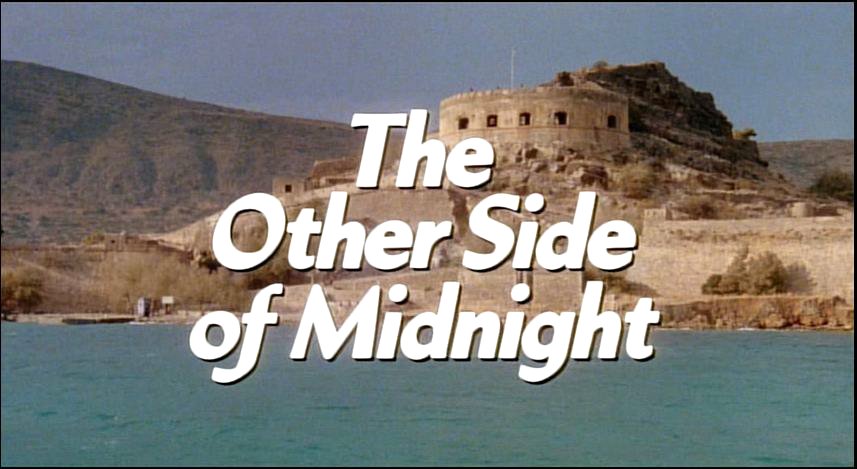
First released in 1977, The Other Side of Midnight is one of those film that literally seems to have everything a viewer could want: sex, love, betrayal, sex, war, melodrama, intrigue, sex, expensive clothes, private island, see-through nightgowns, sex, hurricanes, murder, a surprise twist ending that involves a convent, and sex. Did I mention that this film has sex in it, because it so does.
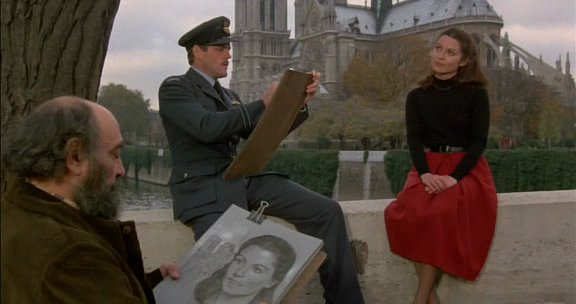
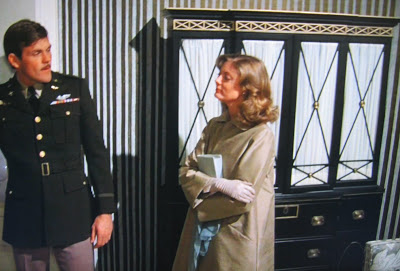
The film opens in Paris during the years leading up to World War II. Beautiful Noelle (Marie-France Pisier) meets Larry Douglas (John Beck), a handsome American who is serving with the Canadian Air Force. Noelle agrees to go out on a date with Larry and they get to have the of the movie’s many falling-in-love montages. Fortunately, they’re in Paris which has a lot of great scenery in front of which they can pose. Unfortunately, Larry is ordered back to the United States. He promises Noelle that he’ll return but he never does. What Larry doesn’t realize is that Noelle’s pregnant — or at least she is until a harrowing scene where she climbs into a bathtub with a wire hanger.
Montage!
This is followed by another montage. Call this the “Out-of-Love-And-Growing-Bitter” montage. Noelle survives the German occupation by seducing and using every powerful man that she meets. Along the way, she becomes one of the most glamorous and famous film stars in all of Europe. Finally, she becomes the mistress of the wealthy and somewhat shady Constantin Demaris (Raf Vallone, doing his best Anthony Quinn impersonation).
Meanwhile, Larry is back in America and, after going through another falling-in-love montage, has ended up married to innocent Catherine Alexander (Susan Sarandon). What Larry doesn’t realize is that Noelle has hired a detective to keep track of him. After the war, Larry gets a job as a commercial airline pilot but Noelle secretly arranges for him to lose that job. Unemployed and desperate, Larry accepts a job to work as the private pilot for Demaris and his mistress.
Montage!
Though it takes him a while to recognize her, Larry eventually does realize that his new boss is his former lover, Noelle. As Larry starts to truly fall in love with Noelle all over again, Noelle starts to pressure him to do something about his new wife. As is the case with several Hollywood melodramas, it all ends in a courtroom. The courtroom scenes may not be exactly exciting but they do feature my favorite image from the entire film: at one point, we see that literally every single character who has appeared in the movie up to this point is sitting in that courtroom, all lined up like a bunch of disparate figures in an Edward Hopper painting.
The Other Side of Midnight is one of those big films where a lot of stuff happens but very little of it really seems to add up to anything. It has a nearly 3 hour running time but it’s story could have just as easily been told in 90 minutes. Instead, director Charles Jarrott pads out the running time with endless falling-in-love and falling-out-of-love montages. This is the type of film that never says anything once that it can say an extra three times.
Montage!
Susan Sarandon and Marie-France Pisier both give good performances. Susan Sarandon is likable, even if her character is unbelievably naive while Marie-France Pisier gives a performance worthy of any good film noir but neither one of them has much chemistry with John Beck. Fortunately, some of the supporting players — like Raf Vallone and Christian Marquand — take full advantage of every chance that they get to chew every piece of scenery that’s available. Clu Gulager, the father of horror director John Gulager, pops up as well, playing perhaps the only good male in the entire film.
In the end, The Other Side of Midnight (and what the Hell does that title mean anyway?) is a rather silly movie about a bunch of shallow characters wearing beautiful clothes and wandering through wonderfully baroque locations. Fortunately, I love elaborately decorated locations and glamorous outfits so I enjoyed The Other Side of Midnight despite myself.
Montage!
One final thing about The Other Side of Midnight: 20th Century Fox was so sure that The Other Side of Midnight would be a huge success that they used it to blackmail theater owners into agreeing to show an obscure science fiction film called Star Wars. Theaters would only be allowed to show The Other Side of Midnight if they also agreed to show Star Wars during the week before Midnight opened.
The end result, of course, is that The Other Side of Midnight was a bomb at the box office and Star Wars is still making money.
Below is a behind-the-scenes documentary on the making of The Other Side of Midnight.




 Through the Shattered Lens