The full title of this piece of Interactive Fiction is: I Was Too Lazy to Get Started on My EctoComp Entry at a Reasonable Time But I Still Wanted to Enter So I Crapped Out This Masterpiece Or: Deep in the Spooky, Scary Woods.
Hey, don’t be so hard on yourself! It’s better than anything that I’ve come up with recently. In this Choose Your Own Adventure style game, you’re in the woods, the spooky, scary woods! You can cry if you want. You can build a fire. You can try to text a friend. But what you have to be prepared for is that eventually, a witch is going to want to join you and you might very well find your way to Dracula’s castle. How will you handle it? How will you interact with the supernatural? What choices will you make? Will you get the good or the bad ending? Play to find out!
Even thought the author states that this game was just something that was put together in an hour, I always enjoy games like Deep In The Spooky Scary Woods. That’s because I’ve played enough pompous and self-important Interactive Fiction games that I can not help but enjoy one where the whole point is to get the player to laugh and poke fun at the whole genre. Sometimes, you’re in the mood for Interactive Fiction that is big and complex and full of subtext. Sometimes, you just want to play something that’s fun, that’ll keep you amused, and which will take less than 15 minutes to complete.
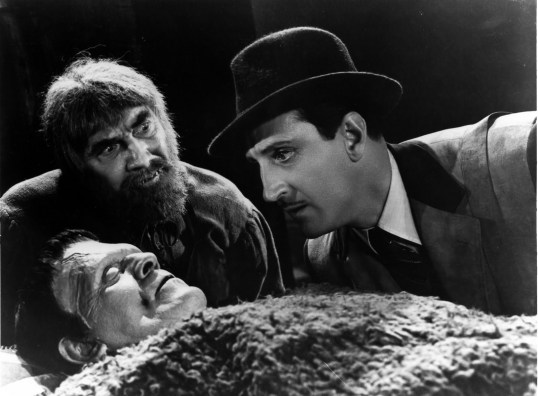
For our first Scene that I love for this year’s Horrorthon, I’m sharing the opening of the 1931 classic, Frankenstein. The scene below features neither Colin Clive or Boris Karloff. Instead, Edward Van Sloan breaks the fourth wall and, in his humorously avuncular way, lets the audience know what’s in store for them.
Today, of course, we all know the story of Frankenstein and his monster. However, imagine how audiences in 1931, many of whom probably knew nothing about the story they were about to watch, must have felt when Edward Van Sloan specifically took a minute to warn them that they were about to see something terrifying. You have to remember that Van Sloan was talking to the first generation of regular filmgoers and he was introducing them to one of the first true horror films of the sound era. Today, it’s easy to smile when Van Sloan says, “You can’t say we didn’t warn you.” In 1931, I imagine it probably sounded more like a dare. Van Sloan was asking, “Do you have the courage to stay in theater?” It’s kind of charming, isn’t it?
Edward Van Sloan was a bit of fixture when it came to the early Universal horror films. Not only did he play Henry Frankenstein’s mentor but, in the same year, he played Prof. Van Helsing in Dracula. He also had a key supporting role in The Mummy. When it came to explaining the supernatural and the undead, no one else did it with quite the class of Edward Van Sloan.
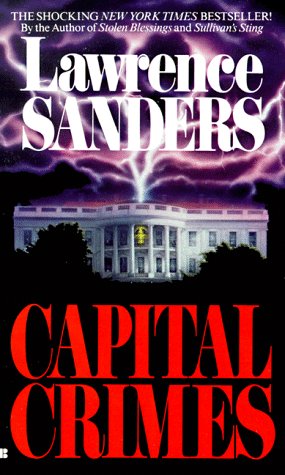
Tell me if the plot of the 1990 novel, Capital Crimes, sounds familiar.
The President of the United States is struggling. The economy is bad. The U.S. is long ground internationally. The President’s approval ratings are plummeting. The members of his own party are searching for a way to get rid of him. However, the President himself is more concerned about the health of his son, a hemophiliac who seems destined to suffer an early death if he’s not somehow cured of his condition.
Everything looks hopeless until the President meets Brother Kristos. Brother Kristos is a wild holy man from the backwoods, a sensualist who drinks vodka, believes that the best way to worship is to have an orgy, and who claims that he has a direct line to God and that he can heal the President’s son. Kristos not only makes the claim but he backs it up by actually doing it. The President and his wife soon become dependent on the mysterious Kristos. Kristos goes from being an obscure cult leader to one of the most powerful men in the country but is he a servant of God or the Devil? While Kristos sets about seducing all of the women in Washington, others try to investigate his background. Is Kristos a charlatan or does he truly have magical powers?
If this sounds familiar, that’s probably because you’re familiar with Rasputin, the Russian monk who became a shadowy and much-feared influence on the family of Nicholas II, the final Tsar of Russia. In fact, Capital Crimes so closely follows the story of Rasputin that you kind of have to wonder why no one in the book ever seems to pick up on the connection. Russia exists as a rival to the United States in Capital Crimes and, as such, one assumes that Rasputin must have existed as well. And yet no one in the book ever says, “Hey, remember when this happened before and it didn’t end well? Maybe we shouldn’t invite the unwashed holy man to live in the White House?”
Capital Crimes is one of the books that I found in my aunt’s paperback collection. I read it a few weeks ago and, beyond the fact that it was so obviously based on the story of Rasputin, there wasn’t anything particularly memorable about it. The reader is continuously told that Brother Kristos is incredibly charismatic and that his piercing stare can hypnotize almost anyone but telling and showing are two different things and Kristos is such a ludicrous figure that it’s hard to take him seriously. (Then again, I imagine many initially said the same thing about Rasputin.) The book flirts with suggesting that Kristos actually does have supernatural powers but it neve really commits to the idea, which is a shame. If you’re going to write a book about a Rasputin in the White House, you might as well go all out and fully embrace the supernatural aspect of the story. Instead, the book gets bogged down in the political machinations of all the people who would like to replace the president. It’s a bit dull.
The book is credited to Lawrence Sanders, who I know wrote quite a few best sellers and who is usually listed among the better thriller writers. Capital Crimes feels extremely sloppy and derivative so I’m going to assume that it was written strictly for the money. That’s not necessarily a criticism, of course. Money’s a good thing! But so is an interesting plot.
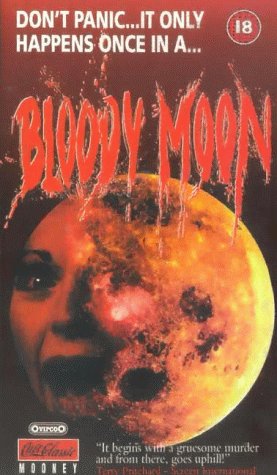
A 1981 West German/Spanish co-production, Bloody Moon open with a disfigured man named Miguel (Alexander Waechter) putting on a Mickey Mouse mask and sneaking into a party being held on the campus of a private school that is known as (deep breath) Europe’s International Youth-Club Boarding School of Languages. It’s a school that is meant for the young, the rich, and the unburdened. In short, it’s not a place for Miguel at all.
With his face safely hidden behind the smiling image of Disney’s favorite mouse, Miguel meets a young woman who is dancing by herself. She mistakes him for her boyfriend and heads into a nearby bungalow with him. They start to make love but — uh oh! — the mask falls off! The woman screams at the sight of Miguel’s scarred face. Miguel grabs a pair of scissors and stabs her to death while Mickey Mouse’s smiling face smiles on the floor. (One can only imagine how Disney reacted to this film.)
A few years later, Miguel is being released from a mental hospital. He’s released into the custody of his sister, Manuela (Nadja Gerganoff). Miguel’s doctor (played by the film’s director, Jesus “Jess” Franco) says that Miguel should be fine as long as he’s not around anything that reminds him of the incident. Manuela says that she’ll look after him and then promptly takes him back to the school where he committed the murder. What part of not reminding him did she fail to understand?
Manuela does actually have an excuse for bringing Miguel to the school with her, though. She and her aunt, Countess Maria (Maria Rubio), own the school. Countess Maria is an angry, wheelchair-bound woman who is convinced that Manuela wants to kill her so that she can take over the school and it does seem that Manuela does have some hostility towards her aunt. Of course, another reason for bringing Miguel back to the school to live with her is that he and Manuela have an incestuous relationship …. or, at least, they did. Now that Manuela refuses to sleep him, Miguel is reduced to lurking around campus and staring at all the students while they sunbathe topless at the pool. While Manuela stands naked in her room and stares at the moon (the bloody moon?), Miguel is hunched down in the shrubbery and peeping through windows.
Among the students is Angela (Olivia Pascal). Angela is upset because she discovered a dead body but no one’s willing to believe her because she also enjoys reading mystery novels. Angela knows that someone is committing murders on campus but is it Miguel or it is Professor Alvaro (Christoph Moosbrugger) or could it even be the enigmatic Bueno (Otto Retzer), a bald guy who seems to randomly pop up around campus? Can Angela convince her remarkably stupid classmates that there’s a murderer on campus before it’s too late?
Bloody Moon was one of the many films directed by the Spanish auteur and former Orson Welles collaborator, Jesus Franco. In a career that lasted over 60 years, Franco directed at least 173 feature films. (It’s felt that he actually directed quite a bit more, usually under a pseudonym. Franco, himself, claimed that he didn’t really remember how many films he had directed.) As a director, Franco is remembered for his low budgets, his unapologetic embrace of the sordid, his rather casual attitude towards maintaining continuity from one scene to another, and for occasionally framing an interesting shot or two. By his own admission, Bloody Moon was not a personal project for Franco. It’s something that he did for the money, as a director-for-hire. However, Bloody Moon is unmistakably a Franco film. The budget is low. The subject matter is often so sordid that it borders on parody. As far as continuity goes, Angela goes from wearing a nightshirt when she discovers a dead body inside her bungalow to wearing a colorful sweater when she runs outside in a panic. (I guess she could have stopped to change clothes with a dead body on the bed and a killer lurking somewhere in the bungalow but I doubt it. When there’s a dead body on your bed, modesty should be the least of your concerns.) And yet, as silly as it all is, there are moments when Bloody Moon does achieve a certain dream-like intensity. The mix of badly dubbed performers, sudden jump cuts, bloody violence, and the total lack of narrative logic makes Bloody Moon feel a bit like a filmed nightmare. It works despite itself.
Bloody Moon is one of the films that was, for a while, banned in the UK due to its violence and bloodshed. And indeed, there is a lot of blood and the violence is a bit more graphic than what one might expect to find in the American slasher films that Bloody Moon was obviously meant to capitalize upon. This film is notable for just how cruel the killer is. Not even Michael Myers or Jason Voorhees resorted to using a giant radial saw. That said, this is one of those films that has a reputation for being bloodier than it actually is. The majority of the film is taken up with scenes of people wandering around campus, either searching for their friends or stalking a potential victim. Personally, I felt the nonstop searching scenes added to the film’s dreamlike feel but I imagine those who only watch films like this for the kills will find it all to be a bit slow.
Bloody Moon was clearly made to capitalize on the success of American slasher films like Halloween and Friday the 13th. That said, Bloody Moon has more in common with the Italian giallo genre, right down to the whodunit nature of the plot, the ludicrously sleazy motives of the killer, and the total lack of intentional comic relief. Like so many giallo films, Bloody Moon takes place in a world where everyone’s either a victim or a killer and no one’s particularly likable. It’s not one of Franco’s personal films but there’s still enough of his signature style to appeal to his fans. As with most of Franco’s film, it will be best appreciated by those who like a little ennui mixed with their horror.
4 Or More Shots From 4 Or More Films is just what it says it is, 4 shots from 4 of our favorite films. As opposed to the reviews and recaps that we usually post, 4 Shots From 4 Films lets the visuals do the talking!
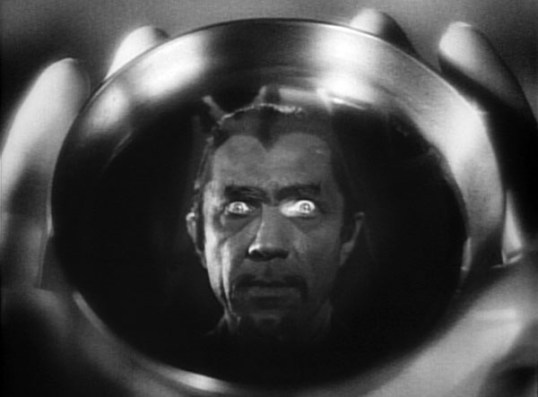
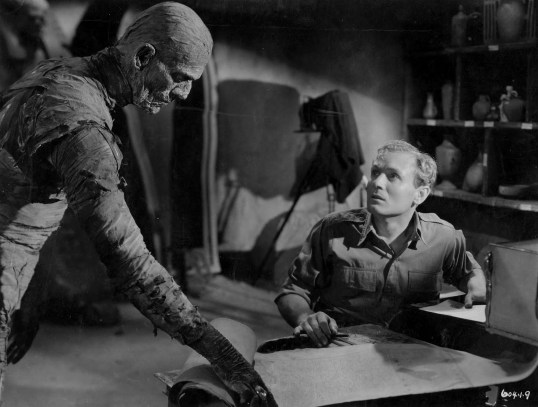
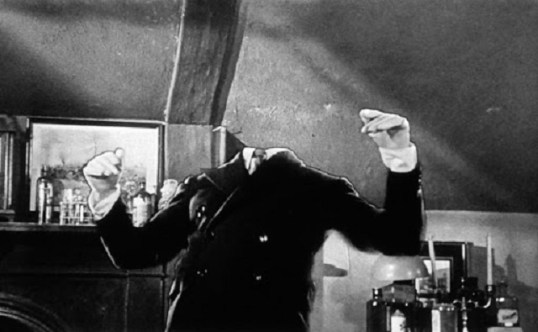
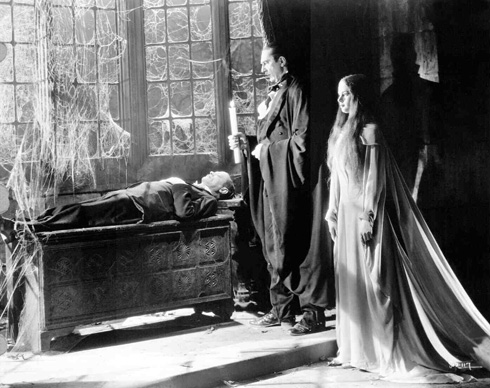
This October, I’m going to be doing something a little bit different with my contribution to 4 (or more) Shots From 4 (or more) Films. I’m going to be taking a little chronological tour of the history of horror cinema, moving from decade to decade.
Today, we take a look at the 1930s.
8 Shots From 8 Horror Films
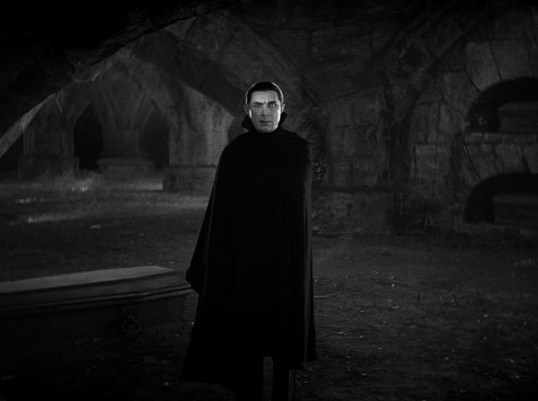
Dracula (1931, starring Bela Lugosi as the Count, Dir by Tod Browning, DP: Karl Freund)
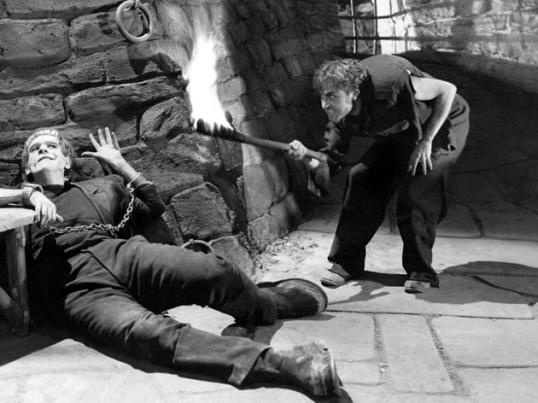
Frankenstein (1931, dir by James Whale, DP: Arthur Edeson)
White Zombie (1932, directed by Vincent Halperin, DP: Arthur Martinelli)
The Mummy (1932, directed by Karl Freund, DP: Charles Stumar)
The Invisible Man (1933, dir by James Whale, DP: Arthur Edeson)
Bride of Frankenstein (1935, dir James Whale, DP: John J. Mescall)
Mark of the Vampire (1935, dir by Tod Browning, DP: James Wong Howe)
Son of Frankenstein (1939, directed by Rowland V. Lee, DP: George Robinson)
Tales of Magic and Mystery promised readers a look into the world of the unknown but, despite that, it had a short print run. The first issue came out in December of 1927. Four issues later, the series was canceled in 1928. The series only ran for five issues but those five issues feature five of the best and most surreal covers that I’ve ever seen. Unfortunately, the identity of the artist responsible for these covers is not known but they certainly make an impression.
Here, to help kick off October and Through the Shattered Lens’s annual celebration of all thing horror, are the five covers of Tales of Magic and Mystery!
The 2018 film, Await Further Instructions, takes place in the United Kingdom during the Christmas season. However, it tells a story that could take place anywhere and at any time. That’s even more obvious today than when the film was first released.
A dysfunctional family has gathered for the holidays. Nick (Sam Gittins) brings his girlfriend, Annji (Neerja Naik). Nick’s sister, Kate (Holly Weston), is both pregnant and a racist. She brings her husband, Scott (Kris Saddler). Tony (Grant Masters) and Beth (Abigail Cruttendon) are the parents, trying to keep some sort of order as dinner is served. Finally, Granddad (David Bradley) dislikes everyone as grandfathers are allowed to do. Once someone reaches a certain age, bad behavior is casually dismissed as someone just having a bad day.
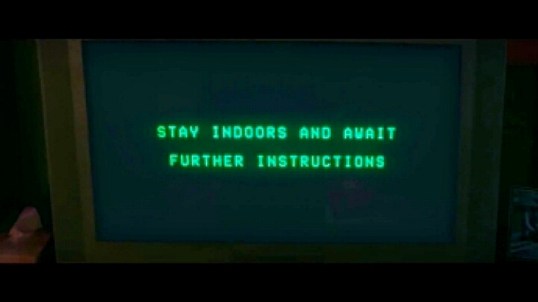
The family dinner is interrupted by reports of some sort of ill-defined disaster. A dark substance appears to have surrounded the house, trapping them inside. Bizarre messages start to appear on the television, telling the family to obey orders and to await further instructions. Some members of the family dare to unplug the television, just for Tony quickly plug it back in. Hypodermic needles are dropped through the chimney, along with a message that one of them is infected and that they have to take the vaccine if they’re going to survive. Even after taking the shot leads to one member of the family vomiting to death, Tony continues to insist that everyone has to follow the instructions coming from the television. The television accuses one of them being a sleeper agent. The television demands a sacrifice. The television warns of terrible consequences if its instructions are not followed. Those who try to resist find themselves being attacked by the other members of the family. “Worship me,” the television suggests at one point and much of the family is willing to do just that.
Await Further Instructions was made in 2018 but it’s a film that feels as if it was specifically made for the COVID era. (I write this as someone who is voluntarily vaccinated and who is still more than happy to put on a mask if someone politely requests that I do so.) While a good deal of the film’s horror does come from grotesque imagery and Cronenberg-style body horror, the reason why the film sticks with the viewer is because it perfectly captures the paranoid atmosphere that everyone has had to deal with over the past two years. (Indeed, if this film had been made today, critics would probably say that the film was a bit too on the nose in its portrayal of people putting blind faith in instructions coming from unseen forces.) Tony goes from being a slightly addled father to being a monster, precisely because that’s what he’s ordered to do and he doesn’t have the courage or the imagination to question why. This is the story of a family that’s destroyed because they put more faith in authority than in their own common sense. It’s a story about family that turns on itself because it’s ordered to do so. It’s a story that feels very relevant today. One need only read one of the thousands of self-pitying social media updates from people talking about how they’ve shut their families out of their lives to realize that many people, if they were in the same situation, would probably behave the same way that Tony behaves in this film.
By confining the action to one location, the film creates a visceral atmosphere of claustrophobia. Even if the family could escape from the house, the viewer has to wonder if there’s anywhere left to go. The film declines to make clear if the same horror is happening to the rest of the world or if it’s just concentrated on that one house. Is everyone being told to await further instructions or is just that one family? Await Further Instructions not only captures the horrors of blind conformity and overwhelming paranoia but also the horror of isolation and again, it’s hard not to feel that this 2018 film predicted the future. For all the horrors of the COVID era, the isolation was the most psychologically damaging. Families were destroyed. Friendships were broken. Faith in institutions was lost. All while people were ordered to shut up and await further instructions.
Even more now than when it was first released, Await Further Instructions is a powerful and visceral horror film.
Here we are! The Most Wonderful Time of the Year! Shout out to Lisa our Glorious Leader and Friend!
Killer Pizzer Delivers! See what I did there?! That’s right, it’s Horrorthon! It’s on! Basically, pizza
is killing people at and home and restaurants. Nikki, our heroine, loses her mother to my people’s food! Side Note: isn’t it awesome to be Italian?! Our food owns the BEST DAY OF THE WEEK!!! Our food makes a party! You have four unrelated people together- that’s a meeting, but add pizza and you have…. wait for it….. A PIZZA PARTY!!!
Back to Killer Pizza! That’s it! It’s 2 minutes and 24 seconds! Enjoy!
As some of our regular readers undoubtedly know, I am involved in a few weekly live tweets on twitter. I host #FridayNightFlix every Friday, I co-host #ScarySocial on Saturday, and I am one of the five hosts of #MondayActionMovie! Every week, we get together. We watch a movie. We tweet our way through it.
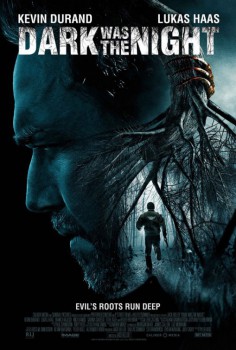
Tonight, for #ScarySocial, Tim Buntley will be hosting 2014’s Dark Was The Night!
The forest near a small town serve as the home of a fearsome creature. Can Kevin Durand and Lukas Haas save their town from supernatural destruction!? I don’t know. I’ll find out tonight when I watch Dark Was The Night with #ScarySocial!
If you want to join us on Saturday night, just hop onto twitter, start the film at 9 pm et, and use the #ScarySocial hashtag! The film is available on Prime and a few other streaming sites. I’ll be there co-hosting and I imagine some other members of the TSL Crew will be there as well. It’s a friendly group and welcoming of newcomers so don’t be shy.
Hi there and welcome to October! This is our favorite time of the year here at the Shattered Lens because October is our annual horrorthon! For the past several years (seriously, we’ve been doing this for a while), we have celebrated every October by reviewing and showing some of our favorite horror movies, shows, books, and music. That’s a tradition that I’m looking forward to helping to continue this year.
To start things off, we have the 1973 made-for-TV movie, The Horror at 37,000 Feet. This film starts off like a typical disaster film, with a collection of familiar celebrities catching a flight from Heathrow Airport. What they don’t know is that celebrity is not the only thing flying across the ocean! There’s a sacrificial altar sitting in the baggage hold and soon, all sorts of strange things are happening! Truly, it’s a horror at 37,000 feet!
This film is silly and perhaps even a little bit dumb but it’s also definitely a lot of fun. To be honest, when you’ve got William Shatner playing an ex-priest who is wondering what happened to his faith, how can you go wrong? Along with Shatner, keep an eye out for Chuck Conners, Buddy Ebsen, Roy Thinnes, Paul Winfield, Tammy Grimes, and France Nuyen. Basically, every TV actor who needed a job in 1973 boarded The Horror at 37,000 Feet.
Happy October and enjoy The Horror at 37,000 Feet!






 Through the Shattered Lens