Horror Novel Review: Bad Dreams by R.L. Stine


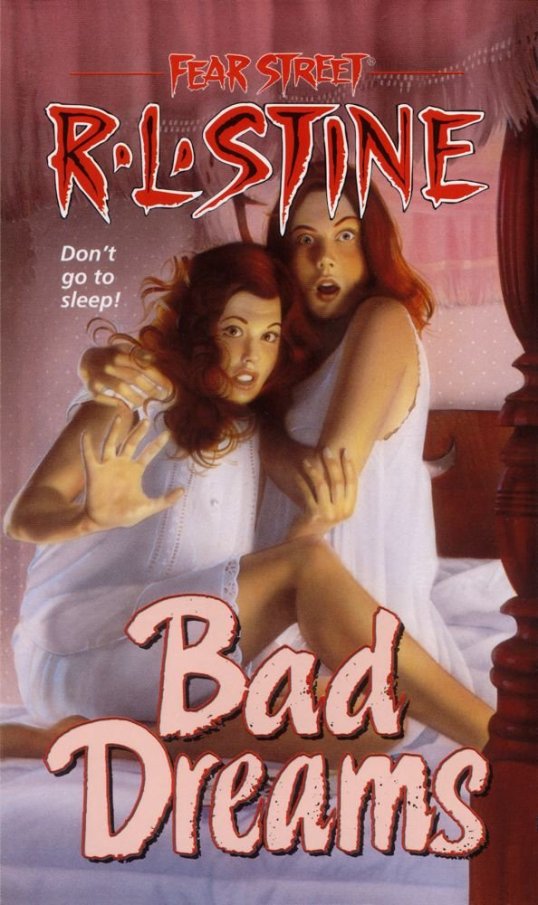
First published in 1994, Bad Dreams is yet another R.L. Stine YA novel about life on Fear Street.

This time, it’s Maggie and her younger sister Andrea who have moved into a new house on Fear Street.  Maggie and Andrea are rivals about almost everything.  They’re both super competitive swimmers who are fighting for the right to represent their high school at the State Championship.  They both like Justin, who is typical boring R.L. Stine boyfriend.  They ever argue over who should get the ornate bed in Maggie’s new bedroom.  Because Maggie agreed to let Andrea have the bigger room, Maggie gets to keep the bed.

I don’t know, Maggie.  You might want to rethink that.

It turns out that the last owner of the bed was actually stabbed to death while laying on top of it.  Soon, Maggie is having disturbing dreams where she sees the murder happening.  Is Maggie being contacted from beyond the grave or are her dreams warning her that she’s about to become the next victim?  And what about all the strange noises coming from the attic?

Soon, Maggie is struggling when it comes to school and swimming because she’s just not getting enough sleep!  (This book made me happy that I’ve never needed more than 3 hours of sleep to function.)  However, the other two girls who are competing against Maggie and Andrea for a chance to go to State each falls victim to a bizarre accident!  Someone is taking out the competition!  Is it the ghost?  Is it Andrea?  Could it even be Maggie herself!?

Will Maggie be able to solve the mystery?  Will she eventually get a good night’s sleep and fulfil the promise of having sweet dreams?  Will she and Andrea ever be able to put aside their sibling rivalry?  And who will go to State!?

And, perhaps most importantly, does anyone really care?

As far as the plot is concerned, Bad Dreams is an example of R.L. Stine on autopilot.  All of the questions are eventually answered but the answers seem to come out of nowhere and it’s hard to escape the feeling that Stine pretty much just kept writing until he reached the minimum word requirement and then he decided to quickly wrap things up without really worrying about whether or not he had provided enough clues to keep the reader from feeling as if she had been denied a fair chance to solve the mystery on her own.  That said, the first of Maggie’s dreams was nicely creepy and the constant arguing between Maggie and Andrea was kind of entertaining.  I’ve got three older sisters so I imagine that every single one of them could probably have related to Maggie at some point while we were all growing up.  (It also helped that Andrea and Maggie had red hair, just like me!)  Plus, all of the drama around the swim team reminded me of the later episodes of Saved By The Bell: The New Class, in which it suddenly turned out that everyone at Bayside was obsessed with the swim team.  Today, books like this are best used for nostalgia and that’s what I definitely felt while reading Bad Dreams.
Book Review: The I-5 Killer by Ann Rule


Yesterday, I reviewed The Serial Killer Letters, a book that is largely made up of letters written by serial killers.  As I mentioned in my review, I was particularly disturbed by the many letters that were written by Randall Woodfield, a former football player who is currently serving a life sentence for one murder but who has been linked to 44 others.

What was it that so disturbed me about Woodfield’s letters, beyond the fact that they were the words of a man who targeted women who physically resembled me?  Some of it was the fact that Woodfield took a flirtatious tone in his letters, presenting himself as being just a charming but hapless guy who ended up suffering from a bit of bad luck.  The fact that he included shirtless pictures of himself with his letters was undeniably icky.  There was also the fact that, despite having been linked to several murders by DNA and a lot of other evidence, Woodfield continued to adamantly claim that he had been set up and railroaded and basically misrepresented by everyone who had ever written or spoken about his case.  In fact, Woodfield was so adamant that, when first reading his words, it was tempting to question why someone who has been serving a life sentence since 1981 and who has no hope of ever getting out would not just go ahead and confess.  Even the author of The Serial Killer Letters admitted to initially feeling conflicted about Woodfield and his claims of innocence.  However, in order to believe Woodfield’s story, you would have to believe that cops in several different jurisdictions all decided to independently conspire against one person.  Considering that his DNA has been linked to several cold cases, you’d have to accept that the DNA evidence was planted at a time when most people weren’t even sure what DNA was.  You would have to ignore all of the other evidence against Woodfield.  You would also have to explain away the fact that three of Woodfield’s suspect victims were acquaintances of his and that all three of them died around the same time and in similarly violent circumstances.  One could accept that a gigantic conspiracy was formed to put Randy Woodfield in prison.  Or one can accept that Randy Woodfield is guilty.

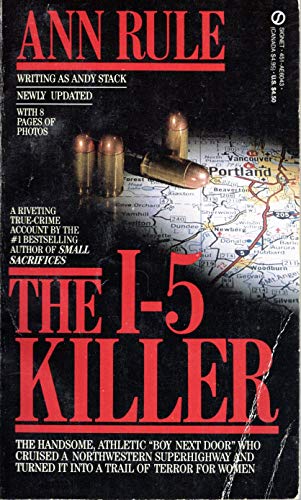
In Woodfield’s letters, he spent a good deal of time ranting about the true crime writer Ann Rule.  In 1984, Rule wrote a book about Woodfield’s crimes, The I-5 Killer.  In fact, Woodfield devoted so much space to accusing Rule of being a part of a conspiracy against him that I felt the need to read The I-5 Killer to see what Rule had to say.  It’s pretty much a standard true crime book, one that gives the sordid details of Woodfield’s crimes while also detailing the investigation that led to Woodfield’s arrest.  The book delves into Woodfield’s background, revealing him to have been a popular high school athlete who, even at the age of 14, had a disturbing compulsion to expose himself to complete strangers.  Woodfield drifted after high school but he was a good enough football player to be drafted by the Packers.  Unfortunately, even while at training camp, Woodfield couldn’t stop exposing himself to strangers.  The Packers decided they didn’t need him on their team and Woodfield instead became a thief, a rapist, and a murderer.  At the same time, he also worked as a bartender and always had a new girlfriend who was willing to help finance his lifestyle.  The book is full of quotes about how charismatic Woodfield could be while tending bar.  However, there’s also a lot of quotes concerning the fact that even Woodfield’s friends and defenders thought he was an idiot.

The book details Woodfield’s crimes and the efforts of one of the survivors of his rampage to not only recover from being shot but also to find the courage to come face-to-face with Woodfield in court.  It makes for disturbing reading but the book should also be praised for revealing that Randy Woodfield was not a Hannibal Lector or a Dexter Morgan or any of the other charming, fictional murderers who tend to turn up in the movies or on television.  Randy Woodfield was a loser, through and through.  His motives were not complex and his methods were not clever.  He was an idiot.  One can understand why Woodfield hates Rule’s book but the book itself provides an invaluable service.  After you read enough true crime books, you come to realize that most murderers are, for the most part, very dull people.

The edition that I read included an update on Woodfield in prison.  It mentioned that Woodfield had become a prolific letter writing and that he always made sure to send everyone a shirtless picture of himself before asking them for money.

International Horror Review: Massacre in Dinosaur Valley (dir by Michele Massimo Tarantini)


As I watched the 1985 Italian film, Massacre in Dinosaur Valley, I found myself wondering one thing.

“Where are the dinosaurs!?”

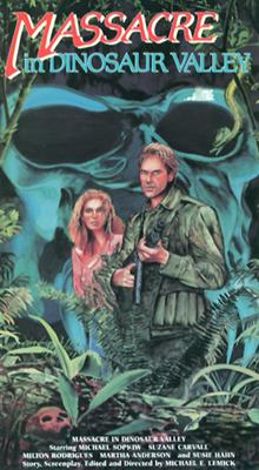
Perhaps I’ve been spoiled by the Jurassic Park franchise but whenever I see the word “dinosaur” in a title, I expect to see dinosaurs.  That’s actually probably the main reason why I, or anyone else for that matter, would watch Massacre in Dinosaur Valley.  Unfortunately, there are no dinosaurs in this film.  Instead, a paleontologist shows up to explain that the valley is called Dinosaur Valley because it is the home to so many fossils.  This, of course, is the equivalent of telling us that, even though a city is really boring now, you should have seen it several thousand years ago.  Unfortunately, we also don’t get to see any fossils in Massacre in Dinosaur Valley.

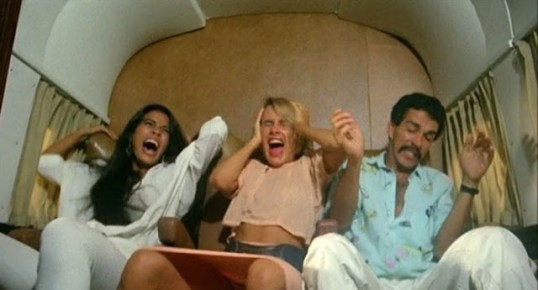
An actual screen shot from Massacre in Dinosaur Valley

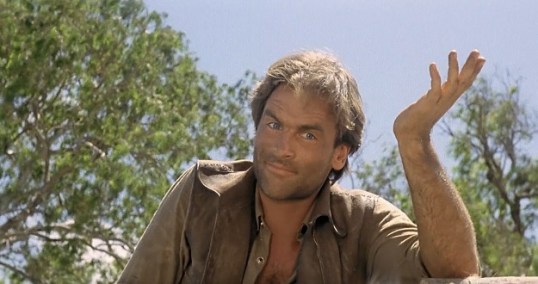
There is, however, a massacre.  When a plane crashes in the valley, the pilot is killed but the majority of the passengers survive.  Insane Vietnam vet John Heinz (Milton Rodriguez) declares himself to be the leader of the survivors, even while his drunk wife (Marta Anderson) taunts him about everything from his lack of sexual prowess to the fact that his war record apparently isn’t as impressive as he claims.  The majority of the survivors would rather be led by Kevin Hall (Michael Sopikw), a soldier of fortune who is first introduced hitching a ride on a truck and then admitting that he doesn’t even have the five dollars that he promised to pay the driver.  Kevin seems like a bit of a loser but he’s better looking than Heinz and a good deal more laid back as well.

That said, it really doesn’t matter whether Kevin or John is in charge of the survivors because, what the valley lacks in dinosaurs, it makes up for in cannibals.  When the cannibals attack, the survivors rather foolishly split up and quickly discover that, if the cannibals don’t get you, the quicksand will.  Kevin ends up making his way through the jungle with Myara (Gloria Cristal) and Belinda (Susan Hahn).

Massacre in Dinosaur Valley was released towards the end of the infamous Italian cannibal cycle.  In Italy, it was originally given the much more honest title of Nudo e selvaggio, which translates to Naked and Savage.  In some parts of the world, it was released as Cannibal Ferox 2, in an effort to associate the film with Umberto Lenzi’s infamous shocker.  The plot of Massacre in Dinosaur Valley obviously owes much to Cannibal Ferox.  Fortunately, there’s far less animal cruelty in Massacre In Dinosaur Valley.  Unfortunately, the plot moves slowly and none of the film’s violence or gore is as nightmarishly realized as in the equivalent scenes from Ferox.  As well, no one in the Dinosaur Valley cast can really duplicate the charisma of Ferox‘s Giovanni Lombardo Radice, Lorraine De Selle, and Zora Kerova.

That said, even if he wasn’t a particularly dynamic actor, Michael Sopkiw was still a likable lead and he was the best thing that Massacre In Dinosaur Valley had going for it.  Sopkiw is a bit of an enigmatic figure when it comes to the history of Italian exploitation films.  He was an American actor and a model who, in quick succession, starred in four Italian films.  He started his career with Sergio Martino’s 2019: After The Fall of New York and then went on to star in Lamberto Bava’s Blastfighter and Monster Shark before ending his acting career with Massacre In Dinosaur Valley.  Sopkiw was good looking and he had a likeable screen presence.  It’s easy to imagine that he could have had a career similar to Michael Dudikoff’s if he had stuck with it.  But Sopkiw apparently decided that acting in B-movies wasn’t for him and he instead went into botany and started a company that makes special glass bottles that protect their contents from exposure to the sun.  Good for him.

4 Shots From 4 Horror Films: The Early 50s


4 Or More Shots From 4 Or More Films is just what it says it is, 4 shots from 4 of our favorite films. As opposed to the reviews and recaps that we usually post, 4 Shots From 4 Films lets the visuals do the talking!

This October, I’m going to be doing something a little bit different with my contribution to 4 (or more) Shots From 4 (or more) Films.  I’m going to be taking a little chronological tour of the history of horror cinema, moving from decade to decade.

Today, we take a look at the early 50s!

4 Shots From 4 Horror Films: The Early 50s

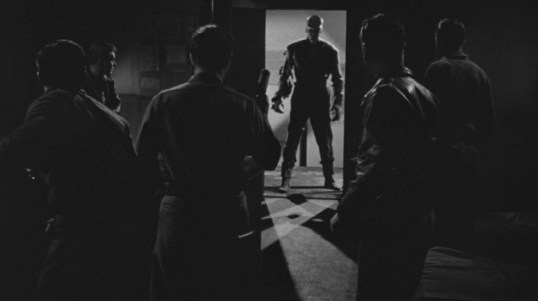
The Thing From Another World (1951, dir by Christian Nyby, DP: Russell Harlan)

It Came From Outer Space (1953, dir by Jack Arnold, DP: Clifford Stine)

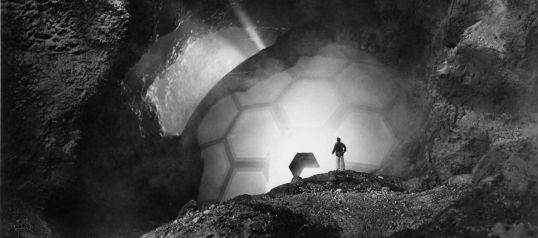
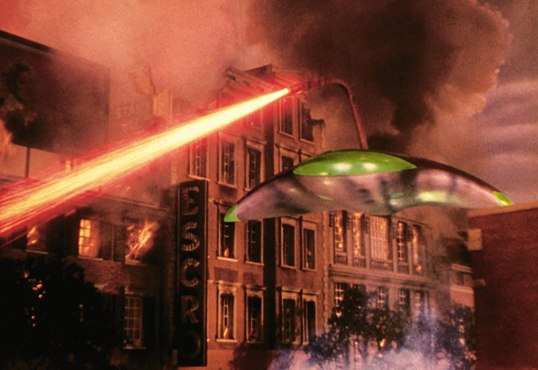
The War of the Worlds (1953, dir by Byron Haskin, DP: George Barnes)

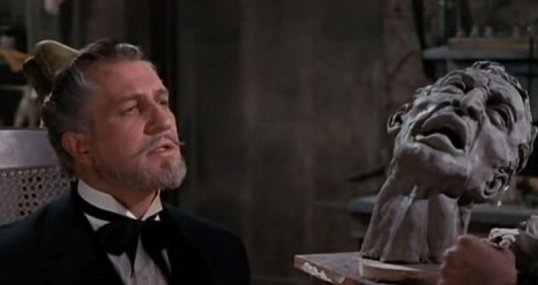
House of Wax (1953, dir by Andre de Toth, DP: Bert Glennon, J. Peverell Marley, and Lothrop B. Worth)

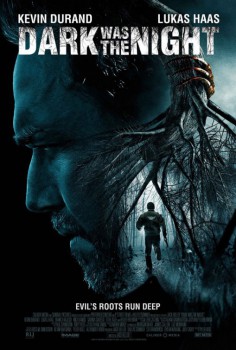
Horror Film Review: Dark Was The Night (dir by Jack Heller)


The 2014 horror film, Dark Was The Night, takes place in the town of Madison Woods.

Madison Woods is a small, isolated town that is located somewhere up north.  It’s one of those dreary blue collar towns where everyone knows everyone else.  Most of the citizens work in the logging industry, attend the same church, and drink at the same bar.  It’s not a town where much happens.  The police force consists of two guys, Sheriff Paul Shields (Kevin Durand) and his new deputy, Donny Saunders (Lukas Haas).  Donny worked in New York City before moving to Madison Woods.  Shields is currently estranged from his wife.  That’s the type of thing that passes for big news in Madison Woods.

When one of the local farmers complains that one of his horses has disappeared, Shields and Saunders assume that the horse has just run off.  When other animals start to disappear, Shields continues to insist that it’s all just a coincidence.  When the local hunters start to talk about an ancient legend of a monster that lives in the woods, Shields replies that there are no monsters and, for good measure, there’s no God as well.  (In many ways, Shields is a perfect example of the old joke about how the best way to spot an atheist is to wait a few minutes and he’ll tell you.)  Even when weird cloven footsteps start to show up around town and Shields himself spots something in his backyard, the Sheriff continues to insist that there is a rational explanation for all of this.  Meanwhile, Saunders hangs out at the bar and drinks and really, who can blame him?  As far as I can tell, it’s not like Madison Woods has a movie theater or anything like that.  It’s a really boring town.  You can either develop the beginnings of a drinking problem or you can start random fights or you can get ripped apart by the thing in the woods.  Make your choice.

Eventually, Shields and Saunders do discover that there is something lurking out in the woods.  And, despite their attempts to come up with a rational explanation, the creature proves itself to be more than just some animal.  Instead, it’s a true supernatural monster, tracking its prey through the community.  As a group of loggers discover at the start of the movie, the creature is just as quick to attack humans as it is to go after deer and other wild animals.  With the entire town locked away in the church basement (because, as Night of the Living Dead proved, the basement is always the safest place), Saunders and Shields try to figure out how to stop a monster that neither one of them has ever seen before.

Dark Was The Night was loosely inspired by a true story.  In 1885, the citizens of Topsham in the UK were stunned to wake up one cold morning and discover a series of cloven footprints in the snow.  The footprints led through the entire city and it appeared that whatever was responsible for them had stopped in front of every house and place of business.  Some claimed that the footprints belonged to the devil while others said that it was just some sort of animal.  The Devil’s Footprints, as the story became known, serves as a bit of Rorschach test.  Those inclined to believe in the supernatural have little trouble believing that the Devil visited the town of Topsham while the more rational among us assume that the footprints were left by a wild animal and then people saw whatever they wanted.  Dark Was The Night moves the story to the modern day and to America but the question remains the same.  Is there really a monster in the woods or, as Shields initially believes, are people just seeing what they want to see?  Unfortunately, the film reveals the monster’s existence within its opening minutes.  The film would have perhaps been more effective if there had at least been some mystery about whether or not Shields’s initial instincts were correct.

Dark Was The Night is a deliberately paced film, which again would be more effective if there was any mystery at all as to whether or not the monster actually existed.  On the plus side, the film is full of atmosphere and Kevin Durand and Lukas Haas are both effective as the two lawmen who find themselves in over their heads.  Fans of Lost will remember Durand as the evil Martin Keamy, who was one of the most heartless characters to ever appear on that show or any other show.  Durand gets to play the hero in Dark Was The Night and gives a good performance as a man who discovers that not everything has a rational explanation.  That said, while the film has some interesting ideas and performances, it ultimately becomes just another monster-laying-siege film and the ending is one that most viewers will see coming from miles away.  It’s not a bad film but it’s still never quite as good as one might hope.

Horror on the Lens: Robot Monster (dir by Phil Tucker)


Today’s horror film is a true classic of its kind, the 1953 science fiction epic Robot Monster.

Now, I should admit that this is not the first time that I’ve shared Robot Monster in October.  I share it every year and, every year, YouTube seems to pull the video down in November.  That sucks because Robot Monster is one of those weird films that everyone should see.  So, I’m going to share it again.  And, hopefully, YouTube will let the video stay up for a while.

As for what Robot Monster is about…

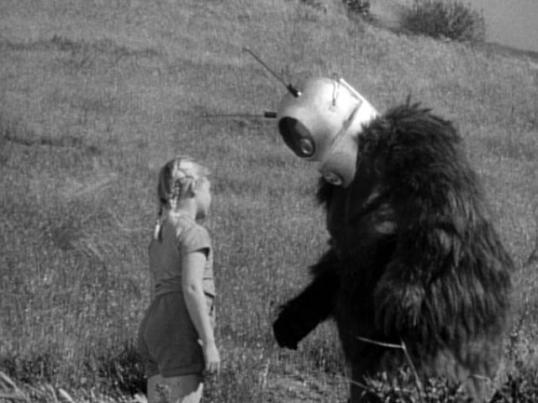
What happens with the Earth is attacked by aliens?  Well, first off, dinosaurs come back to life.  All of humanity is killed, except for one annoying family.  Finally, the fearsome Ro-Man is sent down to the planet to make sure that it’s ready for colonization.  (Or something like that.  To be honest, Ro-Man’s exact goal remains a bit vague.)

Why is Ro-Man so fearsome?  Well, he lives in a cave for one thing.  He also owns a bubble machine.  And finally, perhaps most horrifically, he’s a gorilla wearing a diver’s helmet.  However, Ro-Man is not just a one-dimensional bad guy.  No, he actually gets to have a monologue about halfway through the film in which he considers the existential issues inherent in being a gorilla wearing a diver’s helmet.

Can humanity defeat Ro-Man?  Will Ro-Man ever get his intergalactic supervisor to appreciate him?  And finally, why are the dinosaurs there?

Despite the film’s reputation for being borderline incoherent, most of those above questions actually are answered if you pay attention to the first few scenes of Robot Monster.  In fact, one could even argue that Robot Monster is maybe a little bit more clever than it’s often given credit for.  Of course, it’s still a zero-budget mess of a film but it’s also undeniably fun and, in some sections, unexpectedly dark.  If you’ve never seen it before, you owe it to yourself to set aside an hour and two minutes in order to watch it.  You’ve never see anything like it before.

Finally, I should note that Robot Monster’s hero was played by George Nader, who actually did go on to appear in several mainstream films.  Despite his good looks and talent (which may not be obvious in this film but which he did have), George Nader struggled to get starring roles in Hollywood, where he was often dismissed as just being a member of Rock Hudson’s entourage.  (It’s been theorized that Nader struggled because the studios feared that giving him too big of a role would lead to the gossip magazines writing about Nader’s relationship with Hudson, though the two were just friends.  Nader was in a relationship with Hudson’s private secretary, Mark Miller, from 1947 until Nader’s death in 2001.)  Nader finally left Hollywood and went on to have a pretty successful career in Europe.  He was perhaps best known for playing secret agent Jerry Cotton in a series of films in the 60s.

Enjoy Robot Monster!

Music Video of the Day: Poison Heart by Ramones (1992, directed by Samuel Bayer)


Though he had retired from the band to pursue a solo career, Dee Dee Ramone wrote Poison Heart and gave it to Ramones.  The story has always been that Dee Dee gave them the song as a way to thank the band for bailing him out of jail.  I don’t know if that story is true or not but it does have a ring of truth to it.  Print the legend, to quote The Man Who Shot Liberty Valance.

The song appeared on the soundtrack for Pet Semetary 2 and the video is clearly inspired by that song, with the child being forcefully dragged through the cemetery while the band performs in what appears to be an underground tunnel.

This video was directed by Samuel Bayer, who has done videos for just about everyone.

Enjoy!

Horror on TV: Ghost Story 1.2 “The Concrete Captain” (dir by Richard Donner)


In the 2nd episode of Ghost Story, an important lesson is learned.  If you’re going to bury a sea captain, do not bury him in concrete because his spirit belongs to the ocean.  Upset his spirit and he’ll basically ruin whatever hopes you have of bringing tourists to the seashore!

This episode stars Gena Rowlands and Stuart Whitman and it was directed by none other than Richard Donner.  Donner, of course, would go on to direct such films as The Omen, Superman, and Lethal Weapon.

Enjoy!

(Despite the weird thumbnail, this video should work if you click play.)

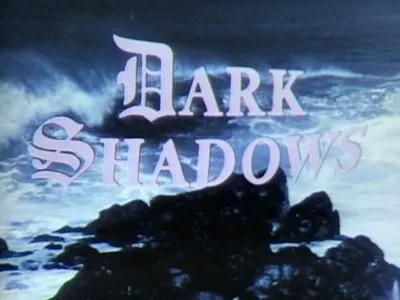
Great Moments In Television History #23: Barnabas Collins Is Freed From His Coffin


The year was 1967 and, in Collinsport, Maine, a petty criminal named Willie Loomis was about to make television history.  Convinced that a fortune in jewelry was hidden in the Collins family’s mausoleum, Willie broke in and opened a coffin that, strangely, was covered in chains.  Willie expected to find a fortune.  Instead, he found Barnabas Collins, a 200 year-old vampire who transformed Willie into his servant and proceeded to spend the next five years masquerading as a cousin from Britain while searching for both a cure to his condition and for the reincarnation of the love of his life, Josette.

Played by stage actor Jonathan Frid, Barnabas Collins made his first appearance on the April 18th, 1967 episode of Dark Shadows.  Though Barnabas was originally only meant to be a temporary addition to the show’s roster of characters, Frid proved to be popular with viewers, like my mother who not only watched the show when it first aired but also when reruns were broadcast in syndication many years later.  The show soon came to center on the ruthless vampire.

In fact, Frid and Barnabas became some identified with the show that many are still shocked to learn that Dark Shadows had run for a full year before Barnabas was introduced as a character.  When the show airs in syndication, it usually starts with Willie (played by John Karlen) opening Barnabas’s coffin and not with the earlier episodes in which the show’s nominal lead character, Victoria Winters, first arrived at Collinwood and met the members of the family.

Many future horror directors and writers have stated that their interest in the genre began with watching Jonathan Frid on Dark Shadows.  And it all began with that one great moment when Willie Loomis opened the coffin and set Barnabas free.

Previous Moments In Television History:

  1. Planet of the Apes The TV Series
  2. Lonely Water
  3. Ghostwatch Traumatizes The UK
  4. Frasier Meets The Candidate
  5. The Autons Terrify The UK
  6. Freedom’s Last Stand
  7. Bing Crosby and David Bowie Share A Duet
  8. Apaches Traumatizes the UK
  9. Doctor Who Begins Its 100th Serial
  10. First Night 2013 With Jamie Kennedy
  11. Elvis Sings With Sinatra
  12. NBC Airs Their First Football Game
  13. The A-Team Premieres
  14. The Birth of Dr. Johnny Fever
  15. The Second NFL Pro Bowl Is Broadcast
  16. Maude Flanders Gets Hit By A T-Shirt Cannon
  17. Charles Rocket Nearly Ends SNL
  18. Frank Sinatra Wins An Oscar
  19. CHiPs Skates With The Stars
  20. Eisenhower In Color
  21. The Origin of Spider-Man
  22. Steve Martin’s Saturday Night Live Holiday Wish List