The TSL’s Grindhouse: Schizoid (dir by David Paulsen)


The 1980 film, Schizoid, is all about the things you can do with scissors.

For instance, in the days before email, text messages, and social media, scissors could be used to cut words out of a magazines.  Those words could then be carefully pasted onto construction paper and then sent to an advice columnist like Julie Caffret (Marianna Hill).  Julie is pretty upset when she starts getting the notes, largely because they promise an anonymous reign of terror and murder.  The police, however, say that the notes probably don’t meant anything.  They’re probably just a hoax.  I mean, it’s true that several members of Julie’s therapy group have recently been murdered but the letters all talk about committing murder with a gun.  Whereas the members of the therapy group are being murdered by someone wielding …. SCISSORS!  (Cue that dramatic music.)

Of course, Julie has other things to worry about.  For instance, her ex-husband, Doug (Craig Wasson), is still in her life.  He’s putting up wallpaper in her office.  Or, at least, that’s what he says he’s doing.  It’s hard not to notice that he doesn’t seem to be making much progress with the job.  Plus, he apparently sleeps in the office, which just seems odd.  Then, there’s the building’s creepy maintenance man, Gilbert (Christopher Lloyd), who specializes in making people uncomfortable on elevators.  And then there’s the fact that Julie’s therapist, is played by Klaus Kinski!

Seriously, if you were looking for a therapist, would you go to Klaus Kinski?

From the minute Klaus shows up, it’s pretty obvious that the film wants us to assume that he’s the killer and really, it’s hard not to make that assumption.  We’re so used to seeing Klaus Kinski play evil and villainous characters and, even 30 years after his death, there are so many stories out there about how difficult Klaus Kinski could be to work with in real life that our natural reaction is to believe any character he plays must have a sinister motivation.  In this film, Klaus’s character has an out-of-control teenage daughter (Donna Wilkes) who tries to commit suicide by locking herself in the garage with a running car.  When Klaus takes an axe to the garage door, we’re left to seriously wonder if he’s planning on killing her or if he’s actually trying to save her life.  That said, Schizoid actually makes good use of Kinski’s menacing persona and Kinski himself gives a performance that elevates the entire film.  Kinski actually does manage to keep you guessing as to whether or not the therapist is a monster or if he’s just kind of a jerk.

Schizoid is usually classified as a slasher film, though it actually has more in common with the classic Italian giallo films that it does with any of the Friday the 13th sequels.  The killer’s identity is masked through POV shots and, in typical giallo fashion, the killer wears black gloves while committing his crimes.  We spend a good deal of the film following the police investigation, which is a typical element of the giallo genre but which is usually treated as an afterthought in post-Friday the 13th slasher films.  Much like Fulci’s The New York Ripper, Schizoid is a violent journey into the heart of darkness, a look at a world with no morality and no safety.  Also like Fulci’s film, it’s so shamelessly sleazy that it’s easy to miss the fact that it’s actually rather well-directed and acted.

Schizoid turned out to be a better film that I was expecting.  That said, I still have to wonder why anyone would select Klaus Kinski to be their therapist.

Film Review: The Poltergeist Diaries (dir by József Gallai)


“They wanted me to laugh when I wanted to cry,” Jacob Taylor (András Korcsmáros) says at one point during the upcoming horror film, The Poltergeist Diaries.

Jacob is attempting to explain why he’s recently abandoned not only his job but also the closeness of his girlfriend and his family and retreated to an isolated house in the middle of the woods.  And really, who can’t relate to what Jacob’s feeling?  We’ve all been in that situation at some point.  We’ve all felt that we were expected to conform to some arbitrary standard and that our honest emotions were not welcome.  Not all of us have chosen to go off the grid and isolate ourselves but there’s probably not a single person reading this who has not, at some point, been tempted.

We learn quite a bit about Jacob over the course of The Poltergeist Diaries.  We learn that he was always something of an outsider.  He was a seeker, a brilliant student who wrote stories and made films and who always seemed to be trying to discover some sort of hidden truth.  We learn that he was also close to his mother.  In fact, it was her worsening health that apparently led to Jacob leaving the city and heading out to the country.  He got a big house for a surprisingly cheap price.  He often filmed himself as he walked around the woods that surrounded his new home.  He saw things in the woods and he heard things in the house.

Of course, the main thing that we learn about Ben is that he’s missing.  The film opens with a statistic, telling us that thousands of people disappear every year in the United States and that only 15% of them are recovered alive.  Jacob Taylor is among the missing and whether or not he’s among that lucky 15% is anyone’s guess.

The Poltergeist Diaries is set up as a documentary, featuring interviews with the people who knew Jacob along with footage that Jacob himself shot of the woods and his house.  Among those interviewed are Jacob’s girlfriend (Kata Kuna) and his brother (Péter Inoka), along with a police detective (Dávid Fecske) who has his own reasons for taking a particular interest in Jacob’s mysterious disappearance.  Eric Roberts even makes a brief appearances, playing Jacob’s apologetic stepfather.  As I’ve said many times on this very site, any film the features Eric Roberts is automatically going to be better than any film that doesn’t.

It’s an effectively creepy film, one that makes good use of the faux-documentary format.  (Jacob being a frustrated artist helps to explain why, even with things getting increasingly strange in the house, he keeps filming.)  The first half of the film is dominated by interviews with people who knew Jacob and who are haunted by his disappearance.  By the time the film switches over to showing us the footage that Jacob filmed in the house and the woods, the audience is definitely ready to discover what happened.  András Korcsmáros plays Jacob as just being unstable enough to leave some doubt as to whether or not he’s really stumbled across something supernatural or if he’s just allowing the isolation to get to him.  He’s at his best when he’s trying to articulate what he’s feeling.  His performance captures Jacob’s desperation and makes him into an intriguing protagonist, one who is both sympathetic and enigmatic.  You’re never quite comfortable Jacob but you still hope the best for him.

Visually, director József Gallai does a good job of creating and maintaining a properly ominous and threatening atmosphere.  The woods that surround Jacob’s house are creepy because they really do appear to stretch on forever and it’s very easy to imagine that they’re could be someone (or something) hiding behind every tree.  The imagery leaves you feeling uneasy and every time that Jacob went outside, I found myself anticipating an attack.  The inside of the house is just as creepy, full of dark hallways and menacing shadows.  This is a film that keep you watching for any hint of unexpected or mysterious movement.

It makes for an effectively intense and dream-like horror film, with the final 15 minutes providing a number of effective jump scares.  It’s a film that will inspire you to take a second look at every shadow and jump at every bump in the night.  It’s a seriously creepy movie.  Don’t watch alone.

Horror on TV: FreakyLinks 1.13 “The Final Word” (dir by David Straiton)


Well, Halloween is nearly over and so is Horrorthon.  Here’s is our final episode of televised horror for 2020.  It’s also the final episode of FreakyLinks!

In this episode, Ethan Embry and the team try to prove that a murder was actually a supernatural occurrence.  Their efforts are recorded for a true crime television show.  The mockumentary approach is reminiscent of The Blair With Project, which was done by the same people who were behind FreakyLinks.  So, there you go!

It’s too bad that there was never a Baywatch Nights/FreakyLinks cross-over.

Oh well.  This episode aired on June 22nd, 2001 and it brought to an end the story of Derek Barnes.  Enjoy the show, everyone!  Happy Halloween!

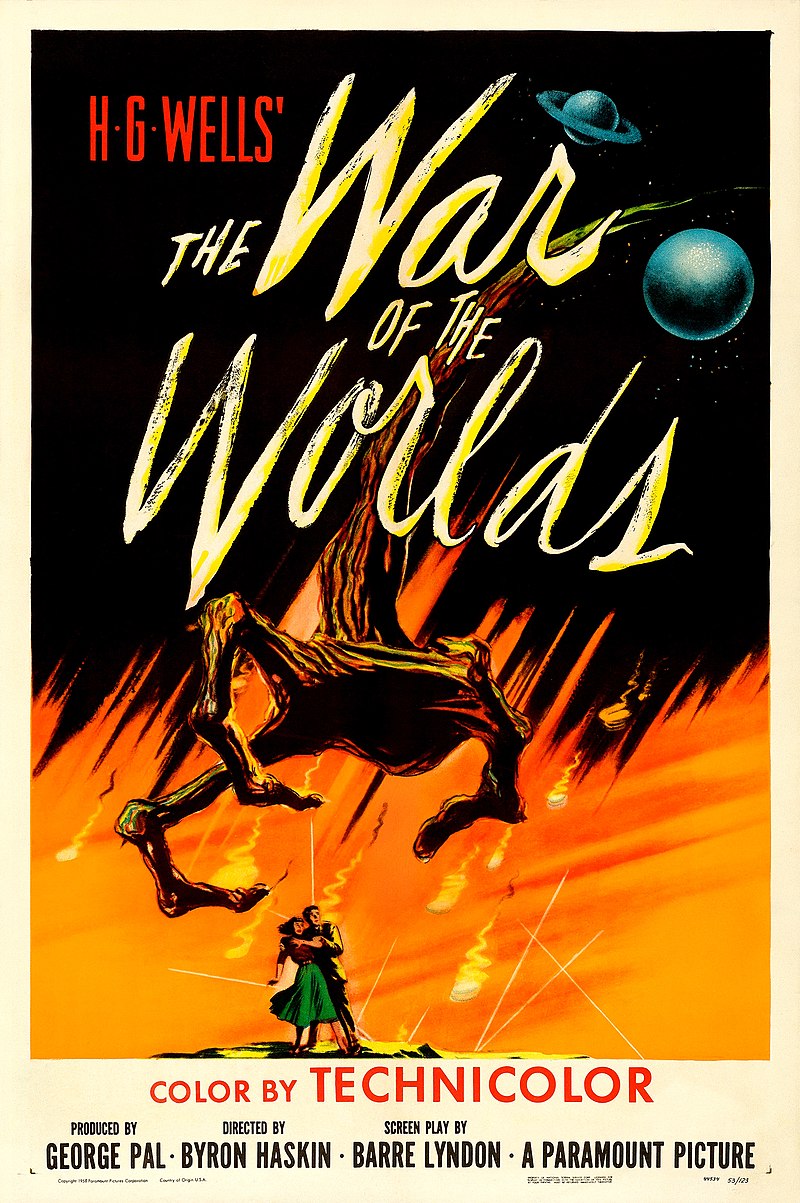
War of the Worlds (1953, directed by Byron Haskin)


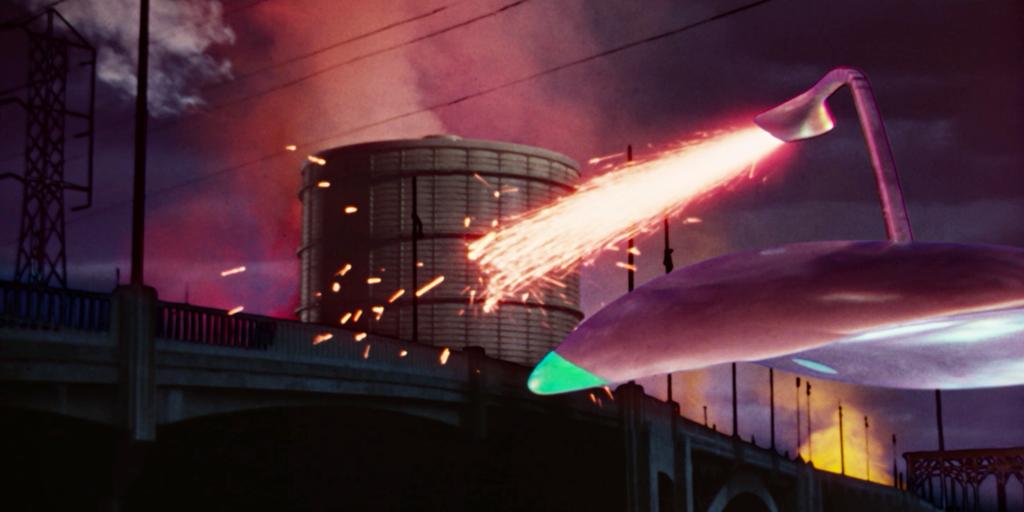
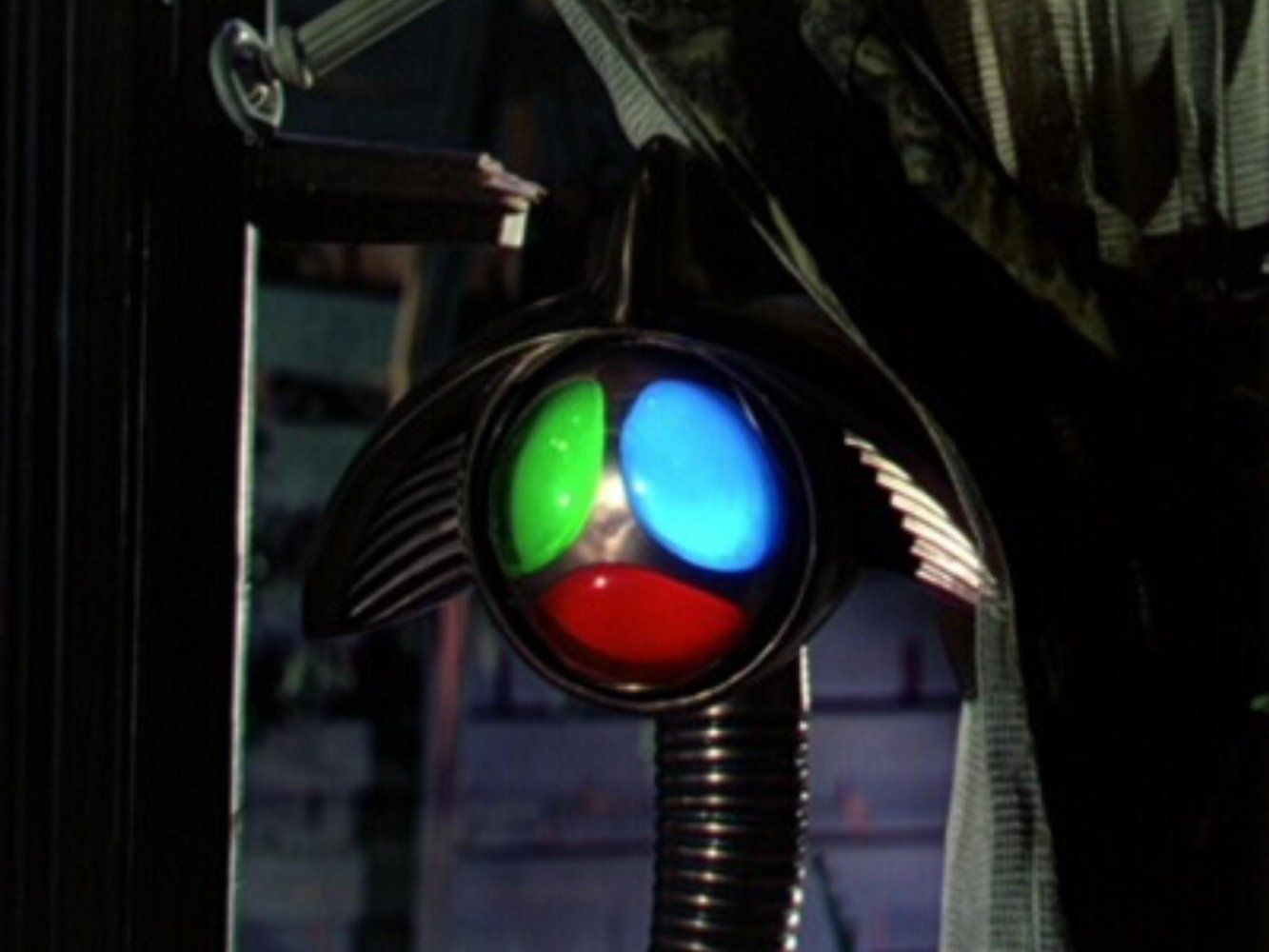
Earlier today, when I saw that Lisa had posted a video of the infamous 1938 radio version of The War of the Worlds, it brought back memories of how much the first film version of War of the Worlds freaked me out.

I can’t remember how old I was when I first saw the 1953 version of War of the Worlds.  I think I must have been 10 or maybe 11.  I could have even been 9, I’m not sure.  I came across the original War of the Worlds at Blockbuster and begged my Dad to rent it for me because, back then, I was into anything that looked like it involved an alien invasion.  I watched it that night and I have no shame in admitting that it totally freaked me out.

I knew that the aliens were the bad guys but nothing prepared me for the scene where the three men approached the alien ship while waving a white flag and shouting that they came in peace.  The Martians took one look at them and…

And then there was the scene where the priest approached the aliens while reciting the Lord’s Prayer.  The Martians took one look at him and…

Today, everyone makes jokes about the scene where the military tries to nuke the aliens and then casually brushes the nuclear fallout off of their jackets.  Yes, that’s definitely not something that you want to try in real life but, when I first saw the movie, the only thing registered with me was that they dropped the greatest weapon known to man on the aliens and…

IT DIDN’T WORK!

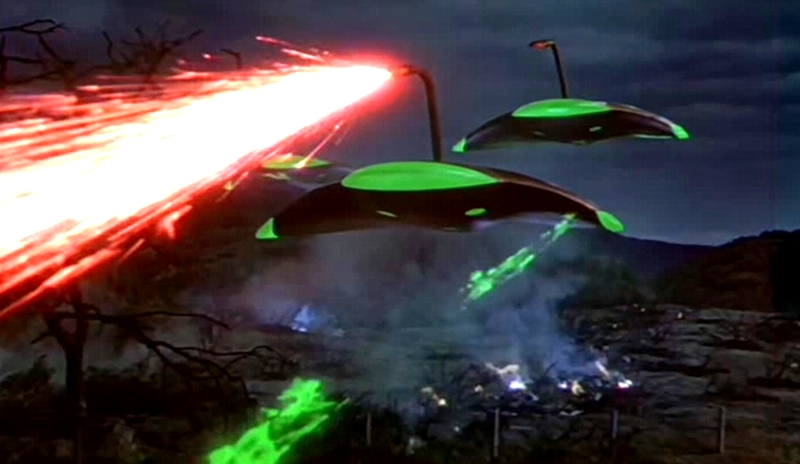
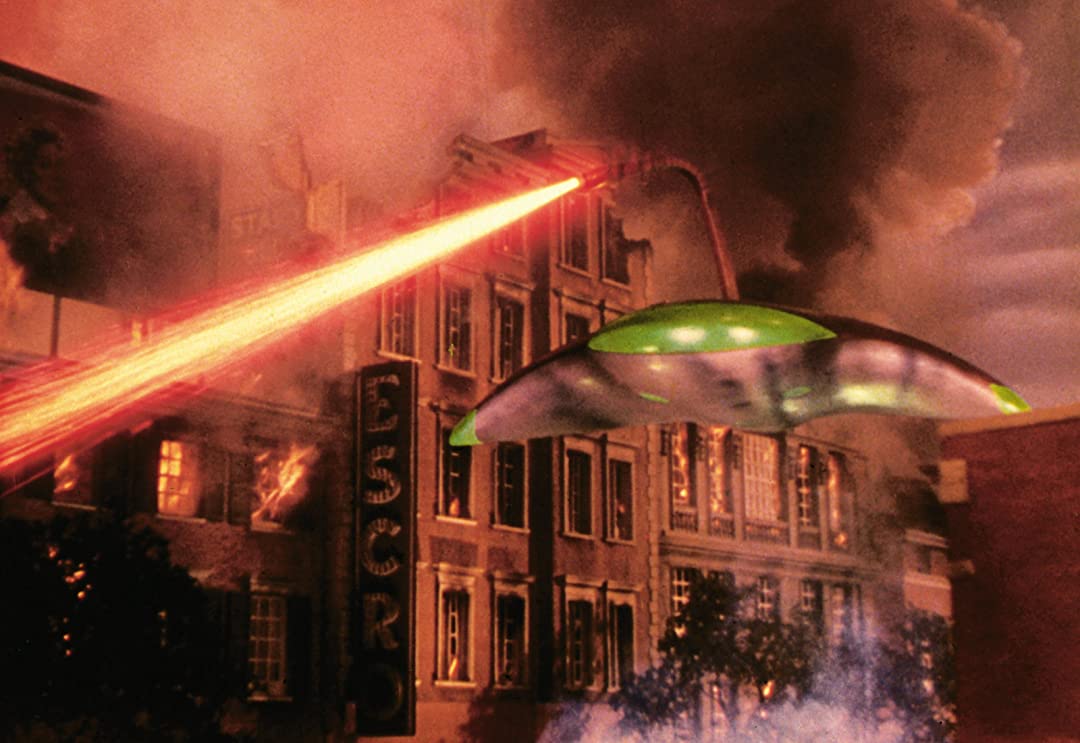
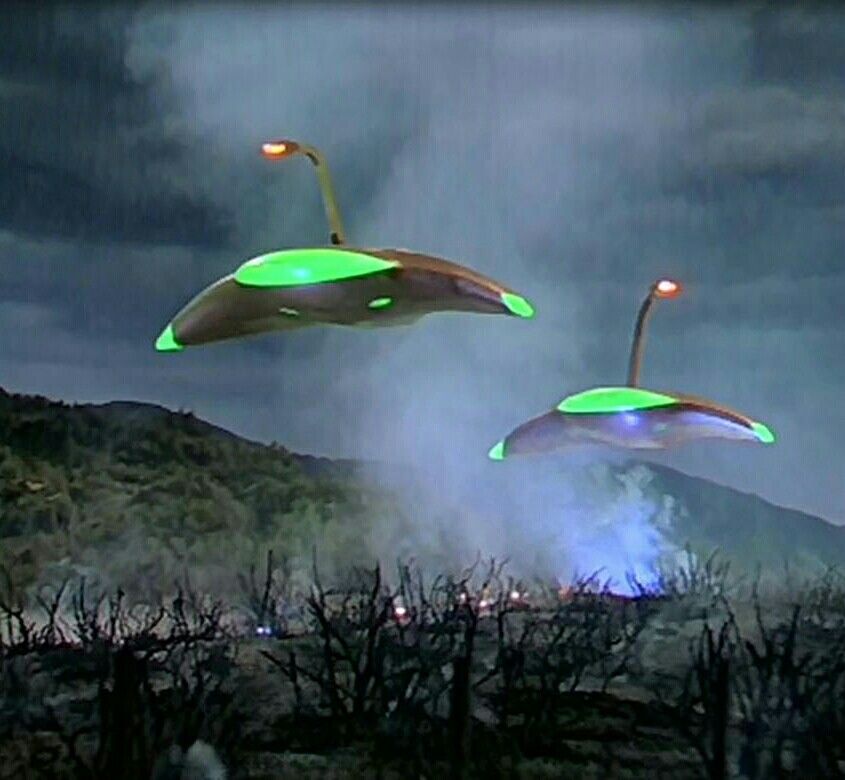
When the Martians attacked all of the great cities of the world, they destroyed every famous landmark that they saw and they set the template for every Roland Emmerich film that would follow.  But for me, all that mattered was that they destroyed London, the city that I was looking forward to visiting in the summer.

Another scene that people tend to poke fun at is everyone gathering in the church and praying.  H.G. Wells was a noted skeptic when it came to religion so he probably would not have cared for that scene.  But when I first watched the movie, that didn’t matter.  What mattered was that the world was on fire and the only thing that could stop the aliens were germs.  Mankind’s weapons were useless.  We were doomed.  In the end, only nature could save the world.

I’ve rewatched War of the Worlds several times since then and it holds up well.  It may no longer freak me out but it still gets to me every time.  It’s still one of the best alien invasion films ever made and it still gets to me whenever I hear, “Everyone knows what a white flag means!”  No, they don’t.

Actually, I might have to watch it again, tonight.

Happy Halloween, readers!

Welcome To Silent Hill


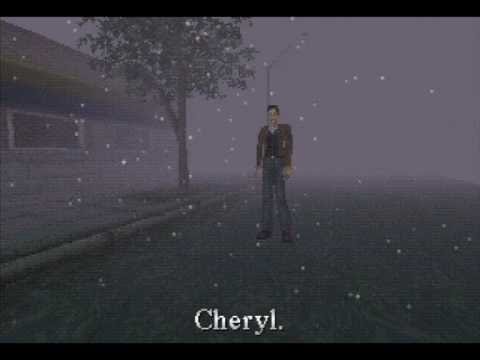
Instead of reviewing an IF game today, I decided to instead share what I consider to be one of the greatest video game opening scenes of all time.

I know people who still play Silent Hill just for the opening alone.  Though it may look primitive compared to what we’re used to today, this game really blew everyone’s mind when it first came out in 1999.  This is the game that showed a generation just how good a game could be.  The opening not only set the mood but also let us know that there was more to Silent Hill than just walking down streets and shooting monsters.  This was a game that told a comple story.  That’s something that we take for granted now but, at the time, Silent Hill was revolutionary.

The score was composed by Akira Yamaoka.  He was influenced by Angelo Badalamenti’s work for David Lynch.

Happy Halloween!  I’ve really enjoyed participating in this year’s Horrorthon and I look forward to doing it all over again next year!

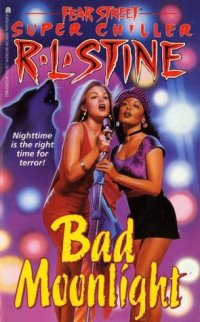
Horror Novel Review: Bad Moonlight by R. L. Stine


Before I say anything else, I have a confession to make.  I read this book really quickly.  I mean, I basically sat down, and skimmed over every page and didn’t write out a single note about the book.

Why was I reading it so quickly?  Bad Moonlight is a book that I ordered off of Amazon last month with the intention of reviewing it for October but then I changed my mind.  As often happens, I ended up running behind and, with Halloween approaching, I decided to set aside all of the Stine books that I hadn’t yet read and reviewed because I wanted to review a different (and, to be perfectly honest, adult) horror novel for Halloween.

Unfortunately, the book that I was planning on reivewing turned out to be really bad, despite the fact that it was co-written by one of my favorite filmmakers.  I didn’t feel like getting all negative on Halloween, especially when it would involve being negative about a filmmaker who I adore and who is no longer with us and whose legacy pretty much defines modern horror.  So I decided to put off reviewing that book (I’ll write about it in November).  Needing something for today, I grabbed R.L. Stine’s Bad Moonlight and I quickly read it.  Fortunately, R.L. Stine wrote books that are pretty much designed to be a quick read.

Bad Moonlight was first published in 1994.  It tells the story of Danielle.  Danielle is 18 but, in a rather creepy aside, we’re told that she looks like she’s closer to 12 because she’s not as developed as the typical 18 year-old.  She’s the lead singer in a band.  The band’s struggling but at least they have a totally hot roadie named Kit.  Anyway, one night, Danielle is inspired to write a song called Bad Moonlight and then she bites Kit’s lower lip until it bleeds.  The band’s fans love the new song and Danielle goes onto write several other songs that all deal with moonlight.  She also writes a song that may or may not be about the death of Joey, “the sound guy.”  Joey was murdered but who killed him?  Everyone thinks it was Danielle, mostly because Danielle is always having these weird hallucinations.  Since this is a Stine book, Danielle is also an orphan with a mysterious background.  She lives with her Aunt Margaret and she sees a psychiatrist named Dr. Moore.  Dr. Moore likes to hypnotize her.  That’s never a good sign.

Anyway, you can probably guess, just based on the title, that this book has to do with werewolves and a big conspiracy to make Danielle into a werewolf bride.  It’s actually kind of a fun book, because you can tell that Stine actually wanted to focus on all of the band melodrama but, because he’s R. L. Stine, he also had to toss in a bunch of werewolves.  The effort to bring the band drama and the werewolf mythos together is a valiant one and it kind of comes out of nowhere and you have to appreciate just how weird Stine allows things to get.  It’s an entertainingly silly book.

If nothing else, it shows how strange the world can look when it’s illuminated by …. BAD MOONLIGHT!

From 1938: Orson Welles and The Mercury Theater Present Dracula!


Did you know that in 1938, the same year that they horrified America with their production of The War Of The Worlds, Orson Welles and the Mercury Theater did a radio version of Dracula?

Check out this amazing cast list:

Orson Welles – Dracula/Dr. Arthur Seward
George Coulouris- Jonathan Harker
Ray Collins – Russian Captain
Karl Swenson – The Mate
Elizabeth Fuller – Lucy Westenra
Martin Gabel – Professor Van Helsing
Agnes Moorehead – Mina Harker

Coulouris, Collins, and Moorehead would, of course, all go one to appear with Orson Welles in Citizen Kane.

And now, we are proud to present, for your listening pleasure …. DRACULA!