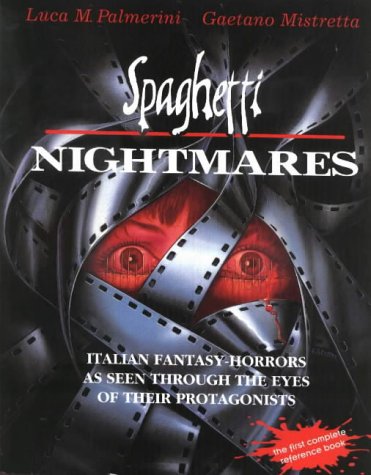
If you answered yes, Spaghetti Nightmares is a book that you simply must own. Actually, you probably already do own it. You’re probably looking at it sitting on your book shelf right now. And you’re thinking, “Gee, thanks Lisa. Maybe next you’ll tell me that giallo is named after the cheap yellow paper that thriller novels were published on in Italy and then you’ll really blow my mind!”
Okay, well fine. Make me feel bad. That’s okay. I hope you’re proud of yourself. It’s a pretty good thing that we both love Italian horror because, if we didn’t, I’d probably never speak to you again….
Anyway, just in case you don’t own this book, you really should. First published in 1996, Spaghetti Nightmares is a collection of interviews with some of the top figures in Italian horror. Michele Soavi, Dario Argento, Ruggero Deodato, David Warbeck, Umberto Lenzi, Lamberto Bava, Luigi Cozzi. Antonio Margheriti, and many more answer questions about their careers, their artistic visions, and their feelings about the future and the past of the Italian film industry. What makes this volume special is that it was written at a time when Italian horror was just starting to be appreciated. So, the questions and the answers are a bit more honest than they probably would be now that everyone is a confirmed Italian horror fan.
This book also features what I believe was Lucio Fulci’s final interview before he passed away. He describes himself as being Italian cinema’s “last zombie” and displays a strong knowledge of cinematic history. Unlike some of the directors interviewed, who come across as being competent (if charming) craftsmen, Fulci comes across as being a true artist. The interview with Michele Soavi is also poignant as he would soon abandon filmmaking to take care of his son. (Fortunately, he has since returned.)
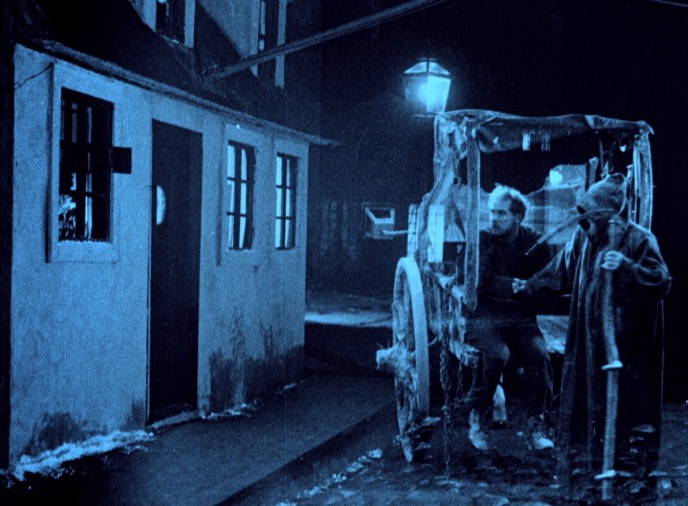
In this 1921 silent film from Sweden, Sister Edit (Astrid Holm) is dying on New Year’s Eve. She has tuberculosis, an illness that was once as common and as feared as COVID is today. Knowing that she doesn’t have long to live and that she probably won’t even make it through the night, she makes one last request. She wants to talk to David Holm (played by the film’s director Victor Sjostrom).
This request shocks everyone because David Holm is known for being a petty criminal and a notorious drunkard. As if to the prove their point, David is spending New Year’s Eve in a cemetery, getting drunk with two friends of his. He tells his friends about a legend that the last person to die on New Year’s Eve is cursed to spend the next year driving death’s carriage and collecting souls. David is obsessed with this legend because, last year, his best friend Georges died right before the clock turned twelve.
Believe it or not, David is actually right. Georges (Tore Svennberg) is currently steering his phantom carriage through the streets of the city, stopping to collect the souls of the recently departed. It’s not a job that Georges wants but it’s one that he’s destined to do until the end of the night. Once a new year begins, someone will take Georges’s place.
When a fight breaks out at the cemetery, David is struck over the head with a bottle, just as the clock strikes midnight. Georges promptly appears. It looks like David has a new job but, before he can get started, he has to deal with both Sister Edit’s request and his guilt over the collapse of his marriage to the tragic Anna (Hilda Borgström). Anna is now near death herself, struck down by the same disease that is killing Sister Edit, a disease that was quite possibly given to both of them by David himself. (It’s easy to imagine someone making a modern version of this film, with COVID replacing the consumption.)
When one hears that The Phantom Carriage is a Swedish film about death, one can probably be excused from thinking, “Aren’t all of them?” And it is true that Ingmar Bergman regularly cited The Phantom Carriage as being a huge influence on his own films, especially The Seventh Seal. And yet, to say that either The Phantom Carriage or The Seventh Seal are solely about death is to do a disservice to both films. The Phantom Carriage is about many things; love, guilt, regret, addiction, destiny, and the promise of redemption. In the end, it’s a film about life. After he’s struck on the head, David reflects on the life that led him to that moment and, finally, he sees how his life not only effected the lives of so many others but how their lives effected his own. It’s only after he’s hit on the head with that bottle and he rides the phantom carriage that he understands what the life he had was truly about.
Of course, for most people, the main appeal of the film will be viewing the ghostly carriage as it moves, unseen by the living, through the streets of the city. The film’s supernatural effects were captured through the use of double exposures, which may sound simple today but which was a very new technique way back in 1921. The images of the transparent ghosts and the carriage making is way through the living remain haunting. There’s a real sense of melancholy that runs through this film, an atmosphere of loss and regret that, a hundred years later, is still effective. It’s a film that plays out like a dream of life and death, light and darkness.
For a film that was released in the early (some would say primitive) years of narrative cinema, The Phantom Carriage holds up remarkably well. Though the film has its overly sentimental and melodramatic moments (it is, after all, a silent movie), the sight of that carriage continues to be hauntingly sad and beautiful.
4 Shots From 4 Films is just what it says it is, 4 shots from 4 of our favorite films. As opposed to the reviews and recaps that we usually post, 4 Shots From 4 Films lets the visuals do the talking!
Yesterday, we paid tribute to the great Canadian director, David Cronenberg. Today, we pay tribute to another filmmaker who got his start in Canada. Though born in America, Clark spent most his career up north. Though he’s today best remembered for directing the holiday classic, A Christmas Story, Clark started his career as a horror director. In fact, long before telling the story of Ralphie and his BB gun, Clark directed one of the first Christmas slasher films.
Today, we honor the legacy of Bob Clark with….
4 Shots From 4 Bob Clark Films
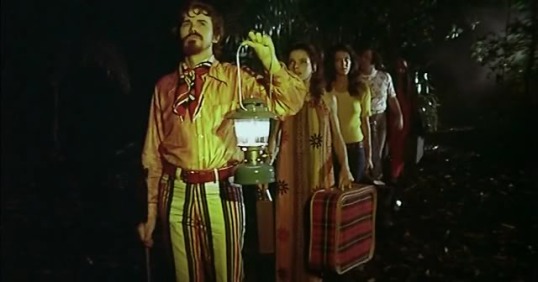
Children Shouldn’t Play With Dead Things (1972, dir by Bob Clark, DP: Jack McGowan)
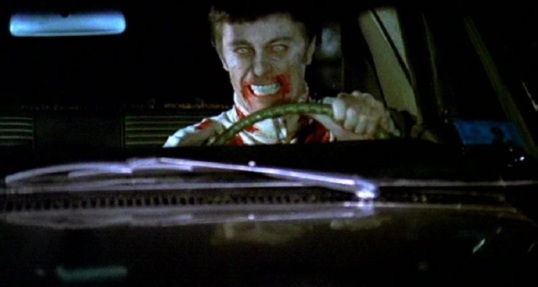
Deathdream (1974, dir by Bob Clark, DP: Jack McGowan)
Black Christmas (1974, dir by Bob Clark, DP: Reginald H. Morris)
Murder By Decree (1979, dir by Bob Clark, DP: Reginald H. Morris)
It will always fascinate me that Stephen King, one of the most popular writers in the world and one of the legitimate masters of horror, also has one of the least inspiring accounts on twitter.
Seriously, he may be the most popular author in the world but he tweets like a retiree who has just discovered the internet. Go over to his twitter account and you won’t find memorable descriptions of small town hypocrisy. You won’t find scenes of shocking psychological insight. You won’t find moments of unexpected but laugh-out-loud dark humor. Instead, you’ll find a combination of dad jokes, boomer nostalgia, and an unseemly obsession with wishing death on any public figure who is to the right of Bernie Sanders. It’s odd because no one can deny that King’s a good storyteller. At his best, Stephen King is responsible for some of the best horror novels ever written. Everyone who is a horror fan owes him a debt of gratitude for the work that he’s done promoting the genre. At his worst, he’s your uncle who retweets the article without reading it first.
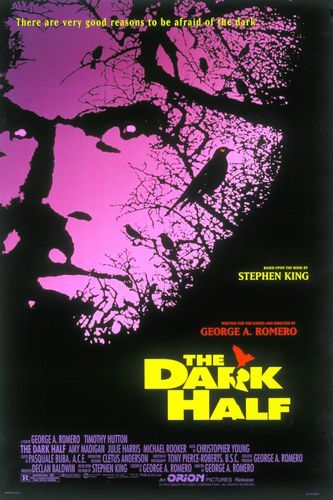
Of course, someone can be great at one thing an terrible at something else. I can dance but I certainly can’t sing. Stephen King can write a best seller but a good tweet is beyond him. That’s the dual nature of existence, I suppose. That’s certainly one of the themes at the heart of both Stephen King’s The Dark Half and the subsequent film adaptation from George Romero.
Filmed in 1990 but not released for three years due to the bankruptcy of the studio that produced it, The Dark Half tells the story of Thad Beaumont and George Stark (both played by Timothy Hutton). Thad is a professor who writes “serious” literature under his real name and violent, pulpy fiction under the name of George Stark. No one reads Thad’s books but they love George Stark and his stories about the master criminal and assassin, Alexis Machine. (Alexis Machine? George Stark may be a good writer but he sucks at coming up with names.) After a demented fan (played, with creepy intensity, by Robert Joy) attempts to blackmail him by threatening to reveal that he’s George Stark, Thad decides to go public on his own. His agent even arranges for a fake funeral so that Thad can bury George once and for all.
Soon, however, Thad’s associates are turning up dead. It seems as if everyone associated with the funeral is now being targeted. Sheriff Alan Pangborn (Michael Rooker) suspects that Thad is the murderer. However, the murderer is actually George Stark, who has come to life and is seeking revenge. Of course, George has more problems than just being buried. His body is decaying and he’s got a bunch of angry sparrows after him. The Sparrows Are Flying Again, we’re told over and over. Seeking to cure his affliction and to get those birds to leave him alone, Stark targets Thad’s wife (Amy Madigan) and their children.
The Dark Half has its moments, as I think we would expect of any film based on a Stephen King novel and directed by George Stark. Some of the deaths are memorably nasty. Hutton is believably neurotic as Thad and cartoonishly evil as Stark and, in both cases, it works well. Rooker may be an unconventional pick for the role but he does a good job as Pangborn and Amy Madigan brings some unexpected energy to the thankless role of being the threatened wife.
But, in the end, The Dark Half never really seems to live up to its potential. In the book, Thad was a recovering alcoholic and it was obvious that George Stark was a metaphor for Thad’s addiction. That element is largely abandoned in the movie and, as a result, George goes from being the literal representation of Thad’s demons to just being another overly loquacious movie serial killer. Despite having a few creepy scenes, the film itself is never as disturbing as it should be. For all the blood, the horror still feels a bit watered down. Take away the sparrows and this could just as easily be a straight-forward action film where the hero has to rescue his family from a smug kidnapper. Comparing this film to Romero’s Martinis all the proof you need that Romero was best-served by working outside the mainstream than by trying to be a part of it.
Add to that, I got sick of the sparrows. Yes, both the film and the book explain why the sparrows are important but “The Sparrows Are Flying Again” almost sounds like something you’d find in something written in a deliberate attempt to parody King’s style. It’s a phrase that’s intriguingly enigmatic the first time that you hear it, annoying the third time, and boring the fifth time.
The Dark Half was a bit of a disappointment but that’s okay. For King fans, there will always be Carrie. (I would probably watch The Shining but apparently, King still hasn’t forgiven Stanley Kubrick for improving on the novel.) And, for us Romero fans, we’ll always have Night of the Living Dead, Martin, Dawn of the Dead, and the original Crazies. And, for fans of George Stark, I’m sure someone else will pick up the story of Alexis Machine. It’s hard to keep a good character down.
From the directors of Ready or Not comes yet another chapter in Wes Craven’s Scream series. I’ll admit I’m liking the cast in this one. We have Melissa Barerra (In the Heights), Jenna Ortega (Yes Day), Dylan Minnette (30 Reasons Why), Jack Quaid (The Boys), Marley Shelton (Planet Terror), Kyle Gallner (Jennifer’s Body), and Mikey Madison (Once Upon a Time…In Hollywood)
Then you have the returning cast, which includes Neve Campbell, Courtney Cox and David Arquette. Most importantly, it appears that Roger L. Jackson is voicing the Ghostface again! On a side note, Jackson was also responsible for Mojo Jojo’s voice in The Powerpuff Girls. (“Curses!”)
January movies don’t always do very well, but we’ll see what happens with this one.
The Cabinet of Dr. Caligari is a film that I’ve shared four times previously on the Shattered Lens. The first time was in 2011 and then I shared it again in 2014, 2015, 2016, 2017, 2018, 2019, and 2020! Well, you know what? I’m sharing it again because it’s a classic, it’s Halloween, and everyone should see it! (And let’s face it — it’s entirely possible that some of the people reading this post right now didn’t even know this site existed in any of those previous years. Why should they be deprived of Caligari just because they only now arrived?)
Released in 1920, the German film The Cabinet of Dr. Caligari is one of those films that we’ve all heard about but far too few of us have actually seen. Like most silent films, it requires some patience and a willingess to adapt to the narrative convictions of an earlier time. However, for those of us who love horror cinema, The Cabinet of Dr. Caligari remains required viewing. Not only did it introduce the concept of the twist ending (M. Night Shyamalan owes his career to this film) but it also helped to introduce German expressionism to the cinematic world.
My initial reaction to The Cabinet of Dr. Caligari was that it simply wasn’t that scary. It was certainly interesting to watch and I was happy that I was finally experiencing this film that I had previously only read about. However, the film itself was obviously primitive and it was difficult for my mind (which takes CGI for granted) to adjust to watching a silent film. I didn’t regret watching the film but I’d be lying (much like a first-year film student) if I said that I truly appreciated it after my first viewing.
But you know what? Despite my dismissive initial reaction, the film stayed with me. Whereas most modern films fade from the memory about 30 minutes after the end credits,The Cabinet of Dr. Caligari has stuck with me and the night after I watched it, I even had a nightmare in which Dr. Caligari was trying to break into my apartment. Yes, Dr. Caligari looked a little bit silly staring through my bedroom window but it still caused me to wake up with my heart about to explode out of my chest.
In short, The Cabinet of Dr. Caligari passes the most important test that a horror film can pass. It sticks with you even after it’s over.
For the curious with an open mind to watch with, here is Robert Wiene’s The Cabinet of Dr. Caligari!
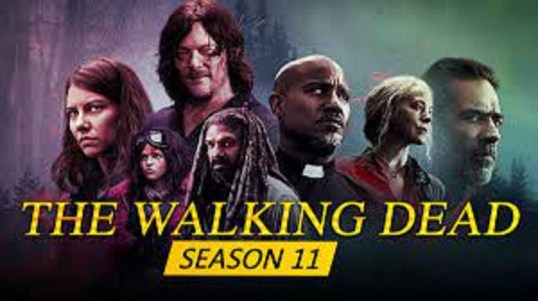
The first third of The Walking Dead‘s final season came to a conclusion on Sunday night with For Blood. With the Alexandrians trying to figure out how to protect their community from a combination of bad weather, shoddy craftsmanship, and walkers gathering at the wall, Maggie launched her assault on Meridian.
Considering that it was the first finale of the final season, it was a surprisingly low-key episode. The majority of the running time was taken up with Darryl, Leah, and Pope watching Maggie, Negan, and the walkers they had culled approaching Meridian. When Pope revealed a willingness to sacrifice Reaper lives, Leah killed him and then took over the Reapers herself. Darryl revealed to her that he was a double agent. Leah proceeded to start shooting fireworks at the invaders and, as the episode ended, it looked like a rocket was heading straight for Maggie.
It was simple but it was effective. I liked it. In the past, talky episodes like this one have driven me crazy but, in this episode, all of the talking actually advanced the story. We learned more about Pope. We learned more about Leah. We even learned a little bit more about Darryl, a testament to the fact that Norman Reedus has managed to keep the character fresh for 11 seasons.
The highpoint of the episode, not surprisingly, was the death of Pope. Personally, I’m happy to have Pope out of there. Pope always came across as being a less effective but somehow even more longwinded version of Negan and it was hard to take the Reapers seriously as long as he was in charge. It was like finding out that a town’s most fearsome gang was led by someone who played Dungeons and Dragons every weekend. I was seriously dreading the prospect of having to spend this entire season with Pope as the main villain. But now, Pope is dead and Leah is in charge and Leah seems as if she’ll be a much more worthy adversary. Certainly, her relationship with Daryl adds a new element to her battle with the Alexandrians.
Darryl tried to convince Leah to join the Alexandrians. Leah, instead, starting shooting fireworks at Maggie. My hope is that Maggie will duck out of the way but still, this episode dealt with something that I think is too often ignored on The Walking Dead. Not everyone wants to be a member of Alexandria. That was something that Rick Grimes never quite understood and I think it’s also something that Maggie needs to learn. Just because the world has changed, that doesn’t mean that people don’t want to find their own community. Some people just aren’t going to want to embrace the Alexandrian way of life, which is something Rick, in his attempts to nation build, often missed
It was a good episode. I look forward to seeing what happens when the show returns next year. I’m looking forward to seeing what else is going to happen with the Commonwealth. I’m definitely looking forward to the moment when Maggie and Negan realize that they’re in love. (Sorry, Glenn. But, that’s just the way of the world.) I’m looking forward to Gabriel’s inevitable sacrifice. (Seriously, Gabriel is so obviously doomed.) I’m looking forward to Darryl and Carol going off to have adventures in their own spin-off. And I’m looking forward to seeing what Leah can do with The Reapers.
If you have told me last year, at this time, that I’d be looking forward to the return of The Walking Dead, I would have given you one of my epic eye rolls. But these past few episodes have won me over. Here’s hoping the rest of the season lives up to the potential of the first third.
Not only where they murdered in their sleep by a junkie loser who also happened to be a member of the family but, for the past five decades, their names have been slandered in a countless number of Amityville books and films. The house’s subsequent owner, George Lutz, realized that he could make a fortune by claiming that the murder house was haunted by a demon and, working with an author named Jay Anson, he did just that. Anson’s book, The Amityville Horror, was published in 1977. The first film version was released in 1979. Since then, there have been over 20 Amityville films, the majority of which feature reenactments of the DeFeo murders and all of which let Ronald DeFeo, Jr. off the hook by suggesting that it was the supernatural that led to the murders as opposed to a raging heroin habit.
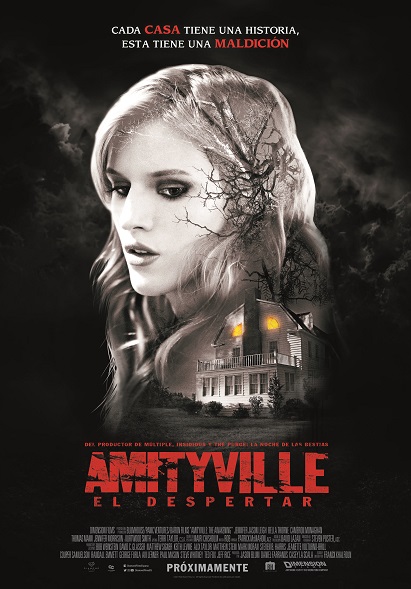
With so many different films having been made by so many different directors and companies, it’s next to impossible to maintain any sort of consistent continuity from film to film. 2017’s Amityville: The Awakening acknowledges this in the most meta way possible by having the film’s lead character, Belle (played by Bella Thorne), watch the original film with two of her friends while discussing all of the sequels. In the world of Amityville: The Awakening, the films exist and the house is both famous and infamous. And yet, people still voluntarily live there.
The latest inhabitants are Joan (Jennifer Jason Leigh) and her three children, Belle, Juliet (McKenna Grace), and James (Cameron Monaghan). James is on life support after having been paralyzed in an accident and Joan is fanatically devoted to him. Though Dr. Milton (Kurtwood Smith) says that there’s no chance of James ever recovering and that he’s probably brain dead, Joan remains convinced that James will someday come back again. As she explains at one point, she’s abandoned her faith in God but she still has faith that there will be a way for James to recover.
No sooner has the family moved in then all of the typical Amityville stuff starts happening. Flies start buzzing around. The dog doesn’t want to be in the house. Juliet starts talking to people who aren’t there. One night, James flatlines but, after being dead for several minutes, his heart suddenly starts to beat again. Suddenly, James is showing indications that, though paralyzed and unable to speak, he is aware of his surroundings. Joan is convinced that James is recovering but is it possible that something else is happening?
If I may take the risk of damning with faint praise, Amityville: The Awakening is not bad for an Amityville film. Yes, you do have to wonder why the house has never been torn down and yes, I’m as bored with the big Amityville flies as anyone else. And the scenes where the characters discuss the DeFeo murders are icky and unethical as Hell. But, with all that in mind, this is actually one of the better-made Amityville films. Director Franck Khalfoun was also responsible for the better-than-it-had-any-right-to-be remake of Maniacand he brings a lot of energy to his direction here. He’s smart enough to realize that the audience is going to automatically roll their eyes at yet another Amityville film and he often rolls his eyes with them. As a result, we get some deserved digs at the shoddiness of the other films. Khalfoun is also smart enough to understand that Bella Thorne is more effective as a personality than an actress and, as such, the character of Belle is carefully developed to fit with Thorne’s public image. Jennifer Jason Leigh, on the other hand, is such a good actress that she actually brings some unexpected depth to the role of Joan and the film as a whole.
Amityville: The Awakening is one of the better Amityville films. You still have to wonder why that house is still standing, though. Seriously, tear it down already.




 Through the Shattered Lens