6 Shots From 6 Horror Films: 2002 — 2004


4 Or More Shots From 4 Or More Films is just what it says it is, 4 shots from 4 of our favorite films. As opposed to the reviews and recaps that we usually post, 4 Shots From 4 Films lets the visuals do the talking!

This October, I’m going to be doing something a little bit different with my contribution to 4 (or more) Shots From 4 (or more) Films.  I’m going to be taking a little chronological tour of the history of horror cinema, moving from decade to decade.

Today, we take a look at 2002, 2003, and 2004!

6 Shots From 6 Horror Films: 2002 — 2004

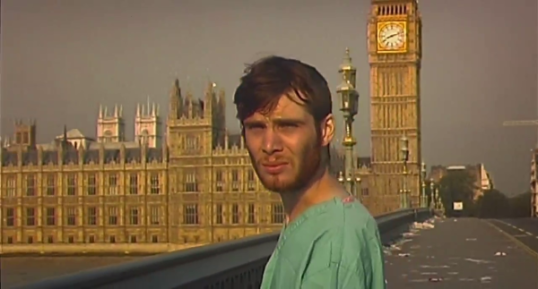
28 Days Later (2002, dir by Danny Boyle, DP: Anthony Dod Mantle)

The Ring (2002, dir by Gore Verbinski, DP: Bojan Bazelli)

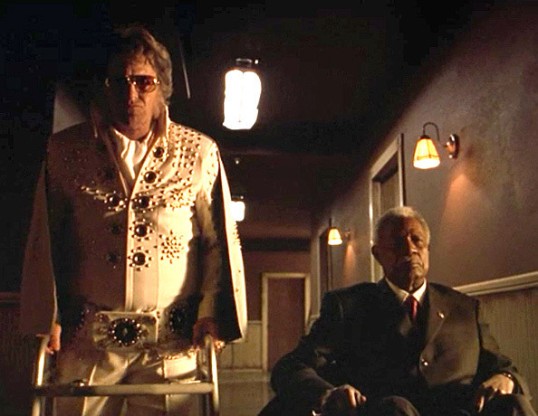
Bubba Ho-Tep (2002, dir by Don Coscarelli, DP: Adam Janeiro)

House of 1,000 Corpses (2003, dir by Rob Zombie, DP: Alex Poppas, Tom Richmond)

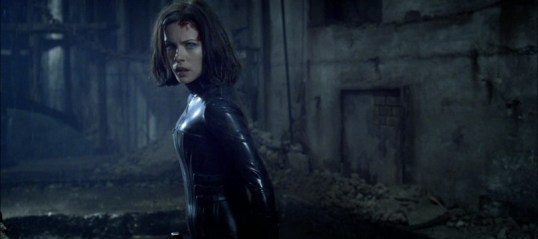
Underworld (2003, dir by Len Wiseman, DP: Tony Pierce-Roberts)

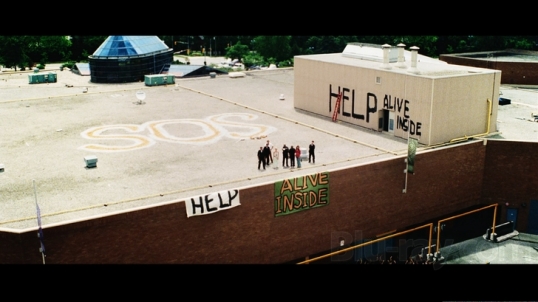
Dawn of the Dead (2004, dir by Zack Snyder, DP; Matthew F. Leonetti)

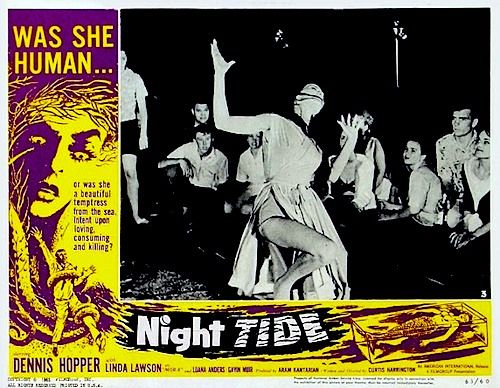
Horror Film Review: Night Tide (dir by Curtis Harrington)


Long before he became Hollywood’s favorite quirky character actor, Dennis Hopper was a young performer who was known for his devotion to the method and for being more than a little difficult. In fact, directors like Henry Hathaway had gotten so frustrated with Hopper and his refusal to “compromise his art,” that, by the time the 1960s rolled around, Hopper had gone from being a promising young star to being virtually blacklisted.  He had gone from scene-stealing turns in Rebel Without a Cause and Giant to struggling to get anyone at the major studios to even admit to knowing who he was.

Unable to get a job on a mainstream film, Hopper teamed up with another unconventional talent, director Curtis Harrington. A film critic-turned-experimental filmmaker, Harrington was talented but, like Hopper, he had a reputation for being an eccentric.  An openly gay artist who was living and working a time when that was still a crime in some states, Harrington gravitated to other outsiders so it was perhaps inevitable that he and Dennis Hopper would become early collaborators and make a film together.

That film was 1961’s Night Tide. Harrington directed while Hopper played Johnny, a naïve young sailor who, while in on leave in Santa Monica, meets a mysterious woman named Mora (Linda Lawson). Mora works as a mermaid at a sideshow. Her boss is the overly possessive and somewhat brutish Captain Samuel Murdock (Gavin Muir). Captain Murdock makes it clear that he doesn’t want Johnny to have anything to do with Mora. Is it because he’s worried about losing Mora or is there another, more supernatural reason?

Johnny hears rumors that the men who fall in love with Mora tend to disappear. Mora, herself, explains that she’s a Siren. Her destiny is to lead sailors to their doom. Johnny tells her that’s ridiculous but what if she’s right?

It’s a strange film, one that moves at its own slow and rather deliberate pace. As Mora, Linda Lawson delivers her lines hesitantly, as one might expect from someone who is having to pretend to be a human being. Meanwhile, Dennis Hopper gives a compelling but nervous performance as Johnny. As written, Johnny is a pretty bland character but Hopper plays up Johnny’s sense of isolation. He’s far from home, he doesn’t know many people in town, and the woman he loves just explained that she’s a sea monster. One can understand why Johnny is a bit jumpy. There’s a few scenes where Hopper’s devotion to the method works against him. He’s convincing when he’s at the center of the scene but a bit too fidgety in the scenes where he just has to listen to other people speak. But, ultimately, Hopper’s performance works. He plays Johnny with a mix of fresh-faced innocence and hints of instability.

As I said, it’s not a conventional film. It moves at its own dream-like pace. The film was shot in black-and-white and that’s the version to see. Avoid the colorized version, in which the colors are so garish that they ruin the film’s surreal atmosphere. Night Tide is an experiment that won’t be for everyone but, when taken on its terms, it’s definitely intriguing.

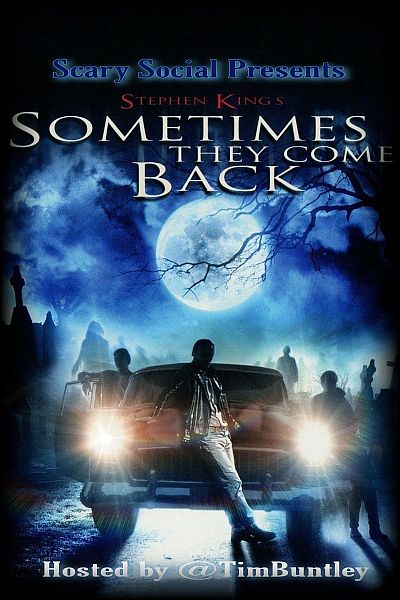
Live Tweet Alert: Watch Sometimes They Come Back with #ScarySocial


As some of our regular readers undoubtedly know, I am involved in a few weekly live tweets on twitter.  I host #FridayNightFlix every Friday, I co-host #ScarySocial on Saturday, and I am one of the five hosts of #MondayActionMovie!  Every week, we get together.  We watch a movie.  We tweet our way through it.

Tonight, for #ScarySocial, Tim Buntley will be hosting 1991’s Sometimes They Come Back!

In this adaptation of a Stephen King short story, the dead refuse to stay dead!

If you want to join us on Saturday night, just hop onto twitter, start the film at 9 pm et, and use the #ScarySocial hashtag!  The film is available on Prime.  I’ll be there co-hosting and I imagine some other members of the TSL Crew will be there as well.  It’s a friendly group and welcoming of newcomers so don’t be shy.

Horror on the Lens: Faust (dir by F.W. Murnau)


Today’s Horror on the Lens is a silent German film from 1926. Based on the legend of the alchemist who sold his soul to the Devil, Faust was dismissed by European critics when it was initially released but it has since been recognized as one of the greatest cinematic examples of German Expressionism.

It was after directing this film that Murnau traveled to Hollywood and directed his masterpice, Sunrise: A Story of Two Humans. (Murnau was also responsible, many years earlier, for directing Nosferatu.) The role of Fasut was played by Swedish actor Gosta Ekman, who tragically developed an addiction to cocaine while making the film and who would die as a result in 1938. Playing the role of Mephisto is German actor Emil Jannings, who would later go to win the very first Academy Award for Best Actor. Unfortunately, with the advent of sound, Jannings — who had no interest in learning English — returned to Germany and, after making some classic films with Marlene Dietrich, spent the rest of his career appearing in Nazi propaganda films. Whether or not Jannings was a committed Nazi or just an opportunist remains a point of contention but it’s still undoubtedly not the career path that one would hope for one of the very first Oscar winners.

Here is Faust:

Horror on TV: Circle of Fear 1.21 “The Ghost of Potter’s Field” (dir by Don McDougall)


While doing research for a story at Potter’s Field, a reporter (Tab Hunter) sees a stranger who looks much like him.  At first, the reporter thinks that it’s a coincidence but then the reporter starts to run into the stranger everywhere.  His friends think that he’s getting upset over nothing.  His girlfriend thinks that he’s in danger.  The reporter knows that he has to figure out who the stranger is and why he’s haunting him.

The second-to-last episode of Circle of Fear aired on March 23rd, 1973.  Tab Hunter is a bit of a bland hero but the episode still had creepy moments.

Enjoy!

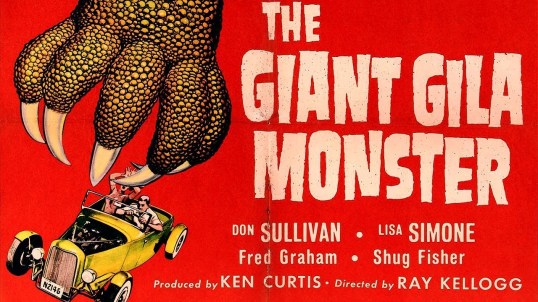
The TSL’s Horror Grindhouse: The Giant Gila Monster (dir by Ray Kellogg)


The 1959 film, The Giant Gila Monster, takes place in a small Texas town, where everyone’s either a drunk, a law enforcement officer, or a teenager who wants to go the sock hop. In fact, the teens are so enthused about the sock hop that it takes them a while to notice that two of their friends are missing! What happened to Pat and Liz!?

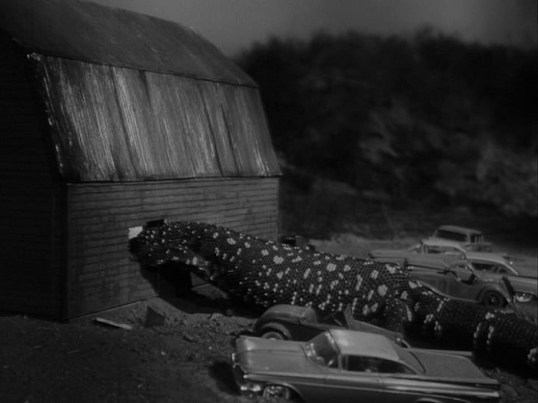
Well, as we already know what happened because we saw it at the start of the film! Pat and Liz were parked at the ravine, making out in Pat’s car, when they fell victim to a giant Gila monster! Though, if we’re going to be honest …. the monster actually isn’t really a Gila monster. It’s just a really big lizard that was filmed wandering over around a miniature set. It moves very slowly and it sticks out its tongue at the camera. It’s a nice looking lizard but it’s no Gila monster. No matter, though! What’s important is that it’s big, it’s dangerous, and it’s making its way towards the town!

Anyway, the teens eventually figure out that their friends have disappeared and they try to appeal to the town’s useless sheriff to help them find them. The sheriff doesn’t really seem to care though. He’s got an entire town of drunks to deal with. So, it looks like the teens are going to have to save the town themselves!

The Giant Gila Monster is a pretty silly film. It’s a little over 70 minutes long and it’s obvious that the majority of the budget was spent on the cars that the various teenagers drive. It was an independent production, made to be sold to drive-ins around the South. Teenagers in 1959 probably watched the film and honked their car horns whenever the monster showed up. The script is bad, the actors are bad, the direction is bad, but you know what isn’t bad? The fake Gila Monster is actually kind of cute. I mean, we’re told that we shouldn’t like it and that it’s responsible for killing a lot of people but who cares? Whenever it shows up, slowly lumbering its way across the countryside, it’s hard not to admire the determination of the Gila Monster. Though the actors often seem to be confused by their dialogue, the lizard is obviously having the time of its life. Go, Lizard, go!

The Giant Gila Monster is one of those independent 50s monster movies that are pretty much impossible to resist. To its credit, the film does have a sense of humor about itself. It is meant to be a comedy, though most of the laughs are unintentional. And, as I said before, vintage car lovers will enjoy seeing some of the roadsters that pop up in this film. Even with all the classic cars, though, the big lizard in the main attraction. It walks around the miniature desert set as if it owns the place. The star is the monster and that’s really the way things should be.

Finally, The Giant Gila Monster was filmed outside of Dallas.  Apparently, the film was funded by none other than Gordon McLendon, who is best-known for founding Dallas’s first talk radio station, KLIF.
A Blast From The Horror Past: Georges Méliès’s The Monster


For today’s blast from the past, we have a film that has often been described as being France’s first horror film.

The Monster is 2-minute silent film from 1903.  Directed by the pioneering French filmmaker, Georges Méliès, The Monster tells the story of an Egyptian prince who brings the dead body of his wife to a sorcerer who apparently likes to hang out in front of The Sphinx.  The sorcerer attempts to bring her back to life and, as so often happens in any film directed by Georges Méliès, things don’t quite go as planned.

In my opinion, this is one of the most charming of Georges Méliès’s surviving films.  From the simple but crudely effective camera trickery to the nicely surreal Sphinx in the background, The Monster is a chaotic delight.

Horror Scenes That I Love: The Diner Scene From Mulholland Drive


From 2001’s Mulholland Drive, here is a scene that literally made me jump the first time I saw it.  Personally, I think this is the scariest moment that David Lynch ever directed.

Book Review: All-Night Party by R.L. Stine


You may remember that, when I reviewed R.L. Stine’s The OvernightI commented that it seemed odd that Fear Lake would have an island sitting in the middle of it and I even wondered if this was a location that Stine used frequently or if it was just something that he randomly tossed into the book.

Well, 1997’s All-Night Party features yet another group of teens spending a long night on Fear Island so I guess that answers my question.  Fear Island is real!  And apparently, it’s a dangerous place.  This is the second book that I’ve read about an act of violence taking place on Fear Island.  Both books not only featured people getting attacked on the island but they also both featured people randomly falling down hills and stuff while walking around the island.  The island is not safe!  Maybe it’s time bulldoze the cabin and build a barrier around the island or something.  Of course, that’ll never happen because that would require too much commitment from the adults of Fear Street.  I’m not all that sure that the parents of Fear Street really care that much about any of their children.  I mean, someone gets murdered every week and yet, no one ever seem to move.  Instead, almost every book seems to start with a new family moving in!  The Shadyside High School yearbook has got to be 75% in remembrance ads.

As for All-Night Party, it’s perhaps the laziest R.L. Stine book that I’ve ever read, which is really saying something when you consider that R.L. Stine wasn’t exactly known for the great care that he put into coming up with his plots and characters.  This is a novel that, for all I know, could have been written by a computer program.

The plot involves a group of teens who decide to throw an all-night party at a cabin on Fear Island.  They’re celebrating Cindy’s birthday.  Cindy is kind of a bitch and after she assures everyone that she hates their presents, she’s murdered in the kitchen.  Who committed the murder?  Was it Patrick, the member of the group who has a big blood stain on his shirt and who keeps getting caught in obvious lies?  Or is the escaped lunatic that Patrick swears is on the island with them?  Or was it someone else in the party, like the seemingly creepy kid who is actually nice and nerdy or maybe the temperamental rebel who has long hair and drives a motorcycle.  This answer is so obvious that it will totally blow your mind when your realize how little effort was put into creating any sort of suspense.

The book feels a rushed and uninspired.  It was published in 1997 and it’s probably not a coincidence that it was one of the last of the original Fear Street books because it’s obvious that either Stine or his ghostwriter were just going through the motions at this point.  To be honest, the solution is so obvious and the plotting is so lazy that I nearly threw the book across the room after I finished with it.

Oh well.  What can you do?  It’s Fear Island.