Horror On The Lens: The Student of Prague (dir by Stellan Rye and Paul Wegener)


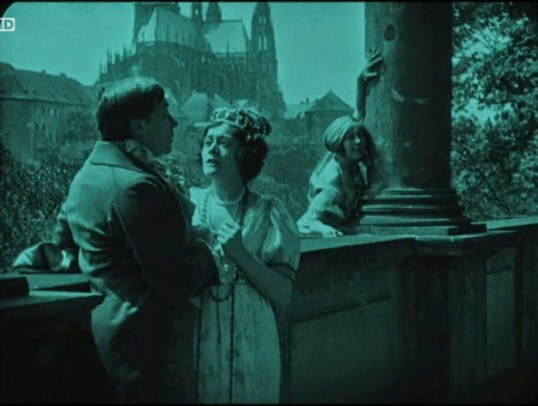
For today’s horror on the lens, we have a film from 1913!  A German adaptation of Edgar Allan Poe’s William Wilson, The Student of Prague is often considered to be the first feature-length horror film.  Featuring Paul Wegener (who also co-directed the film) in the lead role, this is the story of what happens when the popular but poor Balduin attempts to get rich by dealing with the dark arts.  These things never work out well, as Balduin discovers once his reflection steps out of a mirror and goes out of its way to make Balduin’s life difficult.

Of course, to watch the film today, audiences have to adjust both their expectations and the way that they take in and process cinematic storytelling.  As of this writing, The Student of Prague is 109 years old and it’s definitely a film of its time.  The camera largely remains stationary and, from a modern perspective, the film is rather slow-paced.  And yet, the film’s story remains rather intriguing.  Despite the static camera work, the film manages to create and maintain a properly ominous atmosphere and a scene in which Balduin and Margit attempt to meet in a cemetery is effectively creepy.  Paul Wegener’s performance holds up well.  Largely eschewing the overly theatrical acting style that we usually tend to associate with silent cinema, Wegener gives a nuanced and effectively subtle performance as both Balduin and his doppelganger.  When he’s acting opposite of himself, you don’t think about the fact that you’re witnessing an early camera trick.  Instead, Wegener creates two separate but believable versions of the same character.  The doppelganger represents all of Balduin’s undesirable impulses and everything that has kept Balduin from achieving happiness.  By the end of the film, Balduin can’t live with his doppelganger but he can’t live without him as well.

The Student of Prague is an interesting piece of history and one that every true student of horror should watch and learn from at least once.

And here’s your chance!

Enjoy!

Music Video of the Day: The Garden by Guns N’ Roses (1993, directed by Del James)


This was one of the few Guns N’ Roses’s videos to not get heavy play on MTV, perhaps because all of the members of the band appear to be either depressed or under the influence.  Black-and-white shots of the sleaziest parts of New York are mixed with color footage of strippers.  The video makes 1993 New York look so dangerous that it could almost be a Rudy Guiliani campaign commercial.

(Of course, we all know that it wasn’t New Yorkers fear of crime that elected Guiliani.  It was their anger over Yogurt that falsely claimed to be low fat.)

Alice Cooper and the late Shannon Hoon can be heard providing background vocals on this song.

Enjoy!

AMV of the Day: Sunako Nakahara (You’re So Creepy)


As another week comes to a close, it’s time for another AMV of the Day!

Anime: The Wallflower

Song: You’re So Creepy (by Ghost Town)

Creator: Venny (please subscribe to this creator’s channel)

Past AMVs of the Day

Horror on TV: Circle of Fear 1.22 “The Phantom of Herald Square” (dir by James H. Brown)


Tonight, on Circle of Fear, Sheila Larken plays Holly Brown, a young artist who meets and falls madly in love with James Barlow (David Soul).  Unfortunately, this leads to her being harassed by a frightening old man (Victor Jory) and it turns out that James has got a terrible secret of his own.

This melancholy story was the final episode of Circle of Fear, which was cancelled after its first and only season.  This episode makes for a good note for the show to go out on.  It originally aired on March 30th, 1973.

Circle of Fear may be over but Horrorthon continues!  We’ll be back with more televised horror tomorrow!

TSL’s Horror Grindhouse: Queen of Blood (dir by Curtis Harrington)


Queen of Blood (1966, dir by Curtis Harrington, DP: Vilis Lapenieks)

Here’s a question: what happens when Roger Corman buys the rights to two Russian science fiction films, decides to jettison basically everything but the special effects footage, and then hires experimental filmmaker Curtis Harrington to shoot an entirely new film around that footage?

You end up with the 1966 film, Queen of Blood!

Not that that’s a bad thing, mind you. Queen of Blood is actually pretty good and director Harrington manages to smoothly integrate the Russian footage with the new footage. Basically, it works out so that you’ll see a Russian shot of the spaceship taking off or landing and then you’ll see a shot of John Saxon, Dennis Hopper, or Basil Rathbone sitting on a set and pretending like they’re in space.

The film opens with Dr. Faraday (Basil Rathbone) discovering that aliens have been transmitting a message to Earth. They’re sending an ambassador to meet with the Earthlings but the aliens’ spaceship ends up crash landing on Mars! Faraday arranges for an Earth spaceship, the Oceano, to go to Mars and rescue the ambassador.

Aboard the Oceano is a cast made up of a few familiar faces. John Saxon plays Allan, who is the de facto leader of the expedition and also engaged to marry Dr. Faraday’s assistant, Laura (Judi Meredith). A young-looking Dennis Hopper is Paul Grant, an astronaut. Don’t get too excited about Hopper being in the cast. Queen of Blood was made when Hopper was still trying to pursue mainstream film stardom so he gives a rather bland performance here. There’s a few scenes where you can tells that Hopper is on the verge of smirking at some of his dialogue but, for the most part, he plays the role extremely straight. Rounding out the crew is Anders (Robert Boon) and Tony (Don Eitner), neither one of whom would go on to star in Easy Rider, Blue Velvet, or Nightmare on Elm Street.

It’s a difficult journey. The Oceano keeps running into Russian-filmed turbulence on the way to Mars. When they do land, they discover that the ambassador (Florence Marly) is waiting for them to rescue her. She doesn’t talk much nor does she have any interest in eating Earth food. She does seem to like every member of the crew except for Laura. Of course, the ambassador’s defining trait is that she likes to drink blood….

All things considered, Queen of Blood works pretty well. While none of the performances are particularly memorable (though Basil Rathbone does bring some old school class to what is essentially a cameo role), Curtis Harrington does a great job creating and maintaining a properly ominous atmosphere. It takes a while for the crew to finally find the Queen of Blood but, when they do, Harrington gets every bit of creepiness that he can out of the character. The film even ends on an appropriately dark note, suggesting that the human race may be just too stupid to survive.

Queen of Blood is an entertaining B-movie. Watch it the next time you’re in the mood for some intergalactic blood-sucking fun!

Horror Scenes I Love: The Church Scene from 28 Days Later


In a film full of disturbing and frightening moments, this is the one that always gets to me.  I think it’s a combination of how apologetic the clueless Jim is and also just the way those heads pop up when he says, “Hello?”

From Danny Boyle’s 28 Days Later:

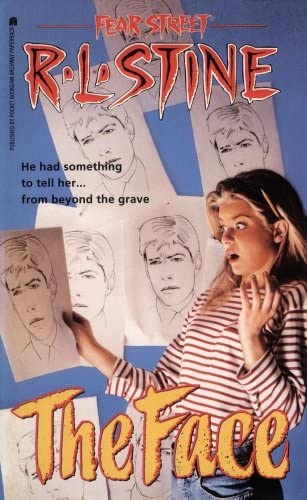
Book Review: The Face by R.L. Stine


In this 1996 R.L. Stine novel, Martha is a popular high school student with a problem.

Ever since she was involved in a mysterious accident, she has had amnesia!  Her friends have been told not to tell her too much about what happened because it’s important that she remember it all on her own.  Her friends agree to not tell her about what happened and, if you know anything about teenagers, you know how good they are not gossiping and keeping secrets.  Martha’s recovery is in good hands!

Martha keeps having flashes of memory, all of which involve some sort of drama that occurred at a cabin between her and her friends.  And whenever Martha tries to calm her nerves by drawing, her hands instinctively draw a picture of a boy who she doesn’t even know, a teenager with a scar over his eyebrow!  (OH MY GOD, A SCAR!  That’s always bad news in any book written by R.L. Stine.  Personally, I think scars are sexy and mysterious.  In Stine’s books, they’re almost always a sign of anti-social behavior.)  Sometimes, Martha discovers that she’s drawn the boy’s face without even realizing that she was drawing at the time.  That’s weird.  Like, how would you not realize that you were drawing?

Anyway, I was really hoping that it would turn out that Martha had been given a hand transplant and her new hands belonged to a murderer or something and now Martha was sleepwalking and strangling people with her new murder hands!  But, to be honest, that’s more of a Christopher Pike type of thing than an R.L. Stine thing.  Instead, this is another R.L. Stine book where the lead character starts to get menacing phone calls and then eventually, she discovers that it’s because all of her friends are keeping secrets and cheating on each other.  There is one surprisingly violent decapitation and some nonsense about hypnotism.  If there’s anything that I’ve learned from R.L. Stine, it’s that hypnotism is very easy to learn.  Despite a promising premise, this is pretty much a standard R.L. Stine rush job, one that efficiently hits all of the expected notes without digging too deep into the characters or the story.

Perhaps the most disappointing thing about this book is that the Face itself never comes to life.  From the cover, I figured that the drawing would actually start to move its lips and speak and totally freak Martha out.  I mean, the cover literally says, “He had something to tell her …. from beyond the grave.”  But once again, a talking picture is probably more of a Christopher Pike thing than an R.L. Stine thing.  I really should have read more Christopher Pike this October.  Oh well.  Live and learn!

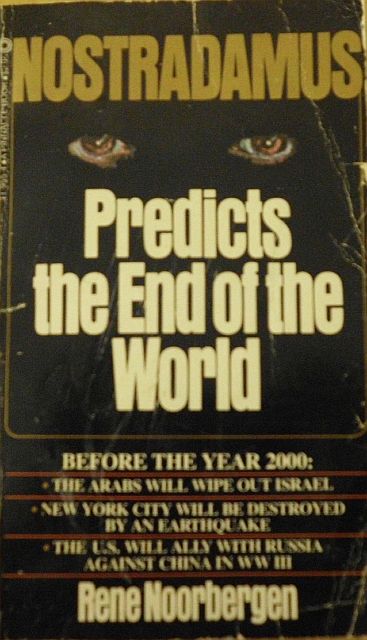
Book Review: Nostradamus Predicts The End Of The World by Renee Noorbergen


In the year 2010, I was at Half-Price Books when I came across an old paperback called Nostradamus Predicts The End Of The World.  The book was full of the cryptic prophecies of the French astrologer Nostradamus, along with interpretations of that what those predictions actually meant.  The book argued that, by using those interpretation, once could come up with a chronological narrative of the next great world war.  The book predicted that World War III was going to break out in the 90s, that New York was going to be destroyed in 1999, and that the world, as we knew it, would be over with around the year 2000.  Once I saw that the world has apparently ended ten years ago, my sense of humor demanded that I buy the book.

Since that time, a few people have told me that I shouldn’t laugh at stuff like this and that, just because the dates were wrong, that doesn’t mean that it’s not going to happen.  Some have pointed out that the passage in which Nostradamus predicted a nuclear bomb hitting New York in 1999 could have just as easily been a prediction of 9/11 and that perhaps Nostradamus either misinterpreted the date or maybe it was originally meant to happen in 1999 but got pushed back a few years or …. well, there’s always a reason, isn’t there?  My argument, of course, is that the only time that Nostradamus gives a date for any of his predictions, he was wrong.  It’s probably not coincidental that Nostradamus picked a date that was so far in the future, he wouldn’t have to worry having to explain himself.

The thing with Nostradamus though is that his “prophecies” were so vaguely written that they could pretty much be interpreted to mean anything.  Indeed, it seems like a compelling argument could be made that his prophecies were actually meant to keep him in favor with the wealthy and royal patrons who subsidized his life.  Much of what he wrote works as Rorschach test.  Readers are going to find what they’re looking for.

For instance, the author of Nostradamus Predicts The End of the World was apparently looking for a battle-by-battle history of the Third World War.  For the author, that was found in Nostradamus’s prophecies.  The book argues that conflict in the Middle East would lead to a World War between the U.S., Russia, and China and that apparently only Australia would be spared.  Towards the end of the book, the author fixates on a red-haired general who apparently referred to in several of Nostradamus’s prophecies.  One wonders why Nostradamus would specifically tell us the year that New York was going to be destroyed and why Nostradamus would, as some have claimed, warn about an evil German leader named “Hister” but while leaving vague the identity of the general who is going to be the key to saving the world.  Indeed, what even is the point of being able to see into the future if you’re going to be so deliberately vague in your reporting that no one is going to know what you’re talking about?

Interestingly enough, even though it’s been over 22 years since the date that Nostradamus the world would end, there are still people posting his prophecies online and saying that he predicted everything from Trump to COVID to AOC.  Never stop believing, I guess.

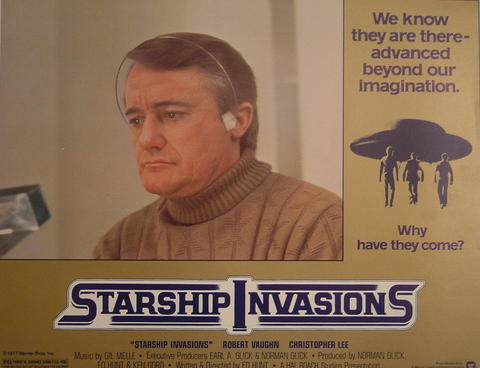
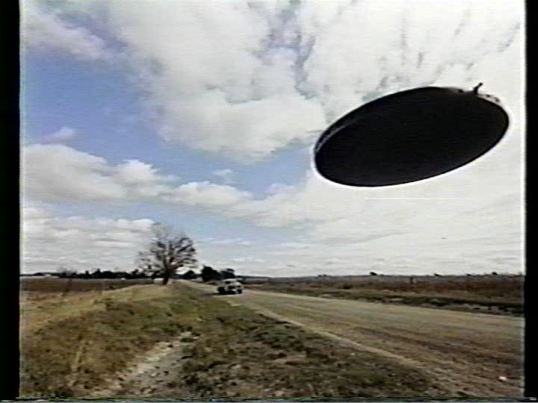
International Horror Review: Starship Invasions (dir by Ed Hunt)


Once, during an interview, the distinguished British horror actor, Christopher Lee, was asked to name the worst film in which he had appeared.

Being a very busy actor who appeared in well-over 200 films, Lee paused for a minute to give it some thought and then eventually said that, in 1977, he had appeared in a Canadian science fiction film in which he played a mute alien who was using a suicide ray to conquer Earth. Though he wasn’t quite sure what the title had been, that was his pick for the worst movie in which he had ever appeared.

Now, considering some of the films in which Lee appeared, that’s a bold statement. Was Lee correct? Was that film — which was entitled Starship Invasions — the worst film in which he ever appeared?

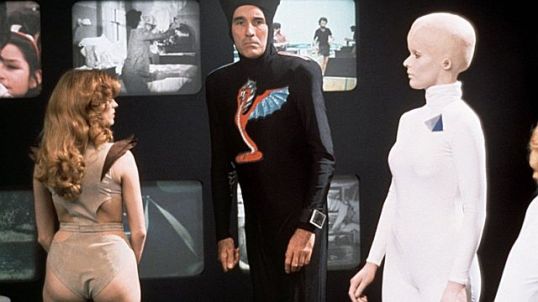
Well …. maybe. It’s certainly not one of his best. Lee plays Captain Ramses, who is the leader of the Legion of the Winged Serpents. The legion’s home planet is about to be destroyed by a supernova so he has taken it upon himself to find a new planet to colonize. Earth looks pretty good to him!

Christopher Lee remembered Ramses as being mute. Actually, he communicates through telepathy. We hear his words but his lips never move. The same is true of every alien that appears in the film. And yes, this could be an example of how different and more advanced the aliens are when compared to the humans but a more likely explanation is that it was cheaper to film the outer space scenes without sound and then just dub in the character’s “thoughts” later.

For reasons that are never quite clear, the Legion of the Winged Serpent abducts several Earthlings before then unleashing their suicide ray. Prof. Allan Duncan (Robert Vaughn) is the UFO expert who investigates the abductions before eventually getting abducted himself by a race of good, gray aliens. The gray aliens are determined to save the Earth from the Legion. It’s never really explained why.

Meanwhile, the suicide ray is causing chaos on Earth as people all over are driven to kill themselves and others. And the ray has just been aimed at Duncan’s wife (played by Helen Shaver) so Allan and the good aliens better hurry up and defeat Ramses and the bad aliens!

Is Starship Invasions really that bad? Well, it’s certainly not …. great. Christopher Lee is properly imposing as Ramses but even he occasionally has a “What have I gotten myself into?” look on his face. Most of all, Starship Invasions is very much a product of the 1970s. When Ramses visits a space station, it looks a lot like an incredibly tacky mix of a fitness center and a cocktail lounge. The fashion of both the Earthlings and the aliens is very much of the era. Robert Vaughn wears a turtleneck that just screams “community college history teacher.” The special effects are rather cheap and the plot never makes much sense. The scenes with the suicide ray, however, are surprisingly effective and the film does have a certain campy charm to it, especially if you’re into low-budget 70s sci-fi. Starship Invasions is probably not Christopher Lee’s worst film. It’s just one of his cheapest.