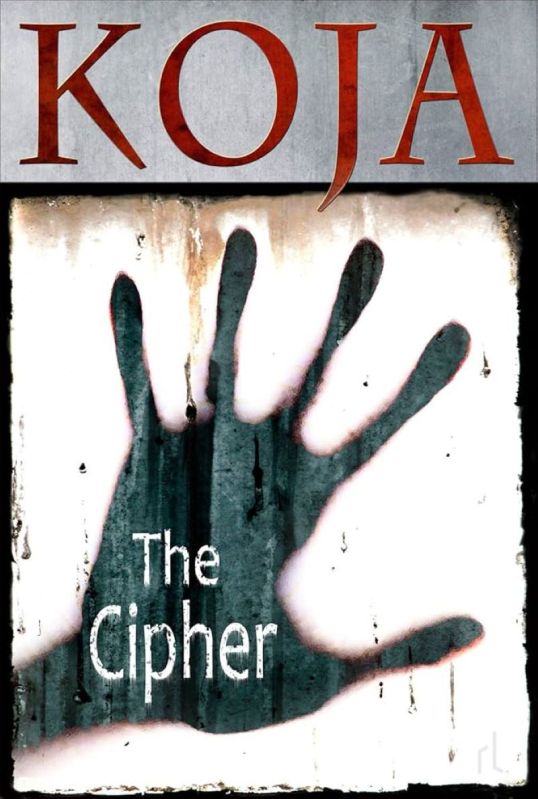
Horror Book Review: The Cipher (by Kathe Koja)


Kathe Koja’s The Cipher stands as a landmark achievement in splatterpunk and psychological horror, noted for its unapologetic dive into existential dread, fragmented narrative, and raw emotional landscape. Its reputation as a genre-defining work is well-earned, yet it also represents a demanding reading experience that diverges sharply from more traditional horror novels. For readers looking for straightforward thrills or clear-cut storytelling, Koja’s novel may feel opaque or even impenetrable. However, for those willing to engage deeply, The Cipher offers a poetic and unsettling exploration of alienation, obsession, and the unknowable.

At the heart of the novel’s challenge is Koja’s distinctive writing style. Eschewing conventional chapter structures or linear storytelling, The Cipher operates as an immersive psychological tapestry woven through the fragmented consciousness of its protagonist, Nicholas. The prose flows in long, often unruly sentences filled with impressionistic and surreal imagery that echo Nicholas’s damaged, chaotic inner world. His thoughts, memories, and anxieties drift in and out of focus, making the narrative feel like a fever dream or an inside-out nightmare. For readers new to literary horror or those more comfortable with clear plots and defined characters, this style can seem alienating and difficult to parse. The book frequently moves between blurred timelines, hallucinations, and raw emotional bursts, challenging the reader to accept ambiguity and psychological discomfort rather than easy narrative anchors.

The story revolves around Nicholas and Nakota, a dysfunctional and toxic couple trapped in a bleak urban environment that acts almost as a third character. This grim unnamed city, reminiscent of the American Rust Belt in decay during the early 1990s, exudes a cold, oppressive atmosphere that mirrors the emotional desolation of its residents. The setting’s grime and desolation bolster the novel’s themes of hopelessness and fragmentation, with Koja’s spare prose turning every scene into a sensory experience of discomfort and decay.

Central to the plot—and the horror—is the discovery of the Funhole, a mysterious and unnaturally black void located in a storage room of the apartment building. Hardly celebrated for whimsy, the Funhole is a locus of enigmatic and malevolent power that both fascinates and consumes. Nicholas and Nakota’s experiments with the Funhole—dropping insects, animals, and eventually cameras—reveal its capacity to distort and corrupt physical reality in grotesque ways, leading to disturbing mutations and aberrations. However, the real horror lies not just in these transformations but in the obsessive pull the Funhole exerts on the characters, particularly Nakota’s increasingly toxic fixation and Nicholas’s reluctant fascination.

Rather than relying on external action or traditional plot progression, The Cipher roots its terror in the psychological and emotional unraveling of its characters. The story is less about what happens and more about how it feels to fall apart in the face of an unknowable force. The degradation of Nicholas and Nakota’s relationship—marked by manipulation, dependency, and alienation—is the emotional thread binding the novel’s narrative chaos. This internal focus demands patience and a willingness to sit with discomfort from the reader; those unaccustomed to introspective or experimental fiction might find the experience frustrating or exhausting.

Overlaying all this is a strong vein of cosmic horror. The Funhole is presented as an unknowable abyss, an entity without explanation, echoing the eldritch voids found in the works of Lovecraft, Blackwood, and Machen. It refuses to comply with human curiosity or understanding, warping reality and identity in ways that defy definition. Unlike classic monster tales, the horror here is existential and diffuse, manifesting as a dark reflection of humanity’s inability to grasp the true nature of the universe or even themselves. In this respect, Koja’s work is a meditation on obsession and transformation, where the boundary between cosmic indifference and personal disintegration disappears.

While The Cipher has been celebrated for its ambition and literary risks, it offers little reprieve in terms of character likability or narrative closure. The protagonists are deeply flawed, often unlikable people caught in spirals of self-destruction. The novel’s resolution is ambiguous and bleak, leaving the audience with more questions than answers, emphasizing themes of loss, transformation, and the unknowable. It challenges standard genre expectations and eschews easy emotional satisfaction, positioning itself as a novel that unsettles rather than comforts.

Readers familiar with the edgier corners of horror fiction—fans of Clive Barker’s visceral fantasies or Poppy Z. Brite’s explorations of identity and desire—will find much to admire in Koja’s approach. The novel’s body horror is not gratuitous but symbolic, a metaphysical cracked mirror reflecting profound anxieties about embodiment, control, and alienation. Its grim realism and morally complex characters resonate alongside challenging literary experiments such as Fight Club and House of Leaves, where mental and existential crises are front and center.

In sum, Kathe Koja’s The Cipher stands as a bold, uncompromising exploration of despair, obsession, and cosmic terror wrapped in a chaotic, poetic narrative. It demands engagement on a deep level, rewarding readers with a unique experience that expands the scope of horror fiction. This is a novel best suited for those who prize atmosphere, psychological depth, and existential questioning over conventional scares or plot-driven horror. While it may prove inaccessible or taxing for some, for others it offers a transformative journey into the dark, tangled spaces of the mind and the universe—an unsettling masterpiece that lingers long after the final page is turned.
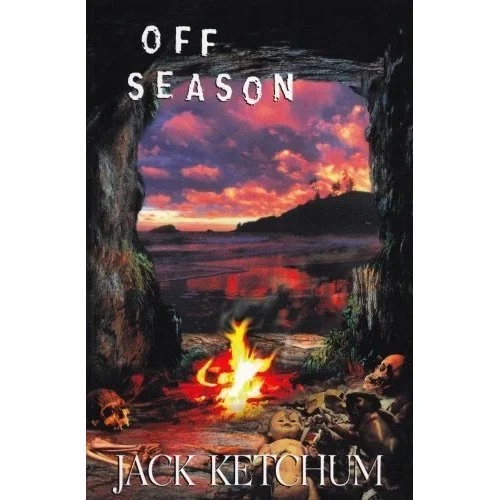
Horror Book Review: Off Season (by Jack Ketchum)


“Man is the cruelest animal.” — Friedrich Nietzsche

Jack Ketchum’s Off Season wasn’t my first venture into extreme horror, but it was an important stop along the way in my continuing exploration of splatterpunk—those raw, confrontational horror stories that don’t flinch from showing you every grisly detail. I’d already spent time in the grand guignol worlds of Edward Lee, Richard Laymon, Poppy Z. Brite, and Brian Keene, and I thought I’d built up a decent resistance to the genre’s more intense offerings. Then I opened Off Season, and within a few chapters, I realized this was going to hit differently. It’s less a fun horror romp and more of an ordeal—one that leaves you feeling like you’ve just crawled out the other side of something vicious, primal, and deeply unsettling.

Ketchum builds his novel around the infamous legend of the Sawney Beane clan—a family of cannibals who, according to folklore, hunted travelers along the Scottish coast in the 15th century. He strips that story out of its historical setting and drops it into the rocky, isolated coast of Maine, replacing the medieval backdrop with an environment that still feels dangerous and untamed. The setup is simple enough: a group of friends from New York rent a secluded cabin, expecting a peaceful getaway, and instead find themselves hunted by a clan that’s every bit as savage as their legendary counterparts. There’s a vibe here that’s partly Romero zombie survival horror, partly John Carpenter claustrophobic menace, but the big difference is that these villains aren’t supernatural—they’re unsettlingly human, real in their hunger and their primal needs. They do what they do because it sustains them, and somehow that makes them worse than any ghost or monster.

While Wes Craven’s The Hills Have Eyes mined similar ground with a more stylized, exploitation-film aesthetic, Ketchum’s take leans hard into plausibility. His cannibal clan feels like a natural, if disturbing, product of generations of isolation and inbreeding, kept alive through hunting, killing, and eating whoever wanders too close. That realism is what makes the violence hit so hard. Ketchum describes their assaults on Carla, her sister Marjie, and their companions with an unapologetically matter-of-fact tone—no flourish, no dramatics. The worst moments aren’t always the attacks themselves, but what he shows inside the clan’s cave home. Kids scamper across jagged stone like feral animals, gnawing meat straight off the bone. Adults pair up in incestuous “unions” meant only to keep the bloodline going. It’s both grotesque and disturbingly believable.

That refusal to hold anything back is part of why Off Season has been linked to splatterpunk, the horror subgenre that gained fame (and infamy) for pushing gore, moral transgression, and human depravity to the forefront. Some critics wrote it off as “horror pornography,” too focused on shock value, but fans saw it differently. In Ketchum’s hands, it’s not about gore for gore’s sake—it’s about stripping away all the comfort zones and exposing something ugly yet honest. When you finish one of these novels, you’re not left thinking “That would never happen.” You’re left thinking “That could happen. Under the wrong circumstances, that would happen.”

One of Ketchum’s storytelling choices is speed. The pacing is fast—there’s just enough time to understand who the characters are before the horror crashes down. That keeps tension high but also means the victims aren’t deeply fleshed out. They’re more representative than personal, standing in for civilization as a whole rather than pulling us into their emotional worlds. You don’t get many chances to connect with them deeply. Instead, you watch them transform from vacationers into survivors, and in some cases, those survivors become something just as savage as the people hunting them.

That shift happens in the second half, when the remaining characters fight back. The counterattack is satisfying in its own crude way, but Ketchum never dresses it up as righteous victory. The brutality of revenge feels just as ugly and unrelenting as the initial assault. By the end, what’s been preserved isn’t humanity—it’s just the body count in favor of the people we started with. The survivors get out, but they’re not unchanged. It’s not the kind of ending that makes you breathe a sigh of relief. More like an exhale that admits, “We made it, but look at what it cost.”

When Off Season first came out in 1980, it caused an immediate stir. Its content was so graphic that some bookstores wouldn’t carry it, and an edited version had to be released to calm the outrage. Years later, Ketchum went back and put out the uncut edition, restoring everything that had been stripped away. Reading that version today is reading the novel as he intended—nothing softened, nothing taken off the table. And in the world of extreme horror, that kind of authenticity is prized. It’s part of what’s given Off Season its staying power; it’s not just a book, it’s a dare.


Underneath all the blood and carnage is a question that sticks with you: If people were cut off from society long enough—if they lost the rules, the moral codes, the comforts—how far would they regress? Ketchum’s cannibals don’t feel like the spawn of evil forces. They feel like us, just pushed far enough in the wrong direction. Their behavior doesn’t come from cruelty for cruelty’s sake. It comes from basic survival drives—hunger, reproduction, and dominance. That’s why they’re such unnerving villains. They’re an evolutionary throwback you can imagine existing somewhere out there, beyond the maps, waiting for someone else to wander too close.


Finishing Off Season doesn’t give you that neat sense of closure other horror stories sometimes aim for. It doesn’t even give you release. It leaves you worn down, a little grimy, and maybe even unsettled in ways you didn’t expect. That’s the difference between horror built on supernatural scares and horror built on human brutality. The latter lingers; it’s harder to shake because you can’t make it go away just by telling yourself, “It’s only fiction.” With Ketchum, you’re never entirely sure.


As far as splatterpunk milestones go, Off Season earns its reputation. It’s both a challenge and a gut-punch—the sort of book that reminds you horror can still be dangerous. It’s not for every reader—if you’re expecting subtle ghost stories or stylish monster tales, you won’t find them here. What you’ll find instead is a grim, fast-paced nightmare about people who’ve let go of everything we’d call human and replaced it with something primal, something real in their hunger and their primal needs. And in the end, that may be the most disturbing thing about them—they’re not from another world. They’re from ours.

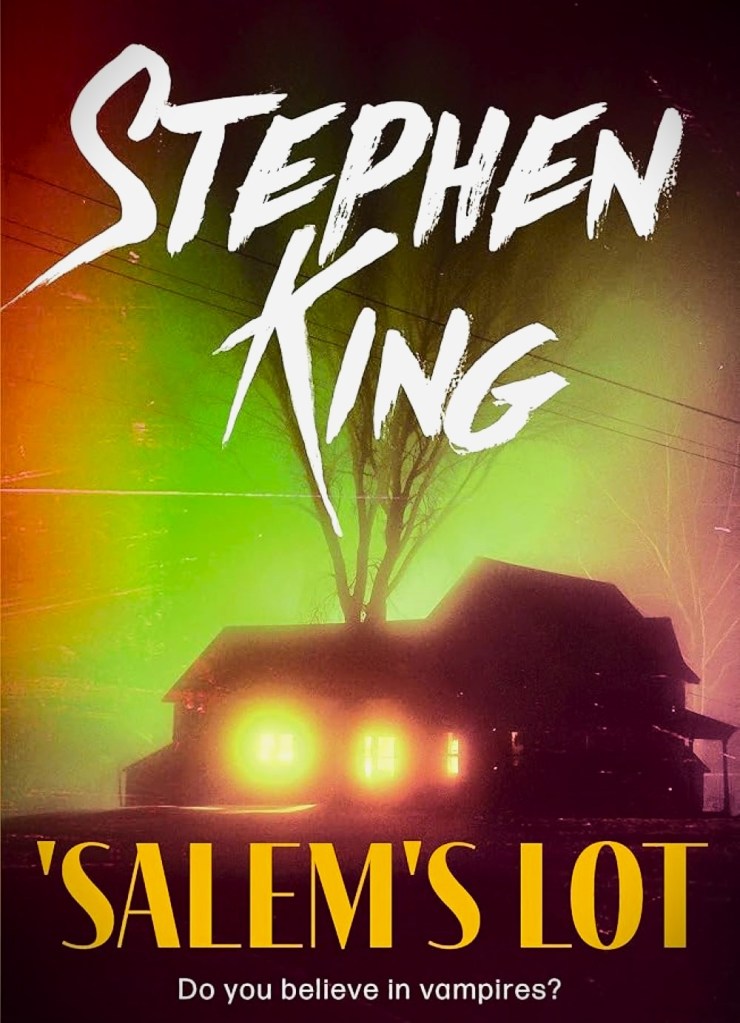
Horror Book Review: ‘Salem’s Lot (by Stephen King)


“Within, walls continued upright, bricks met neatly, floors were firm, and doors were sensibly shut; silence lay steadily against the wood and stone of Hill House, and whatever walked there, walked alone.”
—Shirley Jackson, The Haunting of Hill House

Stephen King’s Salem’s Lot opens with an unsettling and bold narrative choice. Instead of introducing the main characters or setting a conventional stage, the novel begins by showing two nameless figures—an older man and a younger companion, burdened by events already passed. These itinerants are fleeing a terrible evil, seeking refuge in a small Mexican village, suffused with mystery and dread. This brief but cryptic prologue hooks the reader immediately with a pervasive sense of unease and unanswered questions: who are these men, and what horror haunts them so far from home?

This unsettling beginning is not only risky but masterful. King, in just his second published novel, chooses to forgo straightforward exposition and instead promises that the narrative will move backward, retracing the dark events that led to this moment of flight and loss. The prologue casts a shadow into the past, preparing readers for a story where the darkness is already present and will only deepen.

Rewinding, the narrative places us in the small New England town of Jerusalem’s Lot—known to its inhabitants simply as “The Lot”—a quintessential small town in 1970s Maine. Here, Ben Mears, a novelist haunted by childhood trauma centered on the forbidding Marsten House, returns home with the intention of writing about the old mansion. The Marsten House is not just a setting; it is a malignant presence perched over the town like an ominous sentinel. Ben’s youth intrudes everywhere in his memory of that house—a place where something unknowable once touched him—and now, as an adult, he confronts both that past and the house again, its shadow casting unease over the town.

Ben isn’t the only arrival. Richard Straker sets up an antique shop, accompanied by his rarely seen partner, Kurt Barlow—an inscrutable figure whose very mention deepens the novel’s pervasive tension. King reveals Barlow’s presence slowly and indirectly, heightening the atmosphere without immediate confrontation.

King excels at immersing readers in the rhythms of small-town life. Through detailed observation of everyday routines, gossip, and personalities, he crafts a believable, textured community. Each townsperson—whether skeptical official, gossip-prone neighbor, child, or elder—is vividly realized, not as a simple archetype but as a living, breathing individual. Yet beneath this surface of normalcy lurks a pervasive darkness: secrets, resentments, and moral frailties accumulate like hidden mildew in the town’s corners.

In this, Salem’s Lot evokes the spirit of Peyton Place, the classic fictional small town where scandal and hypocrisy fester beneath neighborly facades. King’s Jerusalem’s Lot feels like a much darker cousin—a town where those faults and hidden sins once fodder for gossip become the very soil from which real, supernatural evil springs. While Peyton Place explored human failings within social dynamics, Salem’s Lot reveals how those failings create openings for Kurt Barlow’s vampiric menace. The town’s insularity, mistrust of outsiders, and collective denial become liabilities dooming it—not just morally, but existentially.

At the heart of this encroaching nightmare stands the Marsten House, a building elevated beyond mere backdrop into a living entity. Like Shirley Jackson’s Hill House, Richard Matheson’s Belasco House in Hell House, and King’s own later Overlook Hotel, the Marsten House is steeped in decades of violence and evil. Its walls seem to soak up past horrors; its windows serve as more than architectural features—they are eyes into the house’s dark soul. This physical presence is sinister and predatory, complicit in the nightmarish events it enables. To enter the house is to step into something corrupt and breathing, an organism as alive and malign as the vampire it conceals.

What makes Salem’s Lot especially powerful is how King integrates the supernatural into the texture of daily life. The fantastical elements do not feel imposed or alien but grow organically from the social dynamics, habits, and vulnerabilities of this small town. The horror is inevitable precisely because it grows from recognizable human weaknesses and communal blind spots. This fluid blending invites readers to experience terror as an intimate shattering of the ordinary, a disruption of the familiar.

Relationships anchor the emotional core of the narrative. Ben’s romance with Susan Norton, the steady wisdom of Matt Burke, the youthful courage of Mark Petrie—their humanity keeps the terror grounded and poignant. As vampirism spreads, these bonds are tested and shattered. Community, which once defined the town’s identity, fractures under suspicion and fear. Friends become threats; homes become prisons.

The looming Marsten House is a perfect emblem of this dual threat: a predator perched within the community itself. As Barlow turns neighbors into monsters, the house’s silent complicity looms ever larger. It is as much a character as any human, a sentinel feeding on the decay of place and spirit alike.

As the novel hurtles toward its climax, King heightens the tension with vivid, claustrophobic scenes inside the haunted mansion. The house’s corridors and rooms twist into traps, its atmosphere suffocating and oppressive. King’s mastery of sensory detail brings a visceral dimension to the horror, blending psychological terror with physical menace.

The conclusion returns to the somber tone of the prologue. Although some survive, the town is hollowed out—a ghostly husk abandoned to darkness. Evil is not eradicated but waits patiently, ready to thread its way back through the cracks. The cycle of horror, loss, and exile continues.

Stephen King’s unique strength in Salem’s Lot lies not only in his richly developed characters and finely drawn community but in how seamlessly he introduces supernatural horror into what reads like a real-time study of small-town life. The fantastical elements grow naturally from the social fabric, making the terror feel inevitable rather than contrived. This synthesis of realism and fantasy deepens the novel’s power.

King’s portrayal of Jerusalem’s Lot as a place rotting from within yet clinging to its veneer of normalcy offers a chilling echo of Peyton Place. But while Metalious’s town suffocated under scandal, Salem’s Lot is consumed by predation—the vampire feasting not only on blood but on the fractures of belonging and trust. It is both eerily familiar and profoundly alien: a place where monsters live not just in shadows, but in whispered suspicions and buried sins.

Through this blend of gothic haunted-house traditions, social critique, and psychological realism, Salem’s Lot endures as a masterpiece of horror. The Marsten House is not merely a setting but a sentinel, symbolizing accumulated evil watching over a doomed community. King’s novel terrifies not only with its monsters but with its intimate knowledge of how everyday life can harbor the seeds of nightmare beneath a calm surface.