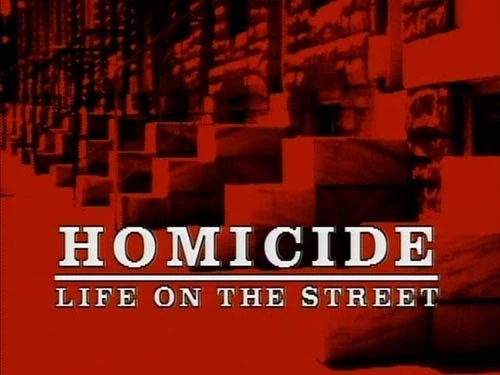
Retro Television Review: Homicide: Life on Street 1.3 “Night of the Dead Living”


Welcome to Retro Television Reviews, a feature where we review some of our favorite and least favorite shows of the past!  On Sundays, I will be reviewing Homicide: Life On The Street, which aired from 1993 to 1999, on NBC!  It  can be viewed on Peacock.

This week, the Homicide Squad works the night shift on the hottest night of the year.

Episode 1.3 “Night of the Dead Living”

(Dir by Michael Lehmann, originally aired on March 31st, 1993)

On the hottest night of the year, Giardello’s homicide squad works the night shift.  Everyone comes in grumpy.  Munch has just broken up with his girlfriend.  Bolander is trying to work up the courage to call Dr. Blythe.  Bayliss is still obsessing on the Adeena Watson case and he and Pembleton are still trying to figure out how to work together.  Kay’s sister is having trouble at home.  Felton’s wife hates him.  Crosetti worries about his teenage daughter and her boyfriend.  Giardello tries to figure out why the air conditioner is only blowing out hot air on what Lewis claims is the hottest night in history.

Despite the heat and the statistics that show that most homicide occur at night, no calls come in.  Bayliss is convinced he’s cracked the Watson case when he discovers that the fingerprints on Adeena’s library book belongs to someone named James.   He sends Thorson out to arrest James.  James turns out to be a seventh grader who thinks he’s being arrested by not paying a library fine.  (James did check out the book, when he was in the fifth grade.)

A drunk man dressed as Santa Claus is brought in and later falls through the ceiling when he attempts to escape custody.  A baby is found in the station’s basement but it turns out to the cleaning lady’s baby.  She brings him to work with her to protect him from the rats that live in their apartment building.  Eventually, Bolander works up the courage to call Blythe and Bayliss and Pembleton figure out that Adeena’s body was found where it was because her killer brought the body down a fire escape.  At the end of the shift, Giardello assembles his detectives on the roof and joyfully sprays them with the water hose.

It’s an episode that feels like a play, taking place in one location and featuring a lot of monologuing.  Each member of the squad gets a their chance in the spotlight, with the episode revealing that every one of them is a bit more complex than they initially seem.  Even Munch, the misanthrope, is shown to light a candle in memory of “all those who have been killed.”  It’s one of those episodes that makes you understand why Homicide is considered to be classic while also showing you why it struggled in the ratings.  In this episode, Homicide revealed itself to be not a cop show but instead a show about people who happened to be cops.  Most shows about detectives end with an arrest.  This episode ends with Giardello showing his love for the people who work for him.  After spending an hour with everyone sweating and complaining, it’s nice to see them happy on the roof of the station house.  Yaphet Kotto’s joy in the final scene is a wonder to behold.  And yet, it’s easy to imagine how confused audiences, whose expectations had been set by more traditional crime show, would have been.

This episode was meant to be the third episode of the series.  NBC decided that it worked better as the finale of the first season and instead made it the ninth episode.  Peacock has this episode placed where it originally belonged and, with this review, that’s what I’m going with as well.


Lisa Marie’s Week In Television: 10/13/24 — 10/19/24


I watched a lot of  horror movies this week but I didn’t watch much television.  Starting on November 1st, I’m going to have a lot of shows to get caught up on.

I caught the latest installment of American Sports Story: Aaron Hernandez.  Like a lot of Ryan Murphy’s recent miniseries, American Sports Story started out strong but the last few episodes have felt like padding.  It’s not that the episodes aren’t contributing to the story.  This week, we watched as Aaron committed what was apparently his first murder and as he started to show signs of CTE.  But it’s still hard not to feel as if each episode is basically 20 minutes worth of story stretched out to 50 minutes.  We’re halfway through this series and it has yet to really give us a reason why we should care about Aaron Hernandez.  He just comes across as being an idiot, regardless of his athletic skills, his terrible childhood, or his status as a self-hating gay man trying to survive in a homophobic culture.  He doesn’t seem to be worth all of this trouble.

I watched Hell’s Kitchen.  The chefs continue to compete at a high level and they continue to have disastrous dinner services.  Hell’s Kitchen is one of the few reality shows not to have massively changed its format over the past four years.  The producers know there’s no need to fix something that’s already working.  If only the producers of Big Brother and Survivor understood that!

I watched an old episode of Night Flight on Friday.  It featured Elvis snarling at the camera.

I watched the episode of Dr. Phil in which Phil and cult expert Rick Ross confronted a guy who said he wasn’t a cult leader despite the fact that he clearly was.  There’s a lot negative things that can be said about Dr. Phil’s show but the episodes where he exposed cults and their leaders were always entertaining and worth watching.

I watched and reviewed Homicide, Miami Vice, and The Love Boat!  I also watched and shared several episodes of One Step Beyond.

And that’s it!

Retro Television Review: Homicide: Life on the Street 1.2 “Ghost of a Chance”


Welcome to Retro Television Reviews, a feature where we review some of our favorite and least favorite shows of the past!  On Sundays, I will be reviewing Homicide: Life On The Street, which aired from 1993 to 1999, on NBC!  It  can be viewed on Peacock.

This week, the search for Adeena Watson’s murderer begins.

Episode 1.2 “Ghost of a Chance”

(Dir by Martin Campbell, originally aired on February 3rd, 1993)

There’s been a murder in Baltimore.  That, in itself, is not news.  The pilot firmly established that murder is a fact of life in Baltimore.  But, the victim of this crime is an 11 year-old girl named Adeena Watson, who left her home to go to the library and who never returned.  The press is covering every detail.  The police brass want an arrest and they want an arrest quickly.  And the primary detective on the case is rookie Tim Bayliss, who has never even worked a murder case on his own before.  Giardello refuses to replace Bayliss but he also makes it clear that he needs Bayliss to bring him something.

As for Bayliss, he spends most of this episode struggling.  Not only does he not have the respect of his fellow detective but he also, as a rookie, doesn’t even have a desk until Giardello, in a fit of anger, knocks everything off an unoccupied desk and awards it to Bayliss.  (So, was that desk just sitting there the whole time?  I thought they didn’t have any available desks.)  Because this crime is what is known as a “red ball,” (i.e., a murder that has attracted the attention of the media and the public), every detective is looking for Adeena’s murderer.  While Bayliss obsesses on who Adeena was before she was killed, the rest of the squad does the practical things, like talking to neighbors and bringing in all of the city’s sex offenders for interrogation.

My heart broke for Bayliss while watching this episode.  Kyle Secor did a good job of capturing both Bayliss’s outrage over the crime and his fear of failing to solve his first case as a primary.  While Bayliss stared at Adeena’s body in the alley, Munch, Lewis, and Crosetti debated sports.  And while their attitude may have seemed callous, this episode established that disconnecting is the only way to handle working Homicide.  Bayliss, having not learned how to disconnect, grows more and more obsessed with Adeena.  I cheered a little when Bayliss finally stood up for himself and even won the grudging respect of Frank Pembleton.  That said, the change in Bayliss happened almost too quickly to be credible.  Apparently, all it took was for Giardello to give him a desk for Bayliss to go from being meek and overwhelmed to being a confident and take-charge detective.

While Bayliss searched for Adeena’s killer, Much and Bolander dealt with a murder that happened in a wealthy neighborhood.  The killer (Gwen Verdon) was a wife who snapped after 60 years of marriage.  As she explained to Bolander and Munch, she and her husband had earlier promised each other that they wouldn’t get a divorce until the children died.  Bolander has a crush on the coroner, Dr. Blythe (Wendy Hughes), but he’s worried about getting back in the dating game after his own divorce.  When Munch asks Bolander how old he is, Bolander replies, “48.”  Ned Beatty was a great actor and I’ve never seen a bad Ned Beatty performance.  That said, it’s also hard for me to think of any film where he looked a day under 50.

Meanwhile, Kay tries to get a confession from a guy who is about to go on trial for murder.  Felton laughs when Kay says that she was visited by the ghost of the guy’s victim.  However, Felton makes up for being a jerk by helping Kay find the murder weapon.  This whole subplot was odd to me, largely because Kay really doesn’t come across as the type to believe in ghosts.  But whatever works, I guess!  Melissa Leo and Daniel Baldwin did a good job in this episode, selling a storyline that had the potential to be a little bit too cute for its own good.

As the episode ended, the killer of Adeena Watson had yet to be captured.  While the other detective drank at a wharf bar, Bayliss went to Adeena’s memorial service and stared at her coffin, haunted.  It was a powerful moment but one that left the viewer worried about Bayliss’s sanity.  Earlier in this episode, Pembleton said that a murder that goes 72 hours without being solved will never be solved.  Bayliss is running out of time.


Lisa Marie’s Week In Television: 10/6/24 — 10/12/24


Here’s my thoughts on what I watched this week.

Abbott Elementary (Wednesday Night, ABC)

Abbott‘s back.  Jeanine and Gregory are dating and they’re a cute couple.  That said, I can’t help but remember how The Office kind of started to become less interesting once Pam and Jim officially became a couple.  Single, neurotic people are always funnier than stable people in love.

It’ll be interesting to see how this season goes.  Last season, I got annoyed with Jeanine working for the district and the show itself occasionally got a bit heavy-handed in a way that it hadn’t during the previous seasons.  At the time, I choose to believe that season’s weaker moments were due to the season being shortened by all the strikes that were going on.  I’m hoping this new season will prove me correct.

Ava continues to be the best character on the show.

Accused (Tuesday Night, FOX)

After an incredibly uneven first season, Fox’s crime anthology show is back for a second season.  The first episode featured a psychic accused and on trial.  Felicity Huffman (who hasn’t really been seen much ever since she was implicated in the so-called Varsity Blues scandal) and William H. Macy provided some star power but the overall results were still pretty dull. I’m not a huge fan of anthology shows in general.  They always seem to be trying a bit too hard.

American Sports Story: Aaron Herndanez (Tuesday, FX)

This week, Aaron started to find fame as a pro football player with the New England Patriots, while continuing to deal with stress by hanging out with lowlifes and criminals.  While struggling to maintain the squeaky clean image that the NFL demanded from its players, Hernandez also beat up his abusive stepfather.  Much as with last week, this episode was well-done but it still feels as if the show is dragging out the story a bit too much.  This episode was about 20 minutes worth of story stretched out over 50 minutes.  Needless to say, it did start to feel a bit repetitive after a bit.  The attempt to use Aaron Hernandez’s stupidity as a way to comment on American society continues to feel a bit half-baked.

Dr. Phil (Pluto TV)

“Shut up!” Kaye yelled, when confronted about her Nigerian boyfriend, who she has never actually met despite selling her house and sending him the money.  I know Kaye was embarrassed but yelling shut up isn’t going to get her money back.

Hell’s Kitchen (Thursday Night, FOX)

One chef left the show to go to the hospital.  Another hurt his back and voluntarily withdrew from the competition.  The Blue Team had a terrible dinner service and a Chef Ramsay sent another chef home.  The Red Team is getting pretty cocky, which I’m going to assume means that they’re going to fall apart next episode.  Getting cocky is always the worst thing that any chef can do on Hell’s Kitchen.  Hell’s Kitchen remains one of the few reality shows to remain as entertaining today as when it first aired.  The show has been smart enough to stick to its formula and not change things up just to satisfy whatever the current cultural trend may be.

Homicide: Life On The Streets (Peacock)

I wrote about Homicide here!

Law & Order (Thursday Night, NBC)

This week’s episode saw SVU‘s Mariska Hargitay making a guest appearance on Law & Order and it really does show just how much things have changed as far as this franchise is concerned.  At one time, SVU was kind of like Law & Order‘s sordid and little-acknowledged bastard cousin and it was a big deal if anyone from L&O lowered themselves to make an appearance on SVU.  Now, things are reversed.  Law & Order is still struggling to find its voice in  the 2020s and it’s SVU that’s providing some star power to its struggling cousin.

On another note, I’m surprised that there’s any tech gurus left in New York as they seem to be the number one victim of choice on Law & Order.  If they’re not getting murdered, they’re going to jail.

I continue to miss Jack McCoy.

The Love Boat (Paramount Plus)

I wrote about The Love Boat here!

Miami Vice (Amazon Prime)

I wrote about Miami Vice here!

Night Flight (Night Flight Plus)

On Friday, I watched an episode from 1988.  The first half of the episode featured music videos, including X’s Devil Doll.  The second half took a look at “upcoming” films, including one in which Arnold Schwarzenegger and Jim Belushi teamed up to fight crime.  No, it wasn’t The Principal.

One Step Beyond (YouTube)

This week, I have continued to watch and share episodes of this old anthology show.  I’ve been having a lot of fun watching this show.

Retro Television Review: Homicide: Life on the Street 1.1 “Gone For Goode”


Welcome to Retro Television Reviews, a feature where we review some of our favorite and least favorite shows of the past!  On Sundays, I will be reviewing Homicide: Life On The Street, which aired from 1993 to 1999, on NBC!  It  can be viewed on Peacock.

Today, I take a look at the pilot for a show that has been called one of the best of all time.

Episode 1.1 “Gone For Goode”

(Directed by Barry Levinson, originally aired on January 31st, 1993)

The opening credits for the first episode of Homicide: Life on the Street immediately announce that the show is not going to be a typical network cop show.  The music starts out as moody and low-key before eventually being dominated by a pulsating beat.  The images of dirty streets and crumbling rowhouses and of a dog running around behind a fence are all in black-and-white.  The faces of the cast appear, the majority of them in harsh close-up.  When viewed today, most of the faces are familiar.  Daniel Baldwin, Ned Beatty, Andre Braugher, Clark Johnson, Yaphet Kotto, Melissa Leo, Jon Polito, and Kyle Secor all flash by and the thing that the viewer will immediately notice is that it’s almost as if they’ve been filmed to remove any hint of glamour or attractiveness.  (Out of that impressive cast, only Baldwin, Johnson, Leo, and Secor are still with us.)

Gone for Goode tells several stories, introducing the detectives as they investigate various murders in Baltimore.  Meldrick Lewis (Clark Johnson) and Steve Crosetti (Jon Polito) are first seen searching for a bullet in a dark alleyway and arguing in only the way that two people who have worked with each other for a long time can argue.  Lewis continually refers to Crosetti as a “salami-head,” and Crosetti, who claims that he’s being kept up at night by his doubts about whether or not John Wilkes Booth was actually Lincoln’s assassin, repeatedly says that Lewis will regret that.  Later, Crosetti writes a complaint about the ethnic insults that he’s been forced to listen to but apparently, he never actually sends it.

When not arguing with each other, Crosetti and Lewis investigate “Aunt Calpurnia,” who has buried five husbands and whose niece has nearly been murdered three times.  Aunt Calpurnia has life insurance policies out on everyone.  While digging up Calpurnia’s former husband, Lewis comments that the body in the grave doesn’t look as large as the man in the picture that he’s been given.  The cemetery’s caretaker replies, “Nobody stays fat down there.”  Technically, that’s true but it also turns out that the wrong man was buried in the grave and the caretaker has no idea where anyone is actually buried.

Detective Felton (Daniel Baldwin) and Detective Howard (Melissa Leo) investigate the murder of a man who was found decaying in a basement.  Howard is the primary detective on the case because Felton, being a screw-up, has too many unsolved cases under his name on the dry-erase board that dominates the squad room.  Howard currently has a streak of solved homicides and that continues for her when the murderer just happens to call the crime scene and then agrees to come in for a talk.

Detective Stanley Bolander (Ned Beatty) guilts Detective John Munch (Richard Belzer, who would play the same character years later on Law & Order: SVU) into investigating a hit-and-run that happened months ago.  Munch, who earlier tells a suspect that he is not Montel Williams (“So don’t like to me like I’m Montel Williams”) and leaves both Bolander and the suspect confused as to who Montel Williams is, eventually discovers that the murder was committed by a brain-dread idiot who can only repeat, “I was drinking,” when he’s confronted with his guilt.

Finally, Lt. Al Giardello (Yaphet Kotto) assigns Felton to work with Frank Pembleton (Andre Braugher), a brilliant but arrogant detective who insists on working alone.  Pembleton and Felton’s partnership begins with Pembleton spending an hour in the station’s garage, searching for his squad car because Pembleton forgot to write down the parking space on the back of his keys.  (Of course the garage is full of identical white cars.)  When Felton says suggests just going upstairs and getting a new set of keys, Pembleton shouts that the next car he tries to unlock could be the right car.

Needless to say, the Pembleton/Felton partnership does not last and Pembleton instead ends up working with an eager newcomer to the squad, Tim Bayliss (Kyle Secor).  They two of them work surprisingly well together until Bayliss objects to Pembleton “fooling” a suspect into waving his right to an attorney.

As the episode comes to a close, Bayliss answers his first call in the squad room.  At the crime scene, in the middle of a torrential storm, he discovers the body of a small girl.

I have to say that the idea of trying to review Homicide: Life on The Street is a bit intimidating, just because the show has got an almost legendary reputation.  It’s often described as being the best cop show of the 90s, as well as being held up as a perfect example of a show that was too good to last.  It was never a hit in the ratings and came close to being canceled several times.  Because it was filmed in Baltimore, it was viewed as being an outsider amongst the New York and Hollywood-produced shows that dominated the airwaves.  Executive produced by Barry Levinson (who also directed Gone for Goode) and based on a non-fiction book by David Simon, Homicide is the show that is often cited as the precursor for The Wire, another show that was loved by the critics but not by its network or the Emmy voters.

The pilot is intriguing, largely because it seems determined to scare off its audience.  Unlike other television  detectives, who are inevitably portrayed as being crusaders who are obsessed with justice, the detectives in Homicide are a blue collar bunch who, for the most part, are just doing their job.  Sure, someone like Frank Pembleton might be brilliant.  And Stanley Bolander might truly mean it when he tells Munch that “we speak for the dead.”  And Bayliss does seem to be very enthusiastic about being a “thinking” policeman.  But the show suggests that most detectives are like Felton, Lewis, and Much.  They’re not particularly brilliant and their approach to the job can sometimes seem callous.  But occasionally, they get lucky and a murder is solved.  Indeed, if there is any real message to the pilot, it’s that criminals are stupid.  They get caught not because of brilliant police work but because they do stupid things, like calling the crime scene or failing to ditch the car that they sole.

That said, the pilot also does what a pilot is supposed to do.  It introduces the characters and gives them just enough space to make an impression, along with also leaving enough room for them to grow.  The characters may not all be instantly likeable but, fortunately, the strong cast holds your interest.  The pilot is very much a product of the 90s, with Munch ranting about Montel Williams and Crosetti mentioning Madonna at one point.  But, at the same time, it still feels relevant today.  Pop culture might change but murder remains the same.

Lisa Marie’s Week In Television: 9/1/24 — 9/7/24


I’ve been getting ready for our annual October horrorthon so, this week, I binged a few of the shows that I review for the Shattered Lens and I wrote up several weeks’s worth of reviews.  If nothing else, I can proudly say that I’ve got reviews of CHiPs, Degrassi Junior High, Malibu CA, and Highway to Heaven all ready to go for the next two months.

On Friday night, I watched an episode of Night Flight that featured music videos from David Bowie.  The music was great.  Though it wasn’t featured on the episode, I found myself singing Heroes while I watched it.

On Saturday morning, Jeff and I watched an episode of Homicide: Life on the Streets, which is currently streaming on Peacock.  The episode featured Robin Williams as a man whose wife was gunned down in front of him and who found himself disgusted by the seemingly callous attitude of the detective investigating the crime.  This is a show that I’ve heard a lot about and one which I’ve been told I should consider reviewing for this site.  The episode that I saw was really good so I might have to do just that.

I haven’t really watched that much television over the past few months.  In fact, I went a few weeks without watching a single thing, which is one reason why there’s been a few weeks where I didn’t even have a reason to post a Week In Television. All of my focus was on taking care of my father.  I have a lot that I now need to get caught up on and I shall.  It might take a while but as James Bond told Tracy at their wedding, “We have all the time in the world.”