Celebrate Labor Day With These 14 Films!


I have no idea what this day is supposed to celebrate but I hope everyone has a good one.
There doesn’t seem to be any agreed upon way to celebrate Labor Day.  A few people have the day off and they’re the reason why I decided to hold off on going up to Lake Texoma until this upcoming, holiday-free weekend.  Personally, I think the best way to celebrate any holiday is with a film festival so here are my suggestions for your Labor Day viewing:
  1. Red Menace (1949) — In this wonderfully atmospheric film noir, a former GI named Bill Jones (Robert Rockwell) finds himself seduced by the Communist Party.  After he witnesses the head of the party murder a man who questions the wisdom of Marx, Jones and his lover go on the run.
  2. Big Jim McClain (1951) — John Wayne takes on the commies!  And you better believe that no one is more determined to keep America and its workers safe from communist influence than the Duke!  This film features some lovely Hawaiian scenery and enough over-the-top propaganda to make any American proud.
  3. I Was A Communist For The FBI (1951) — Based (I imagine very loosely) on a true story, I Was A Communist For The FBI is about an agent who spent nine years undercover as a communist.  As a result, he lost his friends and almost his family but he also serves his country.  Featuring a scene where a strike turns violent, there’s nothing subtle about this film but, as with Big Jim McClain, that’s a large part of what makes the movie so watchable.
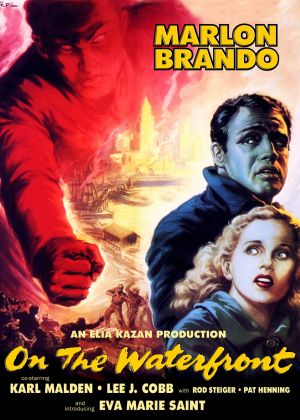
  4. On The Waterfront (1954) — Marlon Brando won his first Oscar for this film about union corruption.
  5. Dr. No (1962) — In his very first film outing, James Bond shows what a good job a true professional can do.
  6. The Godfather (1972) — “It’s strictly business.”
  7. Blue Collar (1978) — In this gritty film from Paul Schrader, three auto-workers (played by Yaphet Kotto, Harvey Keitel, and Richard Pryor) discover that their union is even more corrupt than management.  Consider this film to be an antidote to Norma Rae.
  8. F.I.S.T. (1978) — After the success of Rocky, Sylvester Stallone played a thinly-disguised version of Jimmy Hoffa in this epic historical film.  The film is poorly paced and doesn’t quite work but it’s interesting to see Stallone, post-Rocky, playing a character who isn’t necessarily all-that heroic.
  9. Convoy (1979) — The film celebrate the independent trucker, the hard-working driver who doesn’t want to be tied down by either the unions or the law.  Convoy is infamous for being an out-of-control production and yes, it is a bit self-indulgent.  But who cares?  When that convoy forms, you have to heartless not to cheer a little.
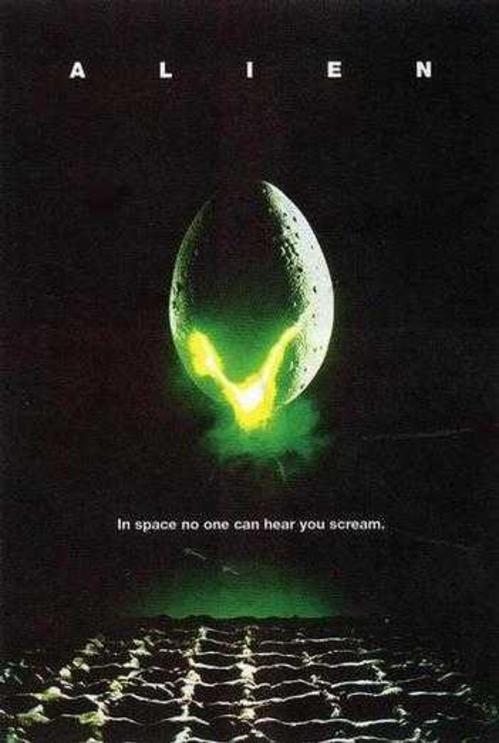
  10. Alien (1979) — One of the best films about how much it sucks to have to work for a living, Alien follows a group of blue-collar workers whose lives are deliberately put in danger by a big, faceless corporation.
  11. Last Exit to Brooklyn (1989) — A labor strike leaves a Brooklyn neighborhood reeling.  This film is not for the faint-hearted.
  12. Hoffa (1991) — Jack Nicholson stars as Jimmy Hoffa in this uneven but watchable film.  This movie is unabashedly pro-Hoffa and therefore, it provides an interesting contrast to films like F.I.S.T. and Blue Collar.
  13. Office Space (1999) — And don’t forget to sing along to the copier scene!
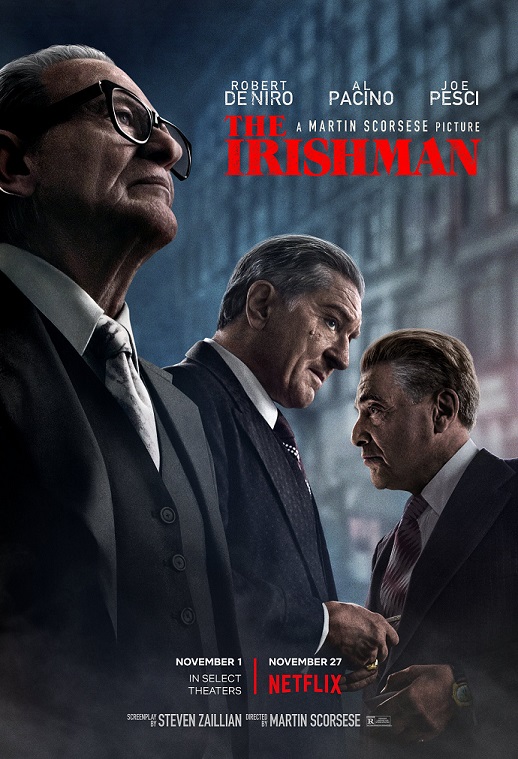
  14. The Irishman (2019) — Despite all the criticism that it received when it was first released, The Irishman is one of Martin Scorsese’s finest films.  It takes a while to get used to the de-aging but Al Pacino’s performance as Jimmy Hoffa was brilliant.  This film is one of the best looks at how the American labor movement lost its way.
An Offer You Can Take or Leave #13: Hoffa (dir by Danny DeVito)


The 1992 film, Hoffa, opens in 1975, with two men sitting in the backseat of a station wagon.  One of the men is the controversial labor leader, Jimmy Hoffa (Jack Nicholson).  The other is his longtime best friend and second-in-command, Bobby Ciaro (Danny DeVito).  The two men are parked outside of a roadside diner.  They’re waiting for someone who is late.  Jimmy complains about being treated with such disrespect and comments that this would have never happened earlier.  Jimmy asks Bobby if he has his gun.  Bobby reveals that he does.  Jimmy asks him if he’s sure that there’s a loaded gun in the diner, as well.  Bobby goes to check.

Jimmy Hoffa, of course, was a real person.  (Al Pacino just received an Oscar nomination for playing him in The Irishman.)  He was a trucker who became a labor leader and who was eventually elected president of the Teamsters Union.  He was a prominent opponent of the Kennedys and that infamous footage of him being interrogated by Bobby Kennedy at a Senate hearing seems to sneak its way into almost every documentary ever made about organized crime in the 50s.  Hoffa was linked to the Mafia and was eventually sent to prison.  He was freed by the Nixon administration, under the condition that he not have anything to do with Teamster business.  When he disappeared in 1975, he was 62 years old and it was rumored that he was planning on trying to take over his old union.  Everyone from the mob to the CIA has been accused of having had Hoffa killed.

Bobby Ciaro, however, was not a real person.  Apparently, he was a composite character who was created by Hoffa’s screenwriter, David Mamet, as a way for the audience to get to know the enigmatic Jimmy Hoffa.  Bobby is presented as being Hoffa’s best friend and, for the most part, we experience Jimmy Hoffa through his eyes.  We get to know Jimmy as Bobby gets to know him but we still never really feel as if we know the film’s version of Jimmy Hoffa.  He yells a lot and he tells Bobby Kennedy (a snarling Kevin Anderson) to go to Hell and he talks a lot about how everything he’s doing is for the working man but we’re never really sure whether he’s being sincere or if he’s just a demagogue who is mostly interested in increasing his own power.  Bobby Ciaro is certainly loyal to him and since Bobby is played by the film’s director, it’s hard not to feel that the film expects us to share Bobby’s admiration.  But, as a character, Hoffa never really seems to earn anyone’s loyalty.  We’re never sure what’s going on inside of Hoffa’s head.  Jack Nicholson is always entertaining to watch and it’s interesting to see him play a real person as opposed to just another version of his own persona but his performance in Hoffa is almost totally on the surface.  With the exception of a few scenes early in the film, there’s doesn’t seem to be anything going on underneath all of the shouting.

The majority of Hoffa is told via flashback.  Scenes of Hoffa and Bobby in the film’s present are mixed with scenes of Hoffa and Bobby first meeting and taking over the Teamsters.  Sometimes, the structure of the film is a bit cumbersome but there are a few scenes — especially during the film’s first thirty minutes — that achieve a certain visual poetry.  There’s a scene where Hoffa helps to change a man’s flat tire while selling him on the union and the combination of falling snow, the dark city street, and Hoffa talking about the working man makes the scene undeniably effective.  The scenes where Hoffa spars with Bobby Kennedy are also effective, with Nicholson projecting an intriguing blue collar arrogance as he belittles the abrasively ivy league Bobby.  Unfortunately, the rest of the movie doesn’t live up to those scenes.  By the time Hoffa becomes a rich and influential man, you realize that the film isn’t really sure what it wants to say about Jimmy Hoffa.  Does it want to condemn Hoffa for getting seduced by power or does it want to excuse Hoffa’s shady dealings as just being what he had to do to protect the men in his union?  The film truly doesn’t seem to know.

Hoffa is definitely not an offer that you shouldn’t refuse but, at the same time, it’s occasionally effective.  A few of the scenes are visually appealing and the cast is full of character actors like John C. Reilly, J.T. Walsh, Frank Whaley, and Nicholas Pryor.  It’s not a disaster like The Gang Who Couldn’t Shoot Straight.  Hoffa is an offer that you can take or leave.

Previous Offers You Can’t (or Can) Refuse:

  1. The Public Enemy
  2. Scarface
  3. The Purple Gang
  4. The Gang That Could’t Shoot Straight
  5. The Happening
  6. King of the Roaring Twenties: The Story of Arnold Rothstein 
  7. The Roaring Twenties
  8. Force of Evil
  9. Rob the Mob
  10. Gambling House
  11. Race Street
  12. Racket Girls