Harry Brown (2009, directed by Daniel Barber)


Today, we wish a happy 89th birthday to Michael Caine!

For longer than I’ve been alive, Michael Caine has been a star.  He’s one of the last surviving icons of the British cultural invasion of the 1960s, a venerable actor who went from being Alfie to being Carter to being Scrooge to being Alfred Pennywise without missing a step.  In many ways, he was the cockney Jack Nicholson, a working class actor with his own very identifiable style who still managed to play a wide variety of different characters.  Like Nicholson, there have been frequent reports that Caine has retired from acting and, if anyone has earned the right to enjoy their retirement, it’s Michael Caine.  Caine himself has said that he doesn’t ever see himself fully retiring from acting and he’s already proven that, even in his twilight years, he’s still as capable of giving a good performance as he was when he first started acting.

Take Harry Brown, for example.

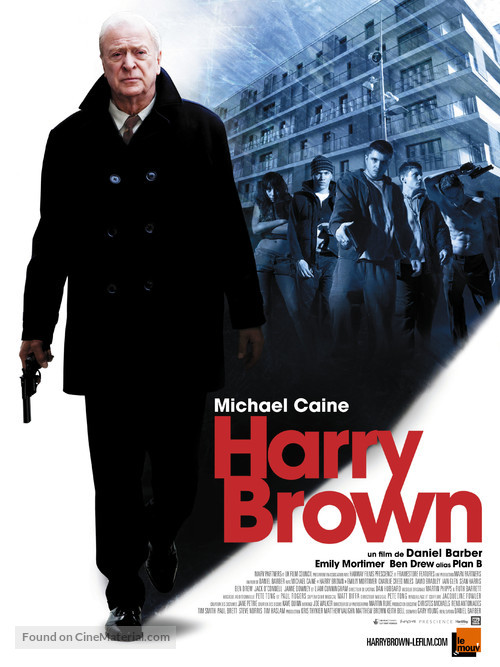
Michael Caine was 76 when he played the title role in this violent British thriller.  Harry is a former Royal Marine who, now elderly and suffering from emphysema, lives on a London council estate that has been taken over by a gang of violent drug dealers.  The nearby underpass is so dangerous that even Harry is scared to walk under it.  Because Harry has to take an alternate route to the hospital to avoid all of the gangs, his wife dies without Harry being at her side.  When his only friend is then killed while trying to stand up to the dealers, Harry snaps.  Harry starts tracking down and killing the dealers and the gang members who have made retirement so unbearable for him.  Detective Frampton (Emily Mortimer) suspects that Harry is the vigilante but, before she can move to stop him, both she and Harry are targeted by the local drug lord, who turns out to be someone who Harry never suspected.

Harry Brown is really just an updated version of Death Wish, set in London instead of New York.  It has its share of good action scenes and director Daniel Barber does a good job making London look like the worst place on Earth but, ultimately, it’s as predictable and heavy-handed as any of the films Michael Winner made with Charles Bronson.  What makes Harry Brown special is not the script but instead the presence of Michael Caine, giving one of his best and most heartfelt performances and making the movie work, even when the story tries to sabotage him.  Caine brings an appropriate amount of righteous fury to the role but he also plays the role with a lot of heart.  Harry would much rather be enjoying his twilight years in peace but he feels that he was one last mission to pursue.  He would rather die protecting his friends and his neighbors than live his life in fear.  Harry also knows that, because he’s old, everyone underestimates him.  That’s a mistake that he uses to his advantage.

Harry Brown is like many Michael Caine films in that the main reason to watch it is because it’s a Michael Caine film.  At the time he made the film, he said that he expected Harry Brown would be his last lead role.  It wasn’t.  Just like Harry Brown, Michael Caine still has more to show the world.

30 Days of Noir #14: Shoot to Kill (dir by William Berke)


The 1947 film, Shoot to Kill (also known as Police Reporter), opens with both a bang and a crash.

The police are chasing a car down one dark and lonely road.  When that car crashes, the police are shocked to discover who was inside of it.  Two men and one woman, all well-dressed.  The men are both dead but the woman is merely unconscious.  The police identify one of the men as being the notorious gangster, Dixie Logan (Robert Kent).  It makes sense that Logan would be fleeing the police but what about his two passengers, newly elected District Attorney Lawrence Dale (Edmund MacDonald) and Dale’s wife, Marian (Luana Walters)?

The police may not be able to get any answers but fortunately, there’s a reporter around!  Mitch Mitchell (Russell Wade) is a crime reporter and, seeing as how he knew both Lawrence and Marian, he seems like the perfect person to get some answers.  (In fact, it was Mitch who first suggested that Lawrence should hire Marian as his administrative assistant, therefore setting in motion the whirlwind romance that would end with them married.)  Mitch goes to see Marian in her hospital room and he asks her what happened.

It’s flashback time!  Yes, this is one of those films where almost the entire film is a flashback.  That, in itself, is not surprising.  Some of the best film noirs of all time were just extended flashbacks.  (D.O.A, Double Indemnity, and Sunset Boulevard, to name just a few examples.)  What sets Shoot to Kill apart is the fact that, occasionally, we even get characters having a second flashback while already in someone else’s flashback.  We’re through the the film noir looking glass here, people.

Lawrence Dale, we’re told, was elected district attorney because he managed to secure the conviction of notorious gangster Dixie Logan, despite Logan’s insistence that he was no longer involved in the rackets.  However, what we soon discover is that not only was Logan actually innocent but Dale specifically prosecuted him as a favor to some of Dale’s rival gangsters.  That’s right, Lawrence Dale was on the take!  It also turns out that Marian has some secrets of her own.  When she first showed up at Dale’s office, she was doing more than just looking for a job.  As for her marriage to Dale …. well, I really can’t tell you what the twist is here because it would spoil the entire film.

Shoot To Kill may clock in at just 64 minutes but it manages to pack a lot of twists and turns into just an hour.  In fact, I’d argue that it probably tries to do a little bit too much.  At times, the film is a bit difficult to follow and a few inconsistent performances don’t help matters.  For instance, Russell Wade is likable as the crime reporter but he still doesn’t exactly have a dynamic screen presence.  Much better cast are Luana Walters and Edmund MacDonald, who both do a good job as, respectively, a femme fatale and a sap.  At the very least, history nerds like me will be amused by the fact that Edmund MacDonald was obviously made up to resemble Thomas E. Dewey, the former Manhattan District Attorney who twice lost the U.S. presidency.

The best thing about Shoot To Kill is the look of the movie.  Filmed in grainy black-and-white and full of dark shadows, crooked camera angles, and men in fedoras lighting cigarettes in alleys, Shoot to Kill looks the way that a film noir is supposed to look.

Regardless of whether it was the filmmaker’s original intention, Shoot To Kill plays out like a low-budget, black-and-white fever dream.  It’s definitely a flawed film but, for lovers of film noir, still worth a look.

41 Songs But No End Credits


The Academy has released a list of the 41 songs that they have determined are “eligible” for an Oscar nomination next year.  Considering how this year has gone, I shouldn’t be surprised that the songs that I really liked (like “Kick Ass” from Kick Ass and “End Credits” from Harry Brown) have not been deemed eligible.

Anyway, via Awards Daily, here’s the complete list of the eligible songs:

“Alice” from “Alice in Wonderland”
“Forever One Love” from “Black Tulip”
“Freedom Song” from “Black Tulip”
“Bound to You” from “Burlesque”
“Welcome to Burlesque” from “Burlesque”
“You Haven’t Seen the Last of Me” from “Burlesque”
“There’s a Place for Us” from “The Chronicles of Narnia: The Voyage of the Dawn Treader”
“Coming Home” from “Country Strong”
“Me and Tennessee” from “Country Strong”
“Despicable Me” from “Despicable Me”
“Prettiest Girls” from “Despicable Me”
“Dear Laughing Doubters” from “Dinner for Schmucks”
“Better Days” from “Eat Pray Love”
“If You Run” from “Going the Distance”
“Darkness before the Dawn” from “Holy Rollers”
“Sticks & Stones” from “How to Train Your Dragon”
“Le Gris” from “Idiots and Angels”
“Chanson Illusionist” from “The Illusionist”
“Never Say Never” from “The Karate Kid”
“To the Sky” from “Legend of the Guardians: The Owls of Ga’Hoole”
“What If” from “Letters to Juliet”
“Life during Wartime” from “Life during Wartime”
“Made in Dagenham” from “Made in Dagenham”
“Little One” from “Mother and Child”
“Be the One” from “The Next Three Days”
“If I Rise” from “127 Hours”
“When You See Forever” from “The Perfect Game”
“I Remain” from “Prince of Persia: The Sands of Time”
“Dream Big” from “Pure Country 2: The Gift”
“How I Love You” from “Ramona and Beezus”
“Darling I Do” from “Shrek Forever After”
“Noka Oi” from “Six Days in Paradise”
“This Is a Low” from “Tamara Drewe”
“I See the Light” from “Tangled”
“Rise” from “3 Billion and Counting”
“We Belong Together” from “Toy Story 3″
“Eclipse: All Yours” from “The Twilight Saga: Eclipse”
“Nothing” from “Tyler Perry’s Why Did I Get Married Too”
“A Better Life” from “Unbeaten”
“Shine” from “Waiting for ‘Superman’”
“The Reasons Why” from “Wretches & Jabberers”

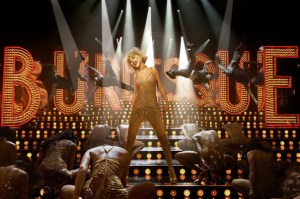
I saw Burlesque with my friend Evelyn earlier tonight (hi, Evelyn!) and even though the movie was pretty silly, we ended up singing our own version of “Bound to You” for three hours afterward. 

I also thought that “Better Days” from Eat Pray Love and “Dear Laughing Doubters” from Dinner For Schmucks were both perfect examples of good songs written for rather disappointing movies.

Still, I’m sad to see that “Pimps Don’t Cry” won’t be getting a chance to bring The Other Guys some Oscar glory.