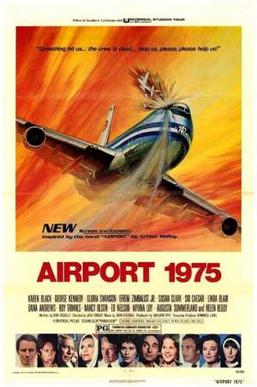
Film Review: Airport 1975 (dir by Jack Smight)


About halfway through 1974’s Airport 1975, Sid Caesar has one of the greatest lines in film history.

“The stewardess is flying the plane?”

Hell yeah, she is!  After a collision with another plane takes out the crew of a Broening 747, it’s up to head flight attendant Nancy (Karen Black) to keep the plane from crashing until another pilot can somehow be lowered into the cockpit of the stricken airliner.  Nancy’s never flown an airplane before but she is dating Al Murdock (Charlton Heston), who may be scared of commitment but who is still described as being one of the greatest pilots who has ever lived.  None other than Joe Patroni (George Kennedy) says that no one knows more about flying than Al Murdock.

George Kennedy is the only cast member to return from the original Airport.  When we previously met Patroni, he was the cigar-chewing chief mechanic for Trans World Airlines.  In Airport 1975, he’s suddenly an executive with Columbia Airlines.  His wife (Susan Clark) and his son (Brian Morrison) are also on the plane.  Joe Patroni and Al Murdock are determined to bring that plane safely to the ground in Salt Lake City and if that means dropping a pilot into the cockpit from a helicopter, that’s what they’ll do.  It’s all a question of whether or not Nancy can keep that plane from crashing while they round up a helicopter and a pilot.

Airport 1975 is so famous for being the movie where the stewardess is flying the plane that it’s often overlooked that it’s also the film where Linda Blair plays a young girl in need of a kidney transplant.  When Sister Ruth (Helen Reddy) sees that the girl has a guitar with her, Ruth sings a folk song that has everyone on the airplane smiling.  (If I was on a plane and someone started playing folk music, I’d probably jump out.  That may seem extreme but seriously, you don’t want to test me on how much I dislike the folk sound.)  This scene was, of course, parodied in Airplane!  In fact, it’s pretty much impossible to watch Airport 1975 without thinking about Airplane!

It’s also overlooked that Gloria Swanson is one of the many stars to appear in this film but Swanson is the only one playing herself.  Gloria Swanson starts as Gloria Swanson and I assume that this 1974 film was set in 1975 in order to generate some suspense as to whether or not Swanson was going to survive the crash.  Swanson talks about how, in 1919, Cecil B. DeMille flew her over California.  She does not talk about Joseph Kennedy or Sunset Boulevard and that’s a shame.  As I watched Airport 1975, I found myself thinking about how different the film would have been if Gloria Swanson had been the one who had to pilot the plane instead of Karen Black.

“Gloria Swanson is piloting the plane?”

As entertaining as that would have been, it would have meant missing out on Karen Black’s intense performance as Nancy.  At times, Nancy seems to be so annoyed with the situation that one gets the feeling that she’s considering intentionally crashing the plane into one of Utah’s mountains.  At other times, she seems to be at a strange sort of peace with whatever happens.  There’s a scene where she attempts to clear some of the clutter in the cockpit and an instrument panel falls on her head and it’s such a powerful moment because I know the exact same thing would have happened to me in that situation.  There’s another moment where I’m pretty sure she accidentally kills the first pilot who attempts to drop into the cockpit and again, it’s a mistake that anyone could have made.  The film doesn’t call her out on it because the film understand that none of us are perfect, except for Charlton Heston.

Speaking of which, Karen Black’s emotional performance contrasts nicely with the performance of Charlton Heston.  This is perhaps the most Hestonesque performance that Charlton Heston ever gave.  Al Murdock is confident, he doesn’t suffer fools, and he’s condescending as Hell.  Every time he calls Nancy “honey,” you’ll want to cringe.  And yet, it’s hard not to appreciate someone who can be so confident while wearing a tight yellow turtleneck.  Charlton Heston watches as the first pilot to attempt to enter the cockpit plunges to his death and immediately declares that it’s his turn to try.  “Get me in that monkey suit!” he snaps and it’s such a Heston moment that you have to love it.

There’s a ton of people in this movie.  Norman Fell, Jerry Stiller, and Conrad Janis play three rowdy drunks.  Erik Estrada, Efrem Zimbalist, and Roy Thinnes are the unfortunate members of the flight crew.  Dana Andrews has a heart attack while piloting a small private plane.  Myrna Loy appears not as herself but as Mrs. Delvaney, who spends almost the entire flight drinking.  Christopher Norris plays Bette, who says that she may look like a teenager but she prefers to be called “Ms. Teenager” and that she’s trained in Kung Fu.  Beverly Garland played Dana Andrews’s wife.  Larry Storch is an obnoxious reporter.  Character actor Alan Fudge plays Danton, the Salt Lake City controller who keeps Nancy calm until Charlton Heston can start snapping at people.

The first time that I watched Airport 1975, I was pretty dismissive of it but, over the years, I’ve rewatched it a few times and I have to admit that I’ve fallen in love with this wonderfully ridiculous film.  There’s just so many odd details, like American Graffiti showing up as the plane’s in-flirt entertainment and Sid Caesar saying that he’s only on the flight because he has a small role in the movie and he finally wanted to see it.  (It seems like it would have been cheaper to just go to a drive-in but whatever.)  And there’s Karen Black, giving the performance of a lifetime and letting us all know that, in 1975, the stewardess flies the airplane!

And she does a damn good job of it too!
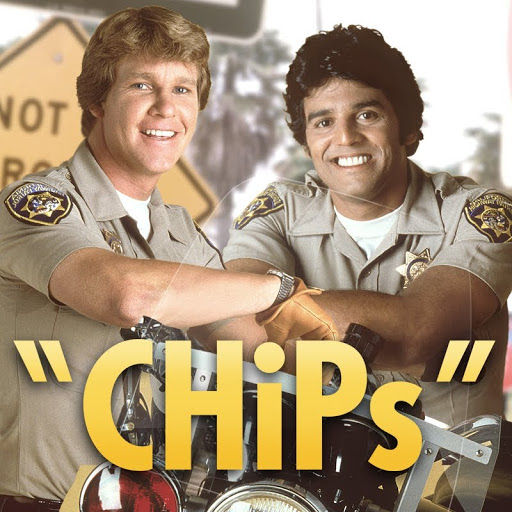
Late Night Retro Television Review: CHiPs 2.16 “Pressure Point”


Welcome to Late Night Retro Television Reviews, a feature where we review some of our favorite and least favorite shows of the past!  On Mondays, I will be reviewing CHiPs, which ran on NBC from 1977 to 1983.  The entire show is currently streaming on Freevee!

This week’s episode is a change-of-pace as Ponch and Baker get off their motorcycles and go undercover!

Episode 2.16 “Pressure Point”

(Dir by Phil Bondelli, originally aired on January 20th, 1979)

The limousine of wealthy industrialist Arthur Forbinger (Rudy Vallee) is ambushed by three cars and a motorcycle.  The motorcyclist shatters both the back and the front driver’s side window and tosses an envelope into the backseat.  Forbinger orders his driver to chase the motorcycle.

Ponch and Baker, enjoying a leisurely patrol through Beverly Hills, spot the limo speeding down the street and they decide to pursue it.  When Forbinger finally tells his driver to pull over, Ponch and Baker demands to know why Forbinger was putting lives at risk.  Forbinger lies and says that he was late to a meeting.  In reality, Forbinger has just opened the envelope and discovered pictures of his granddaughter, Chris (Mary Crosby).  The implication is that whoever broke his window can also get to Chris.

Despite Forbinger’s attempts at deflection, Ponch, Baker, and Cahill soon figure out what actually happened.  Thinking that Forbinger is perhaps being targeted by a private security firm that scares rich people into hiring its guards, Getraer tells Ponch and Baker to get off their motorcycles because they’re going undercover.  Ponch will pretend to be a diplomat from Argentina and Baker will be his driver.

Ponch is overjoyed to at the chance to pretend to be rich.  He’s even happier when he meets Chris.  Oh, that Ponch!

This episode was weird.  It just doesn’t feel right for Ponch and Baker to not be on their motorcycles and the episode spent so much time with Forbinger and Chris that I found myself wondering if it was meant to be some sort of backdoor pilot for a primetime soap opera about the Forbinger family.  Despite featuring quite a few chase scenes and a few dramatic crashes, this didn’t feel like an episode of CHiPs at all.  Is there really a point to the show without the motorcycles?

The other problem with this episode was that the performance of Rudy Vallee …. well, it wasn’t good.  I know that Rudy was a show business veteran when he did this episode and that he had been around for a while but he still gives a rather flat and lifeless performance.  He delivers his lines as if reading them off of a cue card.  (For all I know, he was reading them off of a cue card.)  As for the rest of the guest cast, Mary Crosby is stuck with a nothing role while Guy Stockwell and Tom Troupe are a bit too obviously sinister as the duplicitous security men.

This episode went for a change of pace but it just didn’t work.  Sorry, Highway Patrol.

The Gatling Gun (1971, directed by Robert Gordon)


In the post-civil war west, two Calvary troopers steal a Gatling Gun, the weapon that was invented to be such a powerful instrument of death that people would stop fighting wars just to avoid finding themselves in front of its barrel.  (It didn’t work out that way, of course.)  With the help of a pacifist reverend named Harper (John Carradine), they smuggle the gun into Apache territory.  Rev. Harper thinks that the gun is going to be destroyed and, thus, another instrument death will be eliminated. from the world  Instead, the greedy troopers are planning on selling the gun to Apache Chief Two Knife (Carlos Rivas).  Two Knife has promised a fortune’s worth of gold to anyone who can deliver to him the deadliest weapon in the west.

Before the gun can be exchanged, the reverend, his daughter, and the two deserters are intercepted by a group of Calvary troops led by Lt. Wayne Malcolm (Guy Stockwell).  One of the deserters is killed while the other, Pvt. Sneed (Robert Fuller) is captured.

However, Chief Two Knife still wants what he calls “the king gun.”  Malcolm and his troops find themselves pinned down by the Apaches.  Can Malcolm, with the help of a rancher (Phil Harris), a scout (Woody Strode), and a cook (Pat Buttram), keep both the gun and the all important firing pin from falling into the hands of Two Knife?

The Gatling Gun is a low-budget western that would probably be today forgotten except that it has fallen into the public domain and has been included in several DVD box sets.  It has the flat, generic look of a Western television show and Guy Stockwell’s stiff performance may be believable for a 19th century Calvary captain but it’s still doesn’t exactly make for compelling viewing.  The main problem is that the most exciting and interesting part of the story, the two deserters stealing the gun and tricking the Reverend into helping them, occurs off-screen and the movie instead begins with Malcolm capturing Sneed.

Western fans will mostly want to watch this one to see John Carradine and Woody Strode, two very different actors who were both favorites of John Ford’s and who appeared in several other, better westerns.  (Strode and Carradine had both previously appeared in The Man Who Shot Liberty Valance, to name just one example.)  Carradine is typically theatrical, delivering his lines like the old Shakespearean that he was.  Strode, as usual, is stoic but his imposing screen presence makes him the most memorable of the film’s heroes.  Also keep an eye out for Patrick “son of John” Wayne, playing the rancher’s son.

Though The Gatling Gun has the look of a film that was shot on a studio backlot in Hollywood, it was actually filmed, on location, in New Mexico.  The state’s then-governor, David Cargo, has a small role as Corporal Benton and is listed in the credits as “Honorable Governor David Cargo.”  A look at his imdb page reveals that David Cargo appeared in four films while he was governor.  All of them were filmed in New Mexico so I guess casting the governor was a requirement for filming in that state.  When Cargo left office in 1971, his movie career ended.

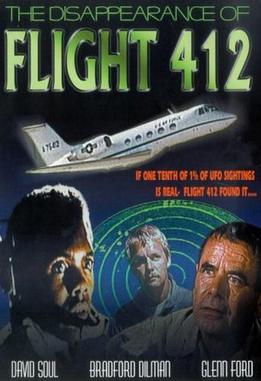
The Disappearance of Flight 412 (1974, directed by Jud Taylor)


Because of recent electrical surges aboard its aircrafts, the commander of the Whitney Air Force Base 458th Radar Test Group sends a four-man crew up in Flight 412 to try to figure out what’s happening.  Colonel Pete Moore (Glenn Ford) and Major Mike Dunning (Bradford DIllman) assume that it will just be a routine flight.  Instead, they find themselves at the center of a government cover-up when Captain Bishop (David Soul) and the other members of the crew spot what appears to be a UFO.  When two jets are sent out to intercept the object, the jets vanish.

Suddenly, Flight 412 is ordered to land at a seemingly deserted military base in the desert.  When they do, the airplane is impounded and the crew is forced to undergo an 18-hour debriefing led by government agents.  The agents demand that the crew members sign a statement saying that they didn’t see anything strange in the air before the jets vanished.  Until all four of the men sign the release, the crew of Flight 412 are officially considered to be missing and will not be released until they agree to deny what they saw.

Meanwhile, Col. Moore tries to learn what happened to his men but the government, led by Col. Trottman (Guy Stockwell), is not eager to tell him.

This movie was made-for-television, at a time when people claiming to have been abducted by aliens was still a relatively new phenomenon.  It was also made during the Watergate hearing and in the wake of the release of the Pentagon Papers, so the film’s sinister government conspiracy probably felt relevant to viewers in a way that it wouldn’t have just a few years earlier.  I appreciated that the movie took a semi-documentary approach to the story but that it tried to be serious and even-handed.  The film shows how witnesses can be fooled or coerced into saying that they saw the opposite of what they actually did see.  Unfortunately, The Disappearance of Fight 412 is ultimately done in by its own cheapness.  The overreliance on familiar stock footage doesn’t help the film’s credibility and there’s too many familiar faces in the cast for the audience to forget that they’re just watching a TV movie.  The Disappearance of Flight 412 doesn’t really succeed but it is still interesting as an early attempt to make a serious film about the possibility of alien abduction and the government covering up the existence of UFOs..  Three years after this film first aired, Steven Spielberg would introduce these ideas to an even bigger audience with Close Encounters of The Third Kind.