Review: The Proposition (dir. by John Hillcoat)


When I first saw John Hillcoat’s film The Proposition I was literally shocked and dumbstruck with what I had just witnessed. As a long-time aficionado of the horror genre I could say that part of me has become desensitized to onscreen violence and nothing really shocks me. Even though I’ve seen films with more violence throughout its running time, The Proposition just had a heavy sense of despair, moral ambiguity, and a Miltonian feel throughout. The film felt like how it would be if one accepted an offer from one of the damned to stroll down to the Nine Circles of Hell. As much as I didn’t want to accept that offer the curiosity of what I might see won out. That’s how I was able to sit through the entirety of Hillcoat’s ultra-violent and nihilistic tale of lawless and amoral individuals in the untamed wilderness of 1880’s Australian Outback.

I must agree with several critics who have said The Proposition seemed to mirror another dark and violent tale. Hillcoat’s film shares so much the same themes and tone as Cormac McCarthy’s brutal novel, Blood Meridian, that one almost wondered if the film was adapted from McCarthy’s great novel. But similarities aside, Hillcoat and Nick Cave’s (director and writer respectively) film can clearly stand on its own two bloody legs.

The film begins with a bloody siege and shootout and we’re soon introduced to two of the three Burns’ brothers. We soon find out that both brothers, Charlie (played by Guy Pearce) and Mikey (played by Richard Wilson), are outlaws wanted for a multitude of heinous crimes with a recent one the senseless rape and murder of the Hopkins family. One Capt. Stanley (Ray Winstone) who acts as law in this particular area of the Outback also happens to be friends of the unfortunate Hopkins clan. When he finally apprehends the two brothers after the siege gives older brother Charlie a proposition. He’ll spare the younger brother’s life from the hangman’s noose if Charlie finds their older brother Arthur (played with Kurtz-like menace by Danny Huston) and kills the outlaw leader. The quest is set as Charlie accepts and sets out to find his elder brother. Whether Charlie will go through with killing his older brother Arthur is one thing the audience won’t find out until the final minutes of the film. Even though there’s no love-lost between Charlie and Arthur, there’s still the traditional bond of family that makes Charlie’s quest a complex one.

We realize early on that Charlie is very protective of his simpler, younger brother Mikey and would do anything to save his life. Guy Pearce does a great performance as the conflicted and brooding Charlie Burns. There’s a quiet intensity in Pearce’s performance. He’s pretty quiet through most of the film, but one could feel the palpable rage just roiling beneath his brooding countenance. Pearce’s Charlie is one who is only a trigger away from exploding into outright violence. Charlie is definitely a child and creation of the lawless Outback the film is set in.

Arthur Burns on the other hand comes in introduced as an almost warrior-poet (though in this story it would be more like a charismatic-sociopath) who would watch the sun set and spout poetry as easily as gun down an innocent or slice a man’s throat without missing beat. Danny Huston does a bravura performance as the charismatic and wholly amoral Arthur. His performance easily matches that of Pearce’s scene for scene. Another performance that I must point out as being very strong in the film is Ray Winstone as Capt. Stanley, the Ahab of the tale with his obsession to bring civilization to the lawless Outback and to bring Arthur Burns to ultimate justice even if it means dealing with the lesser evil that is Charlie Burns.

The Proposition will be talked about alot for its unflinching look at violence onscreen. Though there’s been films that have more violence per hour than Hillcoat’s film, but the extreme brutality of the killings, maimings and rape in The Proposition has such an air of realism to it that one cringes at every gunshot wound and knife slashing. Like Aronofsky’s Requiem for a Dream, this film’s scenes of violence makes one want to rush into the shower and cleanse off the dirt, grime and stink of the film. It’s in this unflinching and realistic portrayal of death and violence that the film shares alot with McCarthy’s Blood Meridian. The images are difficult to watch, but our curiosity makes us look through squinted eyes to see the full breadth of the violence. In time, just through the audiences acceptance of the oncreen violence do we soon become complicit in whats going on the screen.

It is a shame that The Proposition had such a limited release in the US. Even since it’s release on video it’s a film that still seems to be underappreciated. I think this film would’ve done as well as Eastwood’s Unforgiven in giving the audience a different, darker side of the Old West mythology (though its really the Australian Old West). John Hillcoat has crafted himself a brutal and nihilistic film that’s very hard to watch but also difficult to ignore. The Proposition is a film I highly recommend as it is the type of film that helps redefine a whole genre.
A Quickie With Lisa Marie: The King’s Speech (directed by Tom Hooper)


So, I was talking to a friend of mine about the movie The King’s Speech and I told him that the movie was very good but that it managed to “raccoon eye me.”  He found this comment to be very humorous.  In fact, he could not stop laughing at me.  Finally, I got him to stop giggling long enough to explain to me what exactly was so funny about me crying for 2 hour and 13 minutes.  At that point, he explained to me what “raccoon eyes” means to him and apparently every other boy on the planet and all I can say is “ewwwwww!”  Seriously, I’m open to just about anything  but….uhmm, no.  Sorry, no.

Anyway, when I say that The King’s Speech left me all “raccoon-eyed,” I’m referring to the fact that I started crying about 3 minutes into the film — basically from the first minute that a frightened-looking Colin Firth tried to speak into a microphone — and I didn’t stop until the movie was over.

Why was I crying?  A lot of it is because (and I know I say this about almost every movie I see but so what?) I related to the film’s subject matter.  Colin Firth plays the future King George VI (father of the current Queen of England).  Like millions of others (myself included), George VI spoke with a stutter.  Ordinarily this wouldn’t have been a problem (as royalty wasn’t necessarily meant to be seen or heard) but George VI just happens to become king at a time when almost every household has a radio and everyone expects to hear the king’s voice.  In short, the people expect the king to not only speak for them but to speak with them as well and George VI finds himself unable to even speak for himself, much less his nation.  As a result, his wife (Helena Bonham Carter) secretly arranges for the king to receive help from an eccentric, self-trained speech therapist named Lionel Logue (Geoffrey Rush).  The film details the King and Logue’s often contentious friendship, following their relationship up until George VI finds himself, in the days after the start of World War II,  required to give the most important speech of his life.

To a certain extent, you’re going to have to take it on faith that The King’s Speech is a very intelligent, very funny, and very entertaining film because there’s no way to describe the film’s general plot without making it sound like one of those really tedious, boring films that always come out in December.  However, director Tom Hooper takes material that might otherwise have been dry and predictable and he films it with a surprising flair so that even the most predictable of scenes (i.e., the King and Logue get inebriated together and the King talks about the loneliness of being royal) feel fresh and surprising.  This a film that is both interesting to look at and listen to.  Hooper recreates an often foggy, pre-World War II London using a palette of grays and faded primaries.  As a result, the film somehow manages to be both melancholy and nostalgic at the same time.  You marvel at the recreation of the past even with the knowledge that everything’s going to be destroyed in another few years by the onslaught of world war.

Hooper gets uniformly excellent performances from his entire cast.  Rush is eccentric without being overly flamboyant and a result, his performance never descends into the cutesy tricks that have marred so many of his recent onscreen turns.  Bonham Carter, as well, gives one of her most sympathetic performances, suggesting the class of royalty with just enough hint of the off-center persona that made her the perfect Marla Singer. 

However, the film ultimately belongs to Colin Firth.  After years of playing upper class idiots and tragically repressed company men, Firth finally gets to play a human being.  It’s a tribute to his talent that he manages to be believable as both “Bertie,” the insecure Duke of York and as the man Bertie will eventually become, King George VI.  The reason I cried through this film is not just because I used to (and occasionally still do) stutter.  The reason was because Firth captured the essence of having so much to say but not feeling as if you’ll ever be allowed to say it.  Everything Firth does in this film — whether he’s losing his temper over Lionel’s attempts to get him to open up or sadly trying to tell his daughters a joke or joyfully shouting out every piece of profanity he can think of because he doesn’t stutter while being profane — is perfection.  I hate to say that any one was born to play a role (because I think it tends to devalue just how much effort goes into good acting) but it’s hard to escape the feeling that everything Firth has ever done on-screen was simply preparing both him and us for his triumphant performance here.

At the same time, I should add that The King’s Speech is probably the most English (as opposed to British) that I have ever seen.  Lionel may question why George VI’s royal duties lead him to suffer but he never once questions whether or not those royal duties are actually necessary.  Furthermore, the film also tells the tale of Edward VIII (a wonderfully narcissistic turn from Guy Pearce) and his famous abdication from the British throne so that he could be with “the woman I love,” American Wallis Simpson (played by Nurse Jackie’s Eve Best with a permanent scowl).  The film presents Edward and Simpson with absolutely zero sympathy and leaves little doubt that the last thing a member of the British Royal Family should ever do is fall in love with a divorced American. 

(That said, the film is probably correct when it suggests that Simpson and Edward were sympathetic to the Nazi cause.)

It says something about the three lead performances and the strength of Hooper’s direction that even I — proud as I am of my roots in Catholic Northern Ireland — still loved this film despite its obvious pro-English bias.

After the movie ended and I had finally managed to stop crying and clean my face, I found myself reflecting on the fact that I feel as if I know so much about the British Royal Family and yet everything I know about them comes from going to the movies.  As far as the cinematic family history is concerned, The King’s Speech is the best chapter yet.

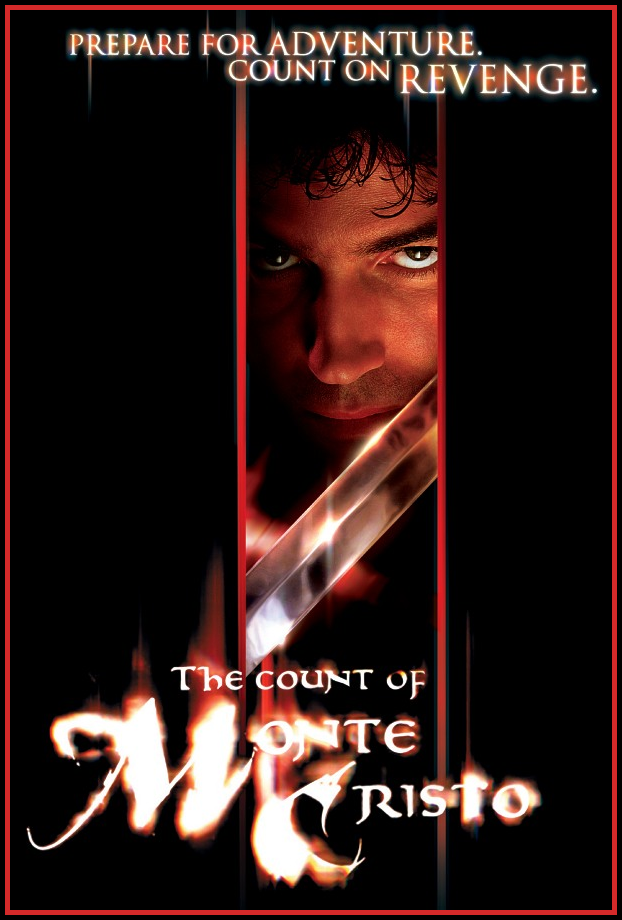
Review: The Count of Monte Cristo (dir. by Kevin Reynolds)


In what has become an unofficial ritual for myself whenever my birthday rolls around I always end up watching a film from 2002 that flew under the radar of most people. While it made modest box-office returns it wasn’t the head-turning blockbuster that some of its producers hoped it would turn out to be. It’s a romantic adventure piece by Kevin Reynolds and for readers of classic literature they’d recognize the title of the film, The Count of Monte Cristo. A film loosely based on the classic novel of adventure, revenge and redemption by French author Alexandre Dumas. The film ends up being a fun, thrilling throwback to films of an era which had marquee stars such as Errol Flynn and Basil Rathbone.

The story is one known well enough. It’s a tale of a man, Edmond Dantès wrongly accussed of a capital crime and imprisoned in the Alcatraz-like prison Chateau d’If through the machinations of three individuals: his best friend Fernand Mondego, first mate Danglars and the ambitious deputy prosecutor Villefort. Dantès spends the next several years in Chateau d’If under the cruel and sadistic eyes of it’s warden, Armand Dorleac (played by Michael Wincott with his usual flair for sadism). It’s while Dantès  has started to contemplate suicide after rejecting God for the pain and suffering he has had to endure that he has a fortuitious meeting with another guest of Chateau d’If. It’s this relationship between Dantès and Abbé Faria (Richard Harris in the mentor role he had begun to play in his later years) which take up the bulk of the first third of the film.

Dantès tells him of the circumstances which led to his imprison in Chateau d’If and the thoughts of vengeance on those responsible for his predicament. Faria tries to turn him from his dark path, but seeing how determined his young friend seems on journeying down its twisted path he agrees to teach him how to become adept at being a noble, finances and in swordcraft in exchange for help in digging themselves out of their prison. Taking several more years to complete the education Dantès needs to exact his revenge it ends at the death of Faria and his mentor’s final gift to his student. The location of a treasure so vast that Dantès could retire to a life of peace and contemplation or fund his plans of vengeance.

The middle section of the film shows Dantès finding the treasure and remaking himself through his newfound wealth as the Count of Monte Cristo to better insinuate himself amongst the wealthy and noble-born his targets mingle in. With the help of a bandit whose life spares after a duel in Jacopo (Luis Guzman) the plans Dantès has worked on for years begin to bear fruit as he manipulates and fools Fernand, Villefort and Danglars into his confidence to better see to their downfall. It’s during this time he meets his former fiancee Mercedes (played by the ridiculously beautiful Dagmara Dominczyk), now Countess Mondego after being told of Edmond’s execution earlier in the film, and Fernand’s son Albert. The circumstances of how his former love having had a child and married to one of the men who had conspired against him brings a new complication to Dantès plans.

The last third of the film shows the culmination of Dantès and his elaborate plans to bring about the downfall of all those who had wronged him. While the plans, at times, strain the bonds of disbelief at actually having fooled and worked against his enemies the way the film makes the audience root for Dantès to succeed helps. This is a Dantès who comes off as noble despite being of commoner origins who we stand behind and support in his plans of vengeance. With the amount of wealth at his disposal it’s not too difficult to put oneself in the same shoes and not think of vengeance as well to strike a balance.

It’s a testament to the direction of filmmaker Kevin Reynolds that the film and it’s story never bogs down despite a story with many elaborate plots and secondary characters introduced midway. The fact that the film only borrows some of its complexity from an even more labyrinthine novel shows how the filmmakers actually had to simplify the story as to not make it so complex that it loses the bulk of its audience.

The Count of Monte Cristo also benefit from a strong cast led by Jim Caviezel in the titular role with Guy Pearce playing his former friend and betrayer Fernand Mondego and James Frain as the prosecutor Villefort. Caviezel plays his role as Dantès and as the Count of Monte Cristo as two different people with distinct personalities. There’s Dantès the earnest sailor who just wanted to get back to his love, Mercedes and then there’s the sophisticated and ruthless Count whose machinations would lead to the destruction of lives and reputations. It’s a mystery why Caviezel hasn’t become the star he surely was in the making and this film showed that he had the talent to become one of the industry’s new leading men. I blame Mel Gibson in casting him as Jesus in The Passion of the Christ for having put a curse on Caviezel.

Guy Pierce in the role of Fernand plays the conniving and remoreless villain role to the hilt. With an overbearing and effete noble bearing to his performance it was a character written to inspire hatred not just in its main protagonist but in the audience as well. Pearce knows what his roles represent and has fun playing up the role as main heavy.

Richard Harris as the priest Faria did his usual great work as the elder mentor to a younger man. It was a role he began to be known for starting with Ridley Scott’s Gladiator right up to his final mentor role as the wizard Dumbledore in the Harry Potter film franchise. It’s hard to explain to people that Harris was not always this wise and mentoring father figure, but one who played roles where he’d play womanizers, charming cads and roguish rebel.

The Count of Monte Cristo ended up being more fun than it should be with enough complexities in its storytelling that the film doesn’t dumb down too much the story it was adapted from. To be honest the only way one could truly adapt Dumas’ novel of revenge and redemption is through a long-form tv series. It is just that complex with so many characters that a film adaptation would just be too long or just unnecessarily crowded with characters the audience would care to know. It’s a good thing that the film by Kevin Reynolds was still able to keep to the spirit of the original source while whiling away the story down to its basic core.

It’s a film that plays like a throwback to the swashbuckling films from Hollywood of the 30’s and 40’s and it wouldn’t be too difficult to see Caviezel in the roles Errol Flynn once inhabited. There’s very little special effects in the film which adds more to this sense with swordfight scenes as expertly choreographed as any of the past. The Count of Monte Cristo, for some reason still unknown to me, continues to be the one thing that keeps airing on my birthday and the fact that it’s such a fun and thrilling film that I continue to watch it everytime my day of days roll around. Can’t wait for next year.

For Your Oscar Consideration


It’s November and that means that we have now officially entered Oscar season.  For the next two months, movies specifically designed to win awards will be released in theaters across America.  Movies like Fair Game, The King’s Speech, True Grit, For Colored Girls, Another Year, and 127 Hours will be presented for “your consideration,” as they always put it in the Oscar ads.  Don’t get me wrong, I’m looking forward to seeing quite a few of those films.  Fair Game looks like its going to be a bit of a pain (seriously, Sean Penn, it’s great you were right about Iraq and all but get over yourself)  and For Colored Girls seems like it’ll be one of those films that people are scared to admit disliking.  However, The King’s Speech looks like it might be a funny and sweet little movie and  127 Hours looks like it might be the film that proves that James Franco is a major hottie who could use and abuse me in any way he…uhmm, sorry, where was I?  Oh yeah — Oscar season!

The unfortunate thing about Oscar season is that often it seems that movies that were released before the end of the year are either totally forgotten or only given a few sympathy nods.  So, here’s my personal list of a few contenders that, though released pre-Oscar season, I think are just as deserving of consideration as Fair Game.

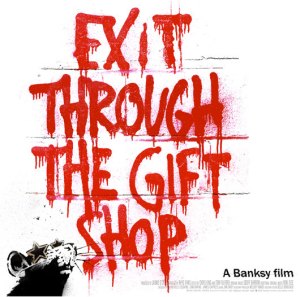
1) Best Picture — Exit Through The Gift Shop

People either love this film or they hate it.  I love it.  I think it’s a great mindfuck and, as of now, it’s my favorite film of 2010.  In a perfect world, it would not only be the first documentary to be nominated for best picture but the first one to win as well.  Unfortunately, the Mainstream hates having its mind fucked.  Which is why I say — Grindhouse Victory for Exit Through The Gift Shop!

2) Best Picture — Animal Kingdom

This grim yet compelling Australian crime thriller plays like an unromanticized version of The Town, which is probably why it will be no where to be seen once the nominations are announced.  Animal Kingdom also features award worthy work from actors Jacki Weaver, Ben Mendelsohn, Guy Pearce, and director David Michod.

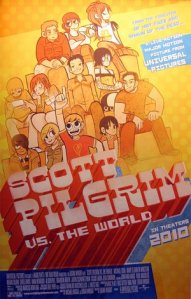
3) Best Picture — Scott Pilgrim Vs. The World

Yes, it crashed and burned at the box office and it’s been the victim of an anti-Michael Cera backlash but Scott Pilgrim Vs. The World was one of the best and most original films of the summer.  If the best movies succeed by creating their own unique worlds, then Scott Pilgrim Vs. The World deserves to be recognized as one of the best.

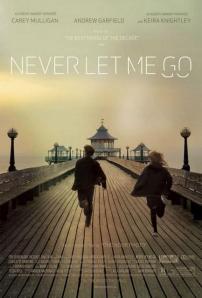
4) Best Picture — Never Let Me Go

Mark Romanek’s low-key but affecting adaption of Kazou Ishiguro’s award-winning novel takes a familiar Sci-Fi plot — clones are raised in seclusion so that their organs can eventually be harvested — and turns it into a haunting meditation on life, death, love, and fate.  Carey Mulligan, who deserved the Oscar last year for An Education, holds the film together with quiet strength while Kiera Knightley and Andrew Garfield make the most of the more showy supporting roles.

5) Best Actor — Patrick Fabian, The Last Exorcism

Yes, Fabian will never be nominated because The Last Exorcism was a box office flop, a horror film, and it had an ending that generated a lot of negative word of mouth.  However, I believe that Fabian gave the best performance of the year (so far) in this film.  One reason why that over-the-top ending upset so many viewers was because Fabian had kept the film so grounded in reality that the sudden appearance of the supernatural almost felt like a betrayal.  Incidentally, I think that Fabian’s performance was meant to be an homage to former child evangelist Marjoe Gortner.  (And yes, I realize that’s like the 100th time I’ve casually mentioned Marjoe Gortner on this site.  It doesn’t mean anything.  Or does it?)

6) Best Actress — Noomi Rapace, The Girl With The Dragon Tattoo

The Mainstream has pretty much already declared Annette Bening to be the winner for her work in The Kids Are All Right but the Grindhouse knows that 2010 was the year of The Girl With The Dragon Tattoo.

7) Best Actress — Katie Jarvis, Fish Tank

Fish Tank probably played too early in the year to be properly remembered by the Academy but that doesn’t change the fact that it’s one of the best films of the year.  Playing an angry but naive British teen, Katie Jarvis gives a fearlessly vulnerable performance.  Just consider the harrowing scene where, after kidnapping her older lover’s daughter, she realizes what a mistake she’s made.

8 ) Best Supporting Actor — John Hawkes, Winter’s Bone

While I hope Winter’s Bone, at the very least, receives nominations for best picture, best actress for Jennifer Lawrence, and a best director nod for Debra Granik, I fear that John Hawkes will be forgotten.  That’s a shame because Hawkes, arguably, gives the strongest performance in the film.  As Lawrence’s drug addicted uncle, Hawkes is both scary and heroic.  If Lawrence represents hope for the future, Hawkes epitomizes the doom of the present.

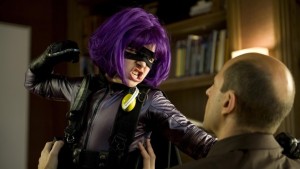
9) Best Supporting Actress — Chloe Grace Moretz, Kick-Ass

If Moretz is nominated, it’ll probably be for her performance in Let Me In.  However, good as she was in that film, I think her performance in Kick-Ass is even better.  Playing the controversial character of Hit-Girl, Moretz was the film’s foul-mouthed, borderline-psychotic heart.

10) Best Cinematography — Twelve

Yes, Twelve is a dire film that manages to turn a good book into a silly melodrama but the movie is gorgeous to look at.

11) Best Original Score — Machete

As performed by the band Chingon (which features the film’s director, Robert Rodriguez, on guitar), Machete’s score was much like the film itself: over-the-top, shameless, and a lot of fun.   In much the same way that Hans Zimmer’s score made you believe in the world of Inception, Machete’s score literally forces the viewer into the proper Grindhouse mindset.

12) Best Original Song — “Pimps Don’t Cry” from The Other Guys

Oh, why not?

13) Best Feature-Length Documentary — Best Worst Movie

A charming documentary about the making of that infamous film, Troll 2, Best Worst Movie is also a look at how a movie can be so amazingly bad that it eventually becomes a beloved classic.

14) Best Animated Feature — A Town Called Panic 

This surreal, French, stop-motion film only played for a week down here in Dallas and I nearly didn’t get to see it.  I’m glad I did because, seriously, this movie — oh my God.  The best description I’ve heard of it comes from Empire Magazine where it was referred to as being “Toy Story on absinthe.”  Of course, since apparently California can’t even handle legalized weed, it’s probably hoping too much that they’ll be willing to drink the absinthe.

As just a sidenote, isn’t the poster for A Town Called Panic just adorable?  I swear, just looking at it makes me feel happy.