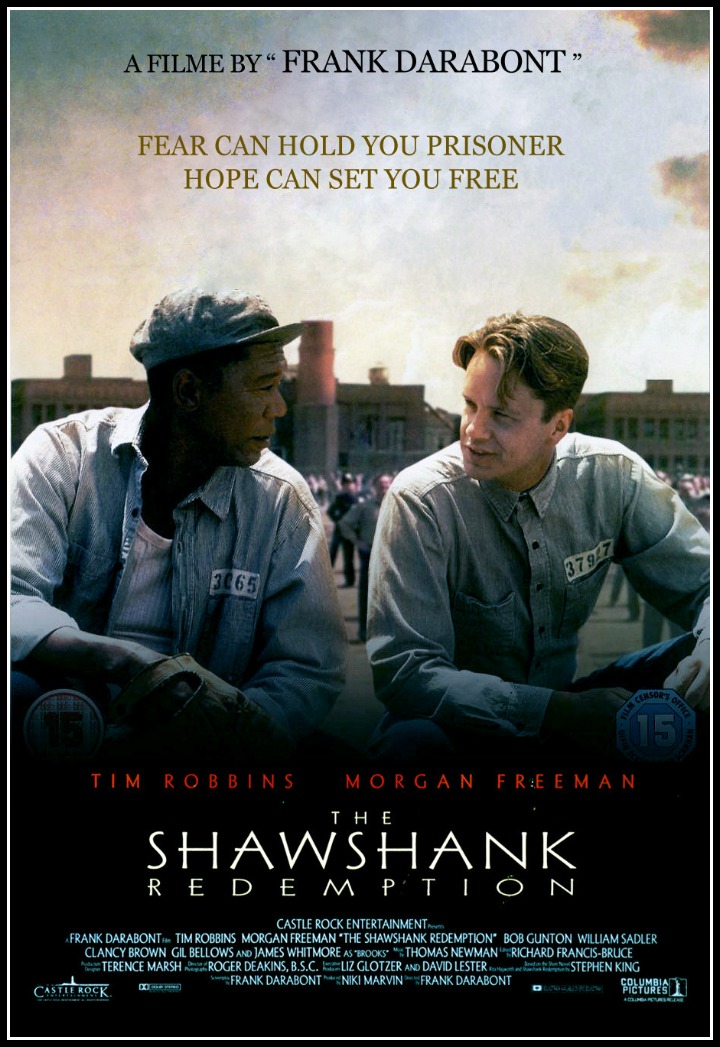
THE SHAWSHANK REDEMPTION (1994) – In honor of our son’s birthday, I review his favorite movie!


I sent our son a text the other day and asked him if he had an answer for the question “What’s your favorite movie?” I thought I knew the answer but it turns out I was only half right. I expected his answer to be THE HATEFUL EIGHT. Rather, the answer I received back was “The Hateful Eight or Shawshank Redemption!” Since I recently wrote about the time that he and I attended THE HATEFUL EIGHT roadshow in Dallas, I decided I would write about THE SHAWSHANK REDEMPTION this time around. It doesn’t hurt that it’s one of my favorite movies as well. It also doesn’t hurt that it’s the very top rated film on the Internet Movie Database.

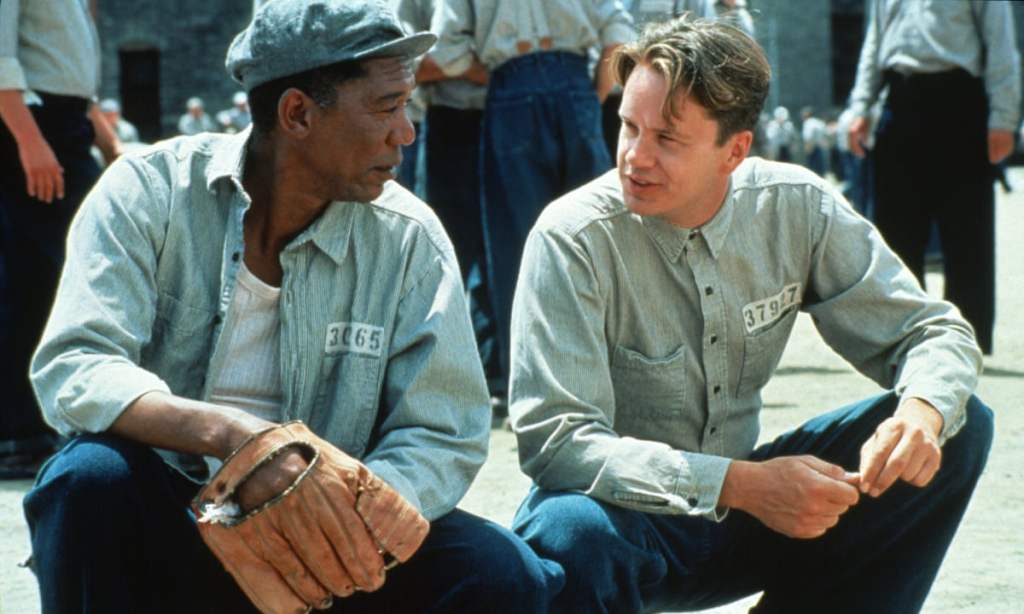
Based on Stephen King’s “Rita Hayworth and Shawshank Redemption,” the story is well known… hot shot banker Andy Dufresne (Tim Robbins) is convicted of the murder of his wife and her lover, and gets sentenced to life at the Shawshank prison. Once on the inside, we meet a variety of characters that you expect in a prison movie. We meet Warden Norton (Bob Gunton), the hypocrite who speaks of the Bible while hiding a corrupt, evil spirit. We meet Captain Hadley (Clancy Brown), the brutal chief prison guard, who rules over the inmates with intimidation and a real willingness to inflict violence and pain on anyone who shows the least bit of independence. We meet Red (Morgan Freeman), the long-time inmate who has the ability and connections to get you anything you need. We meet other inmates like Heywood (William Sadler), the inmate who seems like a jerk when you first meet him but turns out to be a pretty good fella; Tommy (Gil Bellows), the young guy who comes into prison and may know something that proves Andy’s innocence; Brooks (James Whitmore), the old man who gets released after almost a lifetime in prison, and doesn’t know how to adjust to life on the outside; and Bogs (Mark Rolston), the sadistic prisoner who wants to force himself on Andy, and is willing to kill to get what he wants. Life isn’t easy at all in Shawshank, but Andy’s intelligence and ability to prove himself useful to Warden Norton and Captain Hadley allows him to finds ways to make life more bearable for him and his friends. After nineteen years in prison, even though he maintains his innocence, it appears that Andy is content to live out his remaining years in prison. Or is he??

I’ll never forget the first time I saw the movie THE SHAWSHANK REDEMPTION. I didn’t see it until a year or two after its initial release in 1994. I was one of those guys who figured a movie that praised by the critics was probably not something that I would like that much. Plus, at the time, the title of the movie just seemed kind of weird. But I kept hearing about how great it was, so I finally decided to give it a viewing. I agree with my son, I think THE SHAWSHANK REDEMPTION is one of the most emotionally uplifting movies ever made. Why is that you might ask? My answer would be because there’s something profoundly satisfying about people who persevere through the worst times imaginable and continue to find hope where most of us would be hopeless. Prison life is shown as horrific. One prisoner is literally beaten to death by Captain Hadley on his first night in prison for crying. Andy fights off the sadistic Bogs as much as he can, but he is unable to completely fight off his advances. But no matter what he goes through, Andy Dufresne is able keep moving forward, and he does not allow the prison life to completely crush his spirit. He keeps finding ways to persevere. Andy’s actions and endurance turn simple acts like listening to Mozart or having a beer into overwhelming emotional highs for us as the audience. The film also maintains a realistic sense of humor, which might seem difficult under the circumstances. This sense of humor is found in such mundane tasks as creating a prison library, providing tax prep services for the guards, or attending multiple parole hearings over the years. These comedic moments are earned by the way the movie takes it’s time letting us really get to the know the characters and then laugh with them as the individual moments occur. And the friendship between Andy and Red is something that deeply resonates with me. I think we all would like to have that kind of friendship. These kinds of friendships aren’t built overnight, and often they require a level of shared experience that is almost impossible to find. But they find it behind Shawshank’s prison walls, and it connects them for life. In my opinion, the friendship between these two characters leads to one of the most emotionally satisfying endings to any film, ever.
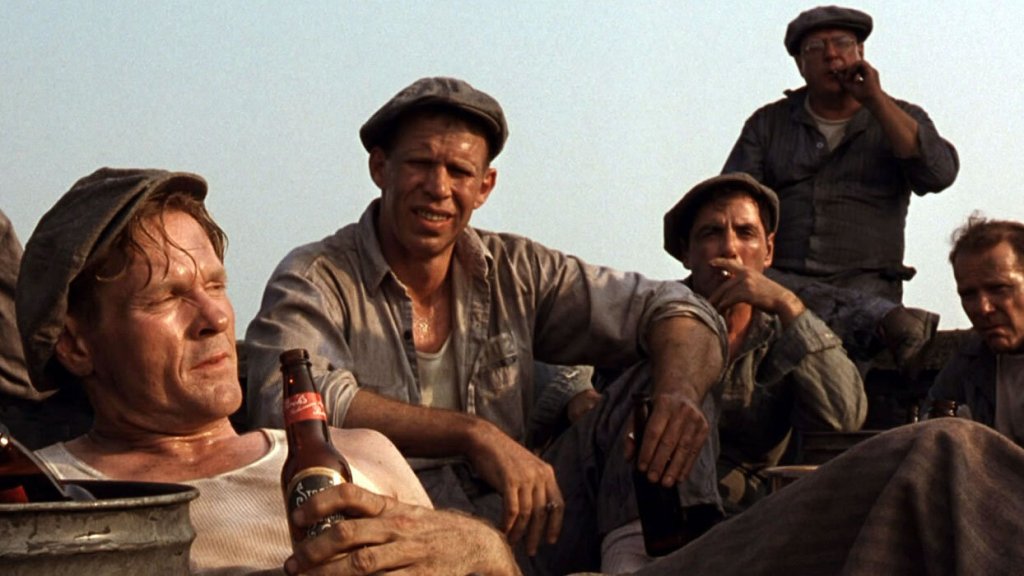
Director Frank Darabont was able to obtain some of career-defining performances from his cast. As good as Tim Robbins is as an actor, in my opinion, he has never been better than he was as Andy Dufresne. And I say this knowing full well he won an Oscar for MYSTIC RIVER. He maintains his dignity against all odds and only appears to break down a time or two. Morgan Freeman is great as always as Red, but his character is so important because we see him go from a hopeless skeptic, to a man who truly has hope thanks to his friendship with Andy. Freeman seems to handle this transition effortlessly. I’m going to give a shoutout to James Whitmore as well. With a career going all the way back to the 1940’s, his performance as Brooks Hatlen is one of the more touching and heartbreaking performances of the film. I haven’t seen all of his work, but I have never seen him better than he was in THE SHAWSHANK REDEMPTION. Each additional cast member, from Bob Gunton, Clancy Brown and Mark Rolston, to Willam Sadler and Gil Bellows all have powerful moments that add to the overall effect of the film.

Looking back now, it’s hard to believe that THE SHAWSHANK REDEMPTION did not win the Academy Award for best film. It lost to FORREST GUMP when the awards were handed out in 1995. It’s even harder to believe that the film did not win a single Academy Award even though it received seven nominations. But at the end of the day, that doesn’t really matter to me. I just know that it’s a great film, and it reaches emotional heights that very few movies, if any, have ever reached before. That’s a pretty damn good legacy.

I Watched The Promotion (2008, dir. by Steven Conrad)


Yesterday, after I got home from voting in my town’s city council elections, I wanted to unwind with a tennis movie.  When I did a search for “tennis,” Tubi recommended that I watch The Promotion.

I don’t know why because there is no tennis in The Promotion.  No one plays a game or even talks about tennis in The Promotion.  Instead, the movie is about two men who work for a grocery store and who are both hoping to get promoted.  The narrator is Doug (Seann William Scott), who is married to Jen (Jenna Fischer), a nurse.  Doug wants to get promoted so that he and Jen can move into a new house and so that he can be the sole breadwinner.  Doug also has to get the promotion because he has already lied to Jen and told her that he got it.  Doug was feeling insecure because Jen’s boss, Dr. Timm (Bobby Cannavale) saves lives for a living while Doug just spends all day dealing with angry customers and the gang members who hang out in the store’s parking lot.  Doug’s rival for the promotion is Richard (John C. Reilly), a recovering drug addict who listens to self-help tapes.  Each of them tries to sabotage the other.  Doug tries to make Richard look stupid at a company retreat and Richard files a false injury report after Doug hits him with a bag of frozen tater tots.

I think the movie was trying to make a point about how desperate people are for status and money that they’ll do anything to get it but I didn’t care because I didn’t find Doug or Richard to be in any way likable and I didn’t want either one of them to get the promotion.  I would not shop at any store where they worked because grocery shopping is bad enough without having to deal with all of that extra drama.  Both Richard and Doug were terrible as assistant managers so as far I was concerned, neither one of them deserved to be promoted.  Jen should have left Doug for Dr. Timm.

Plus, there wasn’t any tennis.

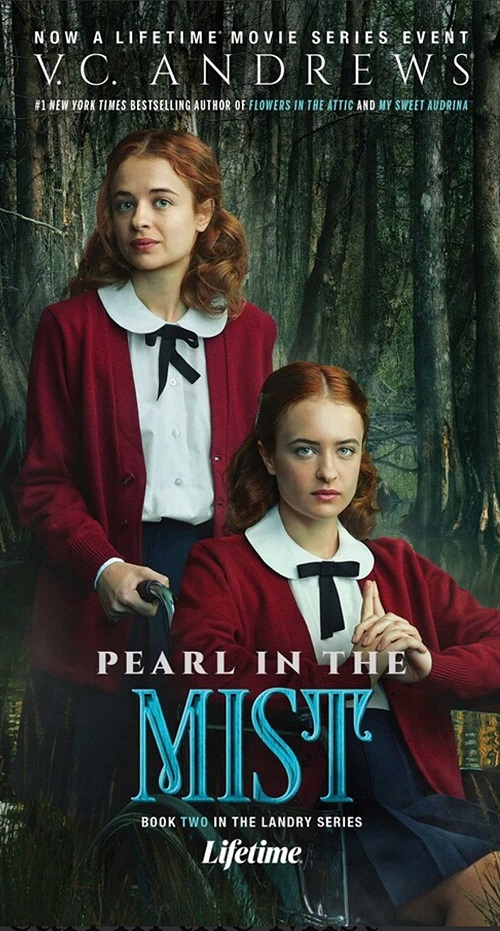
Lifetime Film Review: V.C. Andrews’ Pearl in the Mist (dir by David Bercovici-Artieda)


Since I kind of enjoyed watching Ruby earlier today, I decided to watch the second film in Lifetime’s Landry family saga, V.C. Andrews’ Pearl In the Mist.

Pearl in the Mist picks up where the first film ended.  The year is 1962 and aspiring artist Ruby (Raechelle Banno) is living in New Orleans and still thinking about the life that she left behind in the Bayou.  Her father (Gil Bellows) is still married to her bitchy stepmother (Lauralee Bell).  Ruby’s twin sister, Giselle (Karina Banno), is still using a wheelchair as a result of a car accident and she’s still angry that Ruby stole away Giselle’s boyfriend, Beau (Ty Wood).  Ruby’s half-brother, Paul (Sam Duke), is still living in the Bayou and is still in love with Ruby, despite the fact that any physical relationship between them would be incestuous.

However, it’s time for Ruby and Giselle to get out of New Orleans.  They’ve been enrolled in a prestigious boarding school.  Giselle is not happy about having to leave home.  Ruby is excited because, goddammit, Ruby’s excited about everything.  At the boarding school, Ruby deals with all sorts of drama.  She befriends a girl who is passing as white.  She inspires a blind pianist.  She flirts with a hunky groundskeeper.  She continues to paint under the tutelage of Miss Stevens (Meaghan Hewitt McDonald).  She does all of this despite the fact that the school’s headmistress (Marilu Henner) hates her because Ruby is from the Bayou and no one trusts “swamp people.”  As the same time, Ruby has to deal with her wicked stepmother and her bitter sister.

I have to admit that, at first, I didn’t think I was going to like Pearl in the Mist, if just because Ruby herself was so perfect that she was kind of annoying.  She never had a bad thought.  She never said a bad word.  She was also so extremely naïve and so endlessly enthusiastic that I could understand why Giselle was so sick of having to deal with her.  Ruby’s innocence made sense in the first film, because Ruby was still adjusting to life in the city.  But, by the time Pearl in the Mist rolls around, there’s really no excuse for Ruby to be so clueless about …. well, everything.

Fortunately, about halfway through, the film started to get interesting.  Bizarre incidents started to pile up.  Characters started to snap at each other in dialogue that was so overwritten and pulpy that it was kind of impossible not to love the sound of it.  The film embraced the melodrama, as I like to say.  It all eventually led to a plot twist involving Giselle that was so insane and so out there that it redeemed the entire film.  Karina Banno appeared to be having a lot of fun being bad as Giselle and it was fun to watch her.  If you’re going to be in a film like this, you always want to play the bad girl.  They always get the best lines.

In the end, Pearl in the Mist was so over-the-top and cheerfully silly that I couldn’t help but enjoy it.  All trips to the Bayou should be as fun.

Lifetime Film Review: V.C. Andrews’ Ruby (dir by Gail Harvey)


This time is the 1950s and the place is Louisiana.  Ruby Landry (Raechelle Banno) is a teenage girl who lives in a shack out on the Bayou.  She’s never known her mother.  She’s never known her father.  She does know her Grandmere, Catherine (Naomi Judd), who is a Bayou witch.  

Ruby might not know much but she knows how to paint.  One day, the owner of a New Orleans art gallery just happened to be driving by when he spots Catherine selling Ruby’s paintings on the side of the road.  He’s impressed, even though the paintings aren’t really that impressive.  He buys the paintings and then hangs them in his gallery.  Ruby can’t wait until she graduates high school so that she can move to New Orleans with her boyfriend, Paul Tate (Sam Duke).  Except … uh-oh!  Grandmere explains to Ruby that Paul is actually her half-brother so no, they can’t run off together.  That’s incest and that might be okay for the Ozarks but folks in the Bayous got standards.

As long as secrets are being shared, Grandmere also explains that Ruby’s father is a wealthy man named Pierre Dumas (Gil Bellow) and that Ruby actually has a twin sister, who we later learn is named Gisselle (and who is played by Karina Banno, the twin sister of Raechelle Banno).  Having dropped a lot of information on Ruby, Grandmere promptly dies.

Ruby inherits Grandmere’s shack and she still has the money that she made off of her paintings, which means that Ruby is now one of the richest people in the Bayou.  However, her alcoholic grandfather still wants to sell her to a local businessman so Ruby flees the Bayous, heads to New Orleans, and decides to live with Pierre!

Pierre is ecstatic to discover that he has another daughter.  Pierre’s wife (Lauralee Bell) is a bit less excited about it.  And Gisselle claims that she could hardly care less about her Bayou sister.  In fact, it seems like Ruby’s only ally is the housekeeper who, it turns out, knows all of the best voodoo priestesses in New Orleans….

Now, believe it or not, all of that happens within the first 30 minutes of RubyRuby is not a boring film.  In fact, one could claim that there’s almost too much going on.  No sooner has Ruby moved into the house than she’s hearing mysterious weeping coming from one of the bedrooms.  No sooner has Ruby started high school in New Orleans than she’s being set up for humiliation by her twin sister.  As soon as Ruby draws one of her classmates naked, you know that she’s going to end up in an asylum where a doctor will demand to know if she’s familiar with the term nymphomania.  Ruby is a big and messy film, one that embraces the melodrama with so much enthusiasm that it’s easy to overlook that the film really doesn’t make much sense and that a lot of the plot is dependent upon people not being particularly smart.

Ruby is one of the many recent Lifetime films to be adapted from a V.C. Andrews novel.  Now, of course, V.C. Andrews didn’t have anything to do with writing Ruby.  She died long before the book was written.  Instead, Ruby was written by ghost writer, pretending to be Andrews.  The plot ticks off all of the usual V.C. Andrews tropes with such precision that it’s hard not to be both impressed and amused.  White trash?  Yep.  Incest?  Yep.  Rich relatives?  Yep.  More incest?  Yep.  Big house?  Yep.  Twins?  Yep.  If you made use of a random V.C. Andrews plot generation, it would probably give you something similar to Ruby.

Ruby is silly fun.  It doesn’t reach the heights of Flowers in the Attic films but it’s still better than the films that Lifetime made about the Casteel family.  It was also the first of four films about Ruby and her family.  I’ve got the other three on the DVR and I’ll be watching and hopefully reviewing them before the month ends.

Lisa Cleans Out Her DVR: Girl On The Edge (dir by Jay Silverman)


(I’m currently in the process of cleaning out my DVR!  It’s going to take me forever because I have like absolutely no self-control and I’ve got over 150 things to watch!  For instance, I recorded Girl On The Edge off of Showtime on February 19th!)

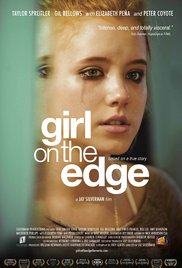
Hannah Green (Taylor Spreitler) is a 15 year-old dancer and is even more troubled than the typical teenage girl.  She is struggling to deal with her parent’s divorce.  Her father, Hank (Gil Bellows), has remarried and, though loving, he doesn’t know how to talk to his daughter.  After the manipulative Tommy (Shane Graham) rapes her at a party and pictures of her are posted online, Hannah stops dancing and descends into depression, self-harm, drugs, and alcohol.  With no idea what to do, her father and stepmother stage an intervention and send Taylor to a “healing center,” a ranch in the wilderness where Hannah and other troubled girls attend therapy sessions, take care of horses, and hopefully, begin the process of recovery.

Girl on the Edge actually feels like two movies that, when smashed together, make for something of an awkward fit.  The better of the two movies deals with Hannah and how her stay at the ranch affects her.  At first, Hannah is resistant to the discipline.  She resents being told what to do and, most heart-breakingly, even risks getting expelled from the program so that she can attempt to contact the boy who raped her.  (“Kill yourself slut,” he writes back.)  Taylor Spreitler gives such a good performance as Hannah that, at times, it was difficult for me to watch.  When I was sixteen, I was rebellious and angry.  I knew Hannah’s pain and, even more importantly, I also knew her anger.  Spreitler’s performance is matched by Peter Coyote, playing the tough-minded founder of the ranch, and the late Elizabeth Pena, who played Hannah’s therapist.

But then there was the second film, which was basically Hank sitting around and feeling guilty.  And don’t get me wrong.  Gil Bellows gives a good performance as Hank.  There are a lot of scenes where Hank is silent and lost in thought but, just through his posture and the sadness in his eyes, Bellows shows us exactly what’s going on inside of Hank’s mind.  Hank ends up confronting Tommy at the ice cream parlor where he works.  He also ends up confronting Travis Lee (Rex Lee), the sleazy head of the company that created the app that Tommy used to stalk Hannah online.  Rex Lee, who is probably best known for playing Jeremy Piven’s assistant on Entourage, gives an over-the-top and rather cartoonishly evil performance.  It feels thoroughly out-of-place, especially when compared to the more naturalistic performances of … well, of everyone else in the cast.

Even if I’m not a huge fan of rehabilitation centers, I am a huge fan of movies about out-of-control teenagers so I enjoyed that aspect of Girl on the Edge.  I think, ultimately, the main reason why this film works is because it’s a very sincere movie.  Cynicism is not to be found in this film’s DNA.  You can tell that the filmmakers really believed in the movie’s message.  Everyone’s heart was in the right place and that goes a long way towards helping the film get over a few rough patches.  Girl on the Edge has its flaws.  Some of the dialogue is a bit too on the nose.  Occasionally, you do wish that it had been directed with a slightly more subtle touch.  But, ultimately, this is one of those movies that is so well-intentioned that it feels a bit petty to get too snarky.

Sometimes, you just have to be willing to appreciate a little sincerity.

Horror Film Review: House At The End of the Street (dir. by Mark Tonderai)


Hi there!  I’m back!  For the past two weeks, I’ve been “on the road,” traveling from my home in Texas to Baltimore, Maryland and then back to Texas again.  It was a great two weeks and a much-needed vacation and now, I am back at my office here at the Shattered Lens Bunker, and I am refreshed and I am ready to get caught up on what really matters: reviewing movies.

This is October, perhaps the third greatest month of the year.  Traditionally, October is horror month here at the Shattered Lens and, for my first post-vacation film review, I want to take a look at an underappreciated horror film that came out right before I left for Maryland.  It was released to theaters on September 21st, was the number one film in the country for a week, and got next to no love from either mainstream critics or my fellow film bloggers.  It’s still playing at a theater near you and, believe it or not, it’s not that bad.  The name of the film?  The House At The End of the Street.

(Or, as my BFF Evelyn and I called it, “The House at the End of the Cleavage” because seriously…)

In The House At The End of Street, recently divorced Sarah (Elisabeth Shue) and her daughter Elissa (Jennifer Lawrence) move to a small country home.  Sarah has managed to buy a house that she really shouldn’t be able to afford and the new neighbors quickly explain to them that this is because, many years ago, a crazy girl named Carrie-Ann was living at the house at the end of the street and she murdered her parents before then disappearing into the woods.  Apparently, this has caused all of the property values in town to plummet and I really have to wonder why.  I’m not a real estate expert (for instance, I have no idea what a mortgage is and I have no desire to learn) but, personally, I would love to live next to a murder house.  Seriously, imagine the interesting conversations that could be started by saying, “So, my neighbor buried a salesman in his basement…”

But anyway, it turns out that Elissa has a perfect view of the house at the end of the street from her bedroom window and she quickly discovers that the house is not deserted.  It turns out that Carrie-Anne’s brother Ryan (Max Thieriot) is living in the house and, despite being shunned by the entire community, he seems to be a nice, sensitive guy.  Despite her mother’s misgiving, Elissa befriends Ryan and defends him against everyone who claims that he’s crazy.

Of course, what Elissa doesn’t know is that there’s another girl in Ryan’s life and she’s locked up in his basement…

When I look over the negative reviews of House at the End of the Street (especially the ones written by male film bloggers), I frequently come across the phrase “lifetime movie.”  Their argument seems to be that House At The End of the Street, with its emphasis on a single mom raising her daughter, was essentially just a PG-13 rated Lifetime movie.

Well, they’re right.

But so what?

Seriously, Lifetime movies are a lot of fun to watch when you’re in the right mood for them and that’s a perfect way to describe House At The End Of The Street.  It’s a lot of fun, the type of silly horror film that’s fun to watch with a group of friends.  Max Thieriot plays the type of cute but damaged (and potentially dangerous) outsider that every girl has had a crush on and, for the boys in the audience, there’s plenty of cleavage and visible bra straps.

Finally, I think the main reason that House At The End of the Street stayed with me is because both Elisabeth Shue and Jennifer Lawrence really invested themselves in their roles.  They were totally believable as mother and daughter and their loving but occasionally contentious relationship felt totally true-to-life (or, at the very least, it was true to my life).  Lawrence and Shue both give performances that bring some unexpected depth to this underrated film.

Review: The Shawshank Redemption (dir. by Frank Darabont)


“Remember, Red. Hope is a good thing, maybe the best of things, and no good thing ever dies.” — Andy Dufresne

1994 was the year that men finally got their version of Fried Green Tomatoes and Beaches. We men we’re always perplexed why so many women liked those two films. Even when it was explained to us that the film was about the bond of sisterhood between female friends and how the march of time could never break it we were still scratching out heads. In comes Frank Darabont’s film adaptation of the Stephen King novella Rita Hayworth and Shawshank Redemption.

Using a script written by Darabont himself, the film just takes the latter half of the novella’s title and focuses most of the film’s story on the relationship between the lead character of Andy Dufresne (played by Tim Robbins) who gets sent to Shawshank Penitentiary for the crime of killing his wife and her lover and that of another inmate played by Morgan Freeman. The film doesn’t try to prove that Andy is innocent even though we hear him tell it to the convicts he ends up hanging around that he is. The relationship between Andy and Red becomes a great example of the very same bond of sisterhood, but this time a brotherhood who are stuck in a situation where their freedom has been taken away and hope itself becomes a rare and dangerous commodity.

Darabont has always been a filmmaker known for his love of Stephen King stories and has adapted several more since The Shawshank Redemption, but it would be this film which has become his signature work. It’s a film that’s almost elegiac in its pacing yet with hints of hope threaded in-between scenes of men clinging to sanity and normalcy in a place that looks to break them down and make them less human. It’s nothing new to see prison guards abusive towards inmates in films set in prisons, but in this film these scenes of abuse have a banality to them that shows how even the hardened criminal lives and breathes upon the mercy and generosity provided by the very people who were suppose to rehabilitate them.

While the film’s pacing could be called slow by some it does allow for the characters in the film, from the leads played by Robbins and Freeman to the large supporting cast to become fully formed characters. It doesn’t matter whether it’s Clancy Brown playing the sadistic Capt. Byron Hadley to James Whitmore as Brooks Hatlen the inmate who has spent most of his life in Shawshank and whose sudden parole begins one of the most heartbreaking sequences in the film. The whole cast did a great job in whatever role they had been chosen to play. Freeman and Robbins as Red and Andy have a chemistry together on-screen that makes their fraternal love for each other very believable that the final scenes in the film doesn’t feel too melodramatic or overly sentimental.

The Shawshank Redemption was a film that lost out to Forrest Gump for Best Picture, but was a film that would’ve been very deserving if it had won the top prize at the Academy Awards. It was a film that spoke of hope even at the most degrading setting and how it’s the very concept of hope and brotherhood that allows for those not free to have a sense of freedom and camaraderie. Darabont’s first feature-length film remains his best work to date and one of the best Stephen King adaptations which is a rarity considering how many of his stories have been adapted. So, while the fairer sex may have their Fried Green Tomatoes, Beaches and the like, we men will have ours in the fine film we call The Shawshank Redemption.