Film Review: Every Which Way But Loose (dir by James Fargo)


In 1978’s Every Which Way But Loose, Clint Eastwood plays Philo Beddoe.

Philo’s an ordinary guy with beautiful hair and a way with throwing punches.  He’s a truck driver.  He enjoys a cold beer.  He enjoys country music.  He makes some extra money by taking part in bare-knuckle brawls.  Everyone says that he could be the next Tank Murdock, a legendary fighter.  Philo is just a simple, blue collar guy who lives in a small house, next door to his best friend Orville (Geoffrey Lewis) and Orville’s profanity-loving mother (Ruth Gordon).  Philo also owns an orangutan named Clyde.  He saved Clyde from being sent to live in a “desert zoo.”

(Actually, now that I think about it, most blue collar guys don’t own monkeys but whatever.  Clyde’s cute and Eastwood’s Eastwood.)

When Philo meets a country singer named Lynn Halsey-Taylor (Sondra Locke), he is immediately smitten.  When Lynn disappears and leaves Philo a cryptic note, Philo decides to go looking for her.  Clyde, Orville, and Philo hit the road.  Along the way, Orville meets and picks up a woman named Echo (Beverly D’Angelo).  This is a road movie so, of course, Clyde, Orville, Philo, and Echo have their adventures on the way to Colorado.  They end running afoul both a corrupt cop and a gang of buffoonish bikers.  Philo enters a fight whenever they need money and one occasionally gets the feeling that Eastwood took this role to show off the fact that, for someone approaching 50, he still looked good without a shirt on.  And good for him!  Because, seriously, Clint does look good in this movie….

I have to admit that, for all of my attempts at sophistication, my roots are in the country and I’ve traveled down enough dirt roads that I find it hard to resist a good redneck story.  And really, there aren’t many films that as proudly and unashamedly redneck than Every Which Way But Loose.  It’s a film that has a laid back, take-it-as-it-comes vibe to it.  Philo may be looking for Lynn but he seems to be okay with taking a few detour along the way.  There’s no real sense of urgency to any part of the movie.  Instead, Every Which Way But Loose was made for people who like a cold beer at the end of the day and who find Ruth Gordon to be hilarious when she curses.  Myself, I don’t drink.  That’s one part of the country lifestyle that passed me over.  But I did enjoy seeing Ruth Gordon cuss out the Nazi biker gang.

Eastwood, Lewis, and D’Angelo have a likable chemistry and the monkey’s cute.  Unfortunately, Sondra Locke isn’t particularly well-cast in the role of Lynn.  (Considering that she was in a relationship with Eastwood, it’s amazing how little chemistry they have in this movie.)  As I watched the film, it occurred to me that it probably would have worked better if Locke and D’Angelo had switched roles.  Locke’s character is supposed to be a femme fatale type but she gives a boring performance and, as a result, the revelation that Philo has misjudged her doesn’t really carry any emotional weight.

That said, this film features some beautiful shots of the wilderness, a charming romance between Lewis and D’Angelo, and a shirtless Clint Eastwood beating folks up.  That’s more than enough to please this secret country girl.

Film Review: Speed (dir by Edwin L. Marin)


1936’s Speed takes place in Detroit, at the home of Emery Motors.

When Joan Mitchell (Wendy Barrie) shows up to start her new job in the PR department, one of the first things she sees is a car being driven around a race track at a high speed until eventually it crashes.  Automotive engineer Frank Lawson (Weldon Heybourn) explains that it’s all a part of making sure the car is safe.  At Emery Motors, they crash cars on a daily basis to make sure that both the car and the driver will survive.

Terry Martin (James Stewart), the driver of the crashed car, proceeds to give Joan a tour of the factory.  There’s an obvious attraction between the two of them but Joan also seems to have feelings for Frank.  Terry and Frank are rivals.  Terry may not have Frank’s education but he has instincts and he has common sense.  He and his friend, Gadget Haggerty (Ted Healy), have an instinctive understanding of cars.  They know how to drive them.  They know how to fix them.  They know how to make them go really fast.

In fact, Terry is working on a new carburetor, one that he says will increase the speed of Emery’s cars.  Frank is skeptical but Terry knows that, if he can enter his car into the Indianapolis 500, he’ll be able to prove that he knows what he’s talking about.  Joan comes to believe in Terry and his carburetor.  And, fortunately, Joan has a secret of her own that will be very helpful to Terry’s ambitions.

Speed was not Jimmy Stewart’s first feature role but it was his first starring role.  28 years old when he starred in Speed, Stewart is tall, a little bit gawky, and unbelievably adorable.  From the minute that Terry climbs out of that wrecked car and introduces himself to Joan, Stewart’s a true movie star.  He and Wendy Barrie have a lot of chemistry and are a truly cute couple but Stewart is the one who dominates the film with his straight-forward charisma.  Terry may not be the best educated engineer at Emery Motors but he is determined to prove himself and Stewart does a great job of portraying that determination.

As for the film itself, it’s low-budget and it’s short.  Automotive enthusiasts might enjoy seeing all of the old cars and getting a chance to see what a car race was about in the days when cars themselves were still a relatively new invention.  The film itself starts out as almost a documentary, with Stewart (as Terry) explaining how each car is manufactured on the assembly line.  He points out all the machinery that goes into making the car in an almost-awed tone of voice.  If the information is a bit dry, it doesn’t matter because it’s impossible not to enjoy listening to Jimmy Stewart speak.  In his pre-WWII films, Stewart was the voice of American optimism and that’s certainly the case with Speed.

Speed was not a huge box office success but, in just two years, Stewart would be working with Frank Capra on You Can’t Take It With You, the first Stewart film to be nominated for (and to win) the Oscar for Best Picture of the year.

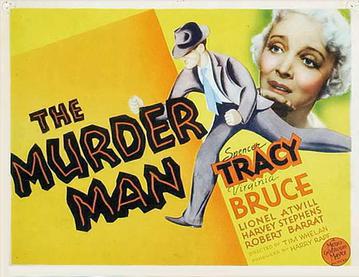
Film Review: The Murder Man (dir by Tim Whelan)


Seven minutes into the 1935 film, The Murder Man, 27 year-old James Stewart makes his film debut.

He’s playing a reporter named Shorty and, since this is a 30s newspaper film, he’s first seen sitting at a table with a bunch of other cynical reporters, the majority of whom seem to be alcoholics and gambling addicts.  Suddenly, words comes down that a corrupt businessman named Halford has been assassinated, shot by an apparent sniper.  (It is theorized that he was shot from one of those carnival shooting gallery games, which was somewhat oddly set up on a street corner.  Maybe there was shooting galleries all over place in 1935.  I supposed people had to do something to keep their spirits up during the Depression.)  While the other reporters run to the scene of the crime, Shorty is on the phone and calling his editors to let them know that a huge story is about to break.

Steve Grey (Spencer Tracy) is the reporter assigned to the story.  Crime is his beat and everyone agrees that no one’s better at covering criminals and understanding what makes them tick.  Unfortunately, it’s not always easy to track Steve down.  He’s a hard drinking reporter and lately, he’s been concerned about the collapse of his father’s business.  Still, when Steve is finally tracked down, he throws himself into covering the story and speculating, in print, about who could have killed Halford.  In fact, his girlfriend (Virginia Bruce) worries that Steve is working too hard and that he’s developing a drinking problem.  She suggests that Steve needs to take some time off but Steve is driven to keep working.

It’s largely as a result of Steve’s actions that a man named Henry Mander (Harvey Stephens) is arrested and convicted of Halford’s murder.  Steve should be happy but instead, he seems disturbed by the fact that he is responsible for Mander going to jail.  When his editor requests that Steve go to Sing Sing to interview Mander, a shocking truth is revealed.

Admittedly, the main reason that I watched The Murder Man was because it was the feature film debut of James Stewart.  (Stewart previously appeared in a comedy short that starred Shemp Howard.)  Stewart is only in a handful of scenes and he really doesn’t have much to do with the main plot.  To be honest, Shorty’s lines could have been given to anyone.  That said, Stewart still comes across as being a natural on camera.  As soon as you hear that familiar voice, you can’t help but smile.

Even if Stewart hadn’t been in the film, I would have enjoyed The Murder Man.  It’s fast-paced mystery and it has a decent (if not totally unexpected) twist ending.  It’s one of those films from the 30s where everyone speaks quickly and in clipped tones.  Casual cynicism is the theme for the day.  Spencer Tracy gives a wonderful performance as the hard-drinking and troubled Steve Grey and the scene where he meets Mander in prison is surprisingly moving.  Clocking in at only 68 minutes, The Murder Man is a good example of 30s Hollywood.

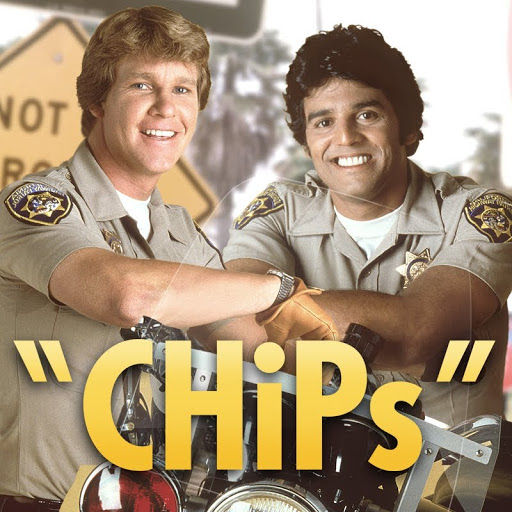
Late Night Retro Television Review: CHiPs 1.17 “Hitch-Hiking Hitch”


Welcome to Late Night Retro Television Reviews, a feature where we review some of our favorite and least favorite shows of the past!  On Mondays, I will be reviewing CHiPs, which ran on NBC from 1977 to 1983.  The entire show is currently streaming on Freevee!

This week, Baker solves everything!

Episode 1.17 “Hitch-Hiking Hitch”

(Dir by Phil Bondelli, originally aired on February 9th, 1978)

It’s another crazy week on the highways of California.

Baker saves a wind sailor who loses control of his boat while testing it on the freeway.  Baker saves a trucker when the brakes go out on his rig.  Baker helps out an old man (George Chandler) who refuses to leave his home until he’s promised that he and his dog won’t be put in an assisted living facility.  Baker tells two teenagers, Jenny (Lark Gein) and Marge (Stacy Nelkin), about the dangers of hitchhiking on the highways.

In other words, this is yet another first season episode of CHiPs where the main theme seems to be that Ponch is thoroughly useless.  Oh, don’t get me wrong.  Ponch definitely helps out.  When Baker tells Ponch to direct traffic, Ponch hops off his motorcycle and starts waving at cars to either stop or go.  But it’s still hard not to notice that, when something needs to be done, Baker is the one who does it.  Indeed, Baker is usually the only one who knows how to do it.  You have to kind of wonder why he’s not in charge since he always knows what to do.

Still, Sgt. Getraer is the man in charge and he’s been named “Sergeant of the Month” by CHiPs Magazine.  Ponch and Baker are worried that Getraer is too humble to really enjoy the honor.  For some reason, Ponch thinks that playing a joke on Getraer by switching out his helmet will make Getraer enjoy life more.  It really doesn’t make much sense to me but this is Ponch that we’re talking about.

There’s an odd scene where Ponch and Baker are having lunch at a diner.  A man in a van pulls up and sees that their bikes are in the parking spot that he wants.  The man, who is rather large, picks up the bikes and puts them on the sidewalk.  He then picks up a car and moves it to the side.  Luckily, Getraer rolls up and gives the guy a ticket.

While Baker and Getraer are doing their jobs, Ponch is trying to get laid.  When Mary Kate (Katherine Cannon) comes to the station to bail out her sister (who is one of the hitchhikers), Ponch takes one look at her and says, “I bet you were named after your grandmother, who was also very beautiful.”  Mary Kate responds that she was named after two spinster aunts.  She goes on a few dates with Ponch and claims that her sister has been led astray by her friend.  It turns out Mary Kate is wrong and her sister is the one who keeps insisting on hitchhiking.

The hitchhiking nearly ends in disaster but fear not!  Baker is there to save Marge from some creeps driving a van.  Seriously, what would California do without Jon Baker?

Anyway, the scene with the out-of-control truck was kind of exciting but otherwise, this was a typical episode of CHiPs.  It wasn’t particularly memorable but the California scenery was lovely to look at.  Anyone want to go wind sailing?

Cleaning Out The DVR #31: Libeled Lady (dir by Jack Conway)


(For those following at home, Lisa is attempting to clean out her DVR by watching and reviewing 38 films by the end of this Friday.  Will she make it?  Keep following the site to find out!)

http://www.youtube.com/watch?v=JI-eY-bU9qg

In the 1936 comedy Libeled Lady, tabloid newspaper editor Warren Haggerty (Spencer Tracy) has a problem.  His newspaper has just published a story accusing wealthy heiress Connie Allenbury (Myrna Loy) of being the other woman in a scandalous divorce.  The problem is that Connie was not the “other woman” and she is now suing the newspaper for $5,000,000.

“5 million dollars!” an astonished Warren declares, “nobody has that type of money!”

(It was 1936, after all.)

However, Warren has a plan and, since this is a screwball comedy, it’s an unneccesarily complicated plan.  He hires a former reporter, the suave Bill Chandler (William Powell, the suavest man alive in the 30s) to meet with Connie.  Warren believes that there’s no way that Connie won’t fall in love with Bill.  (Perhaps Warren had recently seen The Thin Man…)  Once Connie does fall in love, Warren will arrange for Bill’s wife to catch the two of them together.  In order to avoid the scandal, Connie will drop the suit.

The problem is that Bill isn’t married.  However, Warren has a solution for that as well.  Warren arranges for Bill to marry Warren’s fiancée, Gladys (Jean Harlow).  Gladys is not happy about the arrangement but goes along with it because, despite his behavior, she truly loves Warren and Warren promises her that the marriage will only last for 6 weeks.

(When the minister says that he hopes he’ll be invited to the new couple’s silver anniversary, Gladys replies, “It better be in six weeks.”)

And, at first, things go as planned.  Bill meets Connie on a luxury cruise and she quickly falls in love with him.  However, Bill finds himself falling in love with her too.  Soon, he no longer wants to frame her.  However, that’s not the only complication.  Finally fed up with Warren’s behavior, Gladys has started to think that maybe it would be better to be married to Bill.  Soon, she decides that she has no intention of getting a divorce…

Libeled Lady is a minor but enjoyable screwball comedy.  The plot is thoroughly implausible but, fortunately, William Powell was one of those actors who could get you to believe almost anything.  As anyone who has seen any of the Thin Man films can tell you, Powell and Myrna Loy had great chemistry together.  Spencer Tracy seems a little uncomfortable with the role of Warren but Jean Harlow is a lot of fun as Gladys.  She doesn’t have a big role but, at the same time, you can still understand why she was such a huge star and why her tragic death a year later was such a shock.

(At the time the movie was made, Harlow was dating William Powell.  She wanted to play Connie but MGM was determined to repeat the formula of previous William Powell/Myrna Loy comedies and Harlow settled for the secondary role of Gladys.)

As enjoyable as the film is, it still does seem a bit strange that it was nominated for best picture.  It lost the Oscar to The Great Ziegfeld, another MGM film that starred William Powell and Myrna Loy.