Horror on the Lens: The Spiral Staircase (dir by Robert Siodmak)


For today’s horror on the lens, we have the 1946 suspense film, The Spiral Staircase!

In this film, Dorothy McGuire plays Helen, a young mute woman who has been hired to serve as a caretaker for wealthy old Mrs. Warren (Ethel Barrymore, who was nominated for an Oscar for this film).  At the same time, someone is murdering women in the same town.  Are they all connected?  Of course, they are!  The fun of the movie is discovering how they’re connected.

I was introduced to The Spiral Staircase by my friend and fellow member of the Late Night Movie Gang, Chris Filby.  It’s a gothic murder mystery, full of atmosphere and menace.  I think you’ll like it so, if you have 80 minutes to spend on it, please watch and enjoy!

Lisa Reviews An Oscar Nominee: 42nd Street (dir by Lloyd Bacon and Busby Berkeley)


forty-second-street-1933

If you’re a regular reader of this site, it will not take you by surprise to learn that the 1933 Best Picture Nominee, 42nd Street, is one of my favorite films of all time.

I mean, how couldn’t it be?  Not only is it a pre-Code film (and we all know that pre-Code films were the best) and one the features both Ginger Rogers and Dick Powell in early roles but it’s also a film that depicts the backstage world of a stage musical with such a combination of love and snark that it will be familiar to everyone from community theater nerds to Broadway veterans.  42nd Street is a classic musical, though I have to admit that I think the majority of the songs are a bit overrated.  Even more importantly, 42nd Street is the ultimate dance film.  The film’s big production number, choreographed and filmed in the brilliant and flamboyant Busby Berkeley style, is such an iconic moment that it’s still being imitated and lovingly parodied to this day.

Every dance movie owes a debt to 42nd Street but few have come close to matching it.  Remember how much we all hated Smash?  There were a lot of reasons to hate Smash but the main reason was because it tried to be 42nd Street and it failed.  There can only be one 42nd Street.

It’s hard to estimate the number of show business clichés that currently exist as a result of 42nd Street.  Then again, it can be argued that they were clichés before they showed up in 42nd Street but 42nd Street handled them in such an expert fashion that they were transformed from being urban legends to immortal mythology.

42nd Street takes place in the backstage world, following the production of a Broadway musical through casting to rehearsals to opening night.  It’s an ensemble piece, one populated by all the usual suspects.  Julian Marsh (Warner Baxter) is the down-on-his-luck producer who desperately needs a hit.  Dorothy Brock (Bebe Daniels) is the celebrated star who is dating a rich, older man (Guy Kibbee, who made quite the career out playing rich, older men) while secretly seeing her ex, a down-on-his-luck Vaudevillian (George Brent).  From the minute that we first see Dorothy, we know that she’s eventually going to end up with a boken ankle.  It’s just a question of which chorus girl will be promoted to take her place.  Will it be “Anytime” Annie (Ginger Rogers) or will it be the naive and wholesome Peggy (Ruby Keeler)?  You already know the answer but it’s still fun to watch.

If you had any doubts that this was a pre-code film, the fact that Ginger Rogers is playing a character named “Anytime” Annie should answer them.  42nd Street is often described as being a light-hearted camp spectacle but there’s a cynicism to the film, a cynicism that could only be expressed during the pre-code era.  The dialogue is full of lines that, just a few years later, would never have gotten past the censors.

(This is the film where it’s said that Anytime Annie “only said no once and then she didn’t hear the question!”  This is also the film where Guy Kibbee cheerfully tells Annie that what he does for her will depend on what she does for him.  Just try to get away with openly acknowleding the casting couch in 1936!)

The menacing shadow of the Great Depression looms over every glossy production number.  Julian needs a hit because he lost all of his money when the Stock Market crashed and if the show is not a hit, everyone involved in the production will be out on the streets.  The chorus isn’t just dancing because it’s their job.  They’re dancing because it’s an escape from the grim reality of the Great Depression and, for the audience watching, the production numbers provided a similar escape.  42nd Street said, “Yes, life is tough.  But sometimes life is fun.  Sometimes life is sexy.  Sometimes, life is worth the trouble.”  Someday, 42nd Street promises, all the misery will be worth it.

Ultimately, 42nd Street is all about that iconic, 20-minute production number:

42nd Street was nominated for best picture but it lost to the nearly forgotten Cavalcade.

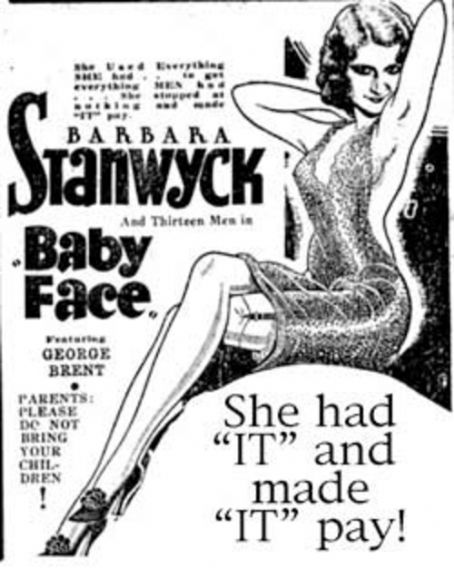
Pre Code Confidential #8: Barbara Stanwyck in BABY FACE (Warner Brothers 1933)


gary loggins's avatarcracked rear viewer

babyface1

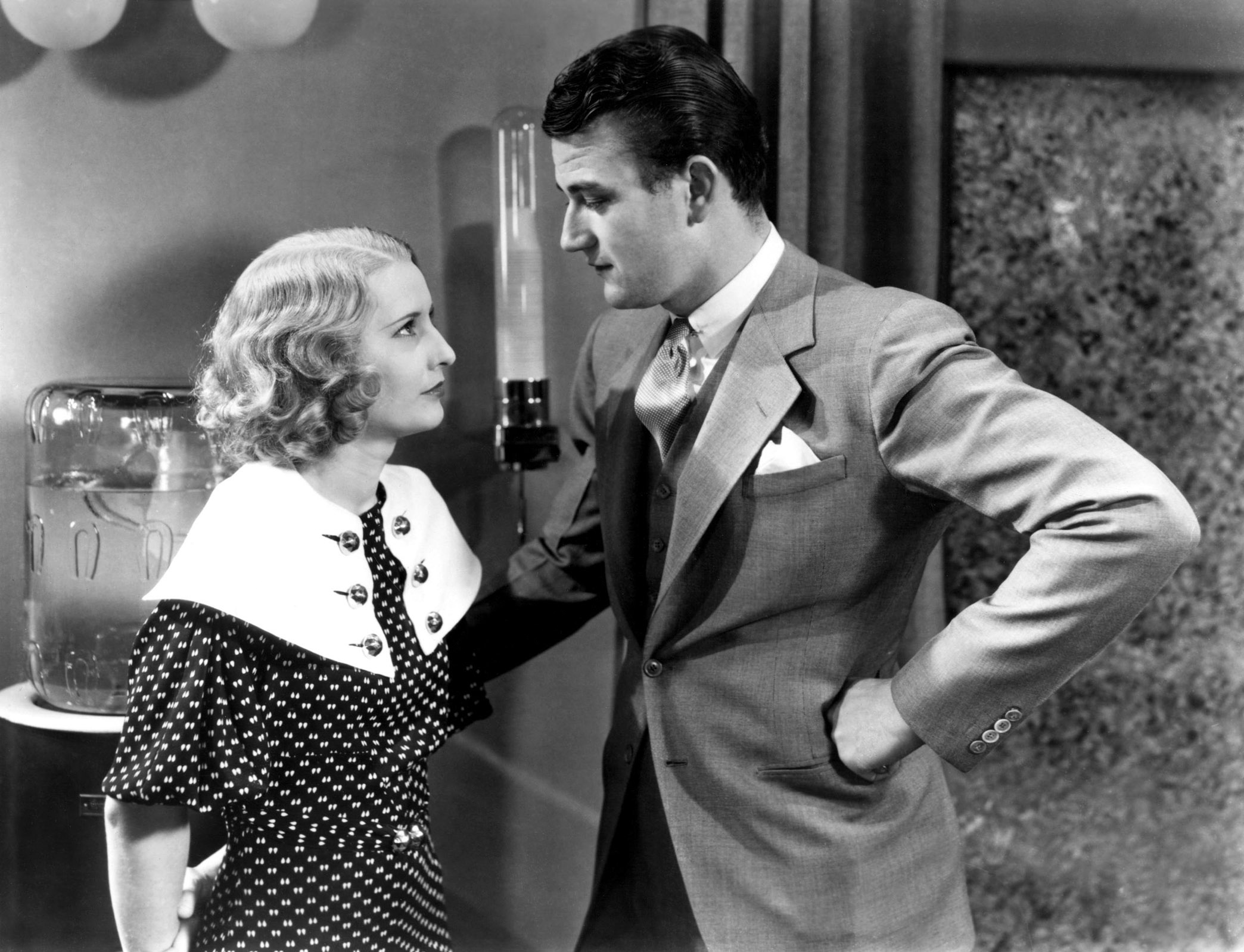
Barbara Stanwyck uses sex as a weapon and screws her way to the top in BABY FACE, an outrageously blatant Pre-Coder that had the censors heads spinning back in 1933. Miss Stanwyck plays Lily Powers, a young woman who works in her Pop’s speakeasy in smog-filled Erie, PA, where Pop’s been pimping her out since she was 14. Lily has a black female friend named Chico who seems to be more than just a friend (though it’s never stated, the implication’s definitely there). All the men paw over her like dogs with a piece of raw meat except the elderly Mr. Cragg, who gives her a book by Fredrich Nietzche along with some advice: “You have power… you don’t realize your potentialities… you must use men, not let them use you… exploit yourself, use men! Be strong, defiant!”.

babyface2

When Pop’s still blows to smithereens, taking Pop with it, Lily and…

View original post 662 more words

Embracing the Melodrama Part II #12: Jezebel (dir by William Wyler)


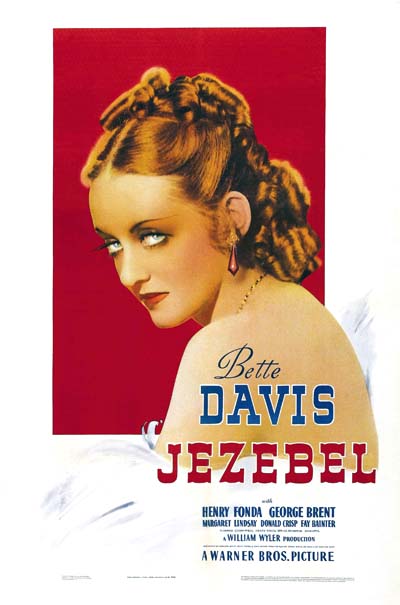
Jesebel_movieposterWe started out this day by taking a look at Bette Davis in Of Human Bondage so it seems only appropriate that today’s final entry in Embracing the Melodrama should be another film in which Bette Davis plays a potentially unlikable character who is redeemed by being the most interesting person in the film.

The 1938 best picture nominee Jezebel stars Bette Davis as Julie Marsden, a strong-willed Southern belle who lives in pre-Civil War New Orleans.  Julie is looking forward to an upcoming ball but is frustrated when her fiancée, boring old Pres (Henry Fonda), says that he has to work and declines to go shopping for a dress with her.  Impulsively, Julie does exactly what I would do.  She buys the most flamboyant red dress that she can find.

Back in the old South, unmarried women were expected to wear white to formal balls, the better to let everyone know that they were pure and innocent and waiting for the right man.  When Julie shows up in her red gown, it’s a scandal and, upon seeing the looks of shock and disdain on everyone’s faces, Julie wants to leave the ball.  However, Pres insists that Julie dance with him and he continues to dance with her, even after the orchestra attempts to stop playing music.

And then he leaves her.  At first, Julie insists to all who will listen that Pres is going to return to her but it soon becomes obvious that Pres has abandoned both Julie and Southern society.  Julie locks herself away in her house and becomes a recluse.

Until, a year later, Pres returns.  At first, Julie is overjoyed to see that Pres is back and she’s prepared to finally humble herself if that means winning back his love.  But then she discovers that the only reason that he’s returned to New Orleans is to warn people about the dangers of Yellow Fever.

Oh, and he’s also married.

To a yankee.

For the most part, Jezebel is a showcase for another fierce and determined Bette Davis performance.  It’s easy to be judgmental of a character like Julie Marsden but honestly, who doesn’t wish that they could be just as outspoken and determined?  It helps, of course, that the film surrounds Julie with a collection of boring and self-righteous characters, the type of people who you love to see scandalized.  Henry Fonda gives one of his more boring performances in the role of Pres while Margaret Lindsay, in the role of Pres’s Northern wife, is so saintly that she reminds you of the extremely religious girl in high school who would get offended whenever you came to school wearing a short skirt.  In a society as rigid, moralistic, and judgmental as the one portrayed in Jezebel, it’s impossible not to cheer for someone like Julie Marsden.

Add to that, I totally would have worn that red dress too!  In a world that insisted that all women had to act a certain way or look a certain way and think a certain way, Julie went her own way and, regardless of what boring old Pres may have thought, there’s a lesson there for us all.

When watching Jezebel, it helps to know a little about film history.  Bette Davis very much wanted to play Scarlett O’Hara in Gone With The Wind and was reportedly very disappointed when the role went to Vivien Leigh.  Depending on the source, Jezebel is often described as either being Davis’s audition for the role of Scarlett or as being a consolation gift for losing out on the role.  Either way, Jezebel is as close as we will ever get to seeing Bette Davis play Scarlett.  Judging from the film, Davis would not have been an ideal Scarlett.  (Whereas Gone With The Wind works because Leigh’s Scarlett grows stronger over the course of the film, Davis would have started the film as strong and had nowhere left to go with the character.)  However, Davis was a perfect Julie Marsden.


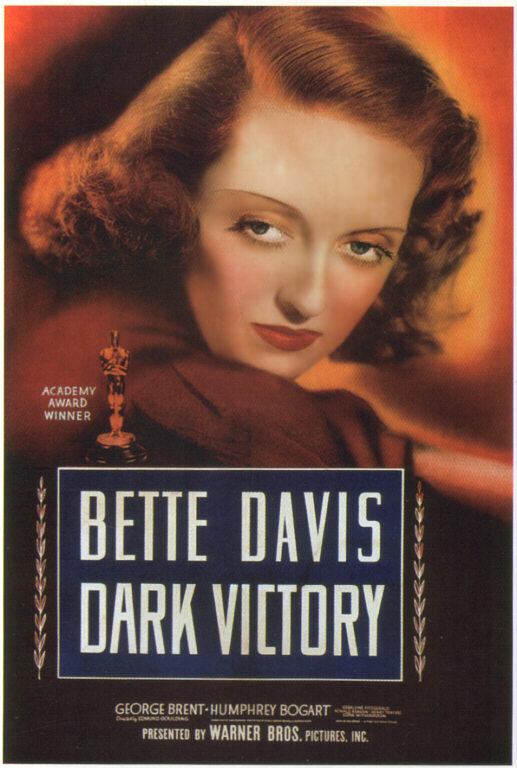
Embracing The Melodrama #8: Dark Victory (dir by Edmund Goulding)


Dark-Victory

For our next melodrama, we take a look at the 1939 best picture nominee, Dark Victory.

Well, with a name like Dark Victory, you can probably guess that the story told be this film isn’t going to be a cheerful one.  Bette Davis plays Judith Taherne, a spoiled and self-centered socialite whose life revolves around hanging out with her constantly inebriated friends (one of whom is played by future President Ronald Reagan) and riding horses.  When Judith starts to suffer from double vision and headaches, she initially ignores the problem but, as her condition worsens, she finally agrees to see a doctor.

Well, as you can probably guess, the news is not good.  Dr. Parsons (Henry Travers, who is best known to us classic film lovers as Clarence Oddbody, the angel from It’s A Wonderful Life) refers her to Dr. Steele (George Brent), a brilliant neurosurgeon.  At first, Steele is reluctant to treat Judith.  He, after all, had been planning on giving up his New York medical practice so he can move to Vermont and spend his time doing research.  Judith, for her part, resents having to see him and treats him rudely.  However, when Dr. Steele discovers that Judith has a malignant brain tumor, he decides to put off moving to Vermont so that he can treat her (and, needless to say, fall in love with her as well).

After getting Judith to agree to surgery to remove the tumor, Steele discovers that the entire tumor cannot be removed and that Judith has only a few months to live.  Though Judith won’t feel any pain, she will die shortly after experiencing total blindness.  Hoping to make Judith’s last few days pleasant, Dr. Steele tells her that the surgery was a complete success and he also conspires with Judith’s loyal secretary, Ann (Geraldine Fitzgerald), to not allow Judith to find out about her terminal condition.

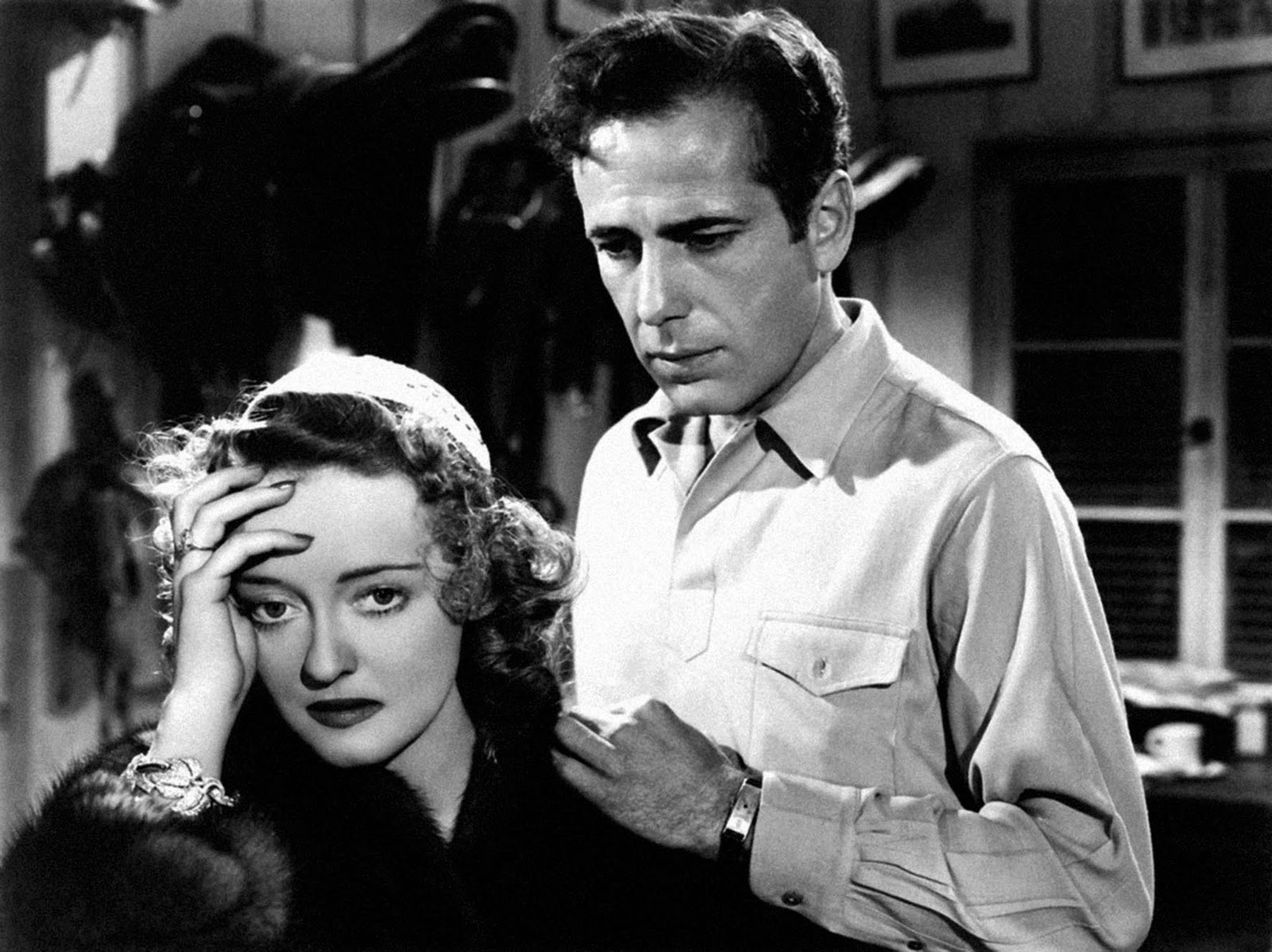
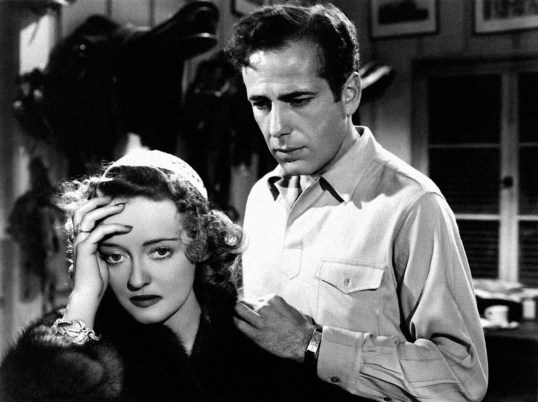
Steele also asks Judith to marry him and move to Vermont with him.  Judith agrees but, when she discovers Steele and Ann’s deception, she breaks off the engagement and returns to her decadent and wild ways.  Can her Irish stablehand (played by Humphrey Bogart) talk some sense into Judith before it’s too late?

If you want to nitpick, you certainly could do that with a film like Dark Victory.  Yes, the film is predictable and yes, Humphrey Bogart is a bit miscast and yes, this film probably did set a precedent for movies about independent women being both punished and redeemed by terminal illness.  Nitpick away but none of it really matters because Dark Victory works almost despite itself.

Whatever flaws the film may have, it also has Bette Davis delivering one of her best performances and making even the most overdramatic of events feel plausible and real.  Bette Davis gives a performance that runs the gamut from A to Z and then keeps running until it discovers letters that you didn’t even know existed.  (Okay, I didn’t come up with that description on my own.  A reviewer named DJ Kent said it on the IMDB but it was such a perfect description for what Bette Davis does here that I simply had to repeat it.)  Dark Victory is often described as being a “tear jerker” and, by the end of the film, I was in tears.  If even as lively and strong a character as Judith Taherne can’t beat death, what hope do the rest of us have?

But, at the same time, the film is not just about the dark.  There’s also a victory to be found in the darkness and that victory comes from the fact that even if Judith can’t beat death, she can at least face it under her own terms.  By the end of the film, you’re sad because Judith is going to eventually die but you’re also happy because she lived.
Dark Victory 3