Retro Television Review: Homicide: Life On The Street 4.13 “I’ve Got A Secret”


Welcome to Retro Television Reviews, a feature where we review some of our favorite and least favorite shows of the past!  On Sundays, I will be reviewing Homicide: Life On The Street, which aired from 1993 to 1999, on NBC!  It  can be viewed on Peacock.
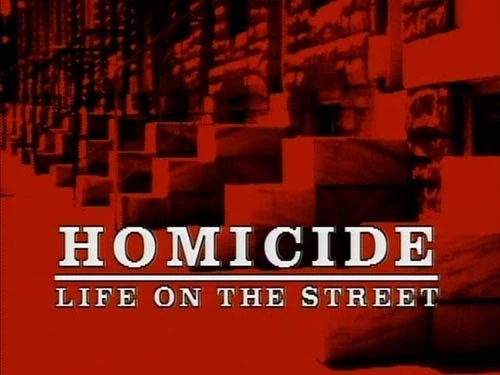
Ring ring.  “Homicide.”

Episode 4.13 “I’ve Got A Secret”

(Dir by Gwen Arner, originally aired on February 2nd, 1996)

This week, almost everyone has a secret.

For example, when Pembleton and Bayliss are called in about a man found dead in his car, they discover that, earlier in the day, he went to a local ER after being shot.  The gunshot wound, which was accidental, didn’t kill him.  Instead, it was the internal bleeding that the doctor either missed or intentionally ignored.  Dr. Kate Wystan (Mimi Kennedy) may come across as being a selfless doctor who has dedicated her life to helping the residents of Baltimore’s most crime-ridden neighborhood but Pembleton and eventually Bayliss come to suspect that her secret is that, because the victim was black and a known criminal, she didn’t give him the same standard of care that she gives to her other patients.  Pembleton considers this to be murder, though it sounds more like a case of malpractice than anything else.

Munch spots Kay kissing a man outside of police headquarters and he becomes obsessed with trying to figure out who the man is.  He’s always believed that Kay is happy being single and alone.  (Uhm, hello?  Munch?  Remember when she dated Ed Danvers?)  Kay’s secret is that apparently she has a life outside of Homicide.

Finally, Lewis and Kellerman spend the entre episode chasing a burly man who is wanted for killing both of his parents.  At first, this entire storyline feels almost like a parody of NBC’s request that the series start featuring more action.  Lewis and Kellerman spend the entire first half of the episode chasing this guy through allies and pool halls and every time, they fail to catch him.  There’s none of the badass heroics that we’ve come to expect from cop shows.  Eventually, Lewis reveals that his brother is in a mental institution.  When Lewis tries to visit his brother, he’s just turned away.  Lewis’s secret is that he actually cares about his brother.

This was an okay episode.  By this point in the series, Homicide had reached the point where it could do an episode where the true enjoyment came less from the storyline and more from just listening to the characters talk to each other.  I really didn’t care much about the crimes that they were investigating.  Instead, I just enjoyed listening to Pembleton and Bayliss talk and bounce ideas off of each other.  They’ve come along way since the day that Bayliss objected to Pembleton’s interrogation technique and Pembleton shouted that he would never have a partner.  By the same token, Kellerman and Lewis have their own unique chemistry that is fun to experience.  They’re like the sensitive frat cops.  As for Munch and Kay, they should just hook up already.  It’s obvious to everyone that they’re in love!

Maybe that’s their secret?
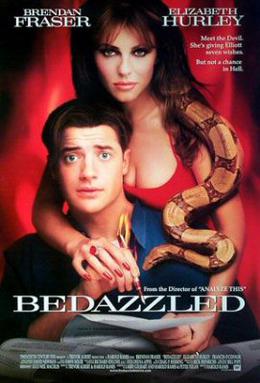
Bedazzled (2000, directed by Harold Ramis)


Elliot (Brendan Fraser) has a go-nowhere job at a computer company and an unrequited crush on Alison (Frances O’Connor), a co-worker who doesn’t even know who he is.  One night, at a bar afterwork, he’s approached by the Devil (Elizabeth Hurley), who offers Elliot seven wishes in return for his soul.  Elliot agrees but then he discovers that the Devil is tricky and his wishes always have an complication.  Elliot wants to be powerful so the Devil turns him into a Columbian drug lord.  Elliot wants to be sensitive and the Devil turns him into a whiny crybaby.  Elliot wants to be president and suddenly, he’s Abraham Lincoln being told to get ready for the theater.  Whenever things start to get too dangerous, the Devil brings Elliot back to reality so that she can continue to taunt him.

An Americanized remake of a British comedy that starred Dudley Moore and Peter Cook, Bedazzled was unfairly savaged by the critics when it was first released.  While it can’t match the wit and heart of the original and not all of the wishes are equally effective, the remake has its charms.  When Bedazzled first came out, most people talked about Elizabeth Hurley’s sexy performance of the Devil.  When she appears as a school teacher, it’s not a surprise that every student brings her an apple at the start of the day.  Hurley is so sexy that it’s easy to miss that she’s also giving a really good performance.  Hurley’s Devil is a prankster.  She likes to steal souls but mostly, she’s just having fun ruining all of Fraser’s wishes.  Brendan Fraser is likable as Elliot and the way he responds to each wish gives him a chance to show off his comedic skills.  Finally, the movie has a good ending, with Elliot growing up and realizing the truth about his crush on Alison.

Bedazzled may not be up to the level of some of director Harold Ramis’s other films but it’s still better than its reputation.

New Jersey Drive (1995, directed by Nick Gomez)


New Jersey Drive takes place in Newark, New Jersey or, as it was known in the 90s, “the car theft capital of the world.”

Jason Petty (Sharron Corley) and Midget (Gabriel Casseus) are teenagers in Newark.  Neither one of them is dumb but, as young African-American males living in the inner city, neither one feels that they have much to look forward to in the future.  They can’t even walk down the street, without getting hassled by the police.  So, they live for the present and that means stealing cars.  At first, stealing cars is just something that they do for fun.  It’s the challenge that attracts them.  However, one night, a cop’s car gets stolen.  That cop is a corrupt racist named Roscoe (Saul Stein) and he is soon going out of his way to make Jason and Midget’s life miserable.

New Jersey Drive may sound like an early version of one of the Fast and Furious films (the first F&F came out six years after New Jersey Drive) but, at heart, New Jersey Drive is less about stealing cars and more about a generation of young men who, because they have nothing to look forward to in the future, have no problem taking dangerous and sometimes stupid risks in the present.  While Midget is the one who truly loves cars and Jason is the one who is mostly just along for the ride, both characters seem to be aware that it’s only a matter of time before they either get caught or get killed for stealing the wrong car.  Today, we would say that Midget and Jason have no respect for authority but can you blame them when the only authority figures that they ever see are racists like Roscoe?  The police in New Jersey Drive come across like an invading army, a sea of white faces driving up and down black neighborhoods and searching for people to arrest.  For all the cars that Jason and Midget steal, they’re just as likely to get in trouble just for walking down the street.

Sometimes, New Jersey Drive is predictable.  In the years immediately following the release of Boyz ‘N the Hood, there were a lot of films about young men growing up in poverty-stricken neighborhoods and having to deal with a combination of racist cops and dangerous gangs.  New Jersey Drive‘s story hits a lot of the expected beats but there were also some scenes that took me by surprise.  When one of the two main car thieve is arrested and incarcerated, the film went off in a different direction than what I was expecting.  At first, Jason and Midget seem like stereotypes.  Midget is the wild and crazy friend while Jason is the smart one who is always hanging out with the “wrong crowd.”  By the end of the film, though, both Midget and Jason have shown some unexpected complexity and they both feel like real people instead of just plot devices in a movie.

Nick Gomez, who has done a lot of television work since the release of this film, does a good job directing New Jersey Drive.  The film captures the high that Jason and Midget feel when they successfully steal a car and Gomez also does a good job of capturing the feeling of the world closing in on the two of them as the story unfolds.  New Jersey Drive is an underrated piece of work that still has the power to inspire audiences to stay the Hell out of New Jersey.