Retro Television Review: Decoy 1.4 “To Catch A Thief”


Welcome to Retro Television Reviews, a feature where we review some of our favorite and least favorite shows of the past!  On Thursdays, I will be reviewing Decoy, which aired in Syndication in 1957 and 1958.  The show can be viewed on Tubi!
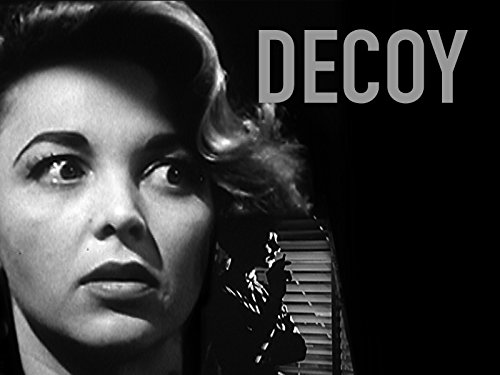
This week, Casey investigates a case of insurance fraud.

Episode 1.4 “To Catch A Thief”

(Dir by Teddy Sills, originally aired on November 4th, 1957)

A thief and his girlfriend mug a business owner named Mr. Whitaker (John McGovern).  When the police capture the thief, Mr. Whitaker claims that more money was stolen from him than was recovered.  Casey is sent undercover to discover whether or not Whitaker is lying or if a cop actually skimmed the cash that they recovered.

Pretending to be the thief’s girlfriend, Casey approaches Mr. Whitaker and tries to blackmail him.  When Mr. Whitaker appears to be innocent, his secretary (Mary James) falls under suspicion.  Mr. Whitaker, however, is eventually exposed as trying to commit insurance fraud when he has a conversation with his secretary at the police headquarters.  Unfortunately, for him, the room was bugged.

This episode bothered me.  On the one hand, I didn’t want an innocent police officer to be suspended for stealing money that he didn’t steal.  On the other hand, having Casey go undercover as a blackmailer felt almost as if it verging on entrapment.  As well, I found it hard to understand why Mr. Whitaker would be fooled into thinking Casey was the one who had robbed him earlier.  Didn’t Mr. Whitaker see the people who mugged him?

This episode just didn’t work for me.
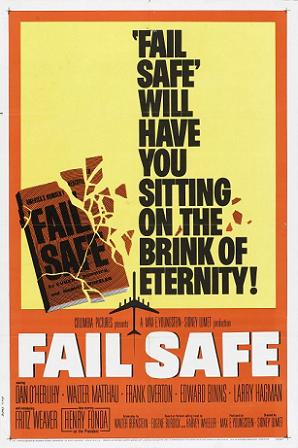
Shattered Politics #23: Fail-Safe (dir by Sidney Lumet)


Fail_safe_moviep

After watching Dr. Strangelove, you may find yourself asking what that film would have been like if it had treated its doomsday scenario seriously.  Well, you can find out by watching yet another film from 1964, Sidney Lumet’s Fail-Safe.

What’s Fail-Safe about?  Well, basically, it tells the exact same story as Dr. Strangelove, except without the humor.  Once again, an American bomber is accidentally ordered to launch a nuclear attack against Russia.  Again, the President (played, somewhat inevitably, by Henry Fonda) has to have an awkward conversation with the leader of Russia.  Again, a sinister defense advisor (this time played by Walter Matthau) argues that the world can survive a nuclear war.

Admittedly, there is no equivalent to George C. Scott’s Buck Turgidson in Fail-Safe.  However, there is a General Black (Dan O’Herilihy) who has a recurring nightmare about watching a bullfight while the sky around him glows with radiation.

Fail-Safe has the same plot as Dr. Strangelove but none of the humor.  In fact, Fail-Safe has absolutely no humor at all.  It’s one of the most somber films that I’ve ever seen.  It has a good opening with General Black’s nightmare and an effective ending that makes excellent use of freeze frames but the middle of the film is basically just a collection of endless debates.

And I’m sure that approach made sense at the time because, after all, Fail-Safe was dealing with a serious theme, it was directed by a serious filmmaker, and it featured a bunch of serious actors.  And maybe if I had never seen Dr. Strangelove, Fail-Safe would not seem like such a slow and boring movie.  But I have seen Dr. Strangelove and, as a result, it’s impossible to watch Fail-Safe without wanting to hear Henry Fonda say, “You can’t fight here!  This is the war room!”

Shattered Politics #19: To Kill A Mockingbird (dir by Robert Mulligan)


To_Kill_a_Mockingbird_poster

So, I guess I should explain why I’m including the classic 1962 film (and best picture nominee), To Kill A Mockingbird, in this series of reviews of films about politicians.  After all, while To Kill A Mockingbird dealt with the issue of racism in Alabama in a surprisingly honest manner, it doesn’t feature any elected officials.  Nobody shows up playing Gov. Benjamin J. Miller or President Franklin Roosevelt.  Instead, this film is about a wise lawyer named Atticus (Gregory Peck), an innocent man named Tom (Brock Peters), a girl named Scout (Mary Badham) and her older brother Jem (Philip Alford), and a mysterious recluse named Boo (Robert Duvall).

However, if you’ve read Harper Lee’s wonderful novel, then you know that Atticus is not just the smartest man in Maycomb, Alabama.  He’s also a member of the Alabama state legislature and his political career is a fairly important subplot in the book, with him occasionally having to leave home so he can go down to Montgomery and help to write the budget.  (Incidentally, Harper Lee’s father actually was a member of the Alabama House of Representatives.)

In the film, no mention of Atticus being a member of the state legislature is made but I still choose to believe that he was.  Because, as played by Gregory Peck, Atticus Finch is exactly the type of man who you would want to think of as serving in government.  He’s wise, compassionate, and firm.  For much of To Kill A Mockingbird, he is literally the only sane adult in Maycomb.  He’s the only attorney willing to defend Tom Robinson when Tom is accused of raping a white girl.  When a mob shows up to lynch Tom, Atticus is the only adult willing to stand up to them.  (Fortunately, Jem also runs up and shames the mob by reminding them that she goes to school with their children.)  And, in court, it is Atticus who proves that Tom is innocent.

When Tom is still convicted, what makes it all the more devastating is that wise and compassionate Atticus doesn’t seem to be surprised as all.  If even Atticus feels that there is no hope for a black man to get a fair trial from an all-white jury, the film seems to be saying, then there truly is no hope.

Of course, the film is not just about Atticus.  It’s about Scout and Jem and their friend Dill (John Megna) and how the three of them grow up and learn the truth about their world.  Watching them from behind the closed doors of his house is the mysterious and reclusive Boo Radley.  When Boo shows up towards the end of the film, I always find tears in my mismatched eyes.  Boo is played, in his film debut, by Robert Duvall.  Duvall doesn’t say a word but he still makes an incredible impression as the shy and withdrawn Boo.

So, I may be cheating a lot by including To Kill A Mockingbird in this series of reviews.  Oh well.  Who am I to turn down a chance to rewatch it?  To Kill A Mockingbird is just a great film.