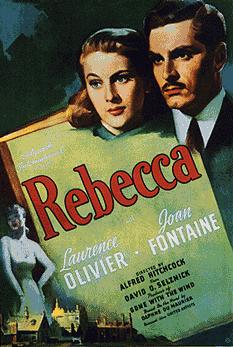
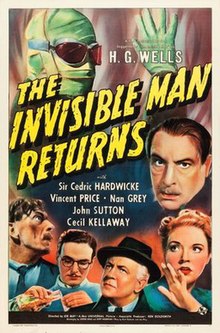
Horror Film Review: The Invisible Man Returns (dir by Joe May)


1940’s The Invisible Man Returns opens with Sir Geoffrey Radcliffe (Vincent Price) sitting on Death Row.  Convicted of the murder of his brother, Radcliffe is due to soon be executed.  Radcliffe claims that he was framed and his girlfriend, Helen Manson (Nan Grey), has spent the past week of her life begging for someone to order a stay on the execution.  However, with the home secretary out of the country, there is no hope of a reprieve.

Dr. Frank Griffin (John Sutton), brother of the original Invisible Man, visits Radcliffe in prison and gives him the same serum that his brother previously developed.  Now invisible, Radcliffe is able to escape from the prison.  Radcliffe is determined to prove his innocence but Dr. Griffin is more concerned with developing a way to reverse the serum’s effects before Radcliffe is driven insane, just as the original Invisible Man was.  Radcliffe becomes convinced that his brother was murdered by their cousin, Ricard Cobb (Sir Cedric Hardwicke) but is Radcliffe correct or is the serum just making him paranoid?  With Inspector Sampson (Cecil Kellaway) searching for Radcliffe and fully aware of what effects the serum are going to have on his mind, can Radcliffe clear his name before he loses his sanity?

The Invisible Man Returns went into production after the success of Son of Frankenstein proved that there was a market for sequels to previously successful horror films.  (Yes, there was a time when sequels were not an automatic thing.)  This was also one of the first horror films in which Vincent Price made an appearance.  (Today, we’re so used to the image of Vincent Price as a somewhat campy horror icon that it’s easy to forget that he originally started his career as a romantic leading man and was even seriously considered for the role of Ashley Wilkes in Gone With The Wind.)  As he spends the majority of the film wearing the same tight bandages that hid Claude Rain in the first film, Price’s actual face is only visible for slightly less than a minute and, without his famous mustache, it’s actually rather difficult to recognize him.  That said, there’s no mistaking Price’s voice, heard as the invisible Radcliffe bitterly complains about everything from a barking dog to other people’s doubts about Cobb being the murderer.  While this film does find Price in a slightly more subtle mood than many of us horror fans are used to, it still features plenty of hints of what the future would hold.

I enjoyed The Invisible Man Returns, which featured some witty invisibility sequences (watch invisible Vincent Price toss off those clothes!) and also managed to take the story’s violence about as far as it could without violating the production code.  While it’s always a pleasure to watch any film featuring Vincent Price, I also liked the performance of Cecil Kellaway, who played the inspector as being the epitome of the the upstanding but dryly humorous British policeman.  One gets the feeling that absolutely nothing could ever take the Inspector by surprise …. not even an Invisible Man!
Previous Universal Horror Reviews:

  1. Dracula (1931)
  2. Dracula (Spanish Language Version) (1931)
  3. Frankenstein (1931)
  4. Island of Lost Souls (1932)
  5. The Mummy (1932)
  6. The Invisible Man (1933)
  7. The Bride of Frankenstein (1935)
  8. Dracula’s Daughter (1936)
  9. Son of Frankenstein (1939)
  10. The Wolf Man (1941)
  11. Ghost of Frankenstein (1942)
  12. Frankenstein Meets The Wolf Man (1943)
  13. Son of Dracula (1943)
  14. House of Frankenstein (1944)
  15. House of Dracula (1945) 
  16. Creature From The Black Lagoon (1954)
Horror Film Review: The Invisible Man (dir by James Whale)


the-invisible-man

The 1933 Universal horror film, The Invisible Man, never seems to get as much attention as Frankenstein, Dracula, The Wolf Man, or The Mummy.  Perhaps it’s because the invisible man really isn’t a supernatural monster.  He’s just a scientist who has turned himself invisible and is now going mad as a result.  Or maybe it’s because there have been so many crappy films that have used invisibility as a plot point that the reputation of the original Invisible Man suffers by association.

For whatever reason, The Invisible Man never seems to get spoken about in the same breathless, gleeful manner as some of the other Universal monsters.  But I have to admit that, though I usually can’t stand movies about invisibility, I rather like The Invisible Man.

Based on a novel by H.G. Wells, The Invisible Man opens with a mysterious man (played by Claude Rains) arriving in a small English village.  He checks into a small inn and soon, everyone in the village is scared of him.  It’s not just his haughty attitude or his habit of ranting about his own superiority.  There’s also the fact that he is literally covered, from head to toe, in bandages.  He always wears gloves and dark glasses.  He insists that he’s doing important research and demands to be left alone.

The inn keeper (Forrester Harvey) and his histrionic wife (Una O’Connor) put up with the mysterious man until he falls behind on his rent.  However, once confronted, the mysterious man announces that he’s not going anywhere.  When the police and a mob of villagers arrives, the man starts to laugh like a maniac.  He unwraps the bandages around his head and…

THERE’S NOTHING UNDERNEATH!

Well, there is something there.  It’s just that the man is invisible so no one can see what’s underneath.  It turns out that the man is Dr. Jack Griffin, a chemist who has been missing for several days.  He’s created an invisibility serum but he can’t figure out how to reverse the effects.  Even worse, the serum is driving him insane.  Griffin’s fiancée, Flora (Gloria Stuart), and her father, Dr. Cranley (Henry Travers), are searching for Jack but Jack doesn’t particularly want to be found.  Jack is more interested in exploring how he might be able to use invisibility to conquer the world…

The Invisible Man is historically important because it was the film that brought Claude Rains to Hollywood.  Rains has previously made films in the UK but this was his first American film.  Think of how different film history would have turned out if The Invisible Man had, as originally planned, starred Boris Karloff.  Without Claude Rains coming to America, who would have played Louis in Casablanca?  Who would have played Sen. Paine in Mr. Smith Goes To Washington or Alex Sebastian in Notorious?  Of course, we don’t really see Claude Rains’s face until the very end of The Invisible Man.  Instead, we just hear his voice but what a voice Claude had!  He delivers his dialogue with just the right amount of malicious sarcasm.

I like The Invisible Man.  For modern audiences, it’s not particularly scary.  (Though I do find the idea of being unknowingly followed by an invisible person to be a little unnerving…)  However, unlike a lot of other old horror films, you can watch The Invisible Man and see why it would have been scary to an audience seeing it for the very first time.  In 1933, a time when film was still a relatively new medium and audiences had yet to become jaded by special effects, here was a man unwrapping his bandages to reveal that there was nothing underneath!  That had to have freaked people out!

The Invisible Man was directed by James Whale and the film features the same demented sense of humor that distinguished The Bride of Frankenstein.  The villagers are portrayed as being so hysterical that you can’t help but think that maybe Griffin has a point about being surrounded by fools.  By the time the local constable declares, “What’s all this then?,” you can’t help but start to sympathize with Jack Griffin.

There’s been a lot of  bad invisibility movies made but The Invisible Man is not one of them.  It may not be as well remembered as some of the other Universal horrors but it’s definitely one worth seeing.

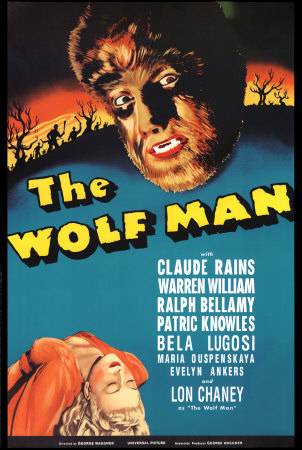
Horror Film Review: The Wolf Man (dir by George Waggner)


the-wolfman

“Even a man who is pure in heart, and says his prayers by night;

May become a wolf when the wolfbane blooms and the autumn moon is bright.”

— Gypsy Poem, The Wolf Man (1941)

Poor Larry Talbot.

We all know his story, of course.  The plot of the original Wolf Man is so iconic and has been imitated in so many other films that, even if you somehow have never seen the original 1941 film, you still know what happened.

Larry (played by Lon Chaney, Jr.) is a loser.  When we first meet him, he is nervously returning to his childhood home in Wales.  (Chaney doesn’t sounds at all Welsh nor does he sounds like he’s from any other part of the UK for that matter, but that’s not really important.)  Larry’s older brother has recently died and Larry hopes that maybe he can reconcile with his father, Sir John (Claude Rains).  Larry’s brother was the favored son, the one who lived up to the Talbot name and made his father proud.  Larry, on the other hand, hasn’t really succeeded at anything he’s ever done.  To use the slang of the time, Larry comes across as basically being a lug.  A big dumb lug.

After discovering that his father really doesn’t seem to want to have much to do with him, Larry goes for a stroll through the nearby village.  He buys a silver-headed walking stick, mostly so he can flirt with the salesgirl, Gwen (Evelyn Ankers).  It turns out that there’s a gypsy camp nearby.  What better place to go on a date!?

Well, perhaps Larry should have just invited her to the movies.  Not only does a fortune teller (Maria Ouspenskaya) see something terrible in his future but Larry ends up getting bitten by what appears to be a wolf.  The good news is that Larry was bitten while saving the life of one of Gwen’s friends, which is certainly going to make him look like good boyfriend material.  The bad news is that the wolf was actually the fortune teller’s son, Bela (played by none other than Bela Lugosi).  It turns out that Bela was a werewolf and now, Larry’s going to be a werewolf too!

Larry, needless to say, is not happy about this.  But then again, Larry wasn’t happy before he became the werewolf either.  Lon Chaney, Jr. played Larry Talbot in five different movies and I don’t think he smiled once.  I guess that’s understandable, seeing as how he was a werewolf.  In every film in which he appeared, Larry would beg someone to kill him and put him out of his misery.  And, in every sequel, Larry would somehow be brought back to life and have to go through it all over again.  I guess he earned the right to be a little glum.

But still, even before he’s bitten in The Wolf Man, Larry is kind of a boring character.  The only time that he’s interesting is when he’s a wolf man.  And really, he’s a far more successful werewolf than human.  When we first meet Larry, he apologizing to his father for never living up to his expectations.  But once Larry turns into the Wolf Man, he finally manages to get things done.  When he’s the wolf man, Larry has the inner drive that he lacks as a human.

To me, the heart of The Wolf Man is not to be found in Chaney’s glum performance.  Instead, it’s in Claude Rains’s performance as John.  When we first meet Sir John, he seems like a rather imposing figure but, over the course of this 70 minute film, John slowly lowers his guard.  We discover that he’s actually a loving father and there’s something rather sweet about watching as he slowly welcomes Larry back into his life.  Of course, it all ends in tragedy.  These things often do.

Everything, from the set design to shadowy cinematography to the hard-working fog machine (which keeps the moors looking properly creepy) to the performances of Claude Rains and Maria Ouspenskaya, comes together to make The Wolf Man into a genuine classic of horror cinema.  And, of course, I have to mention the brilliant makeup job that was done to transform Chaney into The Wolf Man.  

Still, I have to wonder — why did Lugosi turn into an actual wolf while Chaney turned into this?

wm

Oh well, it probably doesn’t matter.  Just relax and enjoy the damn film, as a wise person somewhere once said.  Be sure to watch The Wolf Man this holiday season!

Embracing the Melodrama Part II #13: Rebecca (dir by Alfred Hitchcock)


Rebecca_1940_film_poster

Well, here we are, less than a week into Embracing the Melodrama, Part II, and I’m already running behind!  The plan, as I mentioned back on Monday, is to review 128 melodramatic films over the next three weeks.  And, even though I know that sounds a like a lot, I had it all planned out so that I’d be able to get all that done in just 21 days.  All I had to do was make sure that I reviewed 6 films a day.

And …

Well, life happened.

But no matter!  It may now take me 3 and a half weeks to review 128 films but that’s no great tragedy.  And besides, regardless of how long it takes, I’ve got some pretty good films scheduled.

Take, for instance, the 1940 best picture winner Rebecca.

Rebecca is a film that all women can relate to.  The heroine is played by Joan Fontaine.  I say “heroine” because we never actually learn the character’s name, nor do we learn much about her background.  When we first see her, she’s defined by her job, which is to basically be a paid companion to a wealthy woman.  Later, she’s defined by her whirlwind romance with the brooding and aristocratic widower Maxim de Winter (Laurence Olivier).  When, after two weeks, they get married, she becomes known  as the second Mrs. de Winter.  She becomes defined by both who she married and who she is not.

She’s not Rebecca, the first Mrs. de Winter.

As soon as Maxim takes his new wife to his estate, the second Mrs. de Winter discovers that she’ll always live in the shadow of the deceased Rebecca.  Everyone she meets describes Rebecca as being a vibrant, lively figure — in other words, the complete opposite of the meek second Mrs. de Winter.  The coldly imperious housekeeper, Mrs. Danvers (Judith Anderson), has perfectly preserved Rebecca’s room and makes little attempt to hide the scorn that she feels for the second Mrs. de Winter.  Even worse, once they return to the estate, Maxim reveals himself to be moody and tempermental.  With the help of the manipulative Mrs. Danvers, the second Mrs. de Winter becomes convinced that Maxim will never love her as much as he loved Rebecca.

Making things even more complicated, a man claiming to be Rebecca’s cousin comes by the house when Maxim is away.  Jack Flavell (played by George Sanders, at his most serpent-like) suggests that there may have been more to Rebecca’s death than the second Mrs. de Winter was originally told…

Rebecca is a classic film, for many reasons.  It’s well-acted, with Fontaine, Olivier, Anderson, and Sanders all bringing their characters to vibrant life.  It’s a gothic romance.  It’s a thriller.  It’s a mystery.  It is the epitome of old Hollywood style.  But, for me, the main reason that Rebecca is a classic is because it tells a story to which almost everyone can relate.  Every relationship that I’ve ever had, I’ve always been curious and occasionally even jealous of who came before me.  There’s nothing more intimidating than living in the shadow of someone who you will never get a chance to meet personally.  The second Mrs. de Winter’s insecurities are everyone’s insecurities and, in some fashion or another, we’ve all had a Mrs. Danvers in our life.  The second Mrs. de Winter’s struggles are our struggles and, as she grows stronger, the viewer grows stronger with her.

Alfred Hitchcock is one of the most influential and acclaimed filmmakers of all time but he never won a directing Oscar.  Rebecca was the only one of his films to win Best Picture.  Producer David O. Selznick brought Hitchcock over from England to direct Rebecca and it’s been reported that Hitchcock resented Selznick’s interference.  (And, while Rebecca is undoubtedly a good film that was directed by Alfred Hitchcock, it’s not exactly a Hitchcock film in the way that Shadow of a Doubt, Rear Window, or Vertigo are Hitchcock films.)  As a result, Hitchcock subsequently made it a point to edit future pictures in camera so that the studios would not be able to re-edit his films.

But, whether you consider it to be a Hitchcock picture or a Selznick production, Rebecca remains a wonderfully watchable melodrama.