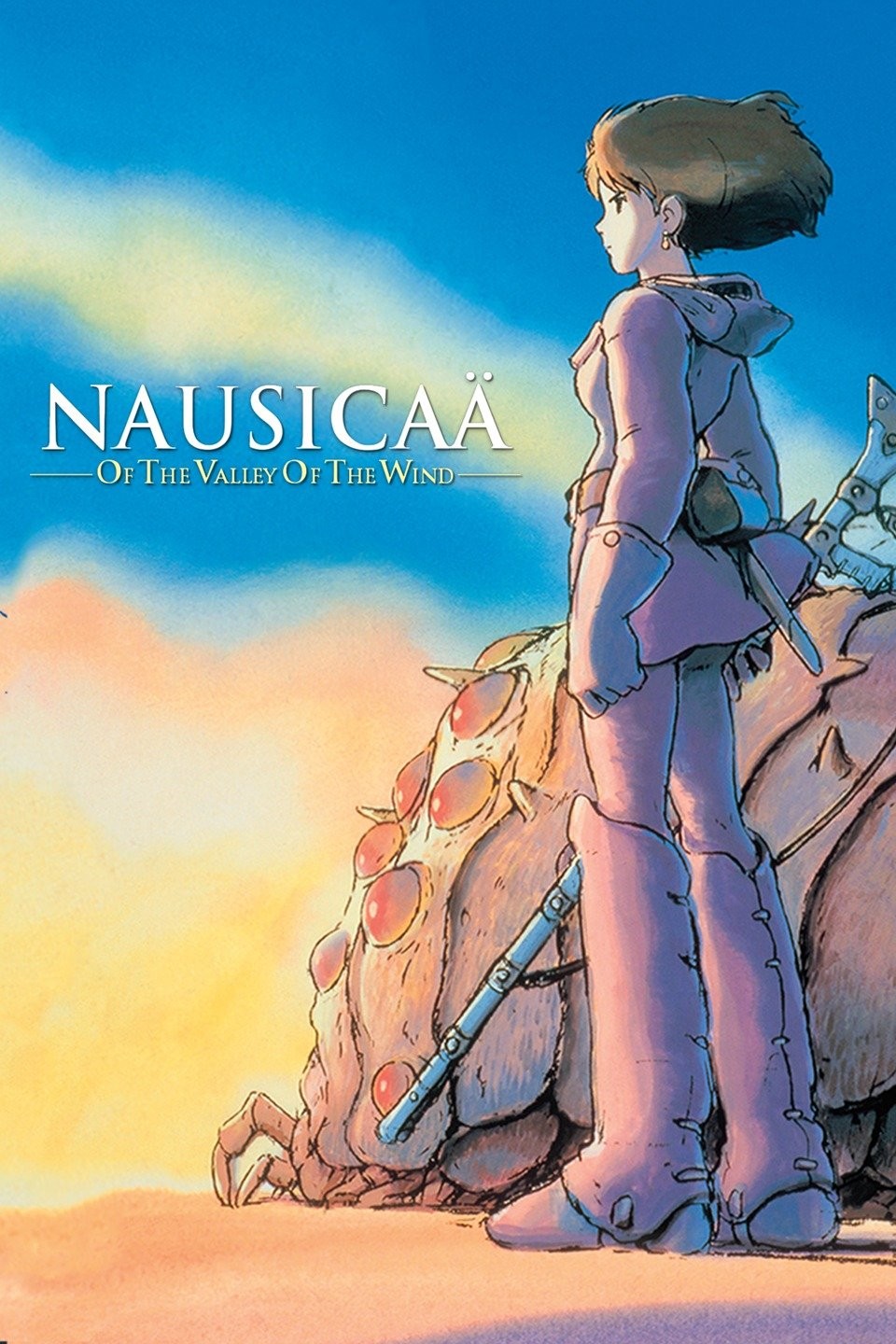
“Every one of us relies on water from the wells, because mankind has polluted all the lakes and rivers. But do you know why the well water is pure? It’s because the trees of the wastelands purify it! And you plan to burn the trees down? You must not burn down the toxic jungle!” — Nausicaä
Nausicaä of the Valley of the Wind stands out as Hayao Miyazaki’s groundbreaking 1984 anime film that blends epic adventure with profound environmental and anti-war messages. This post-apocalyptic tale, adapted from his own manga, follows a young princess fighting to bridge humanity and nature in a toxic world overrun by giant insects.
Imagine an Earth a thousand years after humanity’s self-inflicted apocalypse called the Seven Days of Fire, where massive God Warriors wiped out civilization and left behind the Sea of Corruption—a sprawling, poisonous jungle teeming with mutated bugs like the massive, trilobite Ohmu. In this harsh landscape, pockets of survivors cling to life, and the idyllic Valley of the Wind thrives thanks to constant sea breezes that keep the toxic spores at bay, powering windmills for their farms. Enter Nausicaä, the 16-year-old princess and ace glider pilot, who’s not your typical royal—she dives into the jungle without fear, collects spores, and chats with insects like they’re old pals. Right from the opening, when she calms a raging Ohmu with flash bombs after it chases her mentor Lord Yupa, you know she’s special: brave, empathetic, and way ahead of her people in understanding that the Fukai (the jungle’s name) isn’t just a killer but maybe Earth’s way of healing itself.
The plot kicks into high gear when a hulking Tolmekian airship crashes in the Valley, swarmed by insects and spilling fungi that threaten the crops. Nausicaä rushes in, saving a dying Pejite princess named Lastelle, who begs her to destroy the cargo—a calcified embryo of one of those ancient God Warriors. Too late; Tolmekian forces invade under the steely Princess Kushana, who assassinates Nausicaä’s dad, King Jhil, and claims the embryo to hatch it as a weapon against the Fukai. Kushana’s plan? Revive the beast, burn the jungle, and reclaim the planet for humans, no matter the cost. Nausicaä gets dragged along as a hostage, but chaos ensues: Pejite Prince Asbel (Lastelle’s brother) attacks the convoy in revenge, leading to crashes and a wild glider chase where Nausicaä saves him, only for them to plunge through the jungle floor into a hidden miracle—an underground world of pure water and soil where the Fukai’s roots are actually detoxifying the planet.
Back in the Valley, villagers revolt against the Tolmekians guarding the hatching Warrior, but things spiral when Pejite survivors reveal they lured the Ohmu stampede to the Valley using a tortured baby Ohmu as bait—payback for Tolmekia destroying their city. Nausicaä escapes Pejite captivity (with help from Asbel’s mom and sympathizers), hijacks the baby Ohmu carriers, and races to stop the horde. In one of the film’s most gut-wrenching scenes, she confronts the enraged Ohmu sea, gets trampled to death (or so it seems), her blue-stained dress making her look like a martyr. But the insects heal her with their golden tentacles, lifting her like a messiah in a field of gold, fulfilling a prophecy and halting the rampage just as the premature God Warrior melts down after a couple of blasts. Tolmekians bail, Pejites join the Valley rebuild, and a clean shoot sprouts under the Fukai—hope amid ruin.
What makes Nausicaä of the Valley of the Wind pop off visually is Miyazaki’s hand-drawn mastery, even on Topcraft’s tight nine-month schedule with a million-dollar budget. The gliders (especially her sleek Möwe) slice through skies with fluid grace, Ohmu herds churn like living tsunamis, and the Fukai’s spores shimmer in surreal blues and golds—equal parts beautiful and deadly. Action pops without feeling gratuitous: dogfights buzz with tension, sword clashes ring true (Nausicaä’s gladiator-style fights against armored goons are badass), and that underground reveal flips the script with bioluminescent wonder. Joe Hisaishi’s debut score nails it—haunting flutes for Nausicaä’s flights, pounding percussion for stampedes, and that ethereal title theme sung by Narumi Yasuda that sticks in your head. It’s proto-Ghibli polish before Ghibli existed, proving Miyazaki’s detail obsession (he redrew frames himself).
Nausicaä of the Valley of the Wind isn’t just pretty; it’s a thematic powerhouse that demands attention in our climate-anxious era. At its core, it’s an eco-fable flipping the “man vs. nature” trope: the Fukai isn’t evil—it’s purifying humanity’s mess from industrial hubris, echoing real-world pollution like Minamata Bay that inspired Miyazaki. Nausicaä embodies harmony, tending a secret clean garden proving spores thrive without toxins, and her big revelation underground shows patience over destruction wins. It shares striking parallels with Frank Herbert’s Dune, where both stories unfold in post-apocalyptic or barren landscapes where survival hinges on mastering harsh environments—the Sea of Corruption’s toxic sprawl mirrors Arrakis’s endless dunes, both teeming with misunderstood “monsters” central to their ecosystems. Nausicaä glides over spore-filled jungles much like Paul Atreides rides sandworms, learning to respect rather than conquer these forces; her calming of the Ohmu herd parallels the Fremen’s symbiotic bond with Shai-Hulud, where outsiders must earn nature’s trust through ritual and empathy. The Fukai purifies Earth’s poisoned soil over generations, just as the spice melange ties Arrakis’s fate to galactic power, forcing characters to confront interdependence over exploitation.
Leadership and prophecy drive the parallels deeper: Nausicaä, the blue-clad princess fulfilling a cryptic prophecy through self-sacrifice, embodies the Kwisatz Haderach archetype in Paul, both reluctant saviors burdened by destiny amid warring factions. Tolmekian invaders seeking God Warriors evoke Harkonnen aggressors hungry for spice dominance, while Pejite’s desperate tactics reflect Fremen guerrilla warfare—cycles of revenge where ecology becomes a weapon. Miyazaki drew direct inspiration from Dune, infusing anti-colonial vibes: Nausicaä’s diplomacy rejects imperial conquest, urging coexistence, akin to Herbert’s critique of messiahs sparking holy wars.
Anti-war vibes hit hard too—no pure villains, just cycles of fear and revenge: Tolmekia’s aggression mirrors Pejite’s desperation, both blind to coexistence. Kushana’s not a cartoon baddie; she’s pragmatic, scarred by loss, and her arc hints at redemption. Buddhism creeps in via greed, delusion, and ill will fueling conflict, with Nausicaä’s self-sacrifice as enlightened compassion. Influences like Tolkien and Le Guin shine through, but Miyazaki makes it uniquely hopeful: life’s interconnected, redemption’s possible if we listen.
Nausicaä herself is the heart, a rare female lead who’s warrior, scientist, diplomat—feminine empathy meets masculine grit without preachiness. She leads by diving into danger (ripping off her mask to prove clean air, tackling Pejite goons), inspiring loyalty because she’d never ask what she won’t do. Sidekicks shine: fox-squirrel Teto’s adorable comic relief, Yupa’s wise wanderer vibe, Mito’s gruff loyalty, Obaba’s prophecy-dropping mysticism. Asbel adds rival-turned-ally spark, Kushana steel-spined foil. Voices (Sumi Shimamoto’s Nausicaä especially) convey emotion perfectly; Disney’s 2005 dub (Alison Lohman, Patrick Stewart, Uma Thurman) holds up too, sans the botched 80s Warriors of the Wind edit Miyazaki hated.
Legacy-wise, this flick birthed Studio Ghibli—Miyazaki and Takahata founded it post-success, grossing ¥1.48 billion in Japan alone. Critically adored (91% Rotten Tomatoes, top animated film polls), it influenced games (Panzer Dragoon), Star Wars nods, and eco-anime forever. The manga dives deeper (darker, more conflicted Nausicaä over 12 years), but the film stands alone as pure, idealistic storytelling.
So why is Nausicaä of the Valley of the Wind a must-watch? In a world choking on plastic oceans and endless wars, it slaps you with urgency: destroy nature, destroy ourselves; choose empathy, find salvation. These Dune echoes make it a killer companion for sci-fi fans, blending Miyazaki’s hopeful twist on Herbert’s tragedy to prove timeless ideas thrive across media. It’s thrilling adventure—no slow bits, every frame earns its runtime—with heart that lingers, urging coexistence over conquest. Miyazaki’s optimism shines: even post-apocalypse, one person’s vision sparks change. Skip it, miss anime’s soul laid bare; watch it, level up your worldview. Perfect for sci-fi fans, eco-warriors, or anyone craving stories that stick. Dive in—you’ll emerge healed, like Nausicaä from the Ohmu sea.
 Through the Shattered Lens