10 Oscar Snubs From The 1930s


Ah, the 1930s. America was mired in the Great Depression. FDR was plotting to pack the courts.  The American public, sick of playing by the rules and getting little in return, began to admire gangsters and outlaws.  The horror genre became the new way to vent about societal insecurity. In Europe, leaders were trying to ignore what was happening in Italy, Spain, and Germany. As for the Academy, it was still growing and developing and finding itself. With people flocking to the movies and the promise of an escape from reality, the Academy Awards went from being an afterthought to a major cultural event.

And, of course, the snubs continued.

1930 — 1931: Crime Doesn’t Pay For Little Caesar and The Public Enemy 

When people think about the 1930s, gangsters are probably one of the first things that come to mind.  In the 30s, audiences flocked to movies about tough and streetwise criminals who did what they had to do in order to survive during the Depression.  Unfortunately, the Academy was not always as quick to embrace the gangster genre.  Though The Public Enemy did pick up a nomination for its screenplay, both it and Little Caesar were largely ignored by the Academy.  Not only did the films fail to score nominations for Best Picture but neither James Cagney nor Edward G. Robinson would be nominated for bringing their title characters to life.  It’s a crime, I tells ya.
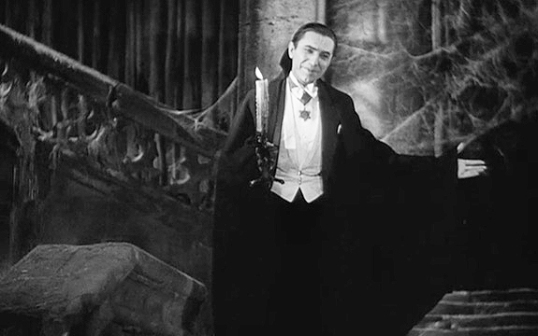
1930 — 1931: Bela Lugosi Is Not Nominated For Best Actor For Dracula

Admittedly, the 1931 version of Dracula is a bit of a creaky affair, one that feels quite stagey to modern audiences.  But Bela Lugosi’s performance in the title role holds up well, despite the number of times that it has been parodied.  Unfortunately, from the start, the Academy was hesitant about honoring the horror genre.

Frankenstein (1931, dir by James Whale)

1931 — 1932: Boris Karloff Is Not Nominated For Best Actor For Frankenstein

Again, the Academy snubbed an iconic horror star.  Not only was Boris Karloff not nominated for Frankenstein but the film itself was not nominated for Best Picture, despite being infinitely better than at least one of the 8 films that were nominated.  (That film, by the way, was Bad Girl.  When is the last time that anyone watched that one?)  In fairness to the Academy, they did honor one horror film at that year’s awards.  Fredric March won Best Actor for Dr. Jekyll and Mr. Hyde.  Of course, he also tied with Wallace Beery, who was nominated for The Champ.  Obviously, the Academy still had to work out its feelings towards the horror genre, a process that continues to this very day.

1932 — 1933: King Kong Is Not Nominated For Best Picture

Oh, poor King Kong.  Film audiences loved him but the Academy totally ignored both him and his film.  Unfortunately, back in 1933, the Academy had yet to introduce a category for special effects.

1932 — 1933: Duck Soup Is Ignored By The Academy

King Kong was not the only worthy film to be ignored at the 1932-1933 Oscars.  The Marx Brothers’s greatest film also went unnominated.

1934: The Scarlet Empress Is Not Nominated For Best Picture

Josef von Sternberg’s surreal historical epic was totally ignored by the Academy.  Not only did it miss out on being nominated for Best Picture but the sterling work of Marlene Dietrich and Sam Jaffe was ignored as well.  How was the opulent set design ignored?  How did it not even pick up a nomination for costume design?  My guess is that Paramount chose to promote Cleopatra at expense of The Scarlet Empress.  Either the way, the Best Picture Oscar was won by one of my favorite films, It Happened One Night.

1935: Fred Astaire and Ginger Rogers Are Not Nominated For Top Hat

Top Hat scored a best picture nomination but the film’s two stars went unnominated.

1936: My Man Godfrey Is Nominated For Everything But Best Picture

My Man Godfrey, a classic screwball comedy, was nominated for Best Actor, Best Actress, Best Supporting Actor, Best Supporting Actress, Best Director, and Best Screenplay but somehow, it was not nominated for Best Picture.  It’s a shame because My Man Godfrey, along being a very funny movie, is also a film that epitomizes an era.  Certainly, it’s far more entertaining today than the film that won Best Picture that year, The Great Ziegfeld.  (Interestingly enough, William Powell played the title role in both Godfrey and Ziegfeld.)

1937: Humphrey Bogart Is Not Nominated For Best Supporting Actor in Dead End

Dead End featured one of Bogart’s best gangster roles.  As a gangster who returns to his old neighborhood and is rejected by his own mother, Bogart was both menacing and, at times, sympathetic.  Like Cagney and Robinson, Bogart definitely deserved a nomination for his portrayal of what it was like to live a life of crime.  Unfortunately, Bogart was an actor who was taken for granted for much of his career.  It wasn’t until he played Rick Blaine in Casablanca that the Academy would finally nominate him.

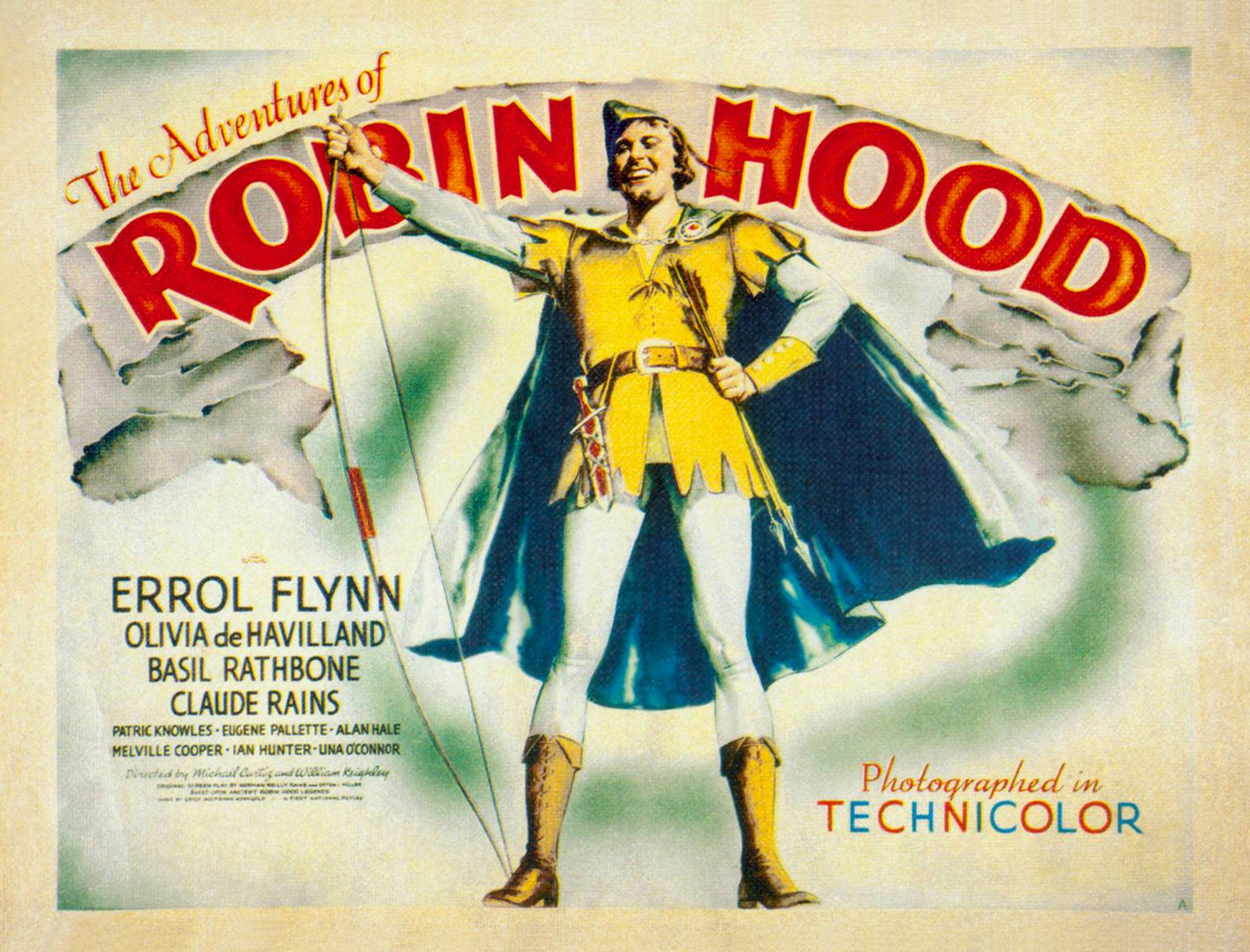
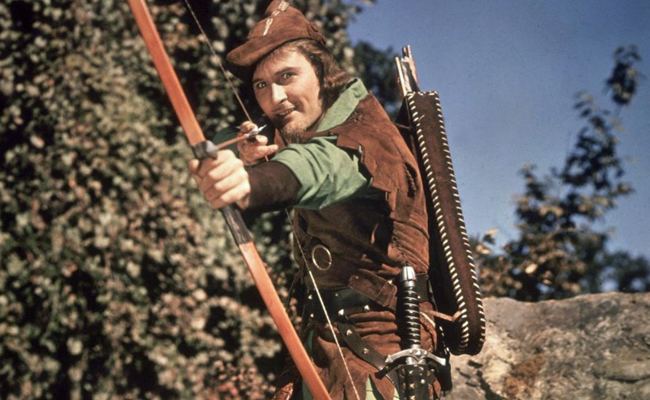
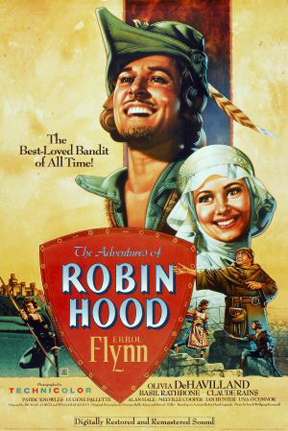
The Adventures of Robin Hood (1938, dir by Michael Curtiz)

1938: Errol Flynn Is Not Nominated For Best Actor In The Adventures of Robin Hood

This is truly one of the more shocking snubs in Academy history.  Errol Flynn’s performance as Robin Hood pretty much set the standard for every actor who followed him.  Russell Crowe is undoubtedly a better actor than Flynn was but Crowe’s dour interpretation of Robin could in no way compete with the joie de vivre that Flynn brought to the role.

Agree?  Disagree?  Do you have an Oscar snub that you think is even worse than the 10 listed here?  Let us know in the comments!

Up next: 1940s, in which Hollywood joins the war effort and the snubs continue!

Dead End (1937, dir by William Wyler)
18 Days of Paranoia #7: Cuban Rebel Girls (dir by Barry Mahon)


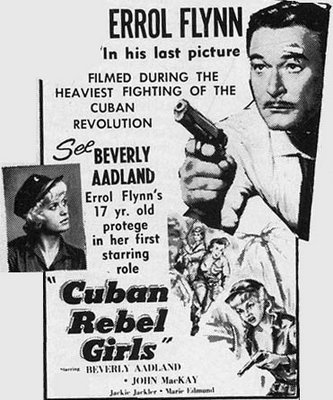
In the 1959 film, Cuban Rebel Girls, Errol Flynn (playing himself) flies down to Cuba.  The time is shortly before the Cuban Revolution.  (From a cinematic point of view, Flynn is in Havana at the same time as Hyman Roth and Michael and Fredo Corleone in The Godfather, Part II.)  Flynn has been hired by the Hearst newspaper syndicate to go down to Cuba and do a report on Fidel Castro.  Flynn narrates the film and tells us that he was very sympathetic to Castro and his cause….

OH MY GOD, ERROL FLYNN WAS A COMMUNIST!

Well, maybe not.  If you actually go back and read contemporary reports about the Cuban Revolution, you’ll see that a lot of Americans had a romanticized view of Fidel Castro and his revolutionaries.  Everyone seemed to agree that the president of Cuba, Batista, was a dictator and he needed to be forced out of power.  Castro, himself, didn’t fully and openly declare himself to be a hardline communist until after he had already taken over Cuba.  In Cuban Rebel Girls, someone mentions that Fidel was “always looking out for the little guy” and that’s the attitude that this film takes.  At the time the film was made, it can legitimately be said that Flynn had no way of knowing that Fidel Castro would eventually reveal himself to be despotic dictator.  (For more infuriating, to me, are the people who have continued to defend the Castros up until this day.)

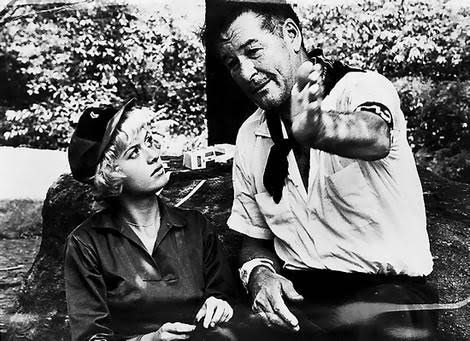
Fidel Castro, himself, doesn’t actually appear until the very end of Cuban Rebel Girls and, even then, it’s just newsreel footage of him riding a tank through Havana.  (Che Guevara does not show up at all.  He may have been busy shopping for berets, I don’t know.)  That said, the film was actually shot in Cuba and it does feature footage of Errol Flynn meeting actual Cuban rebels.  This was also Errol Flynn’s last film and, for the most part, he looks terrible.  Though the film’s poster may feature a suave-looking Errol Flynn holding a gun, the film actually features a noticeably overweight and often out-of-breath Errol Flynn who really doesn’t do much other than sit around and listen to other people talk.

(That said, Flynn’s voice over narration does have the occasional moment of charm.  When he meets one of the rebel girls of the title and he kisses her hand, he jokes that he was relieved to see that he hadn’t totally lost “the Flynn touch.”  Flynn delivers the line with just enough self-depreciation that it’s charming rather than creepy.)

The majority of the film doesn’t actually involve Flynn.  Instead, it involves two girls from New York — Beverly (Beverly Aadland) and Jacqueline Dominguez (Jackie Jackler) — who want to help out the revolution.  Jacqueline is from Cuba, went to high school with Fidel, and her brother is currently a part of the revolution.  Beverly, meanwhile, is convinced that she’ll find the man that she loves in jungles of Cuba.  Beverly explains that she doesn’t know much about Castro or Batista.  That’s for others to worry about!  Jacqueline assures her that, even in high school, “the big jerk” was always looking out for people.

Anyway, Beverly and Jacqueline raise some money from their friends and then decide to smuggle it into Cuba so that the guerrillas can use it to buy weapons.  What follows is a lot of intrigue and sneaking around as Beverly and Jackie try to avoid Batista’s secret police and help out the guerrillas.  And, of course, when I say “a lot,” what I actually mean is “next to none.”  For two people who don’t really come across as being particularly smart, Jacqueline and Beverly certainly don’t have much trouble sneaking around Cuba.

(That said, there are enough references to Batista’s secret police to justify reviewing the film as a part of the 18 Days of Paranoia.  Take my word for it.  Or watch the movie on YouTube, where it’s available under the name Assault of the Rebel Girls.)

Anyway, this is a weird movie, along with also being a really cheap movie.  Beverly Aadland was apparently Errol Flynn’s protegee.  She also wasn’t a very good actress.  (Jackie Jackler does a little bit better in the acting department, though not by much.)  That said, as a film partially shot in Cuba during the days leading up to the revolution, this is an interesting historical document.  And, for some people, just the fact that it’s a pro-Castro film from Errol Flynn (!) will be enough to justify sitting through it.

(Seriously, a celebrity defending a communist?  That’s like a major news outlet or a bunch of basketball players going out of their way to defend the Chinese government.  It just doesn’t make sense….)

Other Entries In The 18 Days Of Paranoia:

  1. The Flight That Disappeared
  2. The Humanity Bureau
  3. The Private Files of J. Edgar Hoover
  4. The Falcon and the Snowman
  5. New World Order
  6. Scandal Sheet

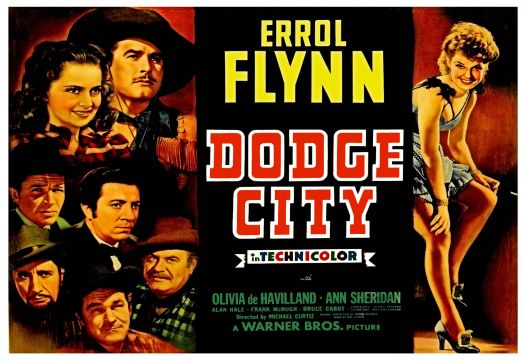
Ride the Trail to DODGE CITY with Errol & Olivia (Warner Brothers 1939)


gary loggins's avatarcracked rear viewer

1939 has been proclaimed by many to be Hollywood’s Greatest Year. I could make a case for 1947, but I won’t go there… for the moment. Be that as it may, 1939 saw the release of some true classics that have stood the test of time, including in the Western genre: DESTRY RIDES AGAIN, JESSE JAMES, STAGECOACH , and UNION PACIFIC. One that doesn’t get a lot of attention anymore is DODGE CITY, the 5th screen pairing in four years of one of Hollywood’s greatest romantic duos, heroic Errol Flynn and beautiful Olivia de Havilland.

DODGE CITY was Warner Brothers’ biggest hit of 1939, and the 6th highest grossing picture that year, beating out classics like GOODBYE MR. CHIPS, GUNGA DIN, NINOTCHKA, and THE WIZARD OF OZ. It’s a rousing actioner with plenty of romance and humor thrown in, shot in Glorious Technicolor by Warners’ ace director Michael Curtiz

View original post 530 more words

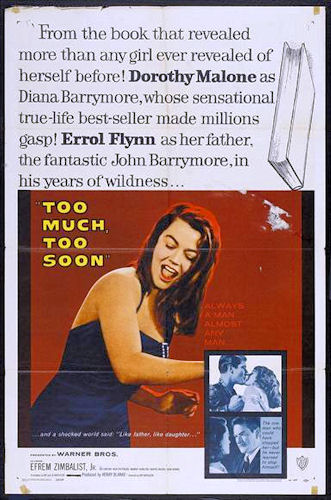
Hollywood Babylon: TOO MUCH, TOO SOON (Warner Brothers 1958)


gary loggins's avatarcracked rear viewer

Hollywood biopics are by and large more about their entertainment value than historical accuracy. TOO MUCH TOO SOON is no exception. It tells the story of actress Diana Barrymore, daughter of “The Great Profile” John, based on her 1957 best-selling tell-all, and though it pretty much sticks to the facts, many of them have been sanitized for audience consumption. Dorothy Malone , fresh off her Oscar-winning role in WRITTEN ON THE WIND, is very good indeed as Diana, whose true life was much more sordid than fiction, and we’ll get to all that later. What makes the film for me was the actor portraying the dissipated John Barrymore – none other than Errol Flynn !

Errol Flynn (1909-1959) as John Barrymore

Don’t expect to see the dashing star of CAPTAIN BLOOD and THE ADVENTURES OF ROBIN HOOD here. Flynn (who a year later would release his own tell-all book, MY…

View original post 657 more words

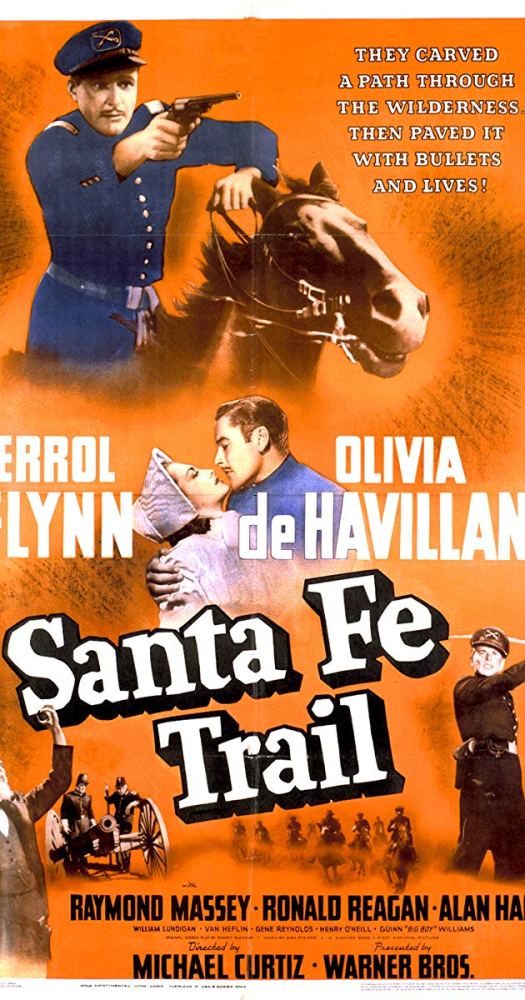
Hollywood History Lesson: Errol Flynn in SANTA FE TRAIL (Warner Brothers 1940)


gary loggins's avatarcracked rear viewer

A movie lover could get pretty spoiled living on a steady diet of Errol Flynn/Warner Brothers epics from the 30’s and 40’s. You’ve got Flynn, the personification of the classic “movie star”, performing heroic feats and romancing his leading lady (usually Olivia de Havilland ). A historical setting   serving as the backdrop to move the story along, expertly directed by Michael Curtiz or Raoul Walsh, a cast full of Hollywood’s greatest character actors, a majestic music score (mainly Max Steiner , but there were others equally as talented), action, drama, humor, conflict… what more could a film fan ask for?

SANTA FE TRAIL has all this and more, an energetic pre-Civil War tale guaranteed to hold your interest for its 110 minutes no matter which side of the Mason-Dixon Line you live on. It’s characters are drawn from history, but historic accuracy be damned… these films were all about…

View original post 774 more words

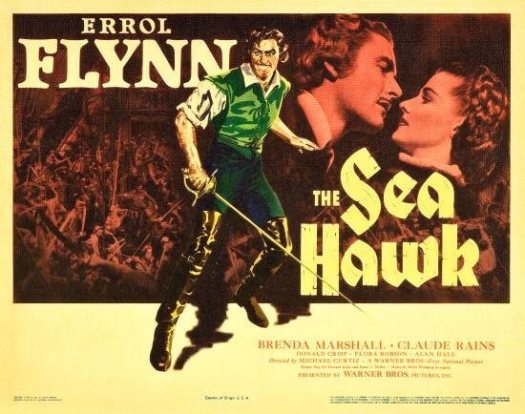
On Her Majesty’s Secret Service: Errol Flynn in THE SEA HAWK (Warner Brothers 1940)


gary loggins's avatarcracked rear viewer

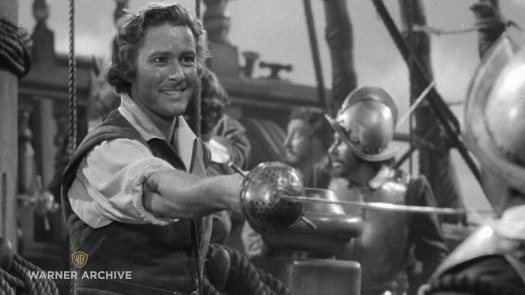
Warner Brothers pulled out all the stops for their 1940 epic THE SEA HAWK. There’s dashing Errol Flynn swashbuckling his way across the Silver Screen once again, the proverbial cast of thousands, high seas action, romance, political intrigue, superb special effects, and a spirited score by Erich Wolfgang Korngold. The only thing missing that could’ve possibly made this movie better is Technicolor, but since Jack and his bros had already spent $1.7 million (equivalent to almost thirty million today) to produce it, why quibble?

Flynn is in fine form as privateer Geoffrey Thorpe, captain of the pirate ship Albatross, in service to Her Majesty Queen Elizabeth I. When they attack and plunder a Spanish ship carrying Ambassador Don Alvarez de Cordoba and his beautiful niece Maria, Captain Thorpe is reprimanded and told to lay off the Spanish. Spain, however, is building up their Armada with world conquest in mind, and…

View original post 603 more words

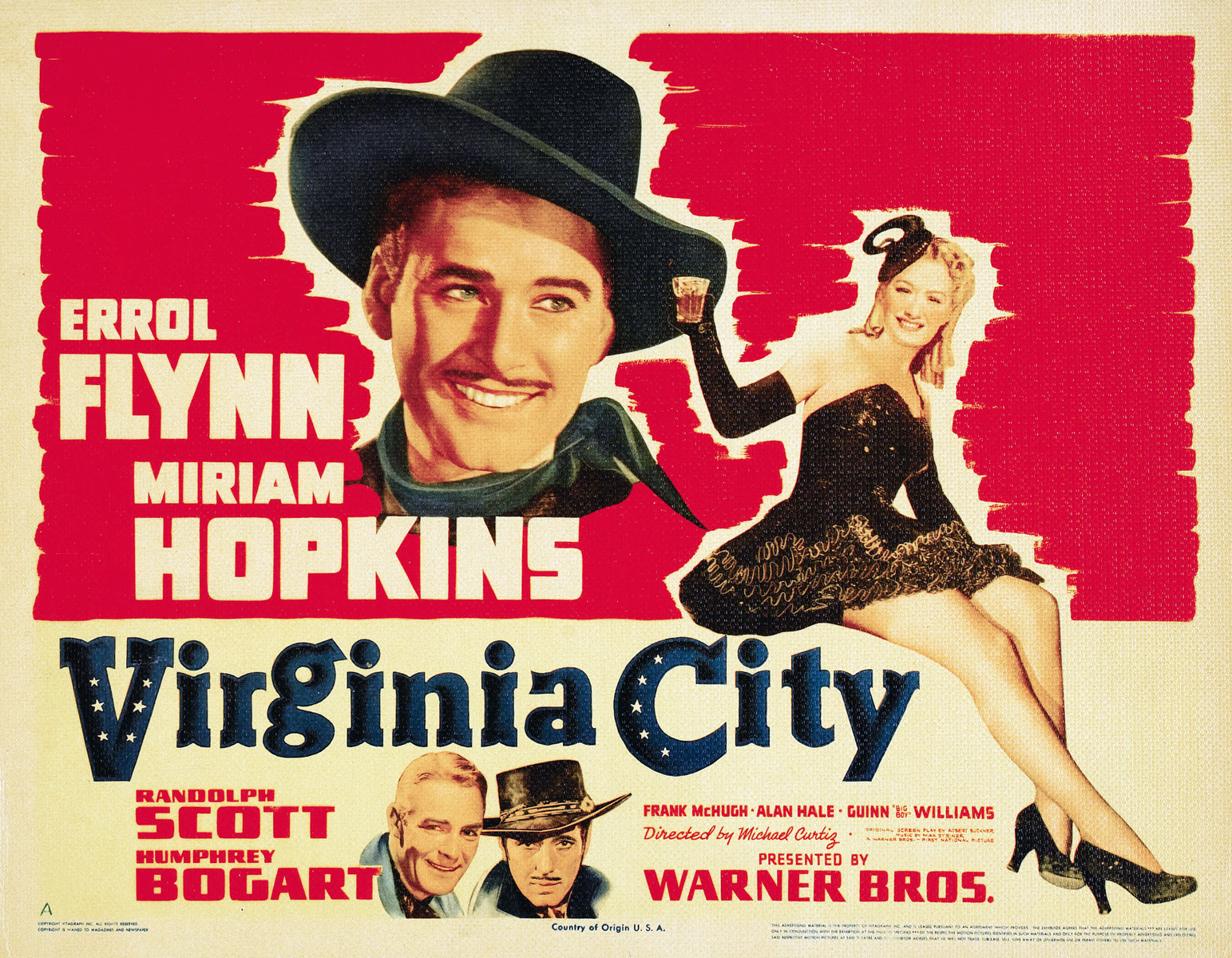
Rally ‘Round The Flag: Errol Flynn in VIRGINIA CITY (Warner Brothers 1940)


gary loggins's avatarcracked rear viewer

vc1

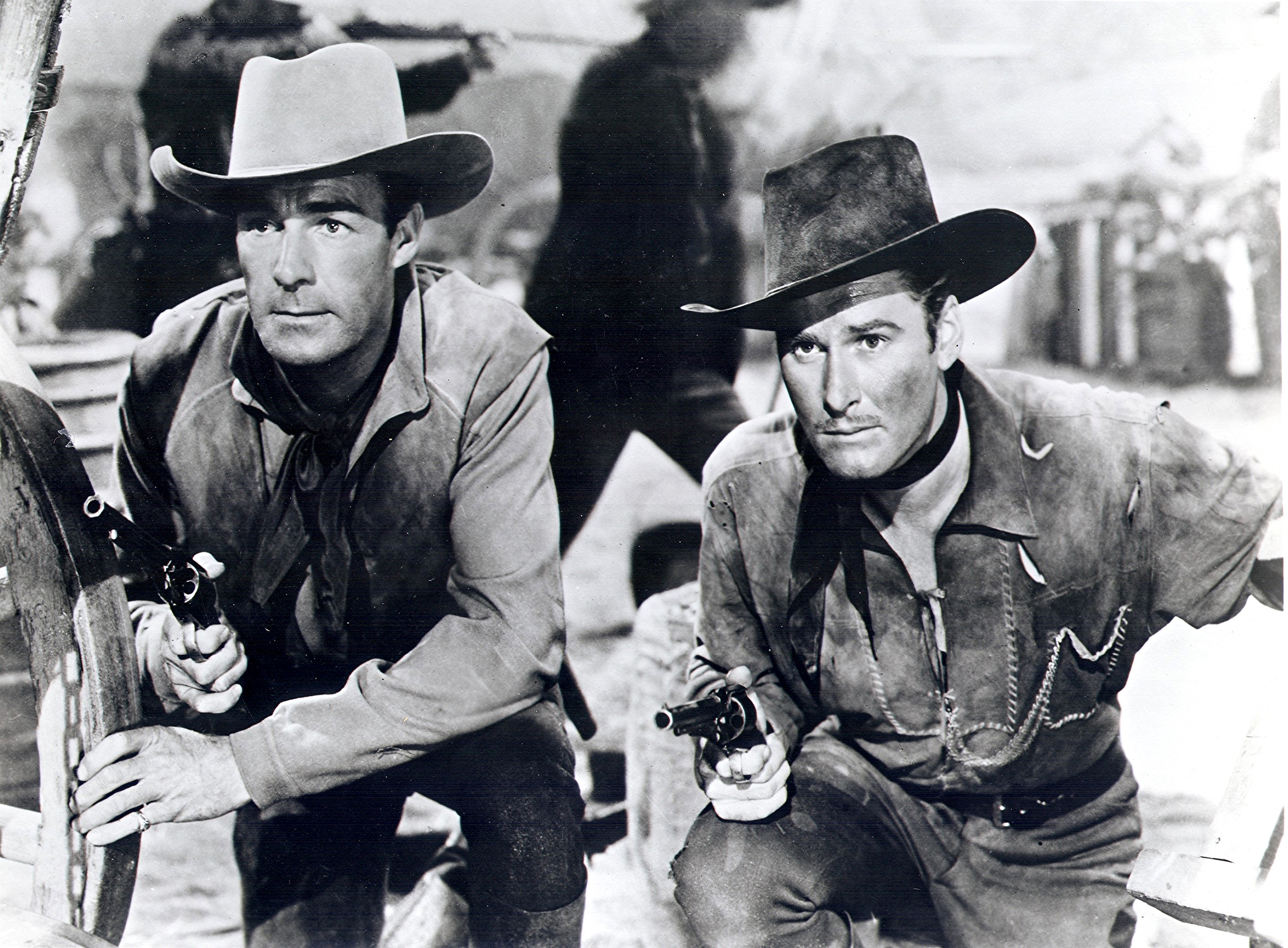
VIRGINIA CITY is a big, sprawling Western, filled with action, humor, and star quality. It’s the kind of movie they used to show around these parts every afternoon at 4 O’clock on DIALING FOR DOLLARS (George Allen was the local host), helping to spark my interest in classic films past, a flame which still burns bright today, two hours of pure entertainment, with square-jawed Errol Flynn going against square-jawed Randolph Scott backed by a Civil War setting and yet another sweepingly epic Max Steiner score.

vc2

We’re told “only the characters are fictional… The story is true” as we watch Union Captain Kerry Bradford (Flynn) and his two buddies Moose and Marblehead (Errol’s frequent co-stars/offscreen drinking compadres Alan Hale Sr and Guinn ‘Big Boy’ Williams) attempt to tunnel their way out of Libby Prison, aka ‘The Devil’s Warehouse’, when they’re caught by commanding Captain Vance Irby (Scott). He tells them Confederate troops…

View original post 689 more words

Why I Love THE ADVENTURES OF ROBIN HOOD (Warner Brothers 1938)


gary loggins's avatarcracked rear viewer

robin1

Readers of this blog know CASABLANCA is my all-time favorite movie, but THE ADVENTURES OF ROBIN HOOD is definitely in the Top Ten, maybe even Top Five (I’d have to think about it… sounds like a future post!). The story’s been told on-screen dozens of times, from the silent 1922 Douglas Fairbanks swashbuckler to Disney’s 1973 animated version to the recent Russell Crowe/Ridley Scott offering. But it’s this 1938  classic that remains definitive, thanks to a marvelous cast, breathtaking Technicolor, and the greatest cinematic swordfight in history.

robin2

You all know the legend of Robin Hood by now, so no need for a recap. Instead, I’ll go right into what makes this film so great, starting with Errol Flynn as the brave Sir Robin of Locksley. Flynn was at the peak of his career here, after starring in such action-packed hits as CAPTAIN BLOOD   , THE CHARGE OF THE LIGHT…

View original post 685 more words

Happy Birthday Errol Flynn: DESPERATE JOURNEY (Warner Brothers 1942)


gary loggins's avatarcracked rear viewer

desp1

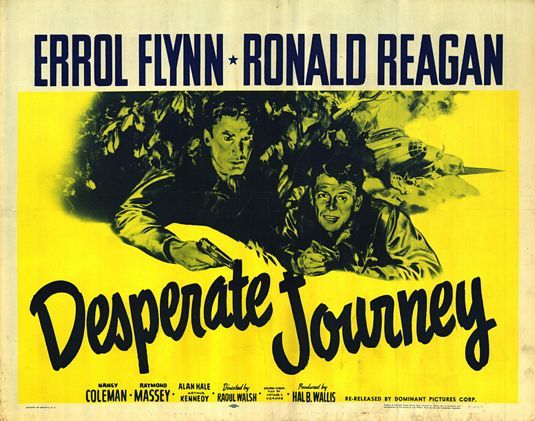
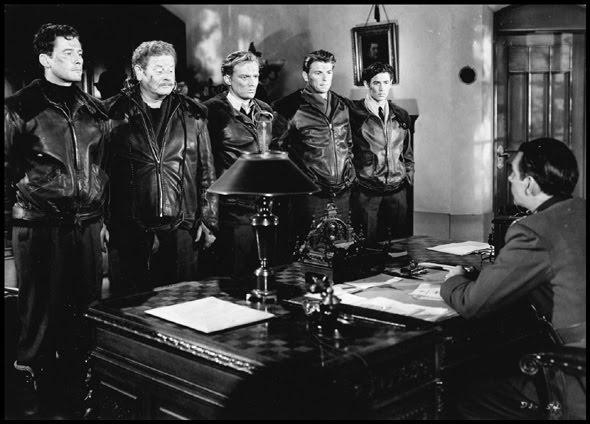
The actor known for his “wicked, wicked ways”, Errol Flynn was born June 20, 1909 in Hobart, Australia. The dashing Flynn skyrocketed to fame with a series of swashbuckling exploits: CAPTAIN BLOOD , THE SEA HAWK, and most notably THE ADVENTURES OF ROBIN HOOD. He was also featured in some of the great Westerns of the era (THEY DIED WITH THEIR BOOTS ON, SANTA FE TRAIL). Like all stalwart screen heroes, during the 1940’s Flynn made a number of wartime propaganda films to boost morale for the masses. One of these was DESPERATE JOURNEY, a totally improbable but highly exciting action yarn from the two-fisted, one-eyed Raoul Walsh, director of such macho fare as THE ROARING TWENTIES, HIGH SIERRA, and WHITE HEAT.

desp2

An RAF bomber squad is sent on a dangerous mission behind enemy lines to take out a train depot. They accomplish the task, but are shot down by Nazi heavy artillery. Forced to…

View original post 795 more words

Cleaning Out The DVR #23: The Adventures of Robin Hood (dir by Michael Curtiz)


(For those following at home, Lisa is attempting to clean out her DVR by watching and reviewing 38 films by this Friday.  Will she make it?  Keep following the site to find out!)

Robin_hood_movieposter

Flamboyant.  Athletic.  Joyous.  Determined.  Handsome.  Outspoken.  Bigger than life.  Revolutionary.  Anarchist.  Sexy.  Libertarian.  Is there any doubt why Errol Flynn remains the definitive Robin Hood?

And. for that matter, is there any doubt why the 1938 film The Adventures of Robin Hood remains not only the definitive Robin Hood film but also one of the most influential action films in history?

The Adventures of Robin Hood tells the story that we’re all familiar with.  The King of England, Richard The Lionhearted (Ian Hunter), is captured while returning from the Crusades.  His brother, King John (Claude Rains, in full autocratic villain mode), usurps the throne while Richard is gone and immediately raises taxes.  He claims that he’s only doing this to raise the money to set Richard free.  Of course, the real reason is that John is a greedy tyrant.

The only nobleman with the courage to openly oppose John is Sir Robin of Locksely (Errol Flynn).  Sir Robin protects his fellow citizens from John’s main henchman, Sir Guy of Gisbourne (Basil Rathbone, also in full autocratic villain mode).  In fact, Robin is so brave that, on multiple occasions, he even enters Sir Guy’s castle so that he can specifically tell King John and Sir Guy that he has no use for their laws.  This, of course, always leads to Robin having to make a dramatic escape while arrows flies and swords are unsheathed all around.

And through it all, Robin Hood keeps smiling and laughing.  He’s a wonderfully cheerful revolutionary.  He may be fighting a war against a ruthless and unstoppable enemy and he may be the most wanted man in England but Robin is determined to have fun.  One need only compare Robin to his humorless foes to see the difference between freedom and bureaucracy.

(We could use Errol Flynn’s Robin Hood today, though I suspect our government would just blow him up with a drone and then issue a statement about how, by stealing money from the rich and giving it to the poor, Robin was keeping the government from being able to rebuild bridges and repair roads.)

When Robin isn’t exposing the foolishness of organized government, he’s hanging out in Sherwood Forest.  He’s recruiting valuable allies like Friar Tuck (Eugene Pallette) and Little John (Alan Hale, Sr.)  He’s playing constant pranks and promoting revolution and, to his credit, he’s a lot more fun to listen to than that guy from V For Vendetta.  He’s also romancing Maid Marian (Olivia de Havilland) and good for him.  Two beautiful people deserve to be together.

Even better, he’s doing it in glorious Technicolor!  There’s a lot of great things about The Adventures of Robin Hood.  The action scenes are exciting.  The music is thrilling.  The film is perfectly cast.  Errol Flynn may not have been a great actor but he was a great Robin Hood.  But what I really love about the film is just the look of it.  We tend to take color for granted so it’s interesting to watch a film like The Adventures of Robin Hood, one that was made at a time when color film was something of a novelty.  For those of us who spend a lot of time talking about how much we love old school black-and-white, The Adventures of Robin Hood is a film that says, “Hey, color can be great too!”

But what I mostly love about The Adventures of Robin Hood is just the pure joy of the film.  Just compare this Robin Hood to the grimly tedious version played by Russell Crowe.

(True, nobody in The Adventures of Robin Hood shouts, “I declare him to be …. AN OUTLAAAAAAAAAAAAWWWWWWWW!”  Actually, now that I think about it, Ridley Scott’s Robin Hood would have worked much better if Oscar Isaac and Russell Crowe had switched roles.)

The Adventures of Robin Hood was nominated for best picture and it probably should have won.  However, the Oscar went to Frank Capra’s You Can’t Take It With You.