Embracing the Melodrama Part II #49: Hustle (dir by Robert Aldrich)


HustleContinuing our journey into the dark Hell of the 1970s, we now take a quick look at the 1975 cop film, Hustle.

Taking place in Los Angeles, Hustle tells the story of several different people who find their lives intertwined in the desperate dance of existence.  (Does that sound overdramatic?  Well, that’s the type of film that this is.)

There’s Leo Sellers (Eddie Albert), a lawyer with bright rosy cheeks and a friendly manner.  You look at Leo and you automatically assume that he must be a nice guy, the type of guy who puts on a fake beard and plays Santa Claus down at the local orphanage.  But actually, Leo is a lawyer for the mob.  He’s gotten rich through crime and his mansion hides all sorts of secrets.  He also has a weakness for violently abusing prostitutes.

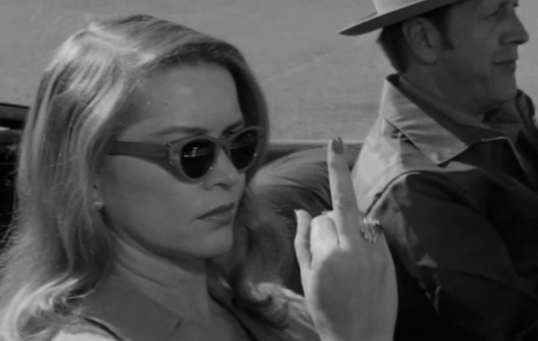
Speaking of prostitutes, one of Leo’s favorite is Nicole (Catherine Deneuve), an icy French beauty who survives by holding the world at a distance.  Though Nicole doesn’t like Leo, she has to keep him happy because Leo could easily arrange for her to be deported back to France.

Nicole is also the girlfriend of Phil Gaines (Burt Reynolds), a cynical homicide detective who, like her, tries to keep the world at a distance.  Phil is obsessed with old films and frequently speaks of how much he wishes the real world could be like a movie.  Throughout the film, he talks about eventually moving to Rome.

Phil’s partner is Louis Belgrave (Paul Winfield), who is not quite as cynical as Phil but who is definitely getting there.  Whereas Phil is always talking about how much the world has disappointed him, Louis mostly accepts things without complaint.  He just wants to do his job and go home at the end of the day.

Phil and Louis’s boss is Santoro (Ernest Borgnine, giving a typical Ernest Borgnine performance).  Santoro is not a bad guy but, in order to hold onto his job, he has to keep powerful men like Leo Sellers happy.

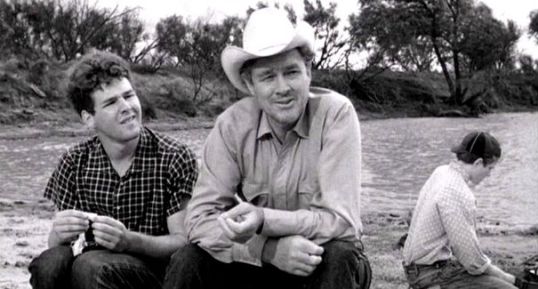
Santoro also has to deal with the complaints of people like the Hollingers.  Marty Hollinger (Ben Johnson) is a veteran of the Korean War and handles the world in a gruff and suspicious manner.  Paula (Eileen Brennan) is Marty’s wife and, as a result of his emotional distance, has recently started having an affair.

And then there’s Gloria (Colleen Brennan), Marty and Paula’s daughter.  Gloria ran away from home a while ago and soon found herself working as a stripper, a porn actress, and eventually as a prostitute.  When Gloria is found dead, Phil and Louis get the case.  It’s obvious to them that Gloria committed suicide.  It’s not so obvious to Marty, who is convinced that his daughter was murdered and, disgusted by Phil’s cynical attitude, sets out to investigate the case on his own.

One of the more interesting things about Hustle is that really is no murder mystery.  Despite what Marty believes, Gloria really did commit suicide.  Marty’s insistence that she was murdered has more to do with his guilt over being a bad father than it does with any real evidence.  As Marty investigates his daughter’s life, he is exposed to a sordid world of strip clubs and prostitution.  He discovers that Gloria’s clients included many powerful men and he decides that the last client she saw must have murdered Gloria.

That client is Leo Sellers.  And while Leo may not have murdered Gloria, he is willing to kill Marty to keep his secret life from being exposed.  Phil and Louis are forced to choose between remaining detached or protecting Marty from himself.

And, since this film was made in the 70s, it all ends on a really dark note!

Hustle shows up on Encore occasionally.  It’s a strange film to watch, as it alternates between being a fairly predictable cop film and being a portrait of existential dread.  The movie doesn’t really work; it’s too long, it features some amazingly pretentious dialogue, and Reynolds, Winfield, and Deneuve all seem to be bored with their characters.  Probably the film’s best performance comes from Ben Johnson.  I imagine that has to do with the fact that Johnson is playing the only character who behaves in a fairly consistent way.

And yet, if you’re like me and you’re fascinated with the nonstop fatalism of 70s cinema, Hustle does have some historical value.  It’s one of those films that you watch and you wonder how anyone survived the 1970s!
Back To School #11: The Last Picture Show (dir by Peter Bogdanovich)


Monday is the first day of school down here in Dallas so it seems only appropriate that this latest entry in our Back to School series should be a look at one of those most quintessential Texas films ever made, the 1971 best picture nominee, The Last Picture Show.

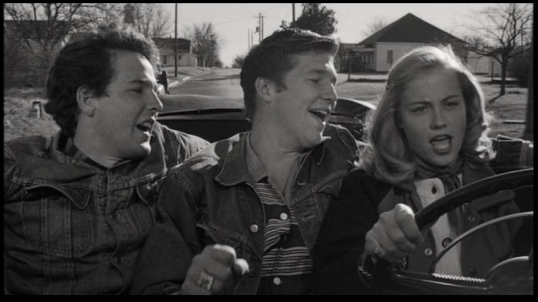
Directed by Peter Bogdanovich and based on a novel by Larry McMurtry, The Last Picture Show takes place in 1951 and tells the story of two high school seniors, best friends Sonny Crawford (Timothy Bottoms) and Duane Jackson (Jeff Bridges, reminding us once again why everbody loves him).  Sonny and Duane live in the rural town of Anarene, Texas.  With little to look forward to in the future, beyond perhaps getting a job working in the oil fields, Sonny and Duane are both intent on enjoying their final year of high school.  Sometimes, that means driving down to Mexico for the weekend.  Sometimes, it means going to the only theater in town and seeing a movie.  Most of the time, however, it means hanging out in a pool hall owned by the strict but fatherly Sam (Oscar winner Ben Johnson).  Often times they are accompanied by the intellectually disabled Billy (Sam Bottoms), who responds to everything with a blank smile and spends most of his spare time wandering around with a broom, futilely trying to sweep the dusty streets.

last-picture-show

The charismatic and impetuous Sonny is dating the beautiful and self-centered Jacy Farrow (Cybil Shepherd), who is the daughter of the wealthiest woman in town.  Jacy knows that her cynical mother (Ellen Burstyn) is having an affair with an oil worker named Abilene (Clu Gulager) but she’s more concerned with her own future.  Even though she’s dating Sonny, Jacy still accepts an invitation from the awkward Lester Marlow (played by a memorably goofy Randy Quaid) to attend a naked indoor pool party.  At the party, she meets Bobby Sheen (Gary Brockette), who is rich and will be able to provide her with the future that Duane never will.  However, Bobby tells Jacy that he isn’t interested in her because she’s a virgin.  If nothing else, this gives Jacy a reason to stay with Duane, at least until after they have sex.

Meanwhile, the far more sensitive Sonny ends up having an affair with Ruth Popper (Cloris Leachman, who won an Oscar for her performance in this film), the wife of the high school football coach.  It appears that Sonny truly cares about Ruth but then he finds himself being tempted by none other than his best friend’s girlfriend…

Sonny and Ruth

At heart, The Last Picture Show really is basically a small town soap opera, a Texas version of Peyton Place.  The difference between the two films — beyond the fact that The Last Picture Show just happens to be a 1oo times better than Peyton Place — is that The Last Picture Show doesn’t take place in a beautiful, idealized small town.  Instead, the town of Anarene is a believably bleak location, one that will be familiar to anyone who, like me, grew up in the American southwest.  A good deal of the success of The Last Picture Show is due to the fact that it was actually filmed on location in Archer City, Texas.

(Nothing annoys me more than when I see the mountains of California in the background of a movie that’s supposed to be taking place in North Texas.  We don’t have mountains up here.  For the most part, we don’t even have hills.  The land is flat.  You can see forever, if you know where to look.)

Of course, you can’t talk about The Last Picture Show without talking about Robert Surtees’s stunning black-and-white cinematography.  Not only does the black-and-white remind us that this is a film about a fading way of life but it drives home the fact that Sonny and Duane don’t have much to look forward to.  Growing up in Anarene means they are destined for lives without color or excitement.  In the end, can you really blame them for occasionally acting before they think?

Ben Johnson

Ultimately, the success of The Last Picture Show is due to a lot of things.  This was Peter Bogdanovich’s second film as a director and he did such an excellent job here that he’s basically spent the rest of his career trying to live up to this one film.  (That said, Bodganovich also left his wife for Cybill Shepherd — despite the fact that his wife was the one who suggested that he make this film and cast Cybill in the first place!  Don’t worry though — Polly Platt got her revenge by having a far more successful career than her ex-husband and she even produced Say Anything, a film that we will soon be looking at.)  The screenplay, by McMurtry and Bogdanovich, is full of sharp dialogue and memorable characters.  As for the performers, this is probably one of the best acted films ever made.  Jeff Bridges and Timothy Bottoms play off each other well, Cybill Shepherd is the epitome of casual destructiveness, and Ben Johnson is brilliantly cast as the film’s moral center.  My favorite performance comes from Ellen Burstyn, who delivers every line with just the right combination of contempt and ennui.

Ellen Burstyn in The Last Picture Show

Ellen Burstyn in The Last Picture Show

If you’re a Texan, The Last Picture Show is one of those films that you simply have to see.  And if you don’t enjoy it and if you don’t relate to at least a few of the characters (I related to Jacy, though I like to think that I’m a lot nicer in the way I treat people), then you’re not a real Texan.

It’s as simple as that.

the-last-picture-show-poster