4 Shots From 4 Films: Special Maureen O’Hara Edition


4 Shots From 4 Films is just what it says it is, 4 shots from 4 of our favorite films. As opposed to the reviews and recaps that we usually post, 4 Shots From 4 Films is all about letting the visuals do the talking.

These 4 Shots From 4 Films are dedicated to the memory of the great Maureen O’Hara.

4 Shots From 4 Maureen O’Hara Films

The Hunchback of Notre Dame (1939, dir by William Dieterle)

The Hunchback of Notre Dame (1939, dir by William Dieterle)

Dance, Girl. Dance (1940, dir by Dorothy Arzner)

Dance, Girl. Dance (1940, dir by Dorothy Arzner)

Miracle on the 34th Street (1947, dir by George Seaton)

Miracle on the 34th Street (1947, dir by George Seaton)

The Quiet Man (1952, dir by John Ford)

The Quiet Man (1952, dir by John Ford)

Sláinte!

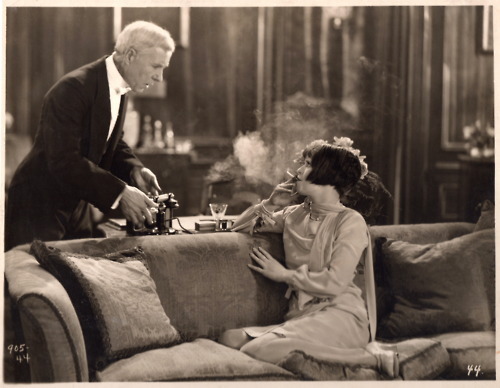
Love On The Shattered Lens: Charming Sinners (dir by Robert Milton and Dorothy Arzner)


Based on a play by Somerset Maugham, 1929’s Charming Sinners takes place amongst the very rich.

Kathryn Miles (Ruth Chatterton) is married to Robert Miles (Clive Brook).  Robert is wealthy and a respected businessman and, through her marriage, Kathryn is also wealthy and …. well, she’s not quite respected.  The fact of the matter is that everyone is gossiping about the fact that Robert is cheating on Kathryn.  Kathryn denies that Robert is being unfaithful but she knows that he is.  She also knows that Robert is cheating with her best friend, Anne-Marie Whitley (Mary Nolan).  Even when Anne-Marie’s husband, George (Montagu Love), comes to suspect that Anne-Marie is cheating with Robert, Kathryn tells George that it isn’t true and defends her cad of a husband.

Why is Kathryn doing this?  As Kathryn explains it, she doesn’t feel that marriage necessarily means that you have to love someone.  Kathryn married Robert for the money and the status and, as long as she has that, she’s willing to overlook Robert’s dalliances.  Admitting that Robert is cheating would obligate her to go through a divorce and potentially lose everything that she has.  If this film had been released just a few years later than it was, the Production Code would have insisted that Kathryn suffer for her less-than-reverent attitude towards the institution of marriage.  Since this is a pre-code film, Kathryn is portrayed as being strong and determined.  What the Production Code would have deemed a drama, the pre-code era considered to be a comedy.

Still, Kathryn does get revenge on her husband by openly flirting with a former lover, Karl Kraley (William Powell, handsome and suave as ever).  Kathryn also makes some money on her own, proving to her husband that she could be a success even if she hadn’t married him.  Kathryn informs Robert that she is going to be living her own life, even if they are married.  And if Kathryn wants to take a lover, that’s her decision.

And good for Kathryn!  Seriously, Robert is so smug and sure of himself that it’s deeply satisfying to watch as Kathryn reveals that Robert was never as clever as he thought it was.  Though the film does not end with the dramatic divorce that some might expect, it does end with Kathryn taking control of her own life and making her own decisions about how she’s going to live it.  That type of ending is rare enough today.  One can only imagine how audiences in 1929 reacted to it.

But is the film itself any good, you may be asking.  It’s an early sound picture and while the cast all proves their ability to handle dialogue, the largely stationary camera often makes the film feel like a filmed play (which is largely what it was).  Like many pre-code films, the emphasis here is on how the rich have better clothes and better homes than the majority of the people watching the movie.  That’s not a problem for me.  I like looking at nice clothes and wonderfully decorated houses.  Some others may dismiss this film as just being about the problems of the rich but my personal opinion is that everyone has problems.  Wouldn’t you rather have problems as a wealthy person than a poor one?  The most important thing is that the film features two of the best actors of Hollywood’s early Golden Age, Ruth Chatteron and William Powell, and they both give excellent and charming performances.

Charming Sinners is a bit of time capsule and probably not for everyone.  If you’re not interested in the film’s era, it probably won’t hold your attention.  But, to a fashionable history nerd like me, Charming Sinners definitely had its charms.

4 Shots From 4 Films: Dancing Mothers, It, Wings, The Wild Party


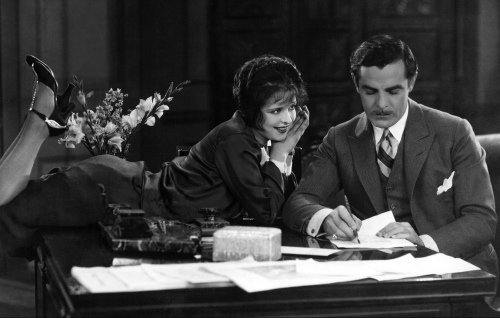
Happy birthday, Clara Bow!

4 Shots From 4 Films

Dancing Mothers (1926, dir by Herbert Brenon)

It (1927, directed by Clarence Badger)

Wings (1927, dir by William Wellman)

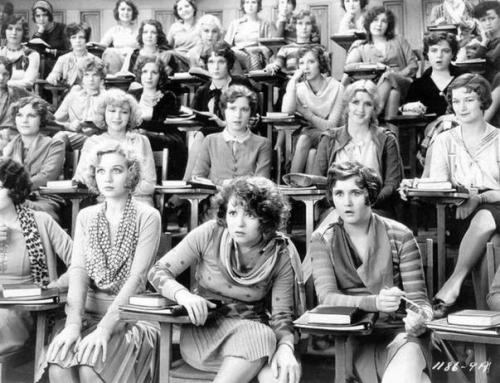
The Wild Party (1929, dir by Dorothy Arzner)

4 Shots From 4 Films — In Memory of Maureen O’Hara


4 Shots From 4 Films is just what it says it is, 4 shots from 4 of our favorite films. As opposed to the reviews and recaps that we usually post, 4 Shots From 4 Films is all about letting the visuals do the talking.

Sadly, it had been announced that actress Maureen O’Hara passed away this morning.  As a lover of Golden Age Hollywood, Maureen was always one of my favorite actresses.  (After all, we were both outspoken Irish redheads!)  Maureen was one of the last surviving actresses from Hollywood’s golden age and, with her passing, a bit history passes too.

(I should also mention that Maureen played the mother of one of my favorite actress, Natalie Wood, in one of my favorite films of all time, Miracle on 34th Street.  Whenever I see Miracle, I think about my mom.)

These 4 Shots From 4 Films are dedicated to the memory of the great Maureen O’Hara.

4 Shots From 4 Films

The Hunchback of Notre Dame (1939, dir by William Dieterle)

The Hunchback of Notre Dame (1939, dir by William Dieterle)

Dance, Girl. Dance (1940, dir by Dorothy Arzner)

Dance, Girl. Dance (1940, dir by Dorothy Arzner)

Miracle on the 34th Street (1947, dir by George Seaton)

Miracle on the 34th Street (1947, dir by George Seaton)


The Quiet Man (1952, dir by John Ford)

The Quiet Man (1952, dir by John Ford)

Sláinte!

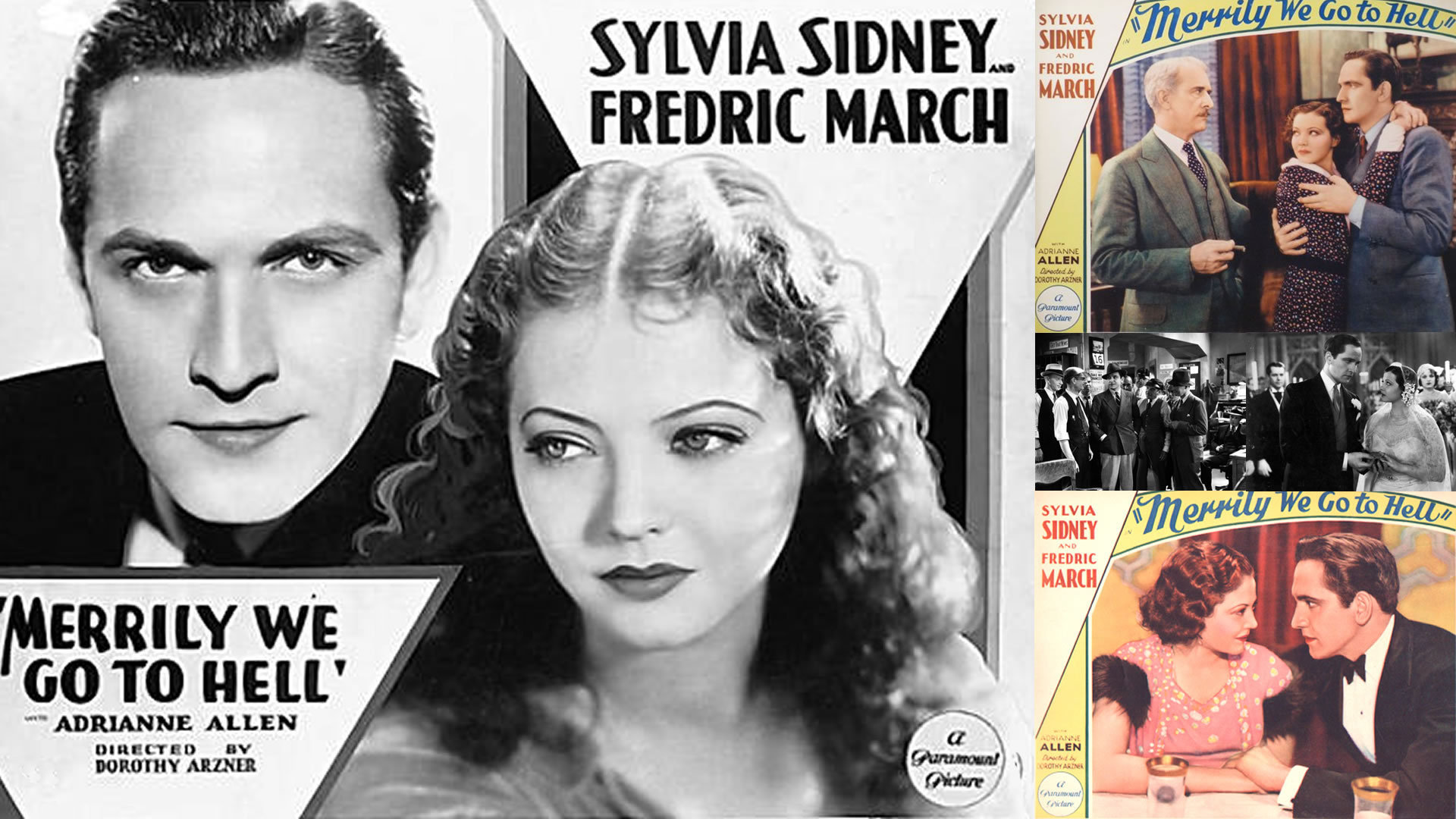
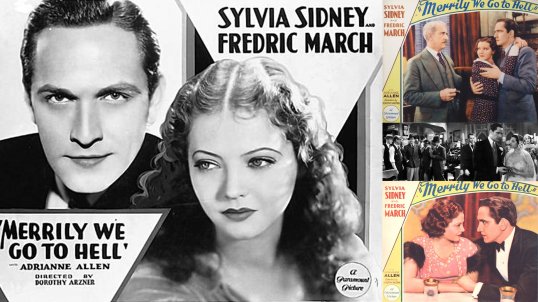
Embracing The Melodrama #5: Merrily We Go To Hell (dir by Dorothy Arzner)


Merrily We Go To Hel

We conclude today’s melodramatic embrace by taking a look at another Pre-Code film.  Released in 1932, Merrily We Go To Hell takes a look at one of the institutions that the Production Code was meant to save: marriage.  It also takes a look at alcoholism, overprotective fathers, and what goes on backstage during a Broadway production.  In many ways, this movie is a comedy but, at heart, it’s a melodrama through and through.

Everyone should have a catchphrase.  Myself, for example, I tend to say “Stay Supple” a lot.  It drives some people crazy but I like the way it sounds and I also happen to think that it’s a pretty good expression of how I view life.  Alcoholic newspaper reporter Jerry Corbett (Fredric March) has a catch phrase of his own.  Every time he takes a drink, he toasts with, “Merrily, we go to Hell.”  Jerry has been haunted ever since he was dumped by his beautiful girlfriend, actress Claire Hempstead (Adrienne Ames), and he now spends all of his time drinking and dreaming of being a playwright.

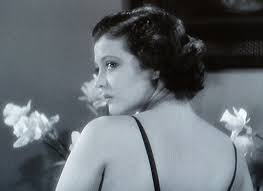
However, things start to look up for Jerry when, at one of those decadent rooftop parties that always seem to show up in pre-Code films, he meets an innocent young heiress named Joan (Sylvia Sidney).  Jerry and Joan fall in love and, despite the reservations of Joan’s disapproving father (George Irving), they marry.  With Joan’s help, Jerry stops drinking and writes his play.  It’s called “When Women Say No” and despite the creepy and misogynistic title, it becomes a huge success.   Oh, did I say despite?  I meant to say because of.

(For those you sitting at home, I am currently dramatically rolling my eyes and shaking my head.)

However, there’s a problem.  Guess who is cast as the play’s leading lady?  That’s right — Claire!  Jerry may love Joan but he’s obsessed with Claire.  Having again fallen under her spell, Jerry is soon drinking again and neglecting his wife.  However — and this is what distinguishes Merrily We Go To Hell from even most films made today — Joan doesn’t just silently accept Jerry’s infidelity or sit around obsessing on how she can get her husband back.  Instead, she decides that if he can do it, she can do it.  And who can blame her when Charlie Baxter is around?  Not only is Charlie suave and handsome but he’s played by none other than Cary Grant!

Merrily we go to Hell indeed!

Merrily We Go To Hell is available as a part of the Pre-Code Hollywood Collection and I think it makes for a good double feature with The Cheat.  (The people who put together the Pre-Code Hollywood Collection obviously agreed with me because they put both films on the same disc.)  While Merrily We Go To Hell is, at heart, a very serious movie, it begins with a deceptively light touch.  Fredric March was such a charming actor and seems to be having so much fun playing Jerry as a charming and well-meaning fuckup, that you actually are surprised when the film reveals just how desperate a character he really is.  This is the epitome of the type of film that makes you laugh at the start just so it can make you cry at the end.

Incidentally, Merrily We Go To Hell was directed by Dorothy Arzner, one of the only female directors to work in Hollywood during the studio era.  As a director, she understands that, at heart, Merrily We Go To Hell is Joan’s story.  Whereas a male director would probably have focused almost exclusively on Jerry and used Joan as a mere plot device, Arzner is more interested in exploring why Joan marries Jerry in the first place and how she deals with the inevitable discovery that there’s actually less to Jerry than first met the eye.  It’s that perspective that ultimately elevates Merrily We Go To Hell above the level of being a mere domestic dramedy and makes it worth watching 82 years after it was first released.
Sylvia Sidney