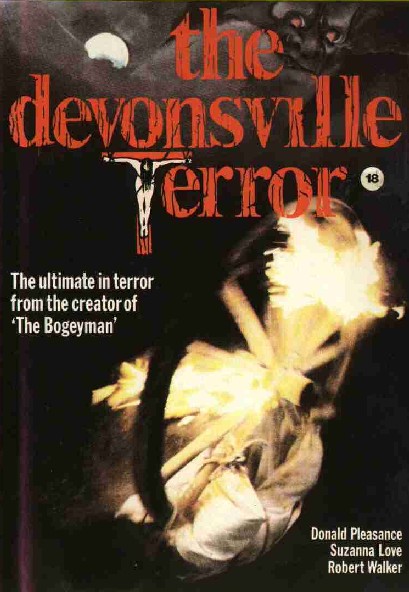
Horror on the Lens: The Pumaman (dir by Albert De Martino)


Okay, so technically, the Italian 1980 film The Pumaman isn’t really a horror film.  However, it does fit in with Halloween because it’s about a super hero and who hasn’t dressed up as a super hero for Halloween?  (Well, I never have but I’m sure a lot of other people have!)

The Pumaman is actually a paleontologist named Tony (Walter George Alton) who, though he doesn’t realize it, is the last in a long line of Pumamen.  Fortunately, an Aztec mystic shows up and lets him know.  When Tony expresses some doubt, the mystic responds by tossing him out a window.

And you know what?

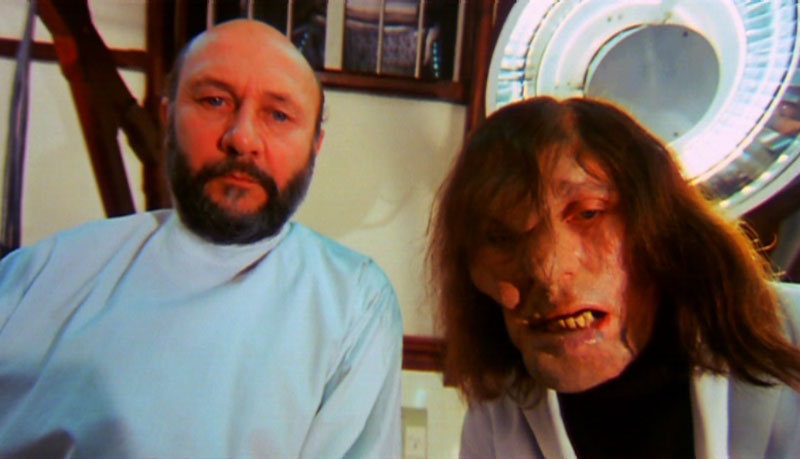
It’s a good thing that Tony has learned the truth about his heritage because the evil Dr. Kobras (Donald Pleasence, who reportedly considered this to be the worst film he ever appeared in) has an evil scheme to do something evil.  To be honest, I’m not sure what Dr. Kobras is trying to do, though it has something to do with an ancient mask and mind control.

I watched Pumaman a few months ago with my friends from SyFyDesigns.com.  I have to admit that I was not a huge fan of the movie but everyone else seemed to enjoy it.  The Pumaman himself is kind of a boring hero but Donald Pleasence is a lot of fun as Dr. Kobras.  Plus, the haunting Theme From Pumaman will get stuck in your head (don’t say that I didn’t warn you…).

Enjoy!

James Bond Film Review: You Only Live Twice (dir. by Lewis Gilbert)


In the days leading up to the American release of Skyfall, the Shattered Lens has been taking a look at the previous films in the James Bond franchise.  Today, we take a look at the 5th official James Bond film, 1967’s You Only Live Twice.

Released two years after the critically derided but financially succesful Thunderball, You Only Live Twice was a step in a new direction for the Bond series.  As Sinclair McKay explains in his brilliant book on the Bond films, The Man With The Golden Touch,  both the world and the movies changed a lot between 1965 and 1967 and You Only Live Twice reflected that change.  Director Lewis Gilbert and screenwriter Roald Dahl were newcomers to the Bond series and the film they created would serve as a prototype for the flamboyant, big budget espionage fantasies that would come to epitomize many of the later entries in the franchise.

You Only Live Twice begins with one the Bond franchise’s more elaborate precredit sequences.  During these first few minutes, the film rather boldly announces that You Only Live Twice is going to be a bit of a departure from the previous Bond films.  The film begins not with Bond but with two anonymous American astronauts orbiting the Earth in a small capsule.  The two astronauts are blandly chatting with mission control on Earth when, suddenly, another spacecraft approaches and literally swallows the American capsule whole.  One of the astronauts is hurled into space as a result and, as his body spins away, it’s obvious that Bond’s not going to be dealing with something bigger than just another guy looking to hold up Fort Knox.

The Americans blame the Russians while the Russians claim that they’re being framed by Americans and the entire world appears to be on the verge of war.  But as always happens in the Bond films, the British are there to keep everyone from overreacting.  A British diplomat is seen calming down the belligerent super powers and assuring them that MI6’s “best man” is already on the case.

(One of the undeniably charming things about the Connery and Roger Moore  Bond films is the way that the United Kingdom is portrayed as being the world’s unofficial third superpower.)

Cut to Hong Kong, where James Bond is lying in bed and asking his latest conquest, “Why do Chinese girls taste different?”  And, at this point, I think it’s fair to say that Bond is really lucky that he looks like a young Sean Connery.  Suddenly, gunmen storm the bedroom and open fire, apparently killing 007.

Oh no!  I guess the world is doomed, right?  We’re left to consider this sad reality as we watch the opening credits and listen to Nancy Sinatra sing the film’s excellent theme song.

Well, of course, James Bond isn’t really dead.  He faked his death so that he can safely go to Tokyo and investigate who was behind the attack on the space craft.  You Only Live Twice was filmed almost entirely on location in Japan and a good deal of the film’s first half is devoted to scenes of Bond simply observing Japanese culture.  It’s a bit like Lost In Translation with an espionage subplot.

After fighting a few random henchmen, Bond meets Tiger Tanaka (Tetsuro Tamba), the head of the Japanese secret service.  Tanaka seems to spend the majority of his time getting massages from the dozen or so young women who wait on him hand-and-foot.  “In Japan,” he tells Bond, “men come first, women come second.”  “I might just retire here,” Bond replies.  Uhmmm…okay.  Thank you, 1967.

In order to continue the ruse that Bond’s dead, Tanaka arranges for Bond to take on an assumed identity.  After being trained on all aspects of Japanese culture and on how to fight like a ninja, Bond is heavily disguised to look like a Japanese fisherman.  Tanaka arranges for Bond to fake marry a local girl named Kissy (Mie Hama).  Kissy is probably one of the least interesting Bond girls in the history of the franchise.  Beyond walking around in a bikini while wearing high heels, Kissy just doesn’t have much of a personality.

Bond and Tanaka’s investigation lead them to a shady industrialist named Osato and his secretary Helga Brandt (Karin Dor).  Helga is about as close as You Only Live Twice comes to featuring a strong female character.  Not only is she an assassin who has no problem with killing a man who she’s just had sex with but she’s also a redhead, just like me!

Anyway, it’s not until very late in the film that we finally meet Helga’s boss.  If for no other reason, You Only Live Twice will always be remembered for featuring one of the great Bond villains.  After being seen in the previous Bond films as just a hand stroking a white cat, Ernest Stavros Blofeld makes his first on-screen appearance here and fortunately, he’s played by Donald Pleasence.

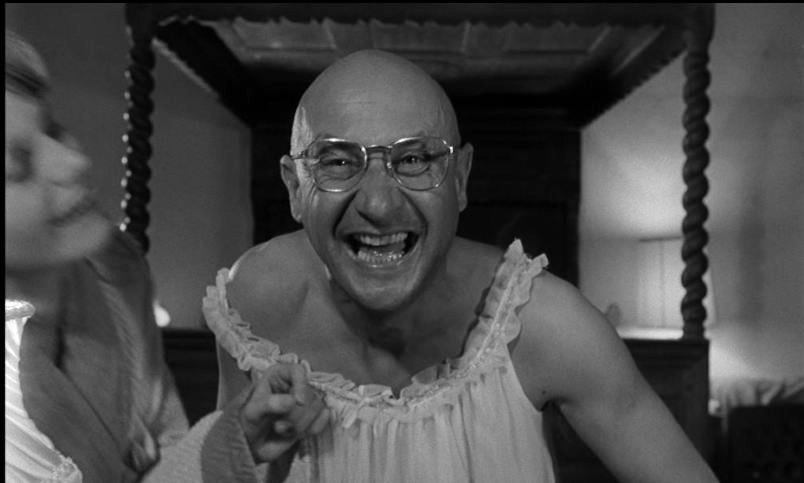
Looking at Pleasence’s performance today, the natural tendency is to compare his Blofeld to the iconic character that he inspired, Mike Myers’ Dr. Evil.  However, one reason that Dr. Evil became such a popular character is because Donald Pleasence’s Blofeld is one of the great film bad guys.  As delivered by Pleasence in his casually off-center way, every line of Blofeld’s dialogue drips with the promise of perversion and hints of the neurosis that fuels his every action.  Blofeld spends most of the movie hiding out in a secret base that’s hidden inside a hollow volcano.  He strokes that ever-present white cat and uses a pool of piranhas to punish failure.  It is a credit to Pleasence’s performance that you never, for a second, doubt that Blofeld could very well be living in a hollow volcano.

I have to admit that You Only Live Twice is not my favorite James Bond film, though there are plenty of things that I do like about it.  Bernard Lee, Lois Maxwell, and Desmond Llewelyn all make welcome appearances and there is a genuinely exciting scene where Bond flies around in a toy helicopter.  Working on his first and only Bond film, Oscar-winning cinematographer Freddie Young captured some beautiful images of Japan and Blofeld’s volcano lair is one of the franchise’s best locations.

That said, You Only Live Twice often moves a bit too slowly for its own good and, with the exception of Blofeld and occasionally Helga Brandt, none of the film’s supporting characters are all that interesting.  Charles Gray, who later took over the role of Blofeld in Diamonds Are Forever, has a nice cameo as a decadent retired intelligence agent but he’s killed off before he can make too much of an impression.  Perhaps worst of all, Connery spends most of this film looking like he’d rather be doing anything other than play James Bond for the fifth time.  By his own account, Connery eventually grew bored with the role and that’s certainly obvious in You Only Live Twice.

Connery’s boredom can perhaps explain why, during the shooting of You Only Live Twice, it was announced that he would not be returning to play the role in the 6th Bond film.  The Bond franchise would continue with On Her Majesty’s Secret Service but it appeared that Connery would no longer be a part of it.

We’ll be taking a look at that film tomorrow.

What Horror Lisa Marie Watched Last Night #53: Halloween II (directed by Rick Rosenthal)


Last night, I watched Halloween II.  No, I’m not referring to the rather disturbing Rob Zombie movie that came out in 2009.  Instead, this Halloween II was the original sequel to the original Halloween.  This version was written by John Carpenter and Debra Hill.  It was released in 1981 and I saw it in 2012, via Cinemax.

Why Was I Watching It?

Because it’s October, of course!  It’s horror month and Halloween is one of the great horror movies.  Would Halloween II turn out to be another great horror movie?  Well, to be honest, I figured it probably wouldn’t but I decided to watch it anyway.

What Was It About?

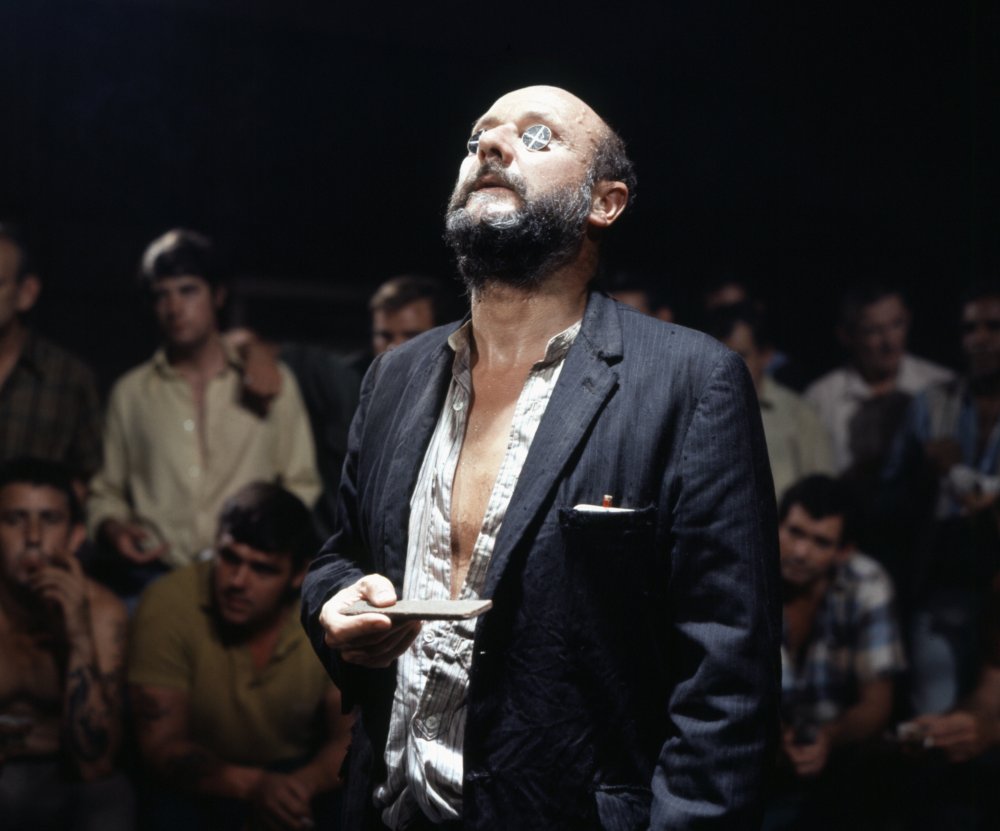
Halloween II picks up exactly from where the first Halloween ended.  The sole surviving babysitter, Laurie Strode (Jamie Lee Curtis), is being rushed to the hospital by two paramedics, one nice (Lance Guest) and one kinda crude and pervy (Leo Rossi).  Two guesses which one of our two paramedics eventually ends up dead.  Meanwhile, Michael Myers has apparently survived being shot six times and falling out of a second story window and he’s still wandering around Haddonfield, Indiana.  Best of all, Dr. Sam Loomis (Donald Pleasence) is still running around all over the place, telling anyone who will listen that it wasn’t his idea to allow Michael to be released.  (In one of the film’s best running jokes, everyone responds to Loomis’ protestations by saying stuff like, “Damn you for letting him out!”  “Uhmm, I didn’t…” Dr. Loomis mutters at one point.)  It quickly becomes apparent that Michael’s rampage wasn’t quite as random as it seemed in the first film.  He’s after Laurie and, once he breaks into the local hospital, it seems like he might very well get her.  Why?  Because, for the most part, it appears that every single citizen of Haddonfield is a total and complete moron.

What Worked?

Halloween II is actually one the better of the slasher sequels of the early 80s.  While it can’t compare to the first Halloween, it’s still a fairly suspenseful little film and Michael Myers is just as frightening as ever.  However, what truly makes this film memorable, is Donald Pleasence’s unhinged performance as Dr. Loomis.  Whereas in the first film, Pleasence played Loomis as just being somewhat testy and annoyed, his performance here suggests that, in the minute or so between shooting Michael and then looking out the window at the end of the first film, Loomis has managed to totally lose his mind.  Pleasence gives one of the most mannered, over the top performances in film history in Halloween II and it works perfectly.  Whenever the film starts to drag, Pleasence shows up and injects a nice bit of crazy into the proceedings.  My favorite moment comes when Loomis suddenly yells at a policeman, “What is it you guys you usually do?  FIRE A WARNING SHOT!?”

Lance Guest, who plays the nice paramedic, was really quite likable.  I know there’s some debate as to the ultimate fate of his character but I chose to believe that he survived.

The Halloween theme music is still probably one of the most effective horror soundtracks to have not been composed by Goblin or Riz Ortolani.  When it came on the TV last night, our cat Doc actually got scared and ran out of the room.

What Didn’t Work?

It’s not the first Halloween.

While the film nominally stars Jamie Lee Curtis, Laurie spends most of the film catatonic and she never really gets to do much other than run from Michael.  Say what you will about how Laurie kept dropping her weapons at the end of the first Halloween, she still at least fought back.  In Halloween II, Laurie is reduced to being a stereotypical victim.

“Oh my God!  Just like me!” Moments

I have to admit that I kinda related to the three nurses who were on call at the hospital.  I related to Karen (Pamela Susan Shoop) because, like her, I have, in the past, shown a weakness for bad boys who insist on making out in a hot tub even while there’s a merciless serial killer wandering about.  I related to Jill (Tawny Moyer) because, like her, I tend to look at my nails whenever I get bored at work.  Most of all, I related to Janet (Ana Alicia), because she couldn’t figure out how to use a walkie talkie.  (And, seriously, what type of name is walkie-talkie anyway?  It sounds like a cutesy robot.)

So, as opposed to most other slasher films, I was able to find instant empathy with not one but three characters!  Unfortunately, all three of those nurses were dead by the end of the film so, seriously … agck!

Lessons Learned:

I would not survive a slasher film.

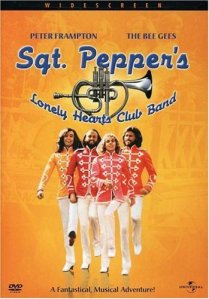
Review: Sgt. Pepper’s Lonely Hearts Club Band (Dir. by Michael Shultz)


In 1978, just based on what I’ve read, everyone in America was regularly doing huge amounts of cocaine.  Whether you were in a disco or at a PTA meeting, you knew that eventually someone would produce a small mirror covered with white powder.  President Carter even snorted it during that year’s State of the Union speech.  Sure, some people used gold spoons and others had to make do with a one dollar bill but, in the end, cocaine brought all Americans together as a nation and helped the country heal after the trauma of Watergate. 

It also contributed to some the year’s best films.  Days of Heaven, Superman, The Deer Hunter, Coming Home, Grease, Animal House, Interiors, Halloween, Midnight Express, Convoy, Go Tell The Spartans, and An Unmarried Woman; these were all films fueled by the Peruvian Headache Powder. 

However, no discussion of 1978 cocaine-fueled films would be complete with mentioning Sgt. Pepper’s Lonely Hearts Club Band.  Featuring songs originally performed by the Beatles and starring the Bee Gees, Peter Frampton, and a whole bunch of other people that my mom liked, Sgt. Pepper’s is a film that, quite honestly, should just be retitled 1978.

Plotwise — oh God, do I really have to try to describe the plot?  Seriously, this could take forever.  I mean, the film isn’t quite two hours long but a lot of stuff happens and really the only connection between any of it is that these odd cover tunes of classic Beatles songs keep popping up in the weirdest places.  Okay, let me try to get this all into one paragraph —

There’s a small town called Heartland that is very small and simple but it’s also the home of the legendary Sgt. Pepper who, throughout history, has maintained world peace by playing his magic instruments.  But then Sgt. Pepper dies and apparently turns into a gold weather vane.  His magic instruments are given to the mayor of Heartland, Mr. Kite (George Burns, who also narrates the entire movie).  The world is in mourning.  But then one day, the Henderson Brothers (the Bee Gees) decide to form a new Sgt. Pepper’s Lonely Hearts Club Band and they invite Sgt. Pepper’s grandson, Billy Shears (played by Peter Frampton) to be their lead singer.  Heartland rejoices and George Burns has a surprisingly sweet scene where he sings  Fixing A Hole.

Anyway, the new band is such a hit that the owner of a record company invites them to come to Los Angeles and record an album.  Billy says goodbye to his girlfriend, Strawberry Fields (Sandy Farina) and then joins the Hendersons in a hot air balloon which promptly leaves for California.  En route, the balloon collides with an airplane but nobody is seriously injured. 

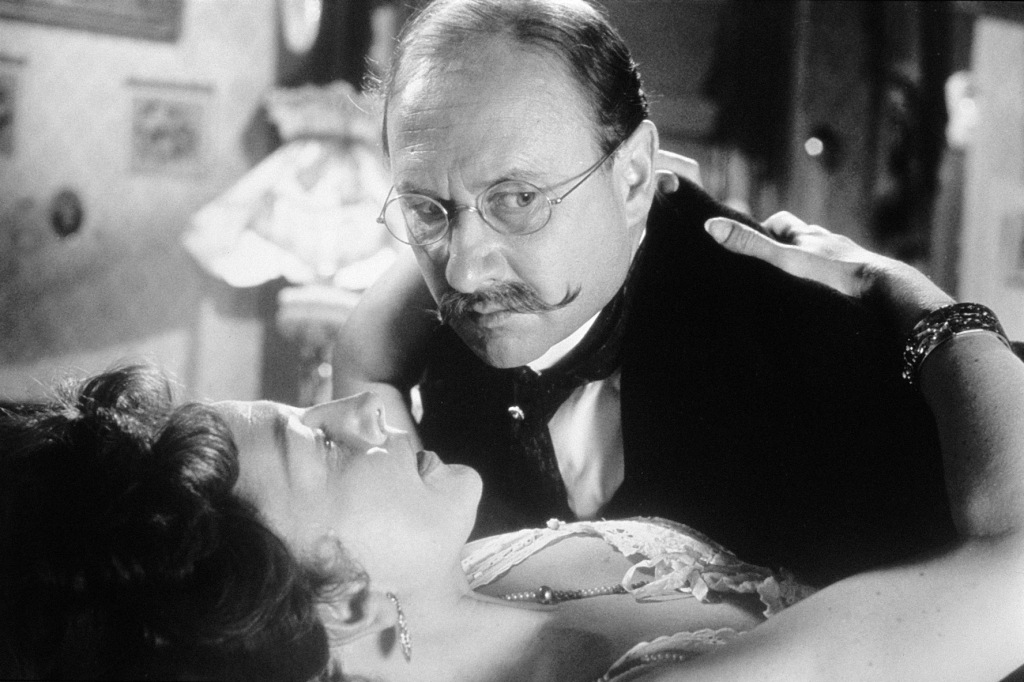
In Los Angeles, they meet the record company owner and it turns out that he’s played by Donald Pleasence.  (It’s interesting to think that Pleasence filmed this and Halloween around the same time.)  Pleasence proceeds to sing the creepiest version of I Want You ever heard.  I’d include a clip of the performance but Pleasence manages to go on for a good ten minutes, repeating “I want you,” in an odd little voice while staring at Peter Frampton.

The boys sign a contract with Pleasence.  Billy Shears is led astray by Lucy and her band, the Diamonds.  (Guess which song they get to sing.)  Somehow, this allows Mean Mr. Mustard to steal Sgt. Pepper’s magic instruments.  Mr. Mustard drives around in a yellow van and he’s assisted by two female robots who, at one point, sing She’s Leaving Home in their electronic, robot voices.

The band is informed that the instruments have been stolen.  Outraged, they jump back in their hot air balloon and quickly start a recovery operation.  It turns out that Mean Mr. Mustard has given the instruments to three separate villains.

The first villain is Dr. Maxwell Edison who uses his silver hammer to turn old people into boy scouts.  This may sound ludicrous and silly but fortunately, Maxwell is played by Steve Martin.  His cameo is one of the highlights of the film, if just because he seems to be one of the few people who actually enjoyed himself on set.

The second villain is the Reverend Sun.  He brainwashes people or something.  I’ve seen this movie a few times and I still can’t quite figure out what Reverend Sun’s deal is.  When I first saw this movie, I got excited because I thought that Tom Savini was playing Rev. Sun.  Then I forced my sister Erin to watch the movie and she told me I was stupid because Rev. Sun was obviously being played by Frank Zappa.  Well, I did some reasearch and discovered that we’re both stupid.  That’s neither Savini nor Zappa.  It’s Alice Cooper.

The final villains are played by a very young (and very, very hot!) Aerosmith.  Here, they are called the Future Villain Band and oh my God, Joe Perry…this film needed a lot more Joe Perry.  I mean, it’s understandable that Steve Tyler  gets most of the screen time and young Steve actually looks pretty good in a Mick Jagger sort of way but Joe Perry…Oh. My.  God.  Anyway, Aerosmith does a cover of Come Together and Joe Perry circa 1978 was just so freaking gorgeous, oh my God.  Eventually, Frampton and the Bee Gees come along and ruin things by getting into a fight with Steve Tyler which leads to the camera constantly cutting away from Joe Perry who is really, really, really hot and all kinds of sexy in this movie.  They should have just called this movie Joe Perry.  Oh.  My.  God.

Uhmm, where was I?  Oh yeah — so, anyway, eventually the weather vane comes to life and suddenly, Sgt. Pepper’s a black man who sings Get Back and ends up magically resetting the past and turning Mean Mr. Mustard into an altar boy or something like that.  Oh, and the Bee Gee who looks like a New Age healer ends up singing my favorite Beatles song, A Day in the Life

Finally, it appears that every single person on the planet shows up in the film’s final scene where a huge group of “stars” show up and sing the film’s title tune one last time.  In the end credits, these people are listed as being “Our Guests At Heartland.”  Doing some research (i.e., looking the thing up in Wikipedia), I’ve discovered that these folks were apparently all pop cultural icons in the 70s.  I didn’t recognize a single one of them but I’m sure they probably all snorted a lot of cocaine.

(And, by the way, Joe Perry does not get to return for the finale so bleh on you, movie.)

For some reason, this movie kept showing up on Starz last November and that’s where I first discovered it.  The first time I saw it, I came in right at the start of Steve Martin’s cameo and the film itself was so just plain weird that I had to jump on twitter and let the world know what I was watching.  (Actually, it doesn’t take much to make me jump on twitter and tell the world what I’m doing.)  As a result, I soon discovered that, apparently, I was the only person on the planet who didn’t know about this film.

Sgt. Pepper’s Lonely Hearts Club Band is really a pretty bad movie.  The plot tries way too hard, the pacing is terrible with some scenes lasting forever and others ending before they really start, and Frampton and the Bee Gees are all distinguished by an utter lack of charisma.  The youngest Bee Gee appears to be cheerfully stoned throughout the entire movie while the other two (and Frampton) are trying way too hard to act. 

And yet, the film fascinates me.  After I saw it the first time, I forced my sister to watch it with me a second time.  I then watched it again on my own.  Finally, I went down to the local Fry’s and nearly did a happy little dance when I found it on DVD.  I’ve watched it since several times.  Whenever I’m depressed, it always cheers me up.

 What’s the appeal?  Some of it is definitely the whole “so-bad-its-good” thing.  Actually, that’s probably most of it.  Another thing fascinating thing is how literally the filmmakers choose to interpret the Beatles lyrics.  Considering the fact that the Beatles themselves were rather open about the fact that a lot of their lyrics were simply nonsense and word games, it’s interesting to try to understand logic behind trying to force them into a coherent storyline.  (This is also the appeal of 2007’s Across The Universe, which is technically a better movie than Sgt. Pepper’s but isn’t half as fun to watch.)  For instance, Billy Shears isn’t in the film because he’s an interesting character.  Instead, he’s just here because — 10 years earlier — either John Lennon or Paul McCartney choose to toss the name into a song.  We’re never quite  sure what Mean Mr. Mustard’s dastardly motivation is beyond the fact that the filmmakers had the rights to his song.  If nothing else, the film is an interesting example of what happens when people try to create a novel out of somebody else’s short story.

However, I think the main appeal of Sgt. Pepper’s is the appeal of 1978.  Watching the movie, you feel almost as if you’re literally sitting beside the cast at Studio 54, watching as everyone snorts a line.  I think that, for future historians, this film may very well turn out to be a cinematic Rosetta Stone.

Then again, maybe it really is just so bad that it’s good.