Welcome to Retro Television Reviews, a feature where we review some of our favorite and least favorite shows of the past! On Mondays, I will be reviewing Miami Vice, which ran on NBC from 1984 to 1989. The entire show can be purchased on Prime!

This week, Miami Vice says goodbye to a friend.
Episode 3.12 “Down For The Count: Part One”
(Dir by Richard Compton, originally aired on January 9th, 1987)
Larry Zito finally gets his own episode!
Played by John Diehl, Larry Zito was a part of the show from the very beginning. Occasionally, it’s easy to forget that Diehl was a part of the ensemble because his character was rarely given anything to do and we rarely learned that much about Zito. He was Switek’s partner and he seemed to have a quirky sense of humor. Occasionally, he had long hair and a beard and he seemed to enjoy wearing elaborate disguises while working undercover. That said, Zito was always a bit of an enigma. Even the rare episodes that centered on the Switek/Zito partnership seemed to feature Zito mostly in the background.
In this episode, though, we finally learn a bit about Zito. We learn that he has a background as a boxer and he’s good at training other fighters. We learn that he takes it seriously whenever he hears about a crooked promoter manipulating a boxer. We learn that Zito is a recovering alcoholic. In this episode, we learn that Zito is more than just goofy comic relief. He’s got a heart as gold. When the Vice Squad investigates a crooked promoter named Guzman (Pepe Serna), Zito takes it upon himself to train an up-and-coming boxer named Bobby Sykes (Mark Breland). Bobby’s previous trainer (played by Randall “Tex” Cobb) was a friend of Zito’s and was murdered by Guzman. For Zito, this case is personal. He even helps Bobby win a championship. Yay, Zito! That’s not bad for a supporting character!
Unfortunately, this also leads to Zito dying. After the fight, Zito is confronted by Guzman and his men. Switek later finds Zito’s body in the gym with a hypodermic needle sticking out of his arm. Guzman gave Zito a fatal overdose of heroin.
This really depressed me! I mean, Zito finally gets a chance to handle a serious case and, even more importantly, John Diehl finally gets a chance to show off the fact that he’s a very good actor and then, at the end of the episode, Zito’s dead! Poor Zito!
(From what I’ve read, John Diehl wanted off the show because he felt his role was underwritten and he also preferred doing theater to weekly television. That’s understandable. At least he got one turn in the spotlight before he was written off the show.)
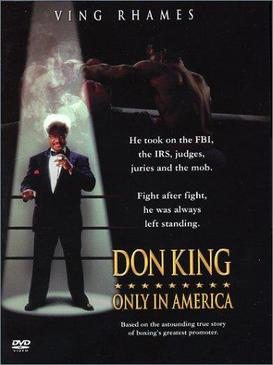
Needless to say, this episode is dominated by the death of Zito. The scene with a tearful Switek cradling Zito’s dead body makes such an impression that it’s easy to forget that this episode also featured the odd spectacle of Don King playing Mr. Cash, an ex-con turned honest fight promoter who disapproves of Guzman’s tactics. Somehow, Don King being the voice of integrity makes sense in the topsy-turvy world of Miami Vice. King says that Guzman is in Miami because it’s a brand new territory and a place where anyone can make it rich. That’s been one of the recurring themes of this show since it began. Anything can happen in Miami. Including Larry Zito dying….
Give me a moment to wipe away the tears. Seriously, the end of this episode really depressed me!
Next week, Switek is out for revenge. I hope he gets it!
 Through the Shattered Lens