Avatar: Fire and Ash Review (dir. by James Cameron)


 “The fire came from the mountain… Eywa did not come. So I went to the fire, and I learned its way” – Varang

Avatar: Fire and Ash plays like a massive, molten crescendo for Cameron’s Pandora saga—visually overwhelming, emotionally heavier than the last two entries, but also very familiar in ways that will either feel comfortingly mythic or a little déjà vu, depending on your tolerance for repetition. The ash-choked skies, lava rivers, and volcanic Na’vi clans are often more compelling than some of the story beats, and the final stretch delivers the kind of operatic, war-movie scale that makes the three-plus-hour runtime go down easier than it should, even though the film clearly didn’t need to run this long.

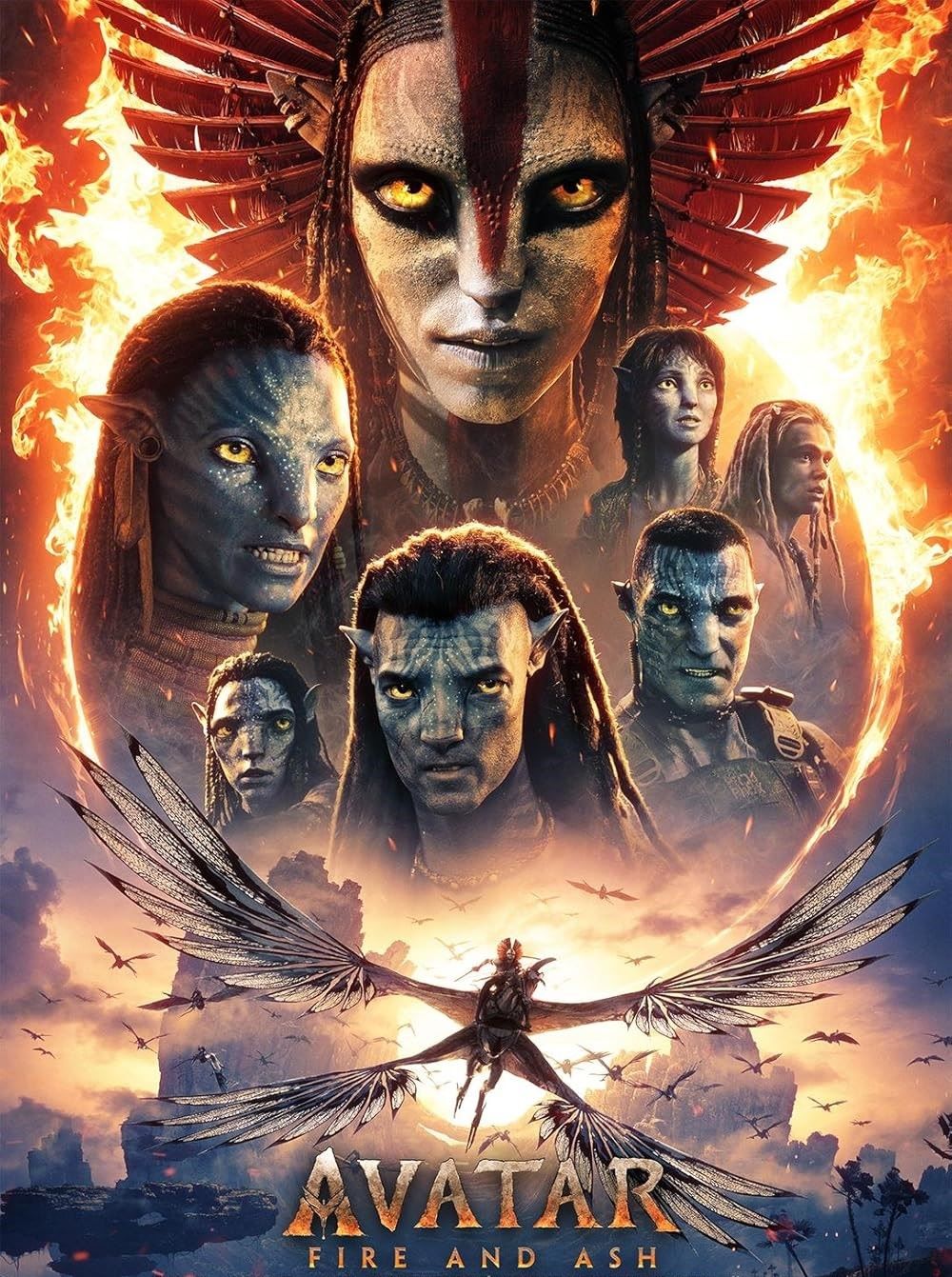
This time around, the series leaves behind the cool blues and oceanic calm of the previous chapter for a harsher, volcanic corner of Pandora that feels like a nature documentary shot in a furnace. Jagged black rock, roiling lava, and smoke-stained skies dominate the frame, with creatures and plant life that look as if they evolved to survive heat and ash rather than coral reefs and open water, giving the movie an immediately distinct visual identity even when the story rhythms feel familiar.

At the center of this environment are the Ash People, or Mangkwan clan, a Na’vi group shaped by relentless scarcity and violence. They ride creatures adapted to fire and ash instead of waves, cover themselves in soot-black markings, and fight using a deliberate blend of traditional Na’vi weaponry and repurposed human tech, putting them ideologically at odds not just with the human invaders, but with other Na’vi clans who still cling to older, more spiritual ways of living with Eywa.

The story picks up with Jake and Neytiri’s family still reeling from Neteyam’s death, and the film leans hard into unresolved grief as its emotional baseline. Jake doubles down on his protector persona, treating every decision as a matter of survival, while Neytiri’s pain expresses itself as barely controlled rage, and that emotional weather trickles down to their children, who are increasingly frustrated at being treated like liabilities. The problem is that a lot of this family dysfunction was already unpacked in the second film, so instead of evolving those arcs, the script often feels like it is rehashing earlier conflicts.

The dynamic between Jake and Lo’ak is the clearest example of this repetition. Jake’s exasperation with Lo’ak’s impulsive, run-toward-the-bullets mentality resurfaces again and again, echoing arguments audiences have already seen: the father insisting his son isn’t ready, the son bristling at never being trusted. These moments still have emotional sting, but they circle the same drain so often that entire conversations could have been trimmed or removed without sacrificing character depth, and tightening that thread alone would have shaved a noticeable chunk off the runtime.

Where the film becomes more thematically interesting is in how it reframes Pandora’s conflict. Instead of a simple “Na’vi versus humans” setup, it pits the more traditional Na’vi clans—those still committed to a symbiotic relationship with Eywa—against the Ash People, whose warlike nature and embrace of human weaponry make them ideological outliers. That split plays as a pointed echo of historical events in the Americas, where European colonial powers armed and favored specific Indigenous nations to fight their neighbors, turning native communities into proxies in conflicts that ultimately benefitted outsiders more than the people doing the actual bleeding.

The analogy becomes sharper in how human forces hang back and quietly exploit these new divisions. By giving the Ash People access to superior firepower and nudging them toward confrontation, the outsiders effectively inflame existing grievances and reshape local power dynamics, much like colonial regimes once did by supplying guns and promises to one group while framing another as the enemy. The result is a Pandora that feels more fractured and politically complex, where internal Na’vi conflict is as dangerous as external invasion.

Varang, the leader of the Ash People, is one of the film’s strongest assets. She’s portrayed as a true believer who has taken real suffering and twisted it into a doctrine of purifying destruction, convinced that burning the world is the only way to save it. The character blends zealotry and charisma in a way that makes her both frightening and compelling, and she wields faith, desire, and fear as weapons with unnerving ease, giving the movie a volatile energy whenever she’s on-screen.

Her alliance with Quaritch pushes the story into darker, more uncomfortable territory. What begins as a pragmatic arrangement—a trade of firepower and influence for help tracking Jake—evolves into a twisted, intimate partnership that underlines just how far both are willing to go to achieve their goals. Their connection is meant to feel toxic and predatory, and it succeeds on that front, though some viewers may find the intensity of those scenes off-putting compared with the relatively straightforward romance and family dynamics of earlier entries.

On a craft level, the film is almost absurdly polished. Even if it no longer feels like a quantum leap in visual effects, the execution is meticulous: volcanic vistas glow with molten light, ash storms swirl with tactile grit, and the interplay of fire, smoke, and bioluminescence gives many shots a painterly quality. The action sequences rely on clear geography and patient staging, so even when the screen is full of creatures, machines, and chaos, it remains surprisingly easy to track who is where and what’s at stake.

The final act is where the movie unleashes everything it has: parallel battles on land, in the air, and over volatile seas, stitched together into a long, escalating crescendo. Familiar James Cameron signatures return—heroic last-second saves, nature itself intervening, climaxes that mirror earlier films—but the pacing of these sequences is handled with enough control that they rarely collapse into pure noise. Still, you can’t help but feel that with a leaner, more disciplined buildup, that climax would have hit even harder.

Structurally, the story leans heavily on patterns that loyal viewers will recognize. There is yet another relocation to a new culture, another period of uneasy assimilation, another slow slide into open warfare, and another sacrificial, emotionally charged finale. Whether that comes across as mythic repetition or simple recycling depends on how patient you are with Cameron’s tendency to “rhyme” his narratives rather than reinvent them.

Most of the main character arcs feel like refinements rather than reinventions. Jake remains the guilt-ridden warrior father terrified of losing his children; Lo’ak edges closer to full-on protagonist status as the reckless but big-hearted son; Kiri’s mystical bond with Eywa deepens while remaining intentionally enigmatic; and Quaritch once again fills the role of relentless, personal antagonist. With the same father–son friction repeatedly dragged back into the spotlight, the emotional landscape can feel stuck in place, and a stricter editorial hand might have refocused attention on the fresher elements—like Varang and the Ash People’s worldview.

Tonally, the film pushes into darker territory while still staying within a mainstream rating. The battles feel more brutal, with a greater emphasis on the physical cost of arrows, explosions, and close-quarters fighting, and there’s a persistent sense that no one is truly safe. That harshness extends to the emotional side as well, as the Sully family finds itself cornered into choices where every option exacts a price, reinforcing the idea that survival in this version of Pandora demands constant compromise.

Thematically, Avatar: Fire and Ash weaves together ideas about faith, extremism, and the way trauma can be weaponized. The Ash People act as a distorted mirror of earlier Na’vi cultures: a society that has taken genuine pain and turned it into an excuse for cruelty, abandoning balance in favor of cleansing violence. Layered on top of that is the divide-and-rule dynamic, where more technologically advanced outsiders stoke internal conflicts for their own advantage, mirroring how colonial powers in the Americas encouraged Indigenous groups to fight one another while expanding their control and extracting resources.

Despite all the digital wizardry, the performances still manage to cut through. Jake and Neytiri’s scenes carry the weight of years of loss and sacrifice, and there’s a believable exhaustion in the way they argue and compromise. The younger characters, especially Lo’ak and Kiri, feel more rooted and central than they did before, which helps sell the gradual shift toward a new generation, even if the script keeps dragging them back through conflicts that feel like reruns instead of genuine evolution.

At the same time, the movie sometimes undercuts its best character work in its rush to reach the next big set piece. Quieter moments that might have deepened side characters or given the Ash People’s beliefs more nuance are often compressed or sidelined, while scenes rehashing Jake and Lo’ak’s issues are allowed to run long. If the film had trusted audiences to remember the family dysfunction carried over from the second installment and cut down on repeated arguments, those smaller, richer beats could have had more space—and the whole piece would likely feel tighter and more focused.

For viewers already invested in Pandora, Avatar: Fire and Ash is clearly built for the biggest screen available: the volcanic vistas, layered sound design, and carefully staged action set pieces are all engineered to overwhelm in the best way. It delivers a darker chapter without abandoning the earnest, sometimes corny sincerity that has always defined this series, and as a conclusion to this phase of the story, it feels emotionally full even as it insists on revisiting familiar territory and stretching its narrative longer than necessary.

For more casual viewers or anyone who found the earlier films predictable, this is unlikely to be the conversion point. The structure is recognizable, the dialogue is often workmanlike rather than sharp, and the movie leans so hard into repeating certain family conflicts that it can feel like the story is padding itself instead of evolving. But if you can live with those flaws—the repetition, the length, the occasional heavy hand—the combination of technical craftsmanship, volcanic imagery, heavy emotional stakes, and that quietly pointed commentary on colonial-era divide-and-rule tactics makes Avatar: Fire and Ash a fiery, flawed, but undeniably impressive ride.
Avatar: The Way of Water Review


“I see now. I can’t save my family by running. This is our home. This is our fortress. This is where we make our stand.” — Jake Sully

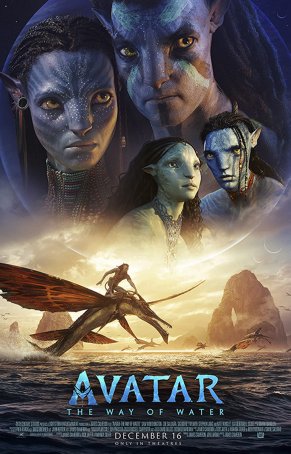
Avatar: The Way of Water delivers jaw-dropping visuals and a sincere dive into family struggles, but it drags under its three-hour weight with repetitive plotting and uneven character depth that keeps it from breaking truly new ground.

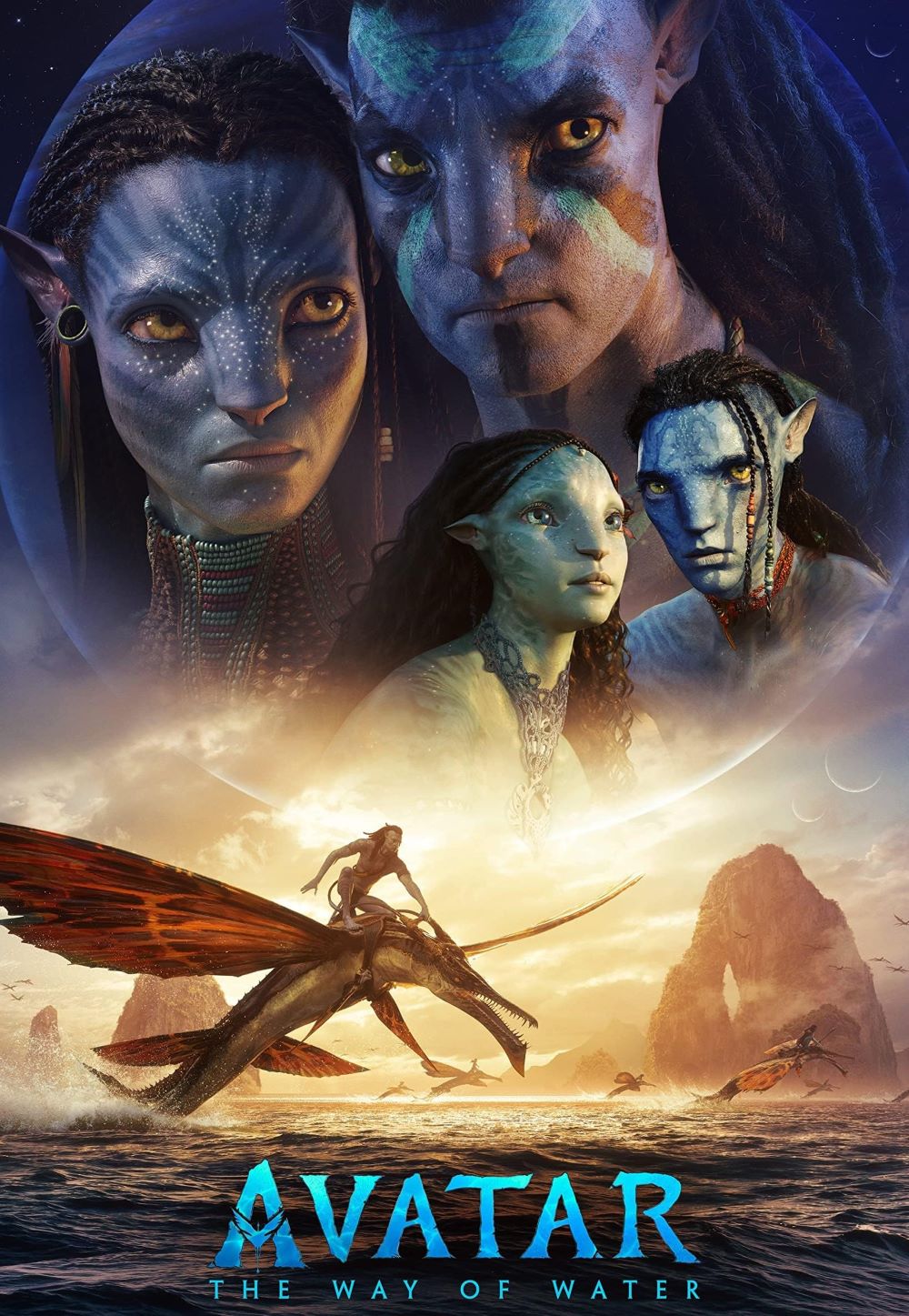
James Cameron returns to Pandora over a decade after the original Avatar, catching up with Jake Sully and Neytiri as they’ve built a sprawling family amid fragile peace—only for human colonizers, the so-called Sky People, to crash back with upgraded tech, ruthless determination, and a deeply personal grudge led by a vengeful Colonel Quaritch reborn in Na’vi avatar form. This forces the Sullys into a desperate flight to the Metkayina, a reef-dwelling Na’vi clan whose ocean-adapted physiology and customs—broader tails for swimming, gill-like breathing aids, a deep spiritual bond with marine life—present a whole new cultural and environmental challenge, transforming the story from the first film’s jungle rebellion into a watery survival tale laced with themes of displacement and adaptation.​

What truly sets the film apart, even if the story treads familiar “pursued heroes vs. imperial baddies” territory without bold twists, is how it masterfully expands the Avatar universe’s worldbuilding, turning Pandora from a singular bioluminescent jungle into a teeming planet with diverse ecosystems and cultures. The Metkayina villages perch on floating lattices of woven kelp and coral, lit by phosphorescent anemones pulsing like underwater stars, while daily life revolves around symbiotic ties with ilu (skittish six-finned mounts) and skimwings (leathery ocean skimmers); nomadic Tulkun society—intelligent, philosophical whale-like beings communicating via sonic songs—clings to a strict non-violence “tulkun way” brutally shattered by human whalers.

These layers emerge organically through the Sullys’ awkward integration, like mastering fluid sign language or breath-holds for deep dives, and the spectacle dazzles relentlessly, powered by advancements in hyperrealistic CG that continue to erode the uncanny valley effect on characters—Na’vi faces now convey micro-expressions of pain, joy, and exhaustion with lifelike subtlety, their skin textures responding to water and light in ways that feel organic rather than synthetic.​

Bioluminescent reefs glow in electric blues and greens, iridescent fish schools dart through sun-dappled shallows, and massive Tulkun glide with skyscraper grace and scarred hides. Cameron’s pioneering underwater motion capture—actors in massive tanks layered with tactile CG—makes every bubble, flipper stroke, and coral sway palpably real, as Na’vi teens free-dive twisting kelp forests and maze-like atolls in lung-burning tension. The film also pushes 3D technology to new heights since the first film, baked natively into every frame rather than tacked on as a post-production gimmick—this integral approach ensures depth pops organically, from swirling plankton clouds enveloping swimmers to layered reef foregrounds framing distant horizons.​

The action peaks in the third-act frenzy of ship crashes against waves, flare-lit dogfights, Tulkun rams crumpling hulls, and a claustrophobic flooding vessel breach where air dwindles second-by-second. Cameron’s chaos clarity—echoing The Abyss or Titanic—ties stakes to family peril, amplified by thundering sound (crashing surf, whale calls, Na’vi gasps) and Jon Landau’s IMAX polish into sensory overload.

Family drives the lived-in, flawed emotional core: Jake (Sam Worthington’s gravelly gravitas) wrestles fatherhood’s math—stern orders backfiring into guilt—as he clashes with impulsive Lo’ak (Britain Dalton’s sulky edge), whose outsider rage forges a bond with scarred Tulkun Payakan, flipping “monster” tropes for real agency; dutiful Neteyam buckles under expectations, innocent Tuk (Trinity Jo-Li Bliss) witnesses horrors, and mystic Kiri—Grace’s avatar-born daughter linked to Eywa—teases lore like planetary souls, while Neytiri (Zoe Saldana’s fiery sorrow) simmers with grief-fueled, mama-bear savagery, her outbursts piercing deeper than rifles.​

These arcs convert invasions into gut punches on protection, belonging, parental failures, and war’s selfish costs—specific melodrama over generic heroism. Yet simplicity amplifies flaws over runtime: a chase loop (hunts, hides, teen trouble, repeat) grates, with middle sags of cultural lessons (sign language, ilu taming, Tulkun reverence) feeling like filler; humans are greed caricatures—whalers gutting pacifists for longevity goo amrita, suits enabling genocide—lacking nuance despite Earth’s biosphere desperation nods, preaching eco-colonialism to the choir. Neytiri gets benched post-roars (a co-lead letdown), Quaritch dangles complexity (death memories, Spider ties) but snarls relentlessly; reef archetypes (wise Tonowari, omen-Ronal, bully-to-ally Aonung) lopsided the cast, Tulkun elders out-nuancing humans.​

The film’s themes land with sincere force: whaling atrocities, from harpooned flesh and bloodied seas to a mother’s primal rage, hammer home human irredeemability without much subtlety, while family adaptation explores “forest people” taunts, strained bonds, and Eywa’s mystical interventions that weave personal growth into planetary balance—heartfelt without ironic quips, either refreshing in its earnestness or manipulative depending on your taste. Pacing remains deeply polarizing, offering immersive vibes for world-huggers who savor the slow builds but feeling bloated and front/back-loaded for plot purists impatient with the expansion-heavy middle.

Ultimately, Avatar: The Way of Water triumphs as a visual banquet and saga extender, hooking viewers with its aquatic marvels, raw parental fears, peerless craft (hyperreal CG and improved 3D elevating it), and smart universe growth through new clans, beasts, and lore seeds—all sans true narrative reinvention, as bloated length, repetitive echoes, and flat foes keep it from pantheon status. Fans of Pandora dive in sated; skeptics surface impressed by the technical wizardry yet impatient with the sprawl. It’s pure Cameron—huge swings promising more sequels ahead. Worth submerging for the spectacle.

Avatar: The Way of Water (dir. by James Cameron)


James Cameron is still out there, trying to push the envelope.

My showing of Avatar: The Way of Water was not only 3D, but in HFR (High Frame Rate), which threw me for a loop. The only other movie I’ve ever watched on a large screen in HFR was The Desolation of Smaug and what was by mistake. The underwater scenes in the film are a sight to behold, but your eyes and mind need to adjust to it. HFR is that thing Christopher McQuarrie and Tom Cruise warned us all about earlier this year, the feature on most modern tv’s that enable a ‘smoothing’ effect. Films that normally look grainy are suddenly “live” under the HFR. It works really well for nature shows and sports events, and with a land as lush as Pandora, it’s good if you know what it is. I’m just not sure how well that will translate for audiences at home or for individuals who are new to it all. I can’t even begin to know what the underwater shooting was like for this film. James Cameron is known to be hard on his cast & crew. Ed Harris supposedly decked him once on the set of The Abyss and Mary Elizabeth Mastratonio once walked off set after they had a film issue on one point. I want to say that whatever they went through for The Way of Water seems to have paid off, but the state of movie theatres overall may have something else to say about that.

There were maybe only 3 people in my 3pm showing, and they seemed to stay for it. I know Cameron wants to save it all, but I feel the theatre experience is still dying. That’s a discussion all it’s own, but not here and now.

The Way of Water finds us having moved on some years after the events of the first film. Jake (Sam Worthington, Man on a Ledge) and Neytiri (Zoë Zaldaña, Guardians of the Galaxy) have a family of five now, living amongst the Omaticaya clan of Na’vi in the lands they moved to since losing Hometree in the first film. The boys, Neteyam (Jamie Flatters, Black Dog) and Lo’ak (Britian Dalton, Ready Player One) are like teenage Marines in training, dutifully following their dad’s orders up until the point where curiousity gets the best of them. The daughters, Kiri (Sigourney Weaver, Aliens) and little Tuk (Trinity Jo-Li Bliss), take a bit after their mom in some ways. There’s also Spider (Jack Champion, The Night Sitter), a young human who is close to Kiri. When humans return to Pandora, the Sullys find themselves once again under attack and on the run, colonization being the big bad it always was. Jake’s just trying to protect his family as best he can, something any parent can relate to. This takes them to a separate water based Na’vi tribe that takes them in and shows them their way of life. That, I really enjoyed. Though I’m mostly a loner at heart, seeing families and communities gel and work together plucks all the right heartstrings for me. There’s nothing that good teamwork can’t resolve and the story keeps circling that with Cameron’s “Family as a Fortress” theme.

If the Saw Movies taught us anything, it’s that you can always expand on a single story with fillers. They took one film, and weaved tons of side points without damaging the main thread. The Fast & Furious films did the same, making sure to keep the continuity, while adding additional content in between. Cameron had four other writers on board along with himself – Shane Salerno (Aliens vs. Predator: Requiem), Amanda Silver (War of the Planet of the Apes), Rick Jaffa (Dawn of the Planet of the Apes), and Josh Friedman (Terminator: The Sarah Connor Chronicles). With The Way of Water, I felt they were pretty successful at doing the same. The film even plants a few seeds here and there for future installments, should Cameron get the green light to go forward with his other 3 films.

If the plot suffers from any problems, it’s that they also took a page out of the Top Gun: Maverick flight manual in following the first film’s flow a little too closely. While The Way of Water has a plethora of new content – vehicles, machines, animals, locales – the story still moves along the path of the first film, making it just a little predictable. I was able to call out two scenes before they occurred. Other than those moments, I spent most of the film either really worrying about the Sully family – they’re outgunned, after all – and marveling at the views.

The editing is also a little weird. I understand this is a big undertaking, but some of the cuts between scenes seemed really abrupt to me, as if someone said…”This scene is out to explain this..you got it?! Good! Moving on to the next…” ..while the audience is still frantically taking notes on what just happened. At 3 hours and 12 minutes (just 11 minutes longer than Avengers: Endgame), there’s a lot to see, but I felt the pacing was okay. If there’s any part of the movie that could be used for a bathroom break, there is an extended sequence with a whale-like creature that could be your best opening. The movie might require more than one viewing to take it all in, but perhaps this is Cameron’s plan all along. One never truly knows.

The sound in The Way of Water was good. Explosions are sharp, animal sounds are cute and the hissing/wailing of Na’vi are clear (though strangely annoying after a while – we get it, you’re in pain or angry, ). The one element I was concerned with was the music. With James Horner’s passing in 2015, those shoes would be a little hard to fill. I originally hoped that Marc Streitenfeld would get the nod, based of his work on Prometheus. Composer Simon Franglen picks up where Horner left off, having worked together on the original Avatar score. Franglen knocks it out of the park, with a score that pays homage to Horner’s work while still making it his own sound.

The Way of Water introduces some new characters and cast. In addition to those previously mentioned, we also have Kate Winslet (Titanic) and Cliff Curtis (Sunshine) as the leaders of the Water Na’vi. Bailey Bass (Claudia in AMC’s Interview With the Vampire) plays their daughter, who helps to train the Sully children. Edie Falco (Nurse Jackie) is on board as a General charged with operations on Pandora. Jermaine Clement (What We Do In The Shadows) is also on hand as a marine scientist. Although everyone’s performances are good, the movie really belongs to the Sully children, with Weaver’s Kiri being the standout. Kiri’s a great character, reminding me a lot of Jinora from The Legend of Korra, and her story arc might be the best one of the lot.

Overall, Avatar The Way of Water is some serious eye candy. You might feel a little sad coming back to Earth after all the wonder Pandora has to offer. Disney could go wild on the merchandizing on this if they wanted (and they probably will). It manages to drop a number of surprises and information on the audience, though the overall trip may be a little too similar to the first film. I’m hoping Cameron gets the 3rd film set.

Review: Inception (dir. by Christopher Nolan)


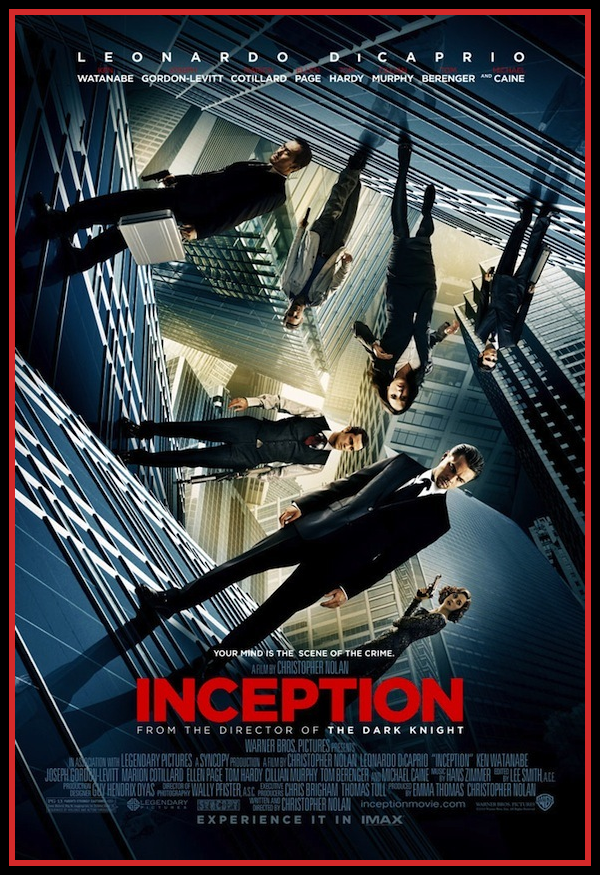
The summer of 2010 has been quite a disappointment. While the films released during this major blockbuster season has been good most have not been able to be that one stand-out which defines a summer season. We’ve had the typical tentpole sequels like Iron Man 2 (good but not great) and Toy Story 3 (also good but not great) to remakes like The Karate Kid to The A-Team. To say that the 2010 summer blockbuster season has been lackluster would be an understatement. Even original films like Splice hasn’t taken in the audience. It now falls to one of the biggest titles for the summer to try and save the season. Whether it will do so financially is still in doubt, but critically the latest from Christopher Nolan may just become the event film of the summer to actually deliver on its hype and the promise of an audience seeing something new, fresh and daring in a sea of mediocrity. Inception comes into the 2010 summer season and delivers on its promises and more than lives up to the hype heaped upon it by critics and fans alike.

A film almost a decade in the making, Christopher Nolan’s epic and sweeping tale of dreams and reality wrapped around a heist film brings the filmmaker one-step closer to becoming the genius filmmaker some of his most ardent followers have dubbed him to be. Nolan as a filmmaker and, more importantly, as a storyteller has always had a fascination with shattered reality and how the subconcious directly affect his protagonists’ sense of the real. We’ve seen this in his film-style of using a disjointed and non-linear structure to his films which goes to creating a sense of confusion in the inattentive viewer. Some have called this style of his as being a gimmick to make a simple story more complex than it really is. I disagree with these individuals and say that Nolan has never done anything to trick an audience with his storytelling style and choices. His films have all the facts laid out before the audience, but in a way that asks the audience to participate in putting the jumbled pieces together. I’ve never seen a red herring used by Nolan in his more personal projects and even in the populist titles he’s done under the rebooted Batman franchise.

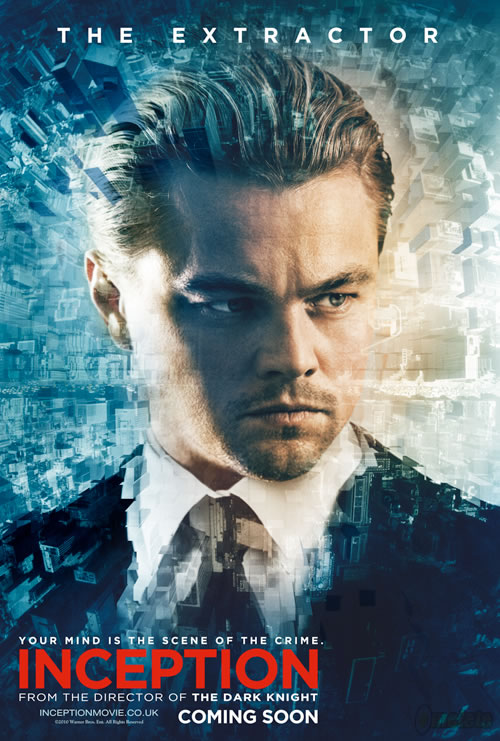
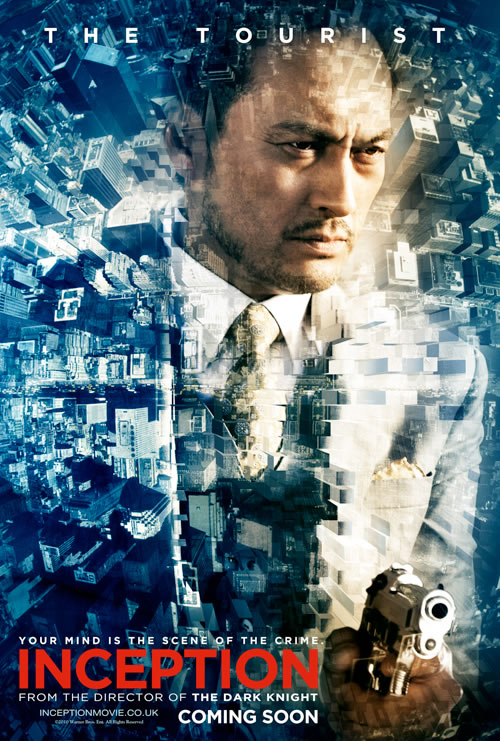
In his latest film, Nolan has refined his non-linear style and used it to successfully create the main setting of the film. Inception is set mostly in the dream world shared by the characters and those they’ve targeted. It is in this shared dream state that the audience learn the rules governing the world of Inception. It is in this dream state that we’re introduced to the first people who would make up an incredible ensemble cast put together by Christopher Nolan and his casting crew. We first meet dream extractor Dom Cobb (played by Leonardo DiCaprio) and his pointman Arthur (Joseph Gordon-Levitt) as they attempt to steal something valuable and important from within the dream of their Japanese-industrialist mark in Saito (Ken Watanabe). We see hints of the rules that will become important for the audience to help them follow the film’s main story as it unfolds. We learn that Saito has already known in advance that he’s in a dream constructed and being shared by Dom and Arthur in their contracted heist by parties unknown. As good as Dom and Arthur are at their job os stealing ideas from a mark through their dreams they have no chance when someone from Dom’s past inserts herself in their plans to sabotage what they’ve worked to accomplish.

It’s in this introductory sequence that we learn of the backstory of Dom and why his latest heist-job didn’t work out too well and has now endangered not just himself but those he has been working with. Saito gives Dom and Arthur a way out of their problems after failing in this job to steal from him by doing a job for him. But unlike previous dream heists Dom and Arthur have done in the past this time Saito doesn’t want something stolen from someone’s mind but to have an idea planted so deep within a mark’s subconscious that the mark believes it to be their very own and not one planted by an outsider. The job doesn’t require Dom to be an extractor of ideas. He’s now to find a way to successfully plant an idea. A job known as “inception” which Arthur and others deem near-impossible to pull off and one quite dangerous not just to the mark but to those involved in the process.

To say anymore about the plot of the film would be to spoil it. Inception works best when as little as possible about the film is known going in. The surprise and awe of the story unfolding is half the fun. It’s like an intricate puzzle or game one tries to solve. It’s ok to know ahead of time how to solve things, but not as fun. While for some people the way Nolan uses non-linear storytelling can be confusing all he asks his audience is to pay attention to the details and clues he’s planting in every scene and piece of dialogue. Let’s be honest this film is not for the inattentive. I won’t say stupid since that implies having low intelligence. It doesn’t take intelligence to pay attention and I’ve known that some of the more intelligent people have a tendency to let their attention wander.

Inception is a film about big ideas and grandiose themes. While the story in of itself when broken down to its simplest common denominator is just a heist film done in a new way, the film allows for layers upon layers of ideas to wrap itself around this simplistic premise. Nolan doesn’t just play with disjointing time for audience. He’s gone and went towards manipulating reality within the subconscious thought to ask the audience a simple question.

Are what we seeing a dream or is it reality?

The film doesn’t trick us using red herrings to make us think one way or another. Everything Nolan has put up on the screen is quite literal and remembering the rules he had set-up in the first hour lays the groundwork for each individual audience to answer that question for themselves. There’s no right or wrong answer to the question, but for some who have seen the film their disappointment seem less to do with the quality of the film, the acting and the direction but more on some of the ambiguous nature of the ending which becomes a dealbreaker for some. Again while I respect their take on this film I find their reasoning for negative criticism to be grounded on thin to non-existent ground. I will get to that ending soon.

While some have called Inception as the anti-Avatar I believe the two filmmaker share similar traits not just in how they create their film, but also in their two latest film. Both Nolan and Cameron are quite known to be very controlling of how their films are made to the point they dabble in every aspect of it. In their latest films they’ve also gone a long way into building a world for their story and characters to inhabit and play around in. While Cameron’s latest was an otherworldly kind in the most literal sense the same could be said for Nolan’s latest but instead inhabits the mind and how anything is possible. From the look of things both film will also share the same sort of near-universal acclaim from the film-going audience with a small, albeit very loud, minority calling Nolan’s film unoriginal, boring and, a word I have loathed for its overuse when something becomes very popular, overrated.

Where the two filmmakers diverge is the way they go about their films. Where Cameron leans heavily in pulling at the emotional strings of the audience through narrative and film sequences in his films, Nolan plies the audiences intellect instead. Cameron for all his technical genius both within the filmmaking sphere and outside of it can be quite the sappy filmmaker and all his films have shown this whether it’s The Terminator or Avatar. For Nolan his films have always felt like an intellectual exercise. An exercise everyone was invited to participate in no matter their level of intellect. He’s been able to marry both his indipendent arthouse sensibilities with the blockbuster the masses seem to crave year in and year out. With Inception he has moved one-step closer to achieving a perfect meshing of the two. This film has all the makings of a great heist and sci-fi thriller wrapped around so many pieces of profound and thoughtprovoking ideas that even after several viewings an audience will find something new to think about. Only one other film I can think of in the last decade or so has accomplished this and that was 1999’s The Matrix by The Wachowski Brothers. While that film was a kick-ass sci-fi action film it also dared to mix in a liberal dose of philosophy both Eastern and Western not to mention subjecting it’s audience to rethink how they see reality.

Christopher Nolan has gone beyond just trying to question the nature of reality. His goal with this film is to deconstruct the nature of the subconscious itself and show how such a thin line separates the dream from the real that at first and, even several glances, one cannot tell the difference. It’s a good thing for the audience watching Inception that Nolan has given them the tools and the rules to follow if they dare. And that’s where I think Nolan will disnguish himself apart from other great directors of his generation and put him up on the level of the true masters in film history. He doesn’t just make films that has worldwide appeal but able to do them while still able to engage his audience to open up their minds to the infinite possibilities his stories offer. While this does make his film a tad cold and distant for some that shouldn’t detract from the high-quality of his work, especially with Inception. The film has heart. It just doesn’t pluck on those particular beats to engage the audience.

I think filmblogger Devin Faraci said it best on his Twitter feed while discussing the film with others. While not exactly verbatim what I got out of it was that he thought it was always easy to engage and/or manipulate the audience through emotional factors, but much harder to engage their intellect. While some have accomplished the former to a great extent and vice versa I think with Inception Nolan has stepped closer than anyone to engage both the heart and the mind of the audience.

This review cannot be too much of a review if I just spoke about the ideas, themes and the inner workings of Nolan’s mind. The film is actually very good. Good enough to that’s close to being perfect. Pick any aspect of the film and those involved have done some of their best work and grown in their craft. As I stated earlier the film sports one incredible ensemble cast. I’ve already mentioned Leonardo DiCaprio and Joseph Gordon-Levitt who both do very great work in their roles. DiCaprio continues to be the go-to-guy when it comes to playing the tortured individual. Similar to his other role in Scorsese’s Shutter Island, DiCaprio as Cobb was quite believable in his personal-made hell in regards to a past event which involved his wife Mal (played with beautiful elegance and malice by Marion Cotillard). But unlike Scorsese’s film Nolan doesn’t reveal this personal issue through a twist in the plot, but let’s it come out naturally with the help of another cast member providing the impetus for Cobb to come clean. This individual is the team’s new dream architect in the form of Ariadne (Ellen Page in her most mature role to date and one that should go a long way from helping her shed the label of being Juno-esque).

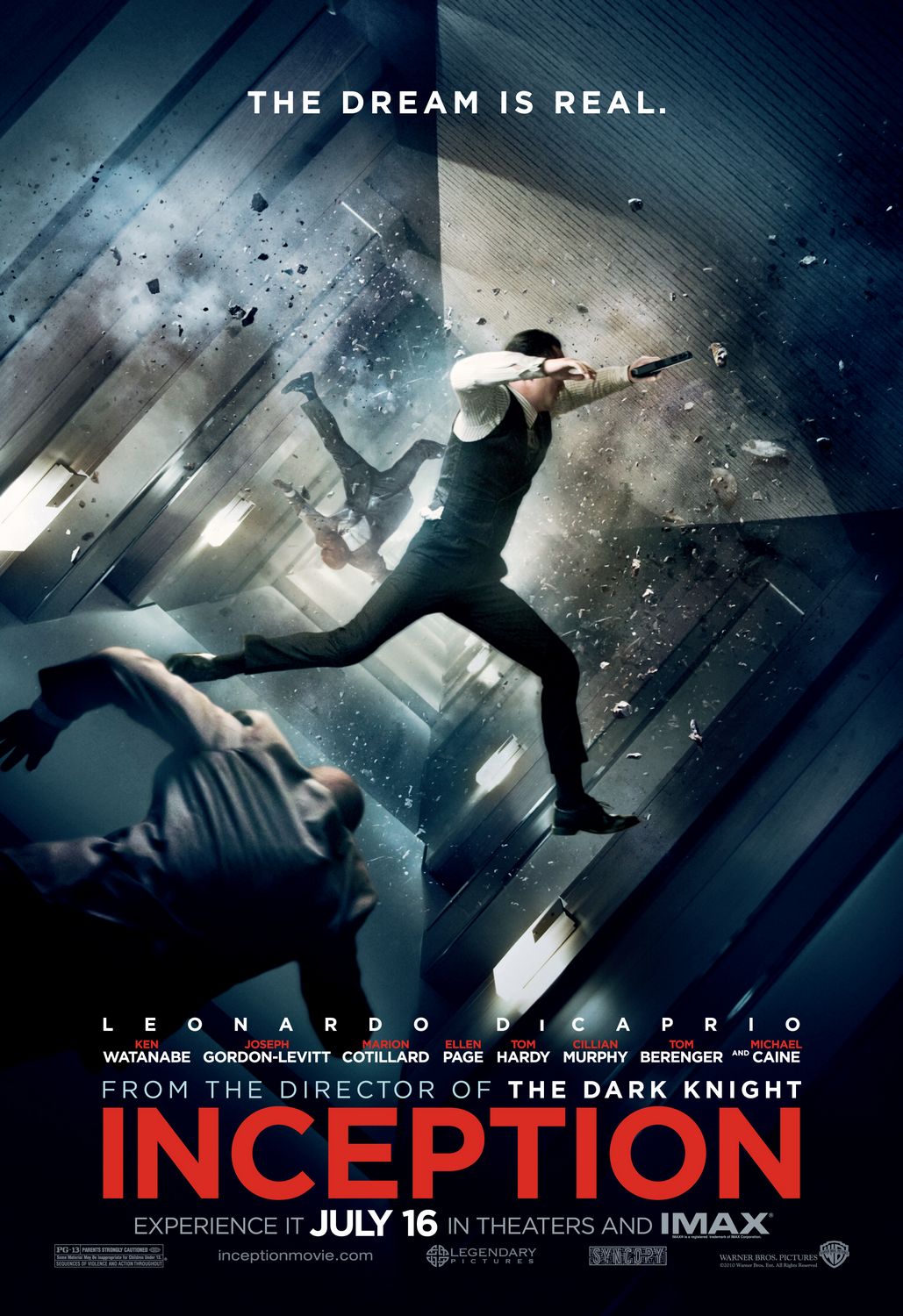
Ariadne becomes the proxy by which the audience learns the in’s and out’s of Cobb’s job as a dream extractor and, very soon, inceptor. Through some inventive use of CGI and practical effects we see throught Ariadne’s eyes how the shared dream-state behaves. How specific rules actually exist within this state no matter how many levels of dreams an individual or group goes down into a mark’s subconscious. Some of these scenes people have seen glimpses of in the trailers and tv spots, but even seeing some of them in advance doesn’t detract from how incredible they look when seen on the bigscreen, especially for those lucky enough to see them on IMAX.

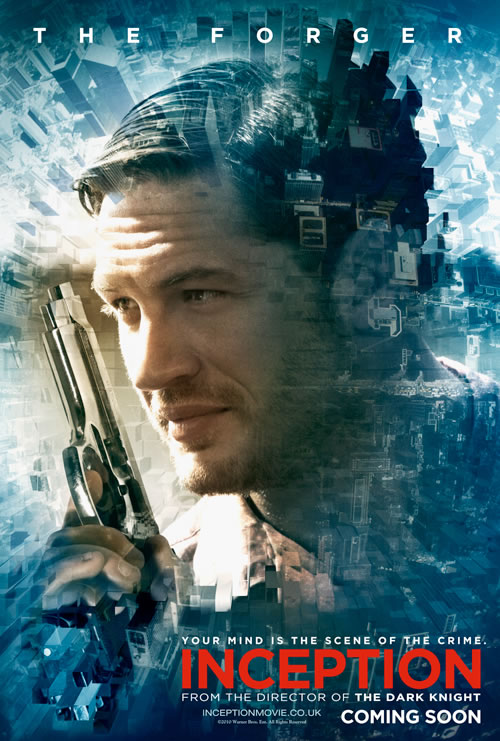
The rest of the cast rounded out by Tom Hardy as Eames the team’s Forger, Dileep Rao as the Chemist in charge of fabricating the compounds needed for the team to enter their mark’s subconscious. Cillian Murphy (starting to become one of Nolan’s regulars) plays Robert Fischer, Jr. their target and mark throughout the film with veteran actors Tom Berenger, Michael Caine and Pete Postlethwaite providing the wise-men roles in the film. It’s Tom Hardy as Eames which stood out in a cast full of extraordinary young and veteran performers. His recent fame as an actor due to his brutal and daring performance in Bronson has made Hardy a hot commodity in Hollywood. His playful character of Eames serves to provide some levity in an otherwise very serious film which allows the audience to come closer to the characters and story instead of remaining distant as Nolan’s detractors like to point out. He nearly pulls off stealing the film from everyone everytime he’s on-screen. It’s a testament to all the actors that he doesn’t as each and everyone have their moments to shine without overshadowing their fellow co-stars.

It would be difficult to review this film without pointing out how beautiful it looks and sounds. The visual part of the film has to go to Walter Pfister who works his magic behind the cameras on this film. Every shot is clear, concise and free of tricks some cinematographers these days have come to rely on too often to make their shots look more dynamic than it really should be. The editing by Lee Smith makes sure that Nolan’s style doesn’t confuse the audience and keeps the non-linear narrative structure easy to comprehend. As for the score one has to look to Hans Zimmer’s growing rapport with Nolan. He’s scored two of Nolan’s film and it looks that Zimmer has tapped into what Nolan wants his film score to sound like. not to dominate or overemphasize particular scenes or beats, but to act as an accompaniment. All three individual do their part as does the actors into making Nolan’s vision of Inception come to life. As great a filmmaker as Nolan is turning out to be these support players have made sure his path towards that goal is done so on smoother ground than not.

Now, there’s going to be some heated and long debates as to the nature of the film because of the final shot. The final shot is of a metal dreidel spinning in the foreground with the camera panning to it. The dreidel is spinning and spinning and looks to keep on doing so. The dreidel is shown earlier in the film as acting as some sort of anchor to tell Cobb whether he is in the real world or in a dream. If it continues to spin and not tip over and fall then he’s still in one. If it spins but ultimately tips over onto its side then he’s out of it. The film ends with the dreidel spinning and for a split second before the film suddenly fades to black we see it wobble.

Many have seen this final shot as being a cop-out by Nolan to play with the audience’s mind. I happen to disagree.  I see it as a part of the story itself. nolan has been asking throughout the film what is real and what is a dream. This last shot just emphasizes this question and leaves it up to the audience to decide whether the dreidel continues to spin or eventually tips over. While I lean to the latter in the end it doesn’t detract from the film. The fact that some people have grabbed hold of this scene to negatively criticized the film as a whole tells me just how well-crafted a film Nolan has made that one little sequence lasting no less than 10 seconds becomes a dealbreaker for some when it should stimulate the mind into thinking what it actually means. I see that as the mark of an excellent storyteller.

In the end, Inception has done something this year which most film have so far been unable to do. It has delivered on its high-minded promises of a film that would challenge the audience and not just entertain them. It’s a film which has been overhyped for the last six month but has more than lived up to it and for some surpassed the hype itself. Inception looks to be one of those films which would forever define a filmmaker and this one will definitely define Nolan moving forward no matter what other projects he has in the future. This is a film that dares to appeal not just to the arthouse cineaste crowd but to the general audience who yearn to watch something exciting and original. I won’t say this is Nolan’s best film since he has years upon years to continue making films. Maybe one of those will be his masterpiece, but Inception definitely could be counted as being a nominee for that honor. If nothing else this film has saved what has been a very ordinary and lackluster 2010 summer film season.

Film Review: Drag Me To Hell (directed by Sam Raimi)


There are exactly two things that keep Sam Raimi’s otherwise entertaining 2009 horror romp Drag Me To Hell from being a classic.

The first is that, about halfway through the movie, Alison Lohman murders her pet kitten.  Admittedly, Lohman’s character is trying to thwart a gypsy curse at the time and the action does show just how terrified she’s become.  But that doesn’t change the fact that it’s a cute kitten and quite frankly, I’m getting sick of seeing cats being killed in horror films.  There’s something truly hypocritical about how far most filmmakers are willing to go to assure an audience that a dog has somehow survived the end of the world while cats are continually killed on-screen without a second thought.

Am I saying that the film would have been better is Lohman had murdered a cute puppy instead?  Yes, I am.  At least that would have been unexpected.  That would have let the audience know that all the rules no longer applied.  Quite frankly, whenever you see a cat in a horror film, you know that cat is going to end up either pinned to a door or hanging in the closet.  Dogs, however, always make it to the end.

I imagine this is because there’s more “dog people” than “cat people” in the world.  People — especially men of a certain age — just love dogs and I’ve never really understood why.  I guess there’s a charm to a loud, smelly, slobbering beast eating its own fecal matter that I’ve never been able to pick up on.

The second thing that keeps Drag Me To Hell from reaching classic status is the fact that Bruce Campbell is nowhere to be found, making this the 1st Raimi film not to feature Bruce in at least a cameo.  Regardless of how well-made or entertaining the movie may have been, I sat through the entire thing waiting for Bruce to show up and, when he didn’t, it was hard not to feel as if perhaps an era in filmmaking had come to an end.

However, despite these two issues, Drag Me To Hell is probably one of the best horror movies to have been released in the past few years.  If nothing else, it proves that, even after directing three Spiderman films, Raimi is still a B-movie director at heart and a brilliant one at that.

In Drag Me To Hell, Alison Lohman plays Christine, a young bank loan officer who, attempting to impress her boss and win a promotion, refuses to give a loan to a decrepit old gypsy woman (played, wonderfully, by Lorna Raver as the type of grotesque character who could only appear in a Raimi film).  The gypsy woman responds by promptly dying but before doing so, she puts a curse on Christine.  In three days, Christine will be dragged to Hell.

What makes this is so effective is that Raimi, as opposed to a less adventurous director, sets the film up to suggest that perhaps Christine deserves to be dragged to Hell.  As disgusting as the old woman is, she clearly doesn’t deserve to be treated as badly as she is by Christine and Christine herself (even before she kills that poor kitten) is a bit of a fake, a former “fat girl” who, when she lets her guard down, reverts back to a country hick accent that she’s obviously spent a lot of time trying to lose. 

Lohman does an excellent job in the lead role, giving a likeable performance as an unlikeable character.  Speaking as a former country girl who still occasionally feels a twinge of shame when I hear myself say “git” instead of “get,” one of my pet peeves is when an actor or actress trots out an unconvincing, patronizing attempt at a rural accent.  However, Lohman captures the accent perfectly and, unlike most actors who try to play country, never allows her performance to just be about doing dialect.  Instead, both she and Raimi show how Christine’s insecurities lead to her actions without ever suggesting that they excuse them.

Though absence of Bruce Campbell is painfully obvious, Raimi still surrounds Lohman with a very strong supporting cast who all bring just the right amount of B-movie seriousness to their roles.  As Raver’s daughter, Bojana Novakovic appears in one the film’s best scenes in which she tauntingly explains the cure to Lohman.  Dileep Rao (who would be wasted later that year in Avatar) steals almost every scene he’s in as a friendly psychic who tries to help Lohman.  Lohman’s boyfriend is played by Justin Long (of the “I’m a Mac” fame) and he’s perfect as a somewhat nerdy guy who, quite frankly, seems like he might be a little bit too nice for his own good.  Plus, the film’s final scene proves that Long can shed a tear with the best of them.  Bruce Campbell would have been ideally cast as Lohman’s boss but, in Campbell’s absence, David Paymer fills the role well enough.

When Drag Me To Hell was first released in 2009, the majority of reviews described it as being an entertaining throwback to the old school horror films of the 50s and 60s.  And, in many ways, this is a totally correct assessment.  What wasn’t often mentioned was that Drag Me To Hell is one of the very few Hollywood horror films to capture the chaotic spirit of H.P. Lovecraft.  Countless filmmakers have attempted to bring Lovecraft’s Cthulhu mythos to the screen and they’ve failed because they could never translate to the screen Lovecraft’s theme of mankind as a bunch of powerless pawns, existing and dying at the whims of a bunch of “demons” whose motivations could never be understood or questioned.  Though Drag Me To Hell is not based on Lovecraft’s work, it perfectly captures the feeling of helplessness in the face of metaphysical chaos that runs through Lovecraft’s best stories.  As the movie progresses, it becomes apparent that Christine isn’t going to be dragged to Hell so much because of the gypsy curse as much as just because the movie’s demon has decided to drag her to Hell.  It’s this theme (and the way that Raimi relentlessly develops it) that takes Drag Me To Hell to a whole other level and which makes its final scene so powerful and effective.

When first released, Drag Me To Hell’s special effects were criticized by some and it is true that the film’s demon, when he does show up, is an obvious CGI creation but who cares?  If anything, the obvious fakeness of the demon adds to the film’s exploitation charm (though the demon is probably another role that Bruce Campbell could have done wonders with).  If you want perfect CGI devoid of subtext or originality, Avatar’s out on DVD.  Me, I’ll take Drag Me To Hell any day.