Doctor Who — The Tomb of the Cybermen (1967, directed by Morris Barry)


In 1966, Doctor Who changed forever.

William Hartnell was in failing health and having difficulty remembering his lines.  He was also not getting along with the current production team and was unhappy with the direction of the show.  (He felt that it was getting too violent and dependent upon the bug-eyed monsters who he had originally been told would have no part of the show.)  It became obvious that Hartnell would not be able to continue as the Doctor.  At the same time, Doctor Who was an unqualified hit and one that the BBC wanted to keep going.

Producer Innes Lloyd and story editor Gerry Davis decided that since the Doctor was an alien, they could just say that he could transform himself physically at will, which would allow them to recast the role.  Hearing the news, Hartnell is said to have replied, “There’s only one man in England who can take over, and that’s Patrick Troughton.”

William Hartnell was correct.  Patrick Troughton, 46 at the time, was a stage-trained character actor who had become a television mainstay.  As opposed to Hartnell, whose Doctor was stern and stubborn, Troughton played the Doctor as being “a comic hobo,” (to quote show creator Sydney Newman).  The Second Doctor enjoyed his travels and had an unquenchable curiosity.  Like an interstellar Lt. Columbo, The Second Doctor often played the fool to get the better of his enemies.  He also become a father figure to many of his companions, a role that Troughton also played offscreen as well.

Unfortunately, many of the Second Doctor’s adventures are missing or are only available in audio form.  When I was growing up, my father and I would watch Doctor Who on PBS.  PBS started with the Fourth Doctor and the Fifth Doctor before then going back to the Third Doctor and then finally broadcasting what they had of The First and Second Doctor.  There were so few of the Second Doctor’s serials available that it only took PBS a month and a half to finish up with Troughton.  People like me got to know Troughton’s Doctor more through his later guest appearances (The Three Doctors, The Five Doctors, The Two Doctors) than through his original adventures.

The Tomb of the Cybermen is the earliest serial known to exist in its entirety to feature Troughton as the Second Doctor.  In this 4-epiosde serial (which also launched the show’s fifth series), The Doctor and his companions Jamie (Frazer Hines) and Victoria (Deborah Watling) materialize on the desolate planet Telos and discover an expedition of humans are trying to enter the Tomb of the Cybermen.

In those days before The Master, The Cybermen were one of the Doctor’s main recurring enemies.  Former humanoids who sacrificed their emotions and individual personalities to become cyborgs, the Cybermen were relentless and ruthless and just as dangerous as the Daleks.  (The Cyberman also had something Daleks lacked, the ability to climb stairs.)  In Tomb of the Cybermen, the expedition assumes that the Cybermen buried in the underground tomb are no longer functioning.  It turns out that the Cybermen are just waiting for someone to revive them.

Tomb of the Cybermen is a classic Doctor Who serial.  The plot borrows considerably from the legends about mummies and cursed Egyptian tombs.  The expedition arrogantly enters the tomb, despite being warned not to.  It turns out that the expedition’s leaders want to use the Cybermen as their own army and their willing to sacrifice everyone with them to try to achieve that goal.  The revived Cybermen aren’t interested in an alliance.  The Doctor and his companions try to escape the crypt while also ensuring that the Cybermen will never escape again.  The plot is simple but exciting.  The Second Doctor pretends to be baffled by the tomb and its technology but later reveals that he always understood more than he let on.

The Tomb of the Cybermen is not only a great Troughton showcase.  It’s also historically important as one of the first serials to really upset Britain’s moral guardians.  Reportedly, British children were left terrified and unable to sleep after witnessing the Cybermen bursting forth from their tombs.  The infamous Mary Whitehouse would often cite Doctor Who as being detrimental programming for children.  The Tomb of the Cybermen was one of the serials that she often cited as just being too violent and frightening.

It’s a shame that we don’t have more of Patrick Troughton’s serials to watch because The Tomb of Cybermen reveals him to be the prototype for almost every Doctor who would follow.  (There’s a small moment where The Doctor, Jamie, and Victoria hold hands while stepping into the Tomb and it says so much about who the Doctor was, post-Hartnell.)  I’m glad, though, that we do have this showcase of the Second Doctor at his best.

So You Want To Be A Rock’n’Roll Star: The Idolmaker, Breaking Glass, That’ll Be The Day, Stardust


So, you want to be a rock and roll star?  Then listen now to what I say: just get an electric guitar and take some time and learn how to play.  And when your hair’s combed right and your pants fit tight, it’s gonna be all right.

If you need any more help, try watching these four films:

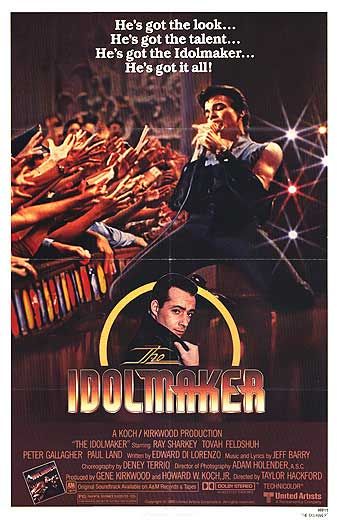
Idolmaker

The Idolmaker (1980, directed by Taylor Hackford)

The Idolmaker is a movie that asks the question, “What does it take to be a star?  Who is more interesting, the Svengalis or the Trilbys?”  The year is 1959 and Vinny Vacari (Ray Sharkey, who won a Golden Globe for his performance but don’t let that dissuade you from seeing the movie) is a local kid from New Jersey who dreams of being a star.  He has got the talent.  He has got the ambition and he has got the media savvy.  He also has a receding hairline and a face like a porcupine.

Realizing that someone who looks like him is never going to make hundreds of teenage girls all scream at once, Vinny instead becomes a starmaker.  With the help of his girlfriend, teen mag editor Brenda (Tovah Feldshuh) and a little payola, he turns saxophone player Tomaso DeLorussa into teen idol Tommy Dee.  When Tommy Dee becomes a star and leaves his mentor, Vinny takes a shy waiter named Guido (Peter Gallagher) and turns him into a Neil Diamond-style crooner named Cesare.  Destined to always be  abandoned by the stars that he creates, Vinny continually ends up back in the same Jersey dive, performing his own songs with piano accompaniment.

The Idolmaker is a nostalgic look at rock and roll in the years between Elvis’s induction into the Army and the British invasion.  The Idolmaker has some slow spots but Ray Sharkey is great in the role of Vinny and the film’s look at what goes on behind the scenes of stardom is always interesting.  In the movie’s best scene, Tommy performs in front of an audience of screaming teenagers while Vinny mimics his exact moments backstage.

Vinny was based on real-life rock promoter and manager, Bob Marcucci.  Marcucci was responsible for launching the careers of both Frankie Avalon and Fabian Forte.  Marcucci served as an executive producer on The Idolmaker, which probably explains why this is the rare rock film in which the manager is more sympathetic than the musicians.

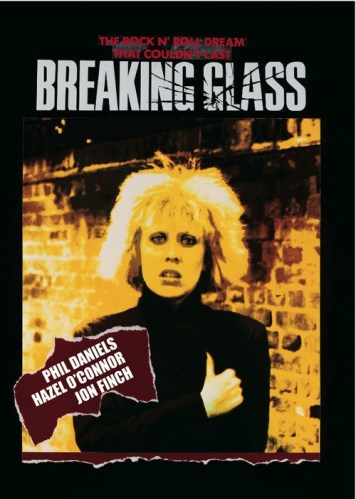
breakglass_lrg

Breaking Glass (1980, directed by Brian Gibson)

At the same time that The Idolmaker was providing American audiences with a look at life behind-the-scenes of music stardom, Breaking Glass was doing the same thing for British audiences.

In Breaking Glass, the idolmaker is Danny (Phil Daniels, who also starred in Quadrophenia) and his star is an angry New Wave singer named Kate (Hazel O’Connor).  Danny first spots Kate while she is putting up flyers promoting herself and her band and talks her into allowing him to mange her.  At first, Kate refuses to compromise either her beliefs or her lyrics but that is before she starts to get famous.  The bigger a star she becomes, the more distant she becomes from Danny and her old life and the less control she has over what her music says.  While her new fans scare her by all trying to dress and look like her, Kate’s old fans accuse her of selling out.

http://www.youtube.com/watch?v=8ALdL8oV_sY

As a performer, Hazel O’Connor can be an acquired taste and how you feel about Breaking Glass will depend on how much tolerance you have for her and her music.  (She wrote and composed all of the songs here.)  Breaking Glass does provide an interesting look at post-punk London and Jonathan Pryce gives a good performance as a sax player with a heroin addiction.

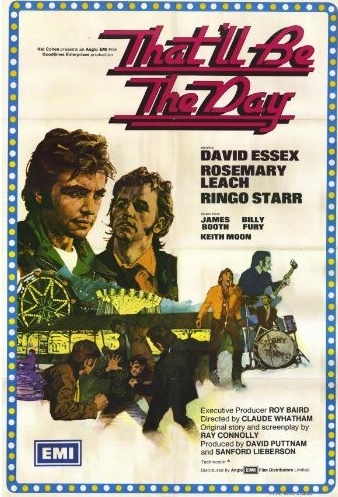
thatll-be-the-day-poster

That’ll Be The Day (1973, directed by Claude Whatham)

Real-life teen idol David Essex plays Jim MacClaine, a teenager in 1958 who blows off his university exams and runs away to the Isle of Wright.  He goes from renting deckchairs at a resort to being a barman to working as a carny.  He lives in squalor, has lots of sex, and constantly listens to rock and roll.  Eventually, when he has no other choice, he does return home and works in his mother’s shop.  He gets married and has a son but still finds himself tempted to abandon his family (just as his father previously abandoned him) and pursue his dreams of stardom.

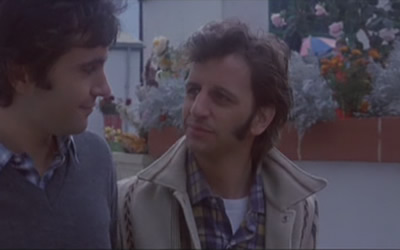
David Essex and Ringo Starr

Based loosely on the early life of John Lennon, the tough and gritty That’ll Be The Day is more of a British kitchen sink character study than a traditional rock and roll film but rock fans will still find the film interesting because of its great soundtrack of late 50s rock and roll and a cast that is full of musical luminaries who actually lived through and survived the era.  Billy Fury and the Who’s Keith Moon both appear in small roles.  Mike, Jim’s mentor and best friend, is played by Ringo Starr who, of all the Beatles, was always the best actor.

That’ll Be The Day ends on a downbeat note but it does leave the story open for a sequel.

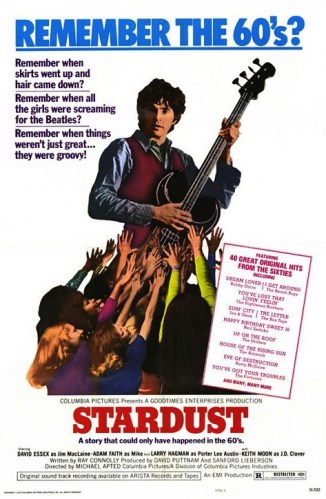
stardust-1

Stardust (1974, directed by Michael Apted)

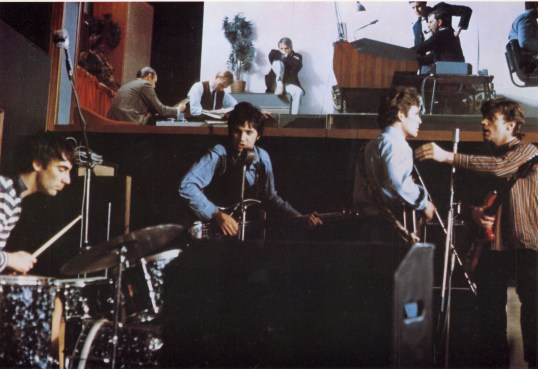
Stardust continues the story of Jim MacClaine.  Jim hires his old friend Mike (Adam Faith, replacing Ringo Starr) to manage a band that he is in, The Straycats (which includes Keith Moon, playing a far more prominent role here than in That’ll Be the Day).  With the help of Mike’s business savvy, The Stray Cats find early success and are signed to a record deal by eccentric Texas millionaire, Porter Lee Austin (Larry Hagman, playing an early version of J.R. Ewing).

When he becomes the breakout star of the group, Jim starts to overindulge in drugs, groupies, and everything that goes with being a superstar.  Having alienated both Mike and the rest of the group, Jim ends up as a recluse living in a Spanish castle.  Even worse, he gives into his own ego and writes a rock opera, Dea Sancta, which is reminiscent of the absolute worst of progressive rock.  Watching Jim perform Dea Sancta, you understand why, just a few years later, Johnny Rotten would be wearing a homemade “Pink Floyd Sucks” t-shirt.

Stardust works best as a sad-eyed look back at the lost promise of the 1960s and its music.  Watch the movie and then ask yourself, “So, do you really want to be a rock and roll star?”

21494_2