“Is there anything better than punching somebody in the face who’s got it coming?” — Braxton
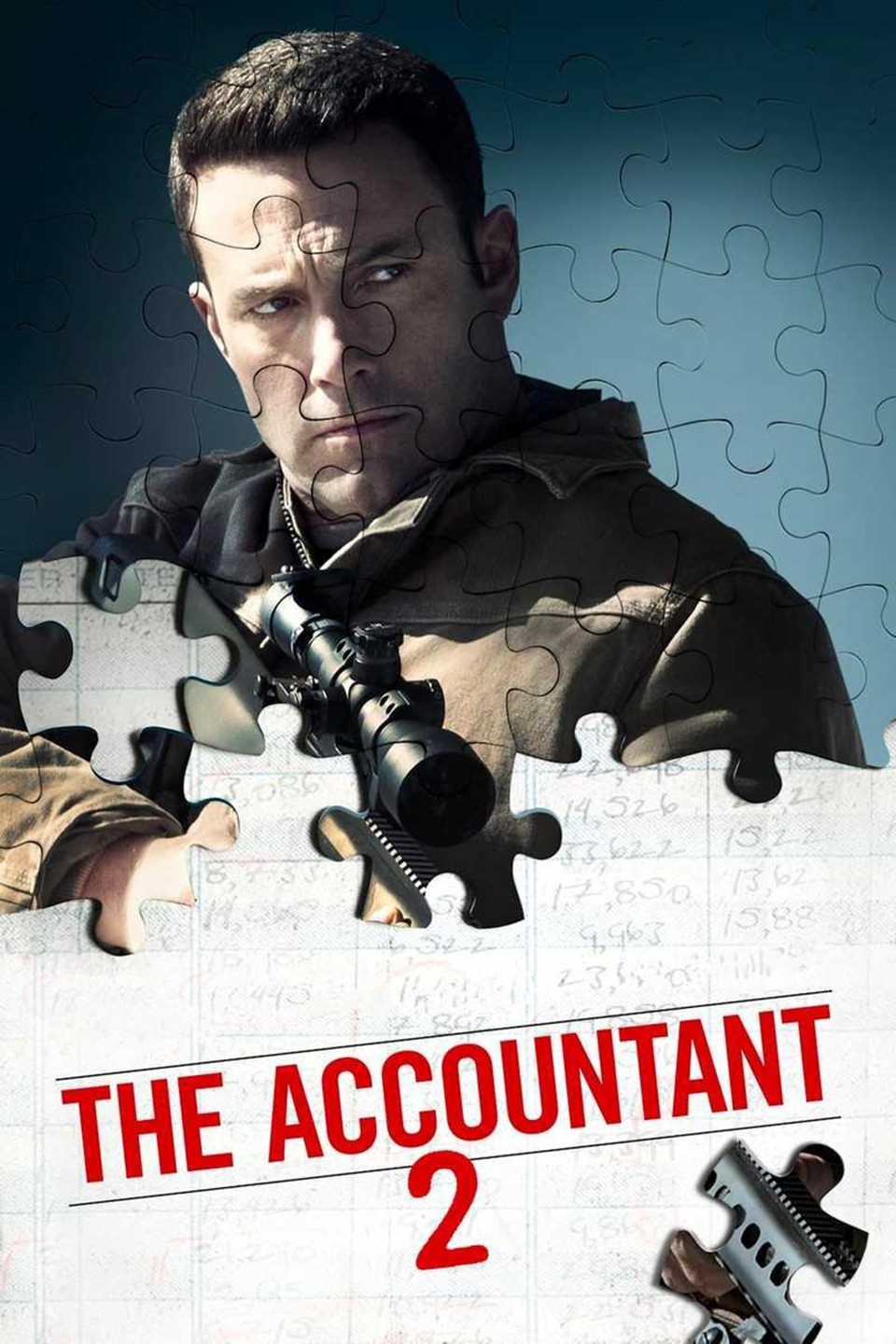
The Accountant 2 plunges back into the offbeat world of Christian Wolff, Ben Affleck’s autistic accounting savant who wields a calculator and a combat prowess with equal deadliness. Directed by Gavin O’Connor, the sequel reunites Christian with his wayward brother Braxton (Jon Bernthal) as they unravel a conspiracy triggered by the murder of FinCEN director Raymond King (J.K. Simmons), pulling in agent Marybeth Medina (Cynthia Addai-Robinson) for a tense alliance. It cranks up the action and brotherly banter from the 2016 original, delivering bursts of gritty fun, but bogs down in bloated plotting and uneven tone that dilute its punchy premise.
The story explodes open with King’s brutal assassination, his dying message—”find the accountant”—dragging Christian out of his trailer-bound solitude. Medina taps Wolff’s uncanny financial insight to sift through King’s jumbled clues, tracing a trail from a pizza parlor’s money-laundering scheme to a vicious human trafficking ring straddling the Juarez border. A sleek assassin named Anaïs (Daniella Pineda) haunts the edges, her fragmented memories linking to Christian’s murky history, while Braxton joins for brawn and levity, transforming the probe into a chaotic sibling odyssey. The narrative sprawls across factories, motels, and hacker dens, blending forensic number-crunching with explosive confrontations, though it piles on subplots—like selfie-stalking tech whizzes and cartel infighting—that strain coherence without sharp resolutions.
Affleck deepens Christian’s portrayal, blending rigid logic with flashes of wry humor that feel more lived-in than the first film’s stiffness. He shines in quirky beats, like speed-dating disasters fueled by probabilistic algorithms or spotting fiscal fraud in pizza dough sales, then enforcing confessions with a vicious finger-twist. Yet the character teeters into trope territory, his neurodivergence often serving as shorthand for unstoppable violence rather than a nuanced lens on isolation. Bernthal dominates as Braxton, his raw charisma and emotional cracks—vulnerable confessions evolving into rowdy bar dances teaching Christian social flow—infuse the film with infectious warmth. Their rooftop schemes and escort-aided stakeouts pulse with buddy-movie spark, a major merit that carries weaker stretches.
Action remains the film’s powerhouse, surpassing the original in raw ferocity if not elegance. The pizza factory brawl erupts from interrogation into a whirlwind of pipes, knives, and improvised carnage, while garage pursuits and a border compound siege unleash R-rated savagery—precise headshots, joint-snapping grapples, even a sniper duel echoing thriller classics. O’Connor’s practical stuntwork and sweaty cinematography ground the chaos effectively, with a throbbing score that heightens tension without flash. These sequences thrill, but the climax devolves into a generic bullet storm, missing the original warehouse fight’s balletic intimacy, and the 132-minute runtime drags amid repetitive cop-agenta standoffs.
Medina’s arc offers steady grit, as Addai-Robinson charts her shift from protocol-bound skeptic to off-book partner, her rapport with Christian adding subtle friction to the bromance. Simmons maximizes his opener, fending off thugs in a dive bar before a fatal shot, nailing a tone of immediate peril. Pineda’s Anaïs cuts a striking figure—poised killer grappling with resurfaced trauma—but her threat fizzles, undermined by sparse buildup and a rushed tie-in to the brothers’ past. Lesser foes like the greasy pizza kingpin or border thug Tomas propel the plot competently yet forgettably, while Christian’s handler Justine (Annie Oosterom) doles out remote wisdom that’s underutilized.
At its core, The Accountant 2 wrestles with family bonds and hidden pains, pitting Christian’s analytical shell against Braxton’s impulsive soul in redemption-tinged flashbacks. Lighter quirks—honky-tonk flirtations, cat cameos, goofy T-shirts—humanize without diluting the edge, crafting a playful hyperviolence that charms in detours like smart-home hacks gone absurd. These merits shine brightest in hangout vibes, where meandering chats and line dances breathe life into the formula. Failures creep in through diluted quirks: the accounting genius takes a backseat to rote crime-thriller beats, cartel clichés overwhelm the fresh oddity, and pacing lurches from taut kills to listless exposition.
Technical craft holds firm, with O’Connor’s no-frills visuals capturing industrial grime and motel seediness, favoring tangible impacts over CGI gloss. The R-rating justifies itself via unflinching gore and profanity, satisfying gorehounds, though humor occasionally jars—like trailer quips amid slaughter—disrupting tonal balance. Compared to the debut’s sleeper surprise, this entry coasts on familiarity, expanding the Wolff mythos with teases of future clashes but lacking the tight ingenuity that sparked cult love.
The Accountant 2 succeeds as a rowdy sequel when leaning on its stars’ chemistry, visceral fights, and odd-couple heart, making it a blast for action cravings. It falters, however, in overreaching scope, diluting Christian’s uniqueness amid familiar shadows and slack momentum. Solid for fans seeking sibling sparks and calculated brutality, it lands as entertaining excess rather than essential evolution—catch it for the highs, forgive the math that doesn’t quite balance.
 Through the Shattered Lens