Incident at Phantom Hill (1966, directed by Earl Bellamy)


During the final weeks of the Civil War, a group of Confederates, led by Joe Barlow (Dan Duryea,) hijacked a shipment of Union gold and buried it near Phantom Hill, Texas. Now that the war is over and Barlow is in custody, he makes an offer. He’ll lead the government to the gold in return for a pardon. Needing the money, the government agrees to Barlow’s conditions. A group of Cavalrymen, led by Matt Martin (Robert Fuller), are ordered to accompany Barlow to Phantom Hill and retrieve the gold. Because the gold itself is buried near Comanche territory, the men will be traveling undercover. If Martin and his men are captured or killed, the U.S. government will disavow any knowledge of the them. Cue the Mission Impossible theme.

It’s an eventful journey to Phantom Hill. When a local sheriff recognizes Barlow as a wanted criminal, Martin has to convince him not to kill Barlow. The sheriff agrees, on the condition that Martin and his men escort a prostitute named Memphis (Jocelyn Lane) out of town. When a group of outlaws discover that Martin and Barlow are heading for the gold, they take off after them. Meanwhile, Barlow has a few plans of his own.

Incident at Phantom Hill is a fast-moving B-western, the type that will be appreciated by fans of the genre. There are a few good shootouts. Jocelyn Lane is beautiful as Memphis, Robert Fuller is firm at Matt Martin, and Dan Duryea is dangerous as Joe Barlow. The outlaws are unusually cruel and the scene where the kill a comic relief character was probably shocking for 1966. The most interesting thing about the movie is its portrayal of Union officers working with former Confederates and the struggle to determine where everyone fits in now that the Civil War is over. Barlow is not to be trusted by the relationship between Memphis and Matt suggests that the country can come back together as long as everyone has a common enemy that needs to be defeated.


Fever Dreams: Fritz Lang’s THE WOMAN IN THE WINDOW (RKO/International Pictures 1944)


gary loggins's avatarcracked rear viewer

Back in 2016, I did a post expounding on one of my favorite films noir, 1945’s SCARLET STREET . This dark masterpiece of corruption starred the titanic trio of Edward G. Robinson, Joan Bennett, and Dan Duryea in a sordid tale directed by German legend Fritz Lang, with moody cinematography courtesy of Milton Krasner. Recently, I viewed a film this team made the year previous, THE WOMAN IN THE WINDOW, with a screenplay by producer Nunnally Johnson. Comparisons were inevitable, but though there are certainly similarities between the two films, this one stands on its own as a powerful entry in the film noir canon. With all that talent, would you expect anything less?

Robinson plays college professor Richard Wanley, an intellectual lecturing on the psychology of homicide to his students. He’s a happily married father of two kids, left alone while the fam visits relatives. Whaley goes to his…

View original post 405 more words

Christmas-tery: Deanna Durbin in LADY ON A TRAIN (Universal 1945)


gary loggins's avatarcracked rear viewer

Deanna Durbin was the best Christmas present Universal Studios ever received. The 15-year-old singing sensation made her feature debut in 1936’s THREE SMART GIRLS, released five days before Christmas. The smash hit helped save cash-strapped Universal from bankruptcy, and Miss Durbin signed a long-term contract, appearing in a string of musical successes: ONE HUNDRED MEN AND A GIRL, THAT CERTAIN AGE, SPRING PARADE, NICE GIRL?, IT STARTED WITH EVE. One of her best is the Christmas themed comedy/murder mystery LADY ON A TRAIN, one of only two films directed by  Charles David, who married the star in 1950, the couple then retiring to his native France.

Our story begins with young Nikki Collins travelling by train from San Francisco to New York City to visit her Aunt Martha, reading a murder mystery to pass the time. Nikki witnesses a real-life murder committed through a window, and after ditching her wealthy…

View original post 579 more words

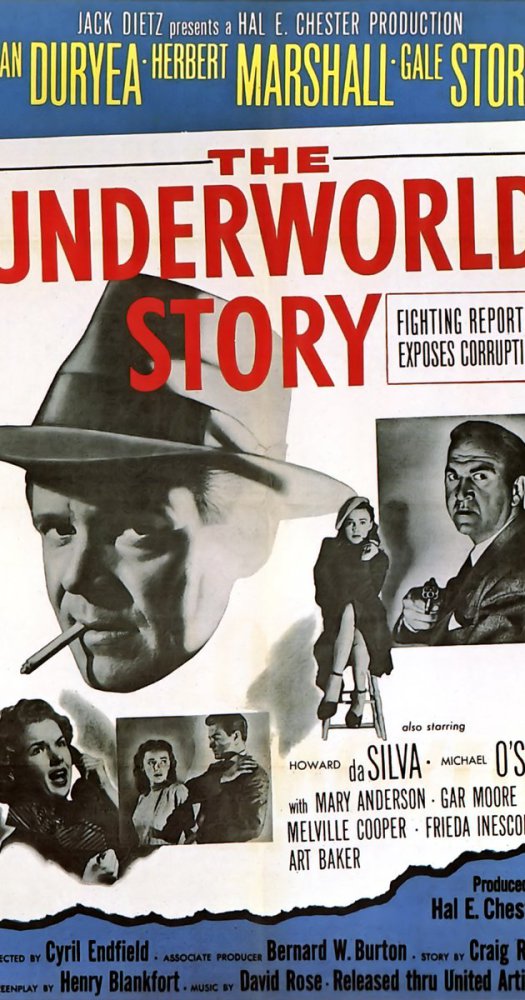
Heel with a Heart: Dan Duryea in THE UNDERWORLD STORY (United Artists 1950)


gary loggins's avatarcracked rear viewer

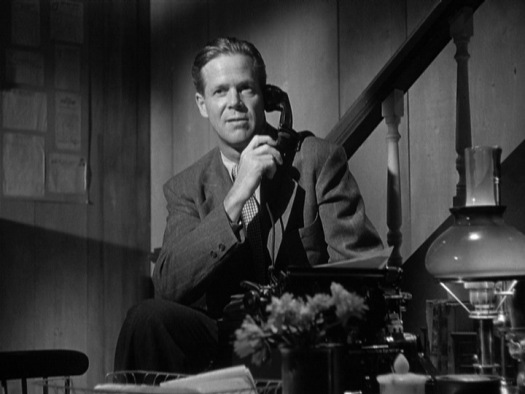
Hollywood’s favorite heel Dan Duryea got a rare starring role in THE UNDERWORLD STORY, a 1950 crime drama in which he plays… you guessed it, a heel! But this heel redeems himself at the film’s conclusion, and Duryea even wins the girl. Since that girl is played by my not-so-secret crush Gale Storm , you just know I had to watch this one!

The part of muckraking tabloid journalist Mike Reese is tailor-made for Duryea’s sleazy charms. He’s a big-city reporter who breaks a story about gangster Turk Meyers spilling to the D.A., resulting in the thug ending up murdered on the courthouse steps in a hail of bullets. DA Ralph Monroe (Michael O’Shea )  puts the pressure on Mike’s editor, and Reese becomes persona non grata in the newspaper game. Seeing an ad for a partner at a small town newspaper, Mike gets a $5,000 “loan” from crime boss Carl…

View original post 451 more words

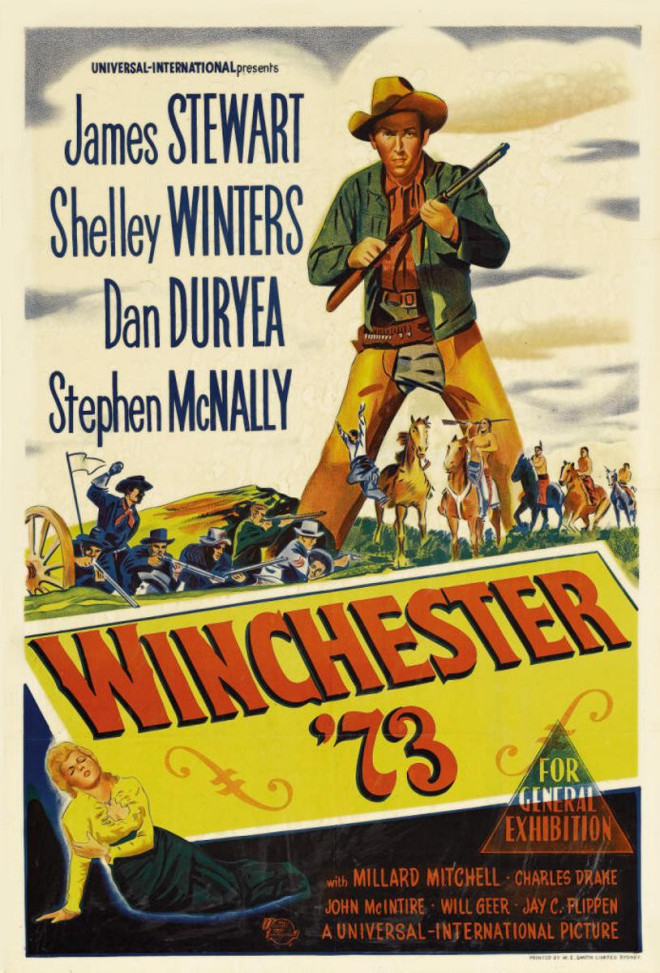
Dark Western Sky: James Stewart in WINCHESTER ’73 (Universal-International 1950)


gary loggins's avatarcracked rear viewer

James Stewart  and Anthony Mann made the first of their eight collaborations together with the Western WINCHESTER ’73, a film that helped change both their careers. Nice guy Stewart, Hollywood’s Everyman in Frank Capra movies like MR. SMITH GOES TO WASHINGTON and IT’S A WONDERFUL LIFE, took on a more mature, harder-edged persona as Lin McAdam, hunting down the man who killed his father, Dutch Henry Brown (Stephen McNally ). As for Mann, after years of grinding out B-movie noir masterpieces (T-MEN, RAW DEAL ), WINCHESTER ’73 put him on the map as one of the 1950’s top-drawer directors.

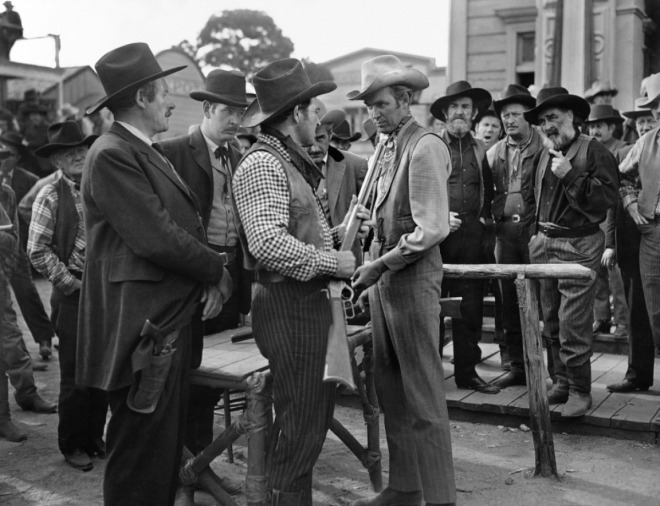
The rifle of the title is the movie’s McGuffin, a tool to hold the story together. When McAdam and his friend High Spade (the always welcome character actor Millard Mitchell) track Dutch Henry to Dodge City, the two mortal enemies engage in a shooting contest judged by none other than Wyatt Earp (Will Geer)…

View original post 465 more words

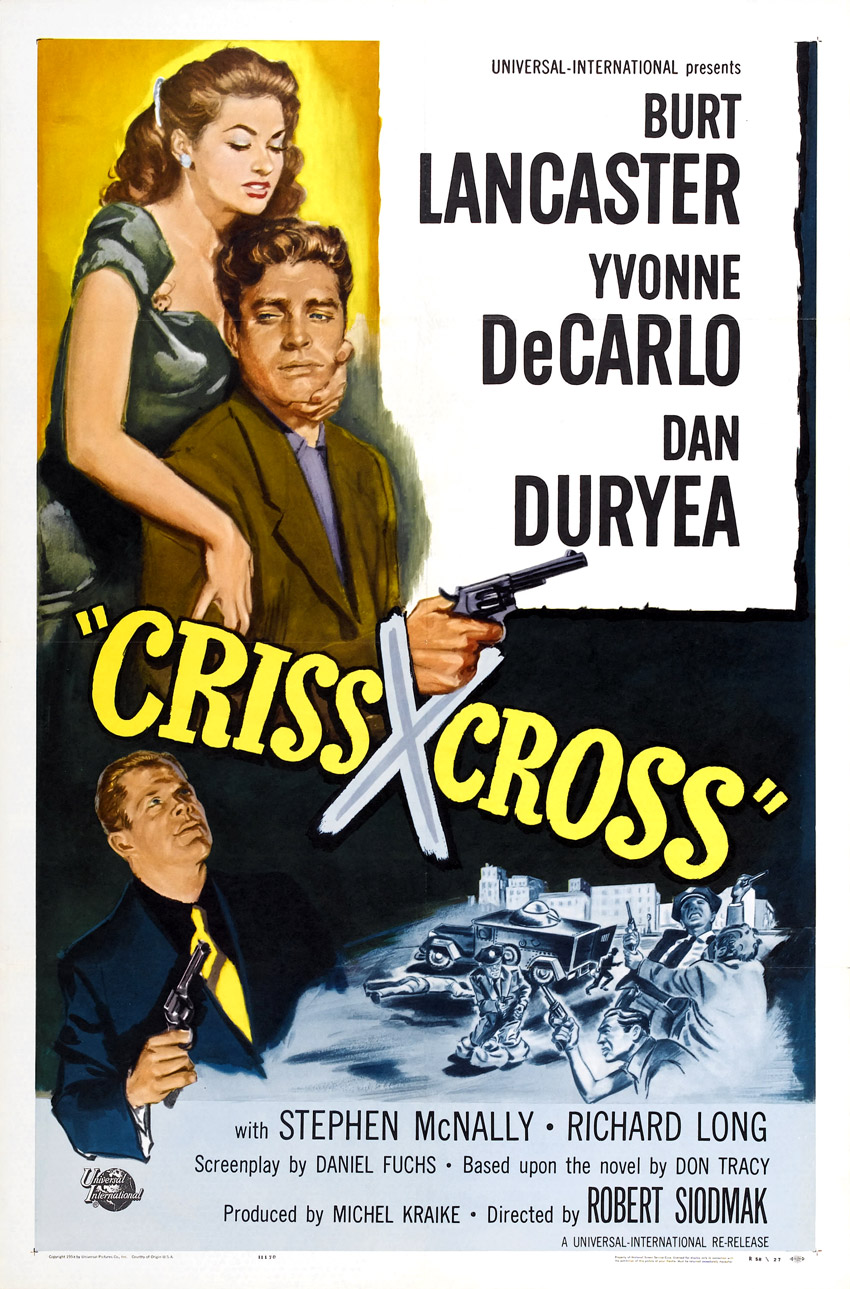
A Bout De Souffle: Robert Siodmak’s CRISS CROSS (Universal-International 1949)


gary loggins's avatarcracked rear viewer

cc1

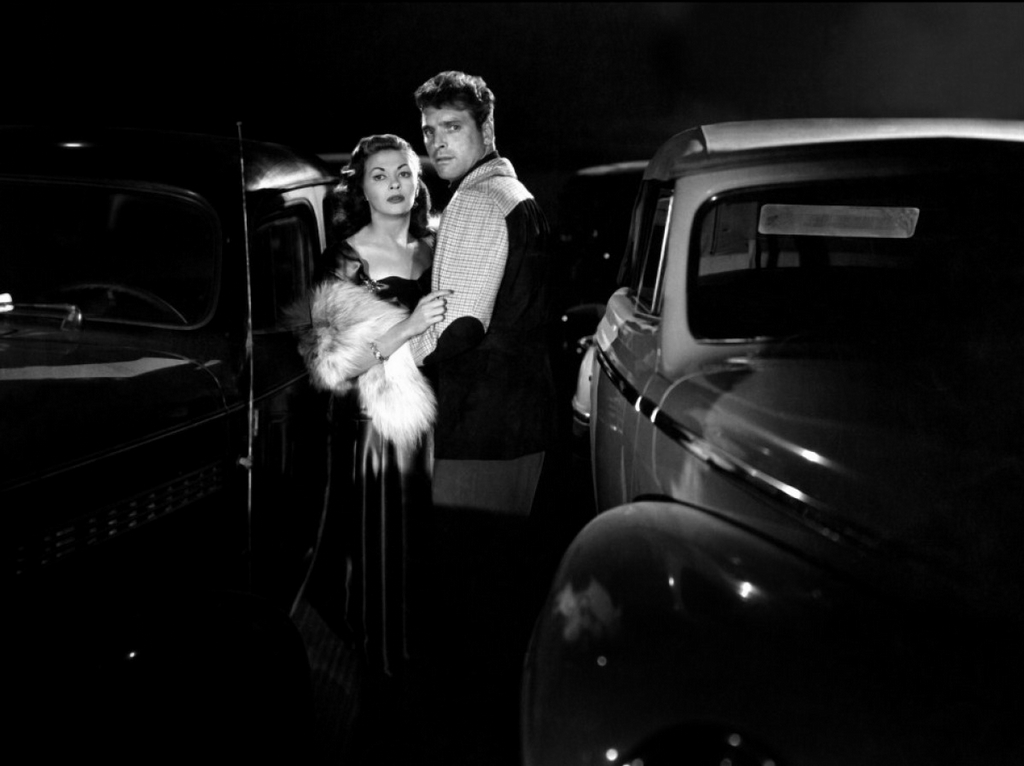
CRISS CROSS hits you like a sucker punch to the gut, delivered hard and swift, followed by a non-stop pummeling that doesn’t let up until the final, fatal shot. Things kick right in as we find clandestine lovers Steve Thompson and Anna Dundee going at it hot’n’heavy in a nightclub parking lot. They go inside, and Steve gets into it with Anna’s husband, the gangster Slim Dundee, who pulls a knife, but the fight’s interrupted by Lt. Pete Rameriz, Steve’s boyhood pal. What Pete doesn’t know is the fight was staged for his benefit: Steve is the inside man on a planned armored car heist Dundee’s gang is pulling off.

cc3

Flashbacks tell us how Steve got here: he was once married to Anna, and after the volatile couple divorced left L.A., drifting across country picking up odd jobs along the way. Returning to the City of Angels, he finds himself…

View original post 555 more words

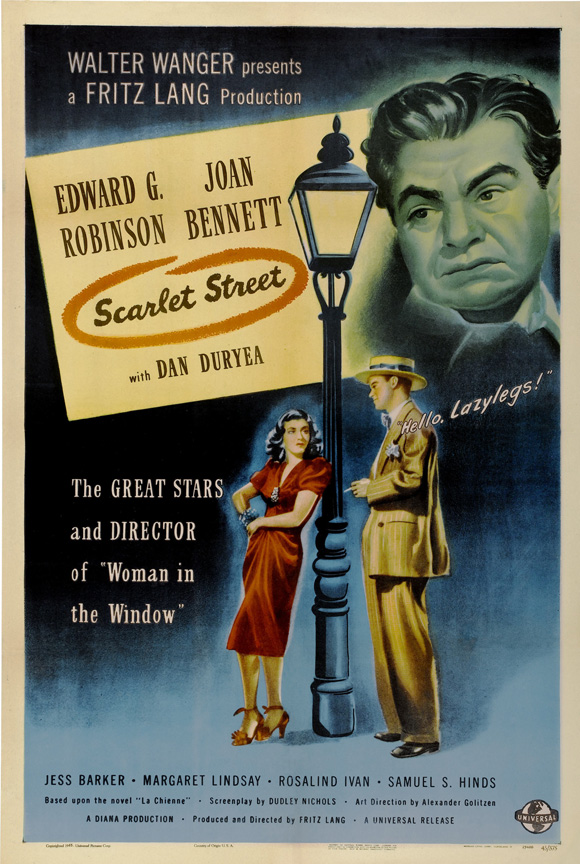
The Art of Noir: Fritz Lang’s SCARLET STREET (Universal 1945)


gary loggins's avatarcracked rear viewer

scarlet1

One of my favorite movies of any genre has always been SCARLET STREET. I used to watch the grainy Public Domain print on my local cable access channel over and over. When I saw that TCM was running the film last October, I recorded it for future reference, as I was in the midst of my “Halloween Havoc” marathon. I finally got the chance recently to sit down and enjoy this beautiful, crispy clear print and watch the film as it was meant to be seen.

scarlet2

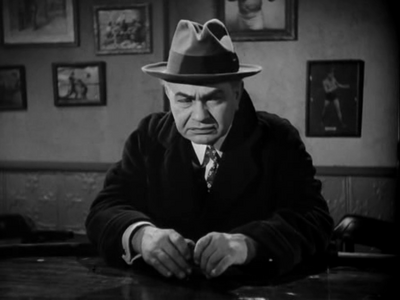
Meek, mousey cashier Christopher Cross receives a gold watch at a party honoring his 25 years of service to J.J. Hogarth’s company. Chris has done his boring, repetitious job without complaint, though his dream has always to be a successful painter. When Hogarth leaves the party, Chris watches him get into a car with a pretty young girl. Walking home with friend and co-worker Pringle, Chris muses aloud what it would be like…

View original post 502 more words

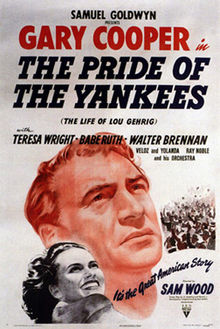
Lisa Reviews An Oscar Nominee: The Pride of the Yankees (dir by Sam Wood)


220px-The_Pride_Of_The_Yankees_1942

“People all say that I’ve had a bad break. But today … today, I consider myself the luckiest man on the face of the Earth.”

— Lou Gehrig (Gary Cooper) at the end of The Pride of the Yankees (1943)

After airing Foreign Correspondent earlier tonight, TCM followed up by showing the 1943 best picture nominee, The Pride of the Yankees.  Knowing that Pride of the Yankees was going to be a baseball film and that I know next to nothing about baseball, I recruited my sister, the Dazzling Erin, to watch the movie with me.  Erin loves baseball and I knew that she would be able to explain anything that went over my head.

Well, I absolutely loved watching this movie with my sister but it turns out that The Pride of the Yankees isn’t really much of a baseball movie.  True, it’s about a real life baseball player.  Several actual players appeared as themselves.  About 85% of the film’s dialogue deals with baseball and probably about 70% of the film features characters playing some form of the game.  But the film never goes into any great detail about baseball or how it’s played.  There’s no talk of strategy or rules or deeper meaning or anything else.  Going into the film, I knew that baseball was a game that involved throwing, swinging bats, and running.  And it turns out that was all that I needed to know.

The Pride of the Yankees is less about baseball and more about celebrity.  It’s a biopic of Lou Gehrig, who today is best known for his battle with ALS, a disease that is also known as Lou Gehrig’s disease.  Lou Gehrig died on June 2, 1941 and The Pride of the Yankees was released just a year later.  Watching the film, it’s obvious that Gehrig was a beloved figure, the type of celebrity who, if he were alive today, would probably be the center of stories like, “Lou Gehrig Did Something This Weekend And It Was Perfect.”  Watching the film, it easy to imagine how traumatic it must have been for the nation when a beloved athlete like Lou Gehrig died at the age of 37.

As a result, The Pride of the Yankees is less a biopic and more a case for canonization.  From the minute that the film’s Lou Gehrig appears on-screen, he is presented as being the type of saintly athlete who, by promising to hit two home runs in one game, inspires a crippled child to walk.  Lou is modest, kind, unpretentious, and never gets angry.  Over the course of the film, he takes care of his mother, displays a worthy work ethic, and marries Eleanor.  He and Eleanor have a perfect marriage without a single argument or a hint of trouble, except for the fact that Lou sometimes gets so busy playing baseball with the local children that he’s late coming home.  There’s not a hint of sadness in their life, until Lou suddenly gets sick.

And really, it should not work.  If ever there’s ever been a film that should be painfully out-of-place in our more cynical times, it would be The Pride of the Yankees.  However, the film still works because Lou is played by Gary Cooper and Eleanor is played by Teresa Wright.  These two excellent performers bring their considerable talents to making overly sentimental scenes feel credible.  Gary Cooper was 40 years old when he made The Pride of the Yankees and there’s a few scenes — especially the ones where Lou is supposed to be a student at Columbia University — where Cooper is clearly too old for the role.  But, for the most part, Gary Cooper did a great job as Lou Gehrig.  Cooper is especially memorable when Lou first starts to show signs of being ill.  Watching Lou struggle to swing a bat, I was reminded of a horse struggling to stand on an injured leg.  It was almost painfully poignant.

The Pride of the Yankees was nominated for 11 Academy Awards, including best picture.  However, it lost to another sentimental film that featured Teresa Wright, Mrs. Miniver.

Horror on TV: The Twilight Zone 1.3 “Mr. Denton on Doomsday”


TheTwilightZoneLogo


On tonight’s episode of The Twilight Zone, Al Denton (Dan Duryea) used to be a notorious old west gunfighter. Now, haunted as the result of killing a teenage boy, Mr. Denton is just the town drunk. However, a salesman subtly named Henry J. Fate (Malcolm Atterbury) comes into town and gives Denton the chance to once again be great. Of course, it all comes with a price and a lesson.


Originally aired on October 16th, 1959, Mr. Denton on Doomsday is one of the earlier episodes of The Twilight Zone. Today, it’s perhaps most interesting for its message of anti-violence. Myself,I just like it because I went to college in Denton, Texas.


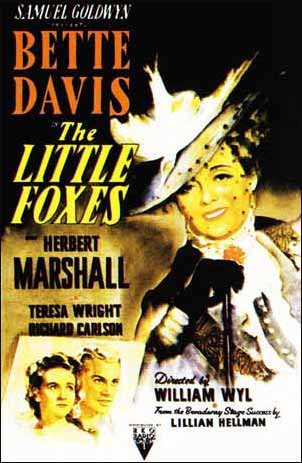
Lisa Watches An Oscar Nominee: The Little Foxes (dir by William Wyler)


Little_foxesThat Bette Davis was an amazingly talented actress is something that we all already know.

However, she has become such an iconic figure that I think that it’s easy to forget just how versatile she could be.  She was ferocious in Of Human Bondage.  She was poignant in Dark Victory.  She was majestic in All About Eve.  Even when she eventually ended up appearing in stuff like Burnt Offerings, she still managed to command the screen.  Of course, nobody played evil with quite the style and power as Bette Davis at her prime.  And if you ever have any doubt about that fact, I would suggest watching the 1941 Best Picture nominee, The Little Foxes.

Based on a play by Lillian Hellman, The Little Foxes is a dark Southern melodrama that takes place in 1900.  The once mighty Hubbard Family has fallen on hard times.  Brothers Benjamin (Charles Dingle) and Oscar (Carl Benton Reid) have inherited their father’s money and Oscar has made himself even more wealthy by marrying the poignant alcoholic Birdie (Patricia Collinge).  However, when Oscar and Benjamin decide that they want to build a cotton mill, they discover that, even with their own fortunes, they are still $75,000 short.

They turn to their sister, Regina (Bette Davis).  As quickly becomes obvious, Regina is a hundred times more intelligent and clever than either one of her brothers.  However, because she’s a woman, Regina was not considered to be a legal heir to their father’s fortune.  As a result, after his death, she was left penniless.  In order to survive, Regina had to marry the wealthy but sickly Horace (Herbert Marshall).  When Regina asks Horace for the $75,000, Horace refuses.  He wants nothing to do with either one of her brothers.

With the reluctant help of Oscar’s son, Leo (Dan Duryea), the brothers steal the money straight from Horace’s bank account.  Regina, however, finds out about the theft and schemes to blackmail her two brothers….

For the majority of the film, you are totally on Regina’s side.  Despite the fact that Regina is ruthless and obviously taking advantage of Horace’s weakened state, you find yourself making excuses for her.  Her brothers are both so sleazy and greedy and Regina is so much smarter than her idiotic siblings that the film occasionally feels like a dark comedy.  It’s fun watching her get the better of them and you find yourself assuming (and hoping) that Regina will somehow be redeemed by the end of the movie.

And then it happens.

Aware of both Regina’s scheme and the fact that she never loved him, Horace announces that he’s going to change his will and he’s going to leave his entire fortune to their daughter, Alexandra (Teresa Wright, in her Oscar-nominated film debut).  He also tells Reginia that he’s going to say that he lent Leo the money, which would make it impossible for her blackmail scheme to work.

It’s while they’re arguing that Horace suddenly suffers a heart attack.  And as Horace struggles to climb up a staircase so that he can get his medicine, Regina calmly sits in a chair and shows not a hint of emotion as he dies.  It’s such an unexpected and effective moment, largely because Bette Davis’s performance was so good that it kept both the viewer and Horace from realizing just how monstrous Regina truly was.

It’s hard to think of any contemporary actress who could so totally and believably embody a character of Regina Gibbons.  It takes courage to commit so fully to playing such an evil and hateful character.  Bette Davis had that courage and her performance alone makes The Little Foxes worth watching.