It’s a lonely Saturday here at the TSL Bunker. Leonard Wilson is at a theater in the city, watching Chernobyl Diaries. My sister, the Dazzling Erin, has abandoned me to go shopping for ingredients so she can make something later tonight for our family’s annual memorial day get together tomorrow and our cat, Doc, is too busy sleeping at the foot of my bed to pay much attention to me Probably even as I sit here typing this, Leon the Duke is watching season 3 of Lost and how I envy him! The Trash Film Guru has escaped to the grindhouse. Necromoonyeti is discovering new music, Pantsukudasai is undoubtedly meeting with his enigmatic anime connection, Semtex Skittle is playing Diablo Something-Or-Another, and SenorGeekus is off spreading the gospel of Jack Kirby. Even Arleigh is off somewhere else, watching a war movie no doubt.
Yes, I’ve been left here alone in my section of the Bunker, which I’ve decorated by utilizing a combination of Catholic iconography, Hello Kitty, and pink wallpaper. I should be working on getting caught up because I am running behind on meeting my quota for the month. However, instead of writing about what’s currently playing in a theater near you, I find myself once again distracted by my continuing mission to watch and review every single film included in Mill Creek’s 50 Chilling Classics Boxset. Fortunately, I’m happiest when I have a mission. Here are reviews of 6 more of the Chilling Classics that I’ve sat through.

The Cold (dir by Bill Rebane)
First released in 1984, The Cold is yet another odd little morality tale from Wisconsin-based filmmaker Bill Rebane. Three mysterious millionaires invite nine people (and just try to keep them all straight) to a secluded mansion that looks suspiciously like an EconoLodge. The nine guests are informed that if they spend a few nights at the “mansion” and face their greatest fears, they’ll win a million dollars. Of course, everyone agrees to do that but how could they have imagined that their fears would include a giant spider that shows up in soup bowl, a shark that shows up in a swimming pool (Agck! That would be my fear right there), rats, and people who wander around hallways while wearing white sheets. Of course, it all ends with a twist that you’ve already guessed and then the film introduces another twist that you’ve already guessed.
This is the third Rebane film that I’ve come across in the Chilling Classic Boxset (the previous two being The Alpha Incident and The Demons of Ludlow). Rebane is one of those odd directors whose uneven films are genuinely inept and yet occasionally show a flash of equally genuine imagination. The Cold is a complete and total mess that features bad acting (after 5 minutes, I’d had enough of the slow-witted girl with the bad Southern accent), bad dialogue (“You can’t come in here. I’m nude.” “Don’t worry, I’ve had a vasectomy”), and a truly incoherent style of editing. Rebane punctuates the action by including random snatches of old timey music and boy did that get irritating fast. And yet, once you start watching, it’s impossible to look away. You simply have to watch to convince yourself that what you’re seeing isn’t just a dream. Plus, the film includes not only an endless disco sequence but a narrator who admits that he can’t really follow the story either.
 Dr. Tarr’s Torture Dungeon (dir by Juan Lopez Moctezuma)
This Mexican film from 1972 is based on an Edgar Allan Poe short story and, despite the poor picture quality that we’ve come to expect from anything put out by Mill Creek, it is one of the most visually interesting films to be found in the Chilling Classics boxset. A newspaper reporter visits a sanitarium in order to investigate the revolutionary form of therapy practiced by Dr. Maillard (Claudio Brook). As Maillard explains (and sh0ws), the inmates are essentially allowed to roam freely through the asylum and live under whatever delusions make them happiest. However, it quickly becomes obvious that Dr. Maillard is insane himself and his asylum is part of a bigger plot to rule the world. The plot makes little sense and it quickly becomes pretty clear that it’s not meant too. Director Juan Louis Moctezuma was a collaborator of the famed surrealist Alejandro Jadorowsky and it quickly becomes obvious that he’s more interested in putting as many odd and surreal images on-screen as possible and, on that level, he succeeds. For whatever the film’s narrative failings, it’s fascinating to just sit and look at some of the images that appear on-screen. Claudio Brook gives a wonderfully over-the-top performance that perfectly compliments the film’s visuals.
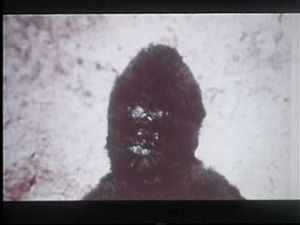
The Legend of Big Foot (dir by Harry Winer)
In this documentary from 1976, a wildlife expert named Ivan Marx rambles on and on about Big Foot while unrelated stock footage plays out on-screen. It’s just as exciting as it sounds. Seriously, I try to make it a point to stick with any film I start watching, no matter how boring it may turn out to be, but the Legend of Big Foot severely tested my patience. Some of the animals in the stock footage are cute, though. Regardless of what he may be discussing at any particular moment during the film, Marx delivers his narration in the most dramatic way possible and that provides a few laughs as well.
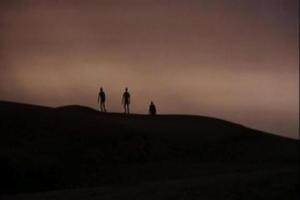
Oasis of the Zombies (dir. by Jess Franco)
In this 1981 Eurocine film, a group of unlikable people come across a lost Nazi treasure in the middle of the African desert. Unfortunately for them, the Nazis are still there, standing guard. Of course, the Nazis have now all been transformed into zombies! As far as Nazi zombie films are concerned, Oasis of the Zombies isn’t as scary as Shock Waves and it’s not as much fun as Zombie Lake. What it is, however, is a Jess Franco film which means that the film features actors in tacky outfits, poorly dubbed dialogue, a zoom lens that just won’t quit, and a few oddly surreal (and occasionally nightmarish) visuals. This is really a pretty shoddy film but it’s enjoyable if you’re a fan of Franco’s “unique” style of filmmaking.

Slashed Dreams (dir. by James Polaskof)
This film was originally released in 1974, under the title Sunburst. It was obviously not meant to be a horror film (though it was clearly meant to appeal to the exploitation market) but instead, it was a painfully sincere, annoyingly naive, and, ultimately, rather offensive attempt to make an important statement about the need to drop out of society and “do your own thing.” However, Robert Englund shows up for the film’s final 10 minutes so, at some point in the 80s, Sunburst was re-released, retitled, and resold as a horror film.
Anyway, this 74 minute film is about two perky and attractive college students (Peter Hooten and Katharine Baumann, both of whom give good performances) who decided to go visit their first Michael who has dropped out of society and is currently living in a cabin out in the middle of the woods. The majority of the film is an endless montage of scenes of Hooten and Baumann hiking through the wilderness while a singer named Roberta Van Dere warbles away on the soundtrack, singing some of the most annoyingly 70s folk songs ever written. I’m sad to say that I got one of them, Animals Are Clumsy Too, stuck in my head. Once they finally reach the cabin, they discover that Michael is off wandering about. They decide to wait around for Michael to show up which leads to them being spotted by two inbred hicks who proceed to rape Baumann before running off. The next morning, Michael shows up and hey, he’s Robert Englund! Michael hears what has happened and, instead of going to the police or, at the very least, getting Baumann to a hospital, he tells her that she just needs to “push the demons out” and get on with living. Which, by the way, is complete bullshit. It’s one thing to discover strength you previously didn’t realize you had as the result of something terrible, it’s another thing to seriously expect a woman to shrug it off after a day or two or to consider rape to be a character-building exercise as this film seems to. Say what you will about I Spit On Your Grave, at least that film understood that rape is an unforgivable violation and more than just a bad thing that might happen in the woods. I swear, just when I think that I can’t hate the late 60s and early 70s anymore than I already do, I see a film like this.

Track of the Moon Beast (dir. by Dick Ashe)
When it comes to bad movies from the 70s, I prefer the likes of 1976’s Track of the Moonbeast to Sunburst/Slashed Dreams. This films takes place in New Mexico and tells the story of Paul (Chase Cordel), a slow-talking mineralogist who gets a chunk of moon rock lodged into his brain. As a result, he turns into a gigantic lizard and goes around killing people. His only hope appears to be his old friend, the stoic Profession Johnny Longbow (Gregorio Sala) who knows all sorts of indian lore. He also knows how to make stew and early on in the film, he gives a world-weary monologue about what ingredients he puts in his stew. (Onions, mostly). Anyway, this is an awful, awful film that’s full of bad acting, bad special effects, and dumb dialogue. It’s also a lot of fun and it features the guy pictured below singing a song called California Lady that got stuck in my head almost as quickly as Animals Are Clumsy Too. I loved Track of the Moon Beast.

So, out of these six, I would definitely recommend Track of the Moon Beast and Dr. Tarr’s Torture Dungeon. The Cold and Oasis of the Zombies should be watched only by people who are already familiar with the work of Bill Rebane and Jess Franco. Legend of Big Foot might be amusing if you’re intoxicated and Slashed Dreams is the one to definitely avoid.


 Through the Shattered Lens