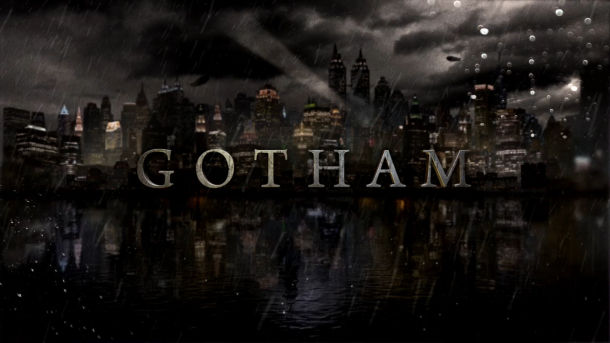
Okay, fair enough, I’m kinda late to the party here since Arleigh has already chimed in with his thoughts on the rather unimaginatively-titled first episode of Fox’s new Gotham TV series, Pilot, but as the closest thing to a “Bat-fanatic” here at TTSL, I thought I’d go ahead and offer a second opinion — even if it’s not terribly different from the first one you fine folks have read here.
Let’s start by stating the obvious — between Year One, Earth One, Zero Year, and Batman Begins, the origins of the Dark Knight detective have been done to death on the printed page and the silver screen over the last couple of decades, so only the venue is really “new” here, the basic outlines of the story this show is going to present are already well-known — aren’t they?
Well, yes and no. We all know how the series “ends,” whenever that happens to be — Bruce Wayne dons the cape and cowl and becomes Batman. Similarly, we all know how the story begins — wealthy socialites Thomas and Martha Wayne are gunned down in the notorious “Crime Alley” neighborhood of Gotham City in front of their young-at-the-time son, (here played by David Mazouz) and his life is, obviously, forever changed.
It’s what happens in between those well-established “bookends” that events in Gotham will be playing out, and there does seem to be ample room for either whole-cloth invention, or creative re-interpretation, within the confines of that territory, and this pilot episode shows that, as was done with Smallville over the course, of — what, ten seasons? — the principal creative minds at work here, most notably executive producer (and writer of this opening salvo) Bruno Heller, will be doing a little of both.
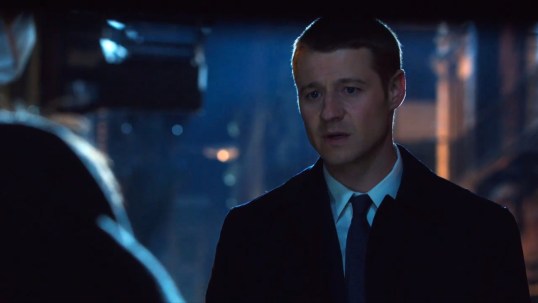
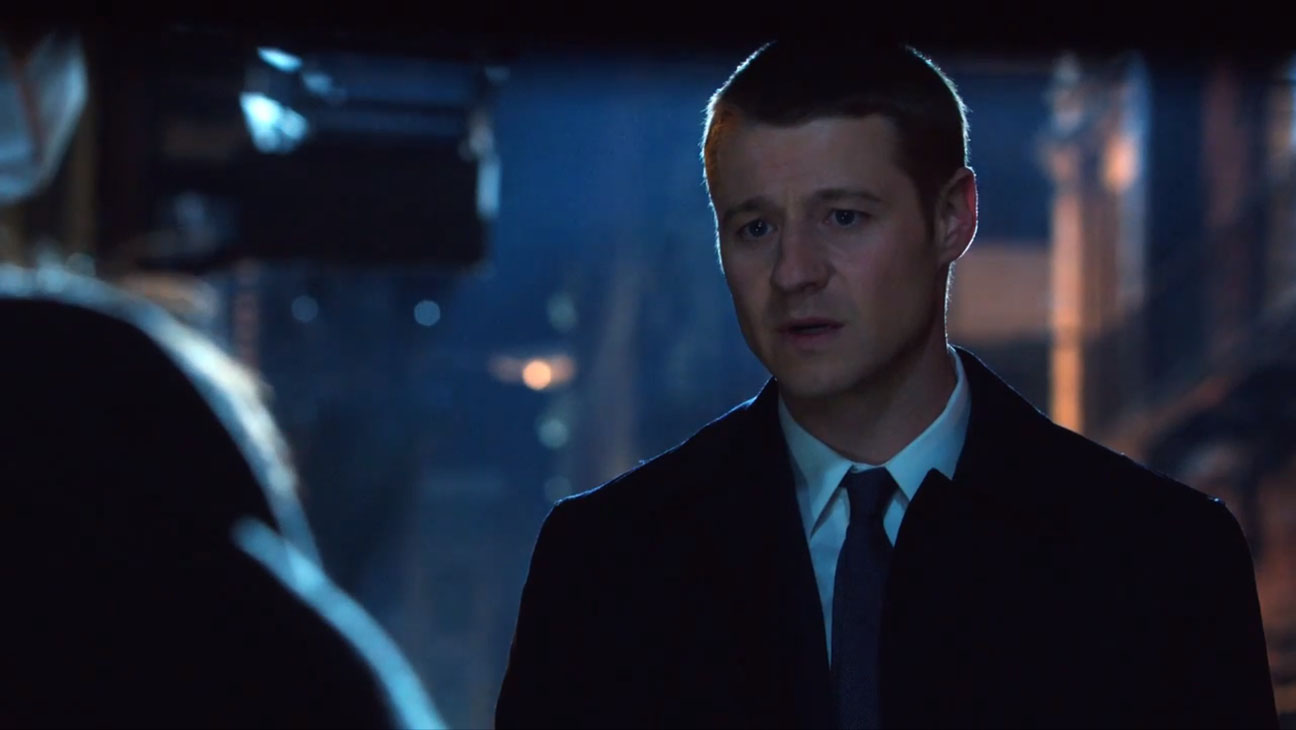
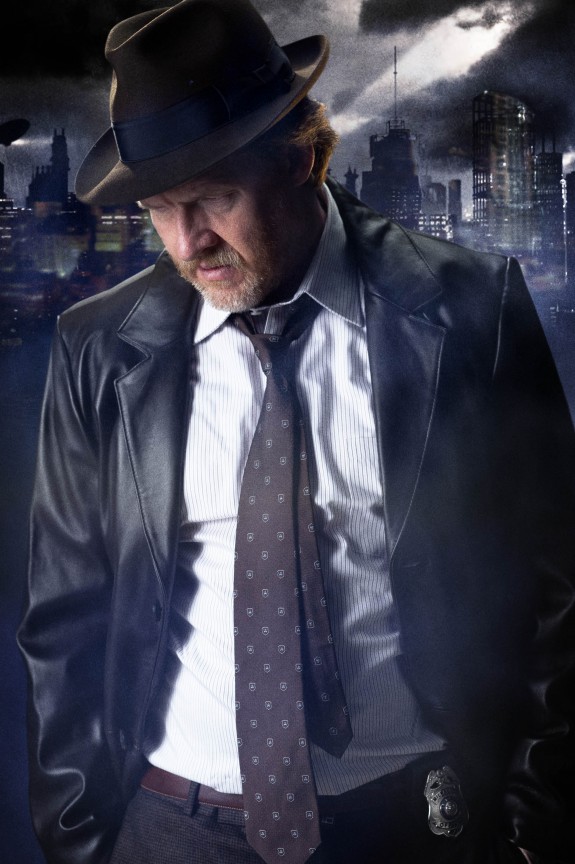
Apparently the main plot thread, at least running through the first season, will see clean-cut rookie detective Jim Gordon (Ben McKenzie) and his crooked partner, Harvey Bullock (Donal Logue), investigating the Wayne murders, and this initial episode largely focuses on them chasing a red herring in the form of a small-time hood named Mario Pepper (Daniel Stewart Sherman) , who they end up killing while he’s trying to escape, to the equal parts relief and despair of his wife and young plant-loving daughter, Ivy (Clare Foley). There’s some painfully strained dialogue that will probably make long-time Bat-fans cringe interspersed here and there, and a couple of scenes that are downright painful to watch, but by and large the story moves along at a reasonable enough little clip, the twists and turns our two protagonists encounter are generally involving, and the stage seems to be set for at least a modestly entertaining yarn as things progress.
Was the episode a great intro to the series? Not by any stretch of the imagination. Was it good enough? Sure, what the hell — I’ll be back next week for more, at any rate, and we’ll see where it goes from there.
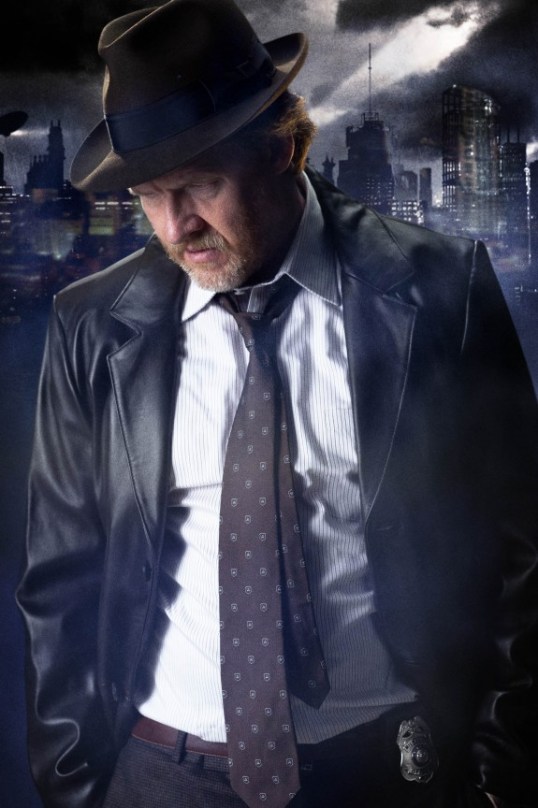
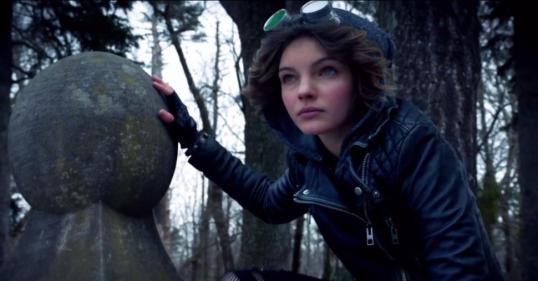
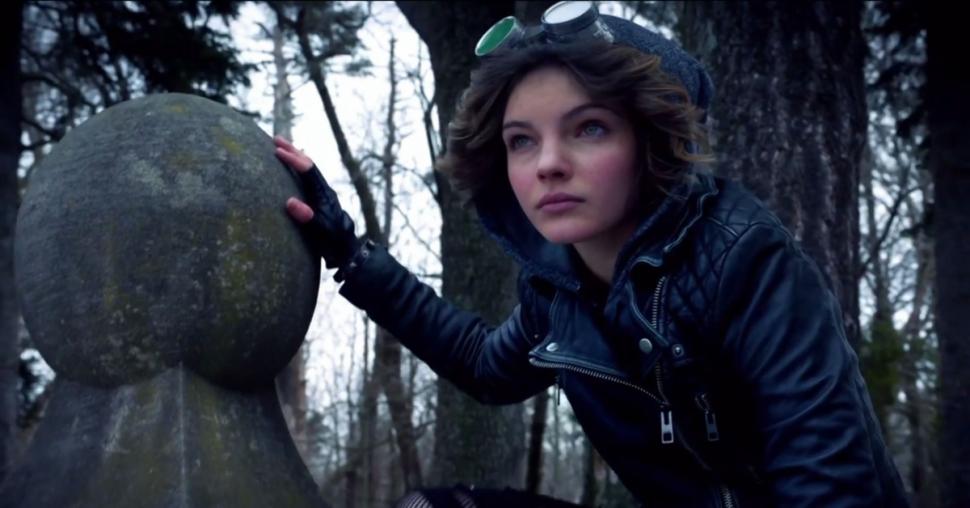
So, how about a rundown of what Heller and director Danny Cannon get right, and what they get wrong, shall we? First, the good stuff : Mazouz is excellent as the pre-pubescent Bruce Wayne, and shows pretty remarkable acting range for a kid. He’s by turns heartbroken, sullen, withdrawn, and determined. Good show all around. McKenzie displays a requisite amount of “regular-guy charm” as the show’s ostensible lead. Logue is a magnificent casting choice for a gruff and cynical veteran detective who’s definitely on the take — probably from more than one source — but may not be completely beyond redemption. Camren Bicondova largely lurks behind the scenes as a young Selina Kyle, but she exudes mysterious charisma to spare and you’ll definitely want to see more of her. John Doman seems intent on giving crime boss Carmine Falcome a whole new layer of depth and a set of complex motivations that really have me interested in finding out just what makes him tick. Cory Michael Smith is the perfect blend of genius and creepy in his role as police scientist Edward Nygma, who will “grow up” to become, of course, The Riddler. And Robin Lord Taylor as Oswald Cobblepot delivers his lines — and performs his physical actions — with a kind of just-beneath-the-surface insanity that shows that if and when he does become The Penguin, he’ll probably be more of the Danny DeVito ilk than the Burgess Meredith one.
The real show-stealer, though, is Jada Pinkett Smith as new character Fish Mooney, a second-tier — for now — player in the local mob scene who has brains, ambition, cunning, and sex appeal to spare. She seems to be having the time of her life sinking her teeth into the role, and it certainly shows. And if she’s not enjoying herself, well then — guess her acting is even better than I’m giving it credit for.
Oh, and just as a quick aside : does anyone else think the scene where she’s auditioning a struggling young stand-up comic for her club might be the first appearance in this series of, well — you-know-who? Maybe I’m over-thinking things, but I had to put it out there regardless.
It’s not as if Heller isn’t prone to offering other subtle hints in this episode’s script, either — one of Gordon’s superior officers just happens to be named Sarah Essen (Zabryna Guevara), and folks who have read Frank Miller and David Mazzuchelli’s Batman : Year One know that name well. Likewise, fans of the Gotham Central comics series will already be well familiar with the names Crispus Allen and Renee Montoya (played by Andrew Stewart-Jones and Victoria Cartagena, respectively), who pop up here as GCPD internal affairs agents. They’re not given much to do, admittedly, but a word of warning to Heller and all other series writers as far as this subject goes : Renee Montoya, in particular, is someone with a lot of hard-core fans, being that she represents one of the few positive portrayals of strong, independent, lesbian women of color anywhere in mainstream comics. Treat her right, or ignore her altogether, but don’t get this one wrong. There are some lurid hints dropped that she has “a past” with Gordon’s fiancee, Barbara (Erin Richards), but I wouldn’t suggest playing Montoya for pure soap opera value — it would be tremendously disrespectful to a character that was truly groundbreaking on the printed page.
Which brings us to what Gotham, at least so far, seems to be getting wrong (apart from some occasionally dodgy set design and CGI work and the script flaws previously mentioned) : Sean Pertwee (son of my second-favorite Doctor to Tom Baker) is a good casting choice as Alfred, and his protectiveness of his young charge certainly shows through, but Heller writes him as a semi-militaristic hard-ass in a move that seems to be a direct nod to the risible work of writer Geoff Johns in his limp Batman :Earth One graphic novel (please note I’m only singling out Johns’ script for criticism, as Gary Frank’s art on that book was superb). I hope they don’t go too far down that road with the world’s most famous fictional butler. Poison Ivy appears to be the victim of a radically different “re-imagining” that, so far, looks a lot less than promising. The overall tone of the proceedings appear overly concerned with shoe-horning in too many specific Bat-elements and not doing enough to establish the city as an entity separate from its most famous vigilante crime-fighter. And having Barbara be a well-heeled, glamorous socialite is a bit of a betrayal of the working-class roots of Jim Gordon and his family that we’ve all come to know — he just doesn’t look right lounging around in her fashionable penthouse apartment.
All in all, then, what we’ve got is a case of “some good, some bad.” By the time the episode was over I was reasonably optimistic that, despite the “mix n, match” approach to re-invention and outright invention that I mentioned earlier, we’re not looking at another Smallville clone here — i.e. a show that amounts to little more than Beverly Hills, 90210 with super-powers. The jury is still out, though, on whether or not this show’s creators have enough of a different spin to add to the Bat-mythos to make this a worthwhile project. They’re borrowing influences from a wide range of sources, some of which I would’ve preferred having them ignore altogether, but it’s probably safe to assume that only some of those things will prove to be major factors in the series going forward. How far forward I go along with it remains to be seen, as there was nothing in the pilot episode to make me say “alright, awesome, I’m all in!” — nor was there enough to make me throw up my hands and walk away in disgust. We’ll call how I feel about things “cautious optimism” for now, with the greater emphasis being on “cautious.” Heller and co. have me interested — not it’s time to impress me.
 Through the Shattered Lens