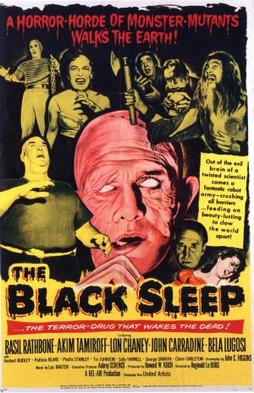
Horror Film Review: The Black Sleep (dir by Reginald Le Borg)


1956’s The Black Sleep opens in a London prison cell.  The year is 1872 and Dr. Gordon Ramsay (Herbert Radley) awaits execution.  He’s accused of murdering a chef who twice sent rubbery scallops to the pass …. wait, a minute, sorry.  Wrong Gordon Ramsay!  This Gordon Ramsay is accused of murdering a man named Curry and he’s considerably more whiny than the modern-day Gordon Ramsay.

Ramsay is visited by Sir Joel Cadman (Basil Rathbone) and Cadman’s associate, Odo the Gypsy (Akim Tamiroff).  Cadman explains that he has developed a potion called “The Black Sleep.”  Drinking it will put the drinker in a state of suspended animation that can pass for death.  And, indeed, it will turn into death unless Cadman administers the antidote.  Cadman offers to give the potion to Ramsay, in return for Ramsay helping Cadman out with his own experiments.  Ramsay agrees.

Ramsay is found “dead” in his cell.  His body is claimed by Cadman and Odo.  (Odo mentions that, in a past life, he was a grave robber and that he died as a result of the guillotine.)  Ramsay is revived and goes to work with Cadman.  As soon as Ramsay enters Cadman’s mansion, he finds himself surrounded by several familiar faces.  For instance, Lon Chaney, Jr. plays the twisted Mungo, who stumbles through the hallways of the mansion and can only be controlled by Daphnae (Phyllis Stanley).  Bela Lugosi plays Casimir, the mute butler.  Bohemud (John Carradine) is a bearded man who rants and raves and calls for Biblical vengeance.  And finally, in the basement, there’s Mr. Curry (Tor Johnson), the man who Ramsay was convicted of murdering!  It turns out that Cadman isn’t quite as benevolent as he presented himself as being.

The Black Sleep may feature an incoherent story but it has a great cast and it is entertaining to see Carradine, Chaney, Tor Johnson, Akim Tamiroff, Bela Lugosi, and Basil Rathbone all living under the same roof and trying to outdo each other as far as the scenery chewing is concerned.  Admittedly, some members of the cast look healthier than others.  Rathbone is as imperiously dashing as always and John Carradine appears to be having a lot of fun with his role.  Akim Tamiroff gets all of the best lines as Odo and he delivers them with just the right amount of wit.  Unfortunately, neither Chaney and Lugosi were in good shape when they appeared in this film.  Lugosi was ill when he did the film.  Chaney, meanwhile, had seen his one-promising career sabotaged by his own alcoholism and, by the time the 50s rolled around, his once handsome features were now ravaged by his drinking.  It transformed him from being a somewhat dull leading man to a craggly character actor.  (Producer/director Stanley Kramer considered Chaney to be one of the best character actors in Hollywood and cast him in both High Noon and The Defiant Ones.)  In The Black Sheep, Chaney’s face is twisted and almost ravaged.  It works for the film but it’s still sad to see.  As for Tor Johnson …. hey, he’s Tor Johnson.  He growls and he tosses things around and he does so convincingly.

(In an interview shortly before his death, Tor said he was offered the role of Oddjob in Goldfinger.  It’s sad to think the world was robbed of the Sean Connery/Tor Johnson team-up it needed.)

This was Bela Lugosi’s final film performance before his death in 1956.  (The footage that appears in Plan 9 From Outer Space was filmed before The Black Sleep.)  It’s a shame that Lugosi wasn’t given more to do in his final film.  Lugosi, with that famous voice, ending his career playing a mute just doesn’t seem right.
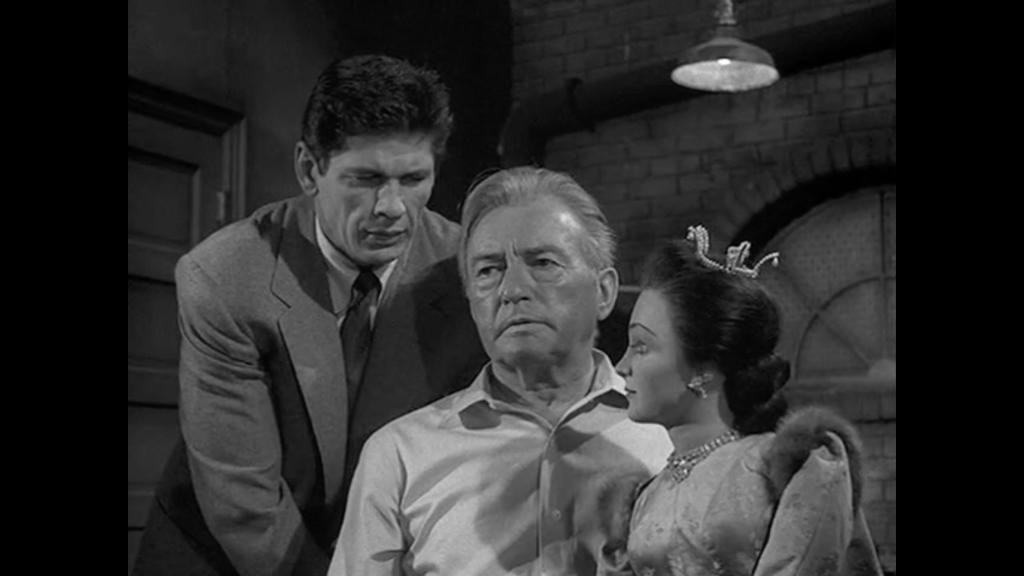
ALFRED HITCHCOCK PRESENTS (TV Series) – S1, E20: “And So Died Riabouchinska,” starring Claude Rains and Charles Bronson!


I’ve never been a rabid consumer of horror films, but I do love Alfred Hitchcock. And when you consider that Charles Bronson was featured three times in his TV series, ALFRED HITCHCOCK PRESENTS, you know I’m all in. Bronson first appeared in the season 1 episode, “And So Died Riabouchinska” which starred the Invisible Man himself, Claude Rains! I thought it would be fun to revisit this early episode from the classic TV series. 

When a juggler named Ockman is found dead in the basement of a vaudeville theater, Detective Krovitch (Charles Bronson), a no-nonsense police investigator, is on the case. The prime suspect quickly emerges to be John Fabian (Claude Rains), a ventriloquist whose act revolves around his beautiful female dummy, Riabouchinska, who we find out is modeled after a long, lost love. As Krovitch interrogates Fabian and all of those around him, including his embittered wife Alyce (Wynne Miller), and her lover, the shady manager Douglas, it becomes clear that the ventriloquist has a dark and dangerous past. We discover a Fabian who is lost in a world of obsession, self delusion and even perversion, a world that the now deceased Ockman was threatening to expose.  Without giving too much away, this episode blends psychological horror with police procedural and spits out an episode that still resonates loudly on the freaky-meter!

Adapted by Mel Dinelli from Ray Bradbury’s short story, “And So Died Riabouchinska” is an exceptional entry in Season 1 of the ALFRED HITCHCOCK PRESENTS TV series. Claude Rains is incredible as Fabian. It’s a thespian tour-de-force, with Rains creating a role that’s creepy, pathetic, and oddly relatable all at the same time. I haven’t seen many of Rains’ most notable works, but based on his performance here, I do know that he’s amazing. Charles Bronson, whose strong screen presence was as obvious as the nose on his face, even this early in his career, goes toe to toe with Rains (and Riabouchinska) and helps ground the episode in something resembling the real world. It’s not a showy role for the legendary tough guy, but he conveys the toughness and authority that would go on to define his career. Performances aside, the episode is truly set apart with an emotional storyline that plumbs the depths of the human psyche in a way that seems daring for 1956 television. There are parts of this episode that will definitely make you squirm in your seat! 

Overall, in my opinion, “And So Died Riabouchinska” is an essential episode of the ALFRED HITCHCOCK PRESENTS series. It’s a lot of fun seeing Hitchcock introduce the show at the beginning and wrap it up at the end, but the best part is the fact that the story that takes place in-between is creepy, clever, and compulsively re-watchable.

Horror on TV: Thriller 1.8 “The Watcher” (dir by John Brahm)


For tonight’s televised horror, we have another episode of the Boris Karloff-hosted anthology series, Thriller!

In this episode, a religious fanatic in a named Freitag (Martin Gabel) lives in a resort community and targets young people who he believes have failed to live up to his standards.  His latest targets are played by Olive Sturgess and Richard Chamberlain.  This is actually a rather grisly little episode.  With its theme of religious hypocrisy, I can only imagine how people reacted when it was first aired on November 1st, 1960.

Enjoy!

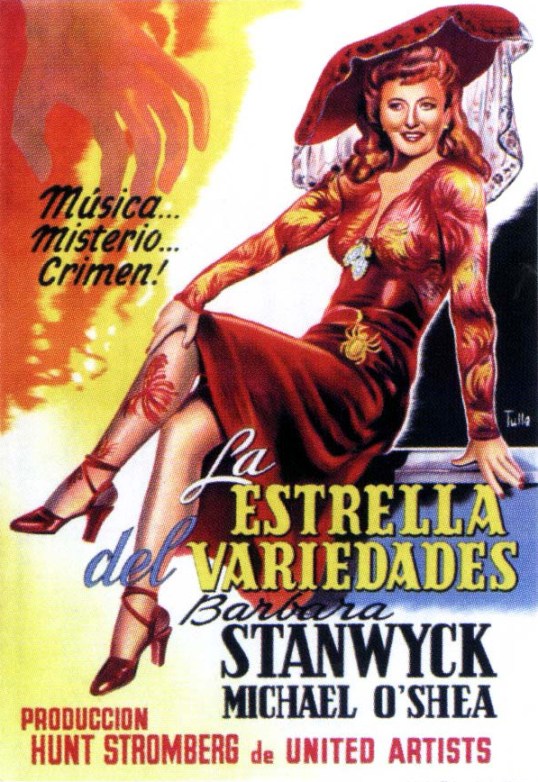
The Fabulous Forties #50: Lady of Burlesque (dir by William A. Wellman)


40s

Way back in April, I started on a series of reviews.  I announced that I would be watching and reviewing all 50 of the public domain films included in Mill Creek’s Fabulous Forties box set.

At the time, I expected that it would take me maybe two weeks.  At the most, two and a half.  After all, I wondered, how long can I take?  Well, needless to say, it took me a little longer than two weeks.  In fact, it took me nearly 3 months.  (In my defense, May turned out to be a very busy month for me and I wasn’t able to review a single Fabulous Forties film.)  However, what’s important is that, after all this time, I am currently writing up the last of my Fabulous Forties reviews!

(And, right now, you’re reading it.)

On the whole, the Fabulous Forties has turned out to be pretty uneven box set.  It contains a few classics, like My Man Godfrey, His Girl Friday, and The Last Chance.  There are several good films, like The Black Book and Trapped.  And then there’s quite a few mediocre and forgettable films, like The Town Went Wild and Jungle Man.  (Dear God, Jungle Man…)  As I started on the final film in the set, I wasn’t sure what I was about to see…

Well, no worries!  The Fabulous Forties ends on a high note!  The 50th film is the wonderfully entertaining 1943 comedy-musical-mystery Lady of Burlesque!

Poster - Lady of Burlesque_03

Lady of Burlesque (which was released in the UK under the title Striptease Lady) takes place in an old and somewhat decrepit New York burlesque house, the type of place where the audience is almost all male, the owners are somewhat sleazy, and the performers are a cross between cynical veterans and naive newcomers who are hoping for their first big break.

As quickly becomes apparent, the theater would fall apart if not for its main attraction, Dixie Daisy (Barbara Stanwyck).  Dixie serves as a mentor for the newcomers and a confidante for the veterans.  She knows how to keep the audience entertained, even when two dancers are loudly screaming at each other offstage.  She knows how to deal with the sleazy owners and how to placate the owners of the Chinese restaurant next door.  Dixie also knows better than to get romantically involved with any of male comics who perform at the theater but that doesn’t stop her from flirting with one of them, Biff Brannigan (Micahel O’Shea, playing his role with an almost poignant earnestness).  As I watched the film, I could tell that Barbara Stanwyck was neither a natural dancer nor singer but it didn’t matter because, whether Dixie was trying to keep peace backstage or performing onstage and singing a song called, “Take It Off The E-String, Play It On The G-String,” Stanwyck totally committed herself to the role.

Plus, her outfits were to die for!

barbara_stanwyck_001_lady_of_burlesque

Seriously, as I watched Lady of Burlesque, I totally wanted to get a job dancing in an old timey burlesque house!  If only I had a time machine…

Of course, it should be understood that the acts in Lady of Burlesque are risqué but, by today’s standards, they’re also rather innocent.   The jokes may be full of double meaning but it’s all hidden in the subtext.  The costumes may be sexy but they also stay on.  (That probably had more to do with the production code than to do with the realities of 1940s burlesque.)

Anyway, Lady of Burlesque is technically a murder mystery but mostly, it’s just an excuse to show the performances happening onstage and a few comedic (and occasionally dramatic) vignettes of what it was like to be backstage in a burlesque house.  Two dancers are murdered but the show must go on.  Even as Dixie solves the murders and tries to keep everyone calm, the show must go on.  In fact, that’s one of the true joys of Lady of Burlesque.  Regardless of what madness might be going on backstage, the show never stops!  In fact, the film often seems undecided about whether or not the backstage murders are bad because of the loss of life or the fact that they threaten to interrupt the performances onstage.  Lady of Burlesque becomes a tribute to the work ethic of entertainers everywhere!

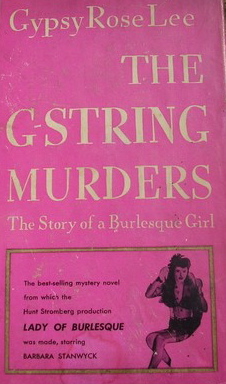
Lady of Burlesque was based on a novel by Gypsy Rose Lee.  The name of that novel was The G-String Murders.  Not surprisingly, that title was changed for the film version.

il_570xN.228180639

Well, that concludes the Fabulous Forties!  In a few weeks, I’ll start in on my next Mill Creek box set, the Nifty Fifties!  Until then, enjoy Lady of Burlesque!

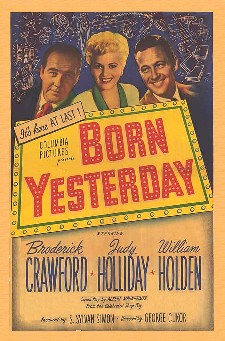
Cleaning Out The DVR: Born Yesterday (dir by George Cukor)


Born_yesterday

After I watched Goodbye, Mr. Chips, I decided to watch one more film that I had recorded off of TCM.  The movie I chose was Born Yesterday.

This 1950 film was directed by George Cukor and stars three Academy Award winners.  The lead actor was William Holden, who would win best actor three years after the release of Born Yesterday.  The villain was played Broderick Crawford, just a year after playing his Oscar-winning role in All The King’s Men.  Finally, the true star of the film was Judy Holliday, recreating her Broadway role of “dumb intelligent blonde” Billie Dawn.  For playing Billie, Holliday would win the award for best actress of the year.

In Born Yesterday, Billie is the girlfriend of Harry Brock (Broderick Crawford).  The crude and not particularly intelligent Harry has made a fortune as a “junkman” and, though the film never comes out and explicitly says so, it is suggested that Harry may have ties to the Mafia.  Harry has come to Washington, convinced that he can buy his way into political power.  Harry’s lawyer (Howard St. John) suggests that Harry should marry Billie, specifically because a wife cannot be compelled to testify against her husband.

However, there’s a problem.  Billie is uneducated and lacks formal manners.  Of course, Harry is even worse but then again, Harry is a rich white guy and, therefore, he doesn’t have to be polite or know what he’s talking about  After Billie embarrasses him during a meeting with a congressman, Harry hires journalist Paul Verrall (William Holden) to teach Billie how to fit in with Washington society.  At first, Paul refuses but, ultimately, he takes the job because he needs the money.

As Paul teaches Billie, it quickly becomes apparent that Billie is not as dumb as everyone assumes.  In fact, she has an insatiable desire to learn.  When Paul takes her on a tour of Washington, Billie is excited to learn the story behind every monument and to take a look at every historical artifact.  (When Paul shows her the bill of rights, Billie immediately reads the 2nd Amendment and gets Paul to explain it to her.  As Paul explained that it meant that citizens had the right to bear arms, my sister walked through the room and said, “You got that right.”)  Judy Holliday perfectly captures Billie’s excitement as, for the first time in her life, she’s actually treated like someone with a brain.

Billie also starts to fall in love with Paul.  After reading one of Paul’s articles, an obviously impressed Billie tells him, “I think it’s the best thing I ever read.  I didn’t understand a word.”  At the same time, Paul starts to fall for Billie.

Meanwhile, Harry is not falling for anyone but himself.  He continues to bribe congressmen but now, Billie not only realizes what Harry is doing but also understands that it’s illegal and goes against everything that the authors of the Constitution envisioned.  After a rather nasty scene in which she is repeatedly slapped by Harry, Billie goes down to the Lincoln Memorial, hears the voice of old Abe himself, and is finally ready to stand up for herself, for Paul, and for the American way of life.

(“When you steal from the government, you steal from yourself, you dumb ox!” she yells at Harry.)

Born Yesterday was based on a stage play and, with the exception of the scenes where Paul and Billie explore D.C., the entire film takes place in Harry’s hotel suite.  The film never quite escapes its theatrical origins.  Broderick Crawford bellows his lines out to the last row and William Holden feels miscast.  (That same year, he gave a far more interesting performance in Sunset Boulevard.)

But ultimately, Born Yesterday is mostly designed to showcase Judy Holliday as Billie Dawn.  When the film first started, I have to admit that I had my doubts about Holliday’s performance.  Her character was so stereotypically ditzy and spoke in such a nasal whine of a voice that I found myself wishing that the film had been made with either Marilyn Monroe or even Jayne Mansfield in the Billie Dawn role.  But, as the film progresses, I started to better appreciate Holliday’s performance.  I started to notice the sadness and the insecurity lurking underneath the surface.  I discovered that there was unexpected nuance to both the character and the performance.  By the time she was running through the National Archives and asking Paul questions about George Washington, she had totally won me over.

Still, Holliday’s victory for best actress does seem a little strange.  After all, to win the Oscar, Holliday defeated All About Eve‘s Bette Davis and Anne Baxter and Sunset Boulevard‘s Gloria Swanson.  Holliday’s performance definitely deserved a nomination but it’s a bit more difficult to argue that it deserved the Oscar.  Of course, Davis and Baxter played two tough and sarcastic divas, neither one of whom depended on a man for their success.  Swanson, meanwhile, played an older woman who ends up murdering her much younger lover.  Billie, meanwhile, is never without a girlfriend and doesn’t murder anyone.  Perhaps it’s understandable that certain Academy voters would be more comfortable with Billie Dawn than they would with Norma Desmond or Margo Channing.

Born Yesterday was also nominated for best picture but it lost to All About Eve.