In The Art of War, Wesley Snipes plays Neil Shaw, an UN operative who is framed for the assassination of a Chinese diplomat and who must uncover the real conspiracy while also proving his innocence. Proving his innocence means engaging in a lot of conflict while using investigation techniques that were cribbed from the Mission Impossible films.
Featuring a lot of war but not much art, The Art of War has a few good action scenes and an overly convoluted storyline that sometimes makes the film feel like a retread of another film in which Snipes was framed for a crime he did not commit, U.S. Marshals. It’s hard to take seriously any action hero who works for the United Nations but Wesley Snipes is credible in the action scenes and he could deliver a one-liner with the best of them. (Of all the bad things you can say about the IRS, the worst is that it put one of our best action stars in prison. Unforgivable!) The supporting cast is good, featuring Donald Sutherland, Maury Chaykin, Anne Archer, and Michael Biehn. The final battle between Snipes and the person who is revealed to be the main villain is exciting but, overall, The Art of War is overlong and overcomplicated. Neil Shaw is cool but he’s no Blade.
On tonight’s episode of The Hitchhiker, a woman who is having an affair with her sister’s husband (uh-oh, don’t do that) starts having surreal and increasingly frightening nightmares about a white horse. Is she being warned of her impending death?
This episode originally aired on October 5th, 1990.
Occasionally, if you’re lucky, you come across a film that so totally and completely conforms to your own worldview that you’re forced to wonder if maybe you wrote the script and then somehow forgot about it.
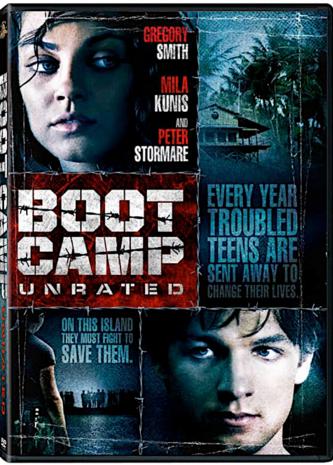
That was certainly the case, for me, when I recently watched 2008’s Boot Camp, a teen melodrama with an anti-authoritarian subtext. Check out the trailer:
In Boot Camp, Mila Kunis plays Sophie. Sophie is rich and, in the eyes of her parents, out of control. She talks back. She sneaks out of the house. She hangs out at all the wrong clubs and with all the wrong people. You know the story. We’ve all seen the talk shows. Sophie’s parents are convinced that the only way that they can get Sophie under control is to exile her to what the film calls a “tough love boot camp.”
The boot camp is located on an island, just a few miles away from a luxurious resort. From the minute Sophie arrives, she is told that escape is impossible and she can only leave after the facility’s founder, Dr. Arthur Hall (Peter Stomare), says that she can. Some people have been at the camp for years, waiting for Dr. Hall to announce that they’re rehabilitated.
The rest of the film follows Sophie and several other inmates as they try to survive boot camp without surrendering their free will. It’s not easy. Though he is more than happy to take their money, Dr. Hall resents the parents and his program is mostly designed to brainwash the inmates into thinking of him as being their new father figure. The camp is staffed with brutes, sadists, and rapists. When one inmate drowns, the staff tries to cover up his death. Eventually, like the inhabitants of the Island of Dr. Moreau, Sophie and the other inmates have no choice but to rise up in rebellion against their masters.
“Tough love boot camps” are a real thing. They used to be hugely popular with daytime talk show audiences and I know that Dr. Phil still has a ranch to which he sends “out of control” teens. (I put “out of control” in quotes because, often times, it seems that “out of control” is code for “thinking for yourself.”) The idea is that rebellious teenagers are sent to the camp, where they get yelled at until they agree to stop being so rebellious. Over the years, there’s been a lot of debate over whether boot camps actually work. If I had been sent to a boot camp, I think I would have just lied about my feelings and put on a repentant good girl act just to get the yelling to stop. I’d be perfectly humble and contrite for three months and then, as soon as I got out of the camp, I’d go back to sneaking out of the house, skipping school, shoplifting, doing drugs, and whatever else got me sent to the camp in the first place. From what I’ve seen of the whole boot camp experience, it seems to be more about brainwashing than anything else. What’s the point of having well-behaved children if they can’t think for themselves?
But, then again, boot camps have never really been about helping the teenagers sent to them. Instead, they’ve always been about making lousy parents feel better about themselves. Parents who have spent the last 14 years totally fucking up their children get to pat themselves on the back because they sent their kids to boot camp. Other adults, bitter over having lost their youth, get to say, “It’s time to teach those ungrateful children to respect authority.” As for the people who run the boot camps, it’s less about the inmates and more about power and money.
That’s certainly the message of Boot Camp. In fact, I was taken by surprise to discover just how much Boot Camp conformed to my own thinking on … well, on just about everything. Make no mistake, Boot Camp is a flawed film. There’s nothing subtle about Christian Duguay’s direction and, with the exception of Mila Kunis, none of the performances are as memorable as you might hope that they would be. Peter Stomare is way too obvious in his villainy, giving a performance that belongs in the Overacting Hall Of Fame. (You’ll find Stomare’s Dr. Hall in the villain wing, right next to Christoph Waltz in SPECTRE.)
But, even with all that in mind, it was impossible for me not to get excited when Sophie and her fellow out-of-control teens finally made their move against their tormentors. The final third of Boot Camp turns into a celebration of disobedience and rebellion and it was impossible for me not to be thrilled by it. Considering the increasingly Orwellian nature of American culture, we need more movies that celebrate revolution and individual freedom. At a time when we’re being told that we “have to do this” or “have to do that,” Boot Camp says, “Nobody has to do anything, beyond what they choose.”
It’s an important message and one that people need to start heeding.
 In The Art of War, Wesley Snipes plays Neil Shaw, an UN operative who is framed for the assassination of a Chinese diplomat and who must uncover the real conspiracy while also proving his innocence. Proving his innocence means engaging in a lot of conflict while using investigation techniques that were cribbed from the Mission Impossible films.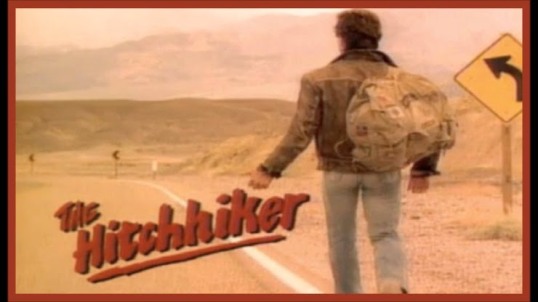
 Through the Shattered Lens