Review: Fallout (Season 2, Episode 4 “The Demon in the Snow”)


“If doing the right thing makes me a traitor, then maybe I’m not the one who’s broken.” — Maximus

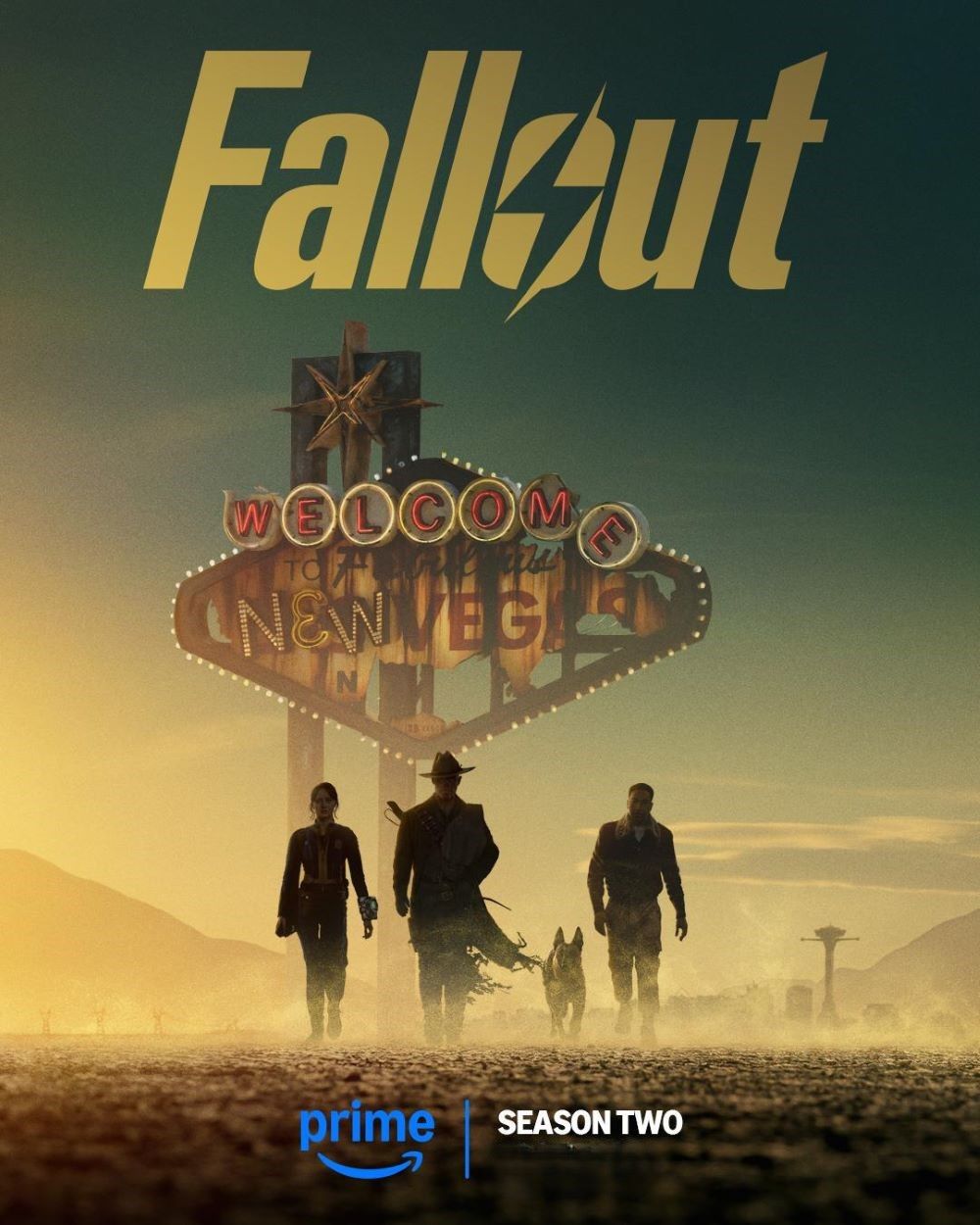
Episode 4 of Fallout Season 2, “The Demon in the Snow,” feels like the moment the season properly hits its stride: nasty, funny, and chaotic, but with just enough focus that it never collapses into pure noise. The hour leans into monster-movie horror and drug-fueled mayhem while still pushing the major storylines forward in ways that feel purposeful rather than like random side quests. It is very much a mid-season “everything is escalating at once” chapter, and for the most part, that energy works in its favor.

The episode is built around escalation on multiple fronts. On the surface level, that means finally unleashing a full-on deathclaw, escalating Brotherhood tension into outright war, and sending Lucy stumbling into New Vegas with a chemically assisted death wish. Underneath the spectacle, though, the script keeps circling one idea: the ways addiction, ideology, and systems twist people into thinking their worst decisions are actually noble. That combination of pulpy set pieces wrapped around a fairly sharp thematic throughline is where the episode finds its groove, even if not every beat lands cleanly.

The Cooper flashbacks give the title “The Demon in the Snow” its most literal read. He’s stuck in a remote war zone long before the bombs fall, only to come face to face with a deathclaw framed as this almost mythic horror cutting through soldiers like they barely exist. The sequence works both as a tense creature-feature moment and as a reminder that the apocalypse wasn’t born just from nukes; it was also born from the weapons and bioweapons people created and then failed to control. There’s something quietly grim in the way Cooper realizes that whatever “victory” his side claims out here has less to do with human heroism and more to do with the nightmare they’ve unleashed.

That past horror reverberates nicely against Lucy’s present-day story. She wakes up in an NCR camp wired to Buffout after being dosed for days, which means she’s basically sidelined into instant addiction. The show has a dark sense of humor about it: Lucy’s twitchy, hyper-focused, and suddenly way too ready to bulldoze through anything that isn’t directly tied to rescuing her father. She frames staying on the drug as a moral choice—if it helps her get to Hank faster, then it must be “right”—and that rationalization is exactly the sort of self-delusion the episode keeps poking at. The Ghoul plays the exasperated straight man here, watching her slide further into this chemically boosted version of herself that’s both capable and deeply compromised.

Their approach to New Vegas walks a satisfying line between fresh ground and game nostalgia. The city’s automated defenses are already wrecked by the time they roll up, which kills any chance of a slow-burn infiltration and immediately tells you something very bad has been here recently. The reimagined Kings—now a feral ghoul faction that riffs on the Elvis-obsessed gang from Fallout: New Vegas—become cannon fodder once Lucy lets the Buffout and her revenge drive take the wheel. The fight that follows is gory, brisk, and noticeably sharper in choreography than some of the earlier action this season. At the same time, the show never totally lets the audience forget how disturbing Lucy’s enthusiasm for the violence actually is; even The Ghoul looks a bit rattled by just how far she’s willing to go now.

The Vegas section eventually funnels into the Lucky 38, where the horror angle fully takes over. The once-bustling casino sits eerily vacant, patrolled only by the corpses of destroyed securitrons and an ominous egg that Lucy discovers a little too late. When the deathclaw finally emerges, it’s staged as a true “oh, we’re in over our heads” moment rather than just a giant CGI flex. The earlier wartime flashback helps here; by the time the creature steps into the light in the present, it already has weight in the story as something more than just a boss fight. Pairing Lucy’s adrenaline and bravado with a threat that genuinely terrifies her is a smart way to cap the episode’s Vegas thread.

Over with the Brotherhood, the show continues leaning into its mix of satire and tragedy. Maximus, scrambling to cover up the fact that he killed his superior, shoves Thaddeus into the dead man’s armor, which leads to some very deliberate physical comedy as Thaddeus fumbles around in a suit he barely understands. Around that goofiness, though, the tension over the cold fusion relic boils over. Leadership squabbles turn ugly, and different Brotherhood factions reveal how thin the veneer of honor and order really is once power is on the line. Dane quietly emerges as one of the more competent and grounded figures, slipping recruits out of harm’s way and securing the relic while the so-called authorities are busy imploding.

The strongest Brotherhood moment belongs to Max’s confrontation with High Cleric Quintus. Max comes clean about killing the Paladin and gets a surprisingly measured response—until he explains that he did it to protect ghouls. The conversation flips on a dime into pure zealotry, with Quintus dropping any pretense of nuance and revealing just how deep the organization’s dehumanizing worldview runs. It’s a blunt scene, but it makes the point: the Brotherhood can talk about discipline and order all it wants, yet underneath that rhetoric sits a fanatical hatred that ultimately guides its choices. When the ships start falling and the Brotherhood’s fortress turns into a battlefield, the chaos feels like the natural endpoint of that ideology colliding with reality.

While all of this plays out topside, the Vault storyline quietly remains the show’s creepiest thread. Vault 33 is dealing with a growing water crisis, yet somehow there are still little pockets of privilege and favoritism intact, which underlines how these supposedly “ordered” societies still manage to ration compassion as much as supplies. Overseer Betty’s attempt to negotiate for help with Vault 32 turns anything resembling cooperation into a transaction; every promise of aid seems to come with a hidden clause involving Hank or Vault 31. At the same time, the group from Vault 31 stumbling into the outside world and discovering things like old food trucks brings a streak of bleak comedy. They’re technically in charge, but their naïveté makes them feel just as fragile as anyone else.

Hints of a looming “phase two” for the Vault experiments keep that story humming in the background, suggesting that the worst outcomes for Vault 32 and 33 haven’t even surfaced yet. The vault sections may be quieter compared to the deathclaw and Brotherhood fireworks, but they deepen the sense that the real villain of the series is still the architecture of Vault-Tec’s grand experiment, not just any one person caught inside it.

If there’s a major knock against the episode, it’s that it occasionally feels like it’s doing too much at once. Between Cooper’s war memories, Lucy’s spiral in Vegas, Brotherhood infighting, and the various vault machinations, the hour sometimes jumps away from a scene right as it’s hitting an emotional high point. Lucy’s addiction arc, in particular, moves so quickly that it risks feeling like a setup beat rather than something fully explored in the moment. On the other hand, that density also gives the world a lived-in, interconnected feel—plotlines bump into each other, collide, and ricochet, instead of sitting on separate tracks waiting for their turn.

Taken as a whole, “The Demon in the Snow” stands out as one of the more compelling entries in Season 2 so far. It delivers on fan expectations with the live-action deathclaw and New Vegas callbacks, but it doesn’t stop at simple spectacle. Lucy’s compromised heroism, Max’s struggle to reconcile his conscience with his faction, Cooper’s haunted past, and the vault dwellers’ slow realization that their home is a gilded cage all circle the same idea: people will justify almost anything—violence, bigotry, self-destruction—if it feels like it serves a higher cause or keeps them from admitting they’re afraid. The episode is rough-edged and occasionally overloaded, but that messiness fits the world it’s dealing with, and it sets the board for the back half of the season in a way that feels genuinely promising.

Review: Fallout (Season 2, Episode 3 “The Profligate”)


“If you think everyone else is the bad guy, chances are, you’re the bad guy.” — Lucy McLean

Episode 3 of Fallout season 2 takes a deliberate breath after the season’s earlier frenzy, shifting focus to simmering tensions and the cracks forming within key factions. It trades some high-octane action for deeper dives into moral gray areas and character dilemmas, while sprinkling in plenty of nods to the game’s lore that will thrill longtime fans. The result is an episode that feels more introspective than explosive, building quiet dread that hints at bigger fractures ahead without fully detonating them just yet.

The spotlight falls heavily on Caesar’s Legion this time around, turning their rigid hierarchy into a pressure cooker of internal strife. Lucy finds herself right in the thick of it, her wide-eyed vault dweller optimism clashing hard against a group that views compromise as heresy. Hanging in the balance between rival power plays, she becomes a symbol of the wasteland’s brutal tug-of-war, where diplomacy often looks more like desperation. It’s a tough spot for her character, one that tests her limits and forces some uncomfortable reflections, though the episode spends more time on the surrounding politics than her personal evolution at first.

The Ghoul shines in his signature blend of cynicism and cunning, navigating a high-stakes deal that underscores his “ends justify the means” survival code. His interactions with NCR remnants carry that dry, world-weary edge, laced with flashbacks that keep peeling back layers of his pre-war life under influences like Vault-Tec and figures from New Vegas lore. These moments aren’t just backstory—they tie directly into his current ruthlessness, showing how old betrayals and power games echo into the irradiated present. It’s the kind of character work that makes his choices feel earned and uneasy, never fully heroic or villainous.​

Meanwhile, Maximus’s path with a Brotherhood superior veers into unexpectedly dark territory, blending camaraderie with the order’s uglier underbelly. What starts as armored antics at a familiar Nuka-Cola site uncovers dilemmas about who gets to claim “civilization,” hinting at rifts that could shake the Brotherhood to its core. His arc builds to a tense crossroads, mirroring the Legion’s own divisions and raising questions about loyalty in a world where ideals curdle fast. It’s a smart parallel that keeps the episode’s themes cohesive without feeling forced.

Guest spots add some unexpected flair, like Macaulay Culkin’s turn as a Legion figure whose quirky menace fits the faction’s cultish vibe perfectly. He brings a bureaucratic fervor to the role, emphasizing how the Legion ritualizes its brutality right down to succession squabbles over key artifacts. These cameos feel organic, enhancing the world rather than stealing focus, and they nod to the games’ eccentric cast without overwhelming the main threads.

Pacing-wise, this hour simmers more than it boils, which might test viewers craving constant momentum. Lucy’s predicament holds steady for a stretch, the Ghoul operates in the shadows, and Maximus’s detour unfolds gradually before tensions spike. That restraint pays off by letting atmosphere build—the Legion camp’s stark crosses and sun-scorched decay capture the series’ horror-Western mashup beautifully. Locations like Camp Golf and NCR outposts evoke New Vegas nostalgia, but twisted into symbols of faded glory, reinforcing the show’s point that no empire endures unscathed.

For game fans, the episode is a treasure trove of subtle references, from Legion dynamics to Securitron teases, woven in ways that serve the plot rather than just fan service. Newcomers won’t feel lost, as the context emerges naturally through dialogue and fallout from prior episodes. Visually, it’s peak Fallout: practical effects make the wasteland feel lived-in and lethal, with practical power armor clanks and irradiated horrors that pop off the screen.​​

By the later beats, the episode starts hinting at shifts in the power balance, leaving characters at pivotal junctures without spelling everything out. Lucy grapples with harsh realities that could harden her edge, the Ghoul’s gambit ripples outward in unpredictable ways, and Maximus faces choices that test his place in the Brotherhood. These teases set up a powder keg for the back half, where alliances fray and the wasteland’s chaos might force some reluctant team-ups or betrayals.​​

All told, episode 3 delivers a balanced mix of lore love, character depth, and atmospheric tension, even if its slower gear occasionally mutes the thrill. Strengths like the Ghoul’s layered flashbacks and faction parallels outweigh any mid-episode lulls, making it a solid bridge that primes the pump for escalation. In a season already nailing the games’ spirit, this one reminds us why Fallout endures: beneath the satire and shootouts lies a grim meditation on humanity’s stubborn flaws.

Review: Fallout (Season 2, Episode 2 “The Golden Rule”)


“Empathy is like mud. You lose your boots in that stuff. Folks been screaming for two hundred years.” — The Ghoul

Fallout season 2, episode 2, titled “The Golden Rule,” eases the series back into its wasteland rhythm with a blend of tense character moments and signature post-apocalyptic absurdity. It’s not the flashiest hour, but it builds tension steadily through moral dilemmas and faction intrigue, rewarding patient viewers with hints of bigger conflicts ahead.

The episode weaves a tapestry of power struggles and ethical compromises across its split storylines. Maximus navigates the Brotherhood’s ruthless internal games, Lucy and the Ghoul debate the cost of mercy in a brutal world, and Norman from Vault 31 leads survivors peeling back more of the pre-war conspiracy’s ugly layers. At its core, it’s about testing how long personal codes hold up when survival demands compromise, forcing characters to confront who they’re really fighting for.

Maximus’s thread packs the most immediate emotional wallop, trapping him in a brutal boxing tournament that’s equal parts ritual and execution. What starts as a show of unity ends with him forced to kill a fellow Knight under the roar of the crowd, stripping away any lingering loyalty to the Brotherhood. His face after the win—drained and distant—captures the hollowness of victory in a machine that chews up its own, turning a grunt’s ambition into quiet tragedy.

The arrival of one of the new faces, Kumail Nanjiani as the slick Paladin Xander Harkness from the Commonwealth, shakes things up right after the fight. His cocky demeanor and whispers of a brewing civil war ripple through the ranks, pulling Maximus from personal survival into something that feels like the edge of a larger schism. It’s a clever escalation that promises fireworks without tipping its hand too soon.

Meanwhile, Lucy and the Ghoul’s road trip revisits old ground, which could feel like treading water if not for the sharp dialogue and escalating stakes. Their clash over stopping to help screams familiar—they clash over optimism versus cynicism, split paths briefly, then reconvene out of necessity—but it deepens their mismatched partnership. A hospital pitstop turns sinister fast, revealing ties to a slaver faction straight out of the game’s lore, where good intentions lead straight into ambush territory.

The Ghoul’s rant about empathy weighing you down like dead weight lands with his usual bite, but Lucy’s frustration with his cryptic warnings flips the script, painting his toughness as half selfishness. Their chemistry carries it, turning repetition into a believable cycle of two scarred people circling trust. And that massive radscorpion brawl? Pure adrenaline-fueled chaos, a hulking nightmare that embodies the wasteland’s random cruelty and gives the duo a shared “not today” win.

Shifting underground, Norman delivers pitch-black satire as he guides cryogenically thawed junior executives who wake up clueless and entitled in the apocalypse. They’re all petty squabbles and status games amid the ruins, a perfect skewer of corporate rot that outlasted the bombs. His scramble for leadership mixes fumbling comedy with a poignant glimpse of awe at the surface world, humanizing the bunker farce while his companions gripe like it’s a bad vacation.

Elsewhere, the pre-war corporate angle simmers darkly, with hints that ongoing “work” stems from a deliberate architecture of doom. It’s subtler than the surface mayhem, but it reinforces the show’s thesis: the end times weren’t random fallout, but a branded catastrophe whose machinery still grinds on.

Pacing strikes a deliberate balance, advancing multiple fronts without rushing payoffs, which suits the serialized vibe but might test newcomers. It prioritizes atmosphere over non-stop action, letting ironic humor—like deadly fights dressed as bonding or doomsday treated as HR drama—bridge the quieter beats. The result feels immersive, like wandering the game’s open world rather than railroading through quests.

Visually and tonally, the episode nails Fallout‘s essence: gritty practical effects, cluttered retro-futurism, and violence that shocks without overkill. Costumes evoke lived-in lore, from power armor gleam to faction garb, while the humor undercuts horror just enough to keep it addictive.

In the end, Fallout season 2, episode 2 is sturdy groundwork that shines in its character crucibles and world-deepening touches. Maximus’s ring of fire and Norman’s Vault meltdown stand tallest, while the road warriors deliver sparks amid echoes. The radscorpion frenzy injects raw thrill, priming the pump for faction clashes ahead. Not a lone-wolf classic, but a smart piece in a sprawling puzzle—fairly balanced, casually compelling, and true to the franchise’s warped heart.

Doctor Who — The Daleks (1963-1964, directed by Christopher Barry and Richard Martin)


It’s easy to forget that Doctor Who was originally meant to be an educational show for children.

When the BBC’s Head of Drama, Sydney Newman, first developed Doctor Who, he envisioned it as being a show in which an eccentric old man known as the Doctor and his granddaughter, Susan, would travel to past eras and meet actual historical figures and witness great events firsthand.  Accompanying them would be two teachers, Ian Chesterton and Barbara Wright, who would make sure the kids at home understood what they were watching.  While Newman allowed that, in order to keep the kids watching, there would be occasional episodes that would focus more an adventure than learning, he also said that the show would not feature any “bug-eyed monsters.”

The first serial, An Unearthly Child, stayed true to Newman’s concept.  After stumbling across the TARDIS while investigating the homelife of their newest pupil, Ian and Barbara found themselves traveling to pre-historic times with The Doctor and Susan.  Susan was played by Carole Ann Ford while Ian and Barbara were played by William Russell and Jacqueline Hill.  Playing the role of the Doctor was veteran actor William Hartnell.  Hartnell was 55 years old when he first played the Doctor but he looked and came across as being much older.  He played the Doctor as being a crotchety old man, one who resented being saddled with two new companions and who could be quite rude to those he considered to be his inferior.  This was early in the series so there was no talk of Time Lords or anything else that Doctor Who fans now take for granted.   Susan even took credit for naming The TARDIS, the Doctor’s time machine that, on the outside, appeared to be a blue police call box.

An Unearthly Child introduced the UK to the Doctor.  It got respectable ratings and reviews.  Viewed today, it’s also pretty boring and it’s easy to see the limitations in Newman’s original concept.  Hartnell plays the Doctor as being so ill-tempered that it was a surprise that he didn’t just jettison Ian and Barbara into space.  (I used to watch Doctor Who on PBS with my father.  The first episodes that we got were the Tom Baker years, followed by the Peter Davison and the Jon Pertwee episodes.  It was only then that PBS started showing the Hartnell episodes.  To go from Baker, Davison, and Pertwee to the grouchy Hartnell was indeed jarring.)  If the show had continued in the style of An Unearthly Child, it probably would not have lasted for more than two series.

Fortunately, the second serial changed everything.

Written by Terry Nation and originally called The Mutants, the second serial introduced The Daleks, the shrill-voiced cyborgs whose cries of “Exterminate!  Exterminate!” made them almost as popular as The Doctor himself.  Squid-like creatures who lived in tank-like robotic shells and who spoke in electronic voices, the Daleks lived on the planet Skaro.  Centuries of nuclear war against the Thals had left the Daleks mutated and trapped in their shells but they were still obsessed with exterminating all of the Thals and eventually conquering the universe.  With their robotic exteriors, the Daleks were bulky and often moved awkwardly.  (The recurring joke is that all the Doctor has to do to escape the Daleks is find a staircase.)  But because the Daleks were so relentless and so determine to exterminate everyone who wasn’t a Dalek, they were still intimidating.  Writer Terry Nation based the Daleks on the Nazis, a comparison that was undoubtedly easy for British audiences in 1963, less than 20 years after the end of World War II, to see.

A seven-episode serial, The Daleks premiered on December 21st, 1963 and ran through February 1st, 1964.  While the serial was airing, word spread about The Daleks.  The first episode was watched by six million viewers.  The seventh and final episode was watched by ten million.  Four million people were brought to the show by The Daleks.  Sydney Newman may not have wanted bug-eyed monsters on Doctor Who but no one could argue with ratings like that.  While the First and the Second Doctor would still have a few strictly historical adventures, The Daleks paved the way for the future of the series.  The Daleks would return many times.  The cavemen from An Unearthly Child were never seen again.

The Daleks opens with TARDIS materializing on the planet that will later be identified as Skaro.  The Doctor and Susan want to explore.  Ian and Barbara are upset because they want to go back to 1963.  (Ian and Barbara always annoyed me but, of all the companions on the original series. they probably did have the most realistic reaction to being swept up in the Doctor’s adventures.)  The Doctor flat-out lies about needing to get mercury to repair the TARDIS and uses it as an excuse to explore a nearby city.  Soon, The Doctor, Ian, and Barbara are the prisoners of the Daleks while Susan meets the peaceful Thals in the forest.  The Daleks and the Thals have been at war for centuries and it has destroyed their world.  The Doctor tries to broker a peace, which just leads to the Daleks killing even more Thals.  The Doctor can be excused because this was his first meeting with the Daleks.  The Thals should have known better than to trust the people who specifically decided to become cyborgs because they didn’t want to ever have to stop fighting.

Seen today, The Daleks holds up fairly well.  At seven episodes, it runs a bit long and, for those of us who grew up with Tom Baker and Peter Davison in the lead role, William Hartnell’s Doctor takes some getting used to.  The nonstop bickering between The Doctor and Ian gets old quickly.  The Thals are almost too naive to be believed.

But the Daleks themselves remain a brilliant creation and, even when seen in grainy, black-and-white, it is easy to understand why they became a phenomenon.  Their relentless determination to destroy and exterminate make them intimidating but what really stands out about the Daleks is how forthright they are about what they want.  It’s not just that the Daleks want to exterminate you.  It’s that they’ll tell you that they want to exterminate you, as if it’s the most reasonable desire that any creature could have.  (One reason why The Thals are so unsympathetic is that they keep falling for Dalek tricks, despite the Daleks being pretty honest about their hatred of the Thals.)  From the minute that the Daleks make their first appearance, cornering Barbara in their city, they give Doctor Who a jolt of energy that it very much needed.

This serial ends with The Doctor convinced that the Daleks have been destroyed and will no longer be a threat.  Of course, The Doctor had never been so wrong.  The Daleks would return and Doctor Who would never be the same.


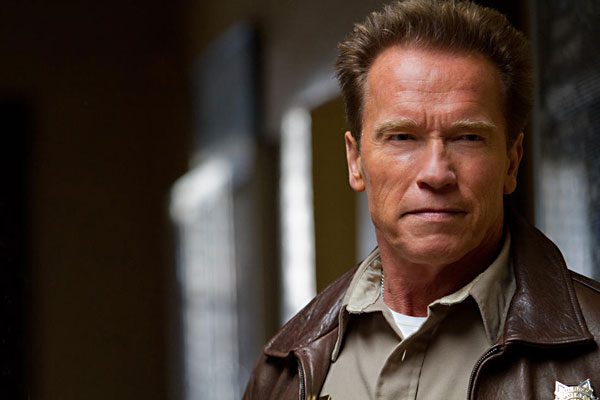
Brad reviews THE LAST STAND (2013), starring Arnold Schwarzenegger!


After eight years of serving as Governor of California, Arnold Schwarzenegger made his big comeback as an action movie star in director Kim Jee-woon’s THE LAST STAND (2013). Sure, he put in a little work on the first two EXPENDABLES movies, but those were really just glorified cameos. Here, Arnold was front and center for the film’s 107 minute running time. This was an exciting time for me, because like most action movie fans, I loved him and had truly missed seeing him consistently kicking butt and taking names on the big screen. I gladly made my way to the movie theater in January of 2013  for a large tub of ‘corn, a big Mr. Pibb, and the true return of an action megastar!!

In THE LAST STAND, Schwarzenegger plays Ray Owens, a former LAPD narcotics officer who chose to leave the big city and take a job as the sheriff of the quiet, southern border town of Sommerton, Arizona. It won’t be quiet for long after notorious drug kingpin Gabriel Cortez (Eduardo Noriega) makes a daring escape from FBI custody. Cortez immediately heads towards the border in a souped up Corvette where an advanced group of highly trained gunmen, led by Burrell (Peter Stormare), are waiting to help him cross. Cortez and his small army of mercenaries appear to be on a collision course with Sheriff Owens and his ragtag group of deputies, including Mike (Luis Guzman), Jerry (Zach Gilford), and Sarah (Jaimie Alexander). Knowing they’re outgunned and outmanned, Sheriff Owens asks for additional help from ex-military man and current drunk Frank Martinez (Rodrigo Santoro), as well as the crazy local gun nut Lewis Dinkum (Johnny Knoxville). Add to this mixture, FBI agent John Bannister (Forest Whitaker) and his team’s attempts to try to stop Cortez before he gets to Sommerton, and the stage is set for lots of action! 

I really liked THE LAST STAND when I saw it at the movie theater in 2013, and I really liked it again when I revisited the film this week. I made it a habit many years ago to not read reviews of a film before I go see it at the theater. I had found that reading potential negative comments could affect my viewing of a film, so I cut that out. As such, after totally enjoying myself with THE LAST STAND, I was surprised that the film wasn’t received very strongly by the audience or critical community, and I was even more surprised that it completely flopped at the box office, only bringing in a total of $12 million in the United States during its run. For me, the film delivered what I was looking for… Arnold Schwarzenegger kicking ass, spouting off some good one-liners, and outsmarting and outmuscling his much younger adversaries! No critic or keyboard warrior can take that away from me, as THE LAST STAND is an entertaining movie with a good cast. Heck, even the great Harry Dean Stanton pops in for a surprise cameo at the beginning of the action. 

I also appreciate the fact that THE LAST STAND is the American directorial debut of the great South Korean director Kim Jee-woon, who has directed some of my favorite South Korean films, including A BITTERSWEET LIFE (2005) and I SAW THE DEVIL (2010). His direction brings some Asian flair that results in stronger, more graphic violence, as well a penchant for jarring changes in tone between humorous character interplay and sometimes violent tragedy. In a movie designed primarily as a piece of entertainment, I appreciate those more over-the-top touches that lift it above the norm. 

Overall, I easily recommend THE LAST STAND to fans of Arnold Schwarzenegger and old-school action movies. It’s not a Schwarzenegger classic in the same way as movies like PREDATOR (1987), TERMINATOR 2 (1991), and TRUE LIES (1994), but it’s still a fun ride!