Today’s horror on the lens is the surprisingly effective 1977 made-for-TV revenge-of-the-yeti film, Snowbeast!
You can read my full review here!
Enjoy!
Today’s horror on the lens is the surprisingly effective 1977 made-for-TV revenge-of-the-yeti film, Snowbeast!
You can read my full review here!
Enjoy!
It’s a lonely Saturday here at the TSL Bunker. Leonard Wilson is at a theater in the city, watching Chernobyl Diaries. My sister, the Dazzling Erin, has abandoned me to go shopping for ingredients so she can make something later tonight for our family’s annual memorial day get together tomorrow and our cat, Doc, is too busy sleeping at the foot of my bed to pay much attention to me Probably even as I sit here typing this, Leon the Duke is watching season 3 of Lost and how I envy him! The Trash Film Guru has escaped to the grindhouse. Necromoonyeti is discovering new music, Pantsukudasai is undoubtedly meeting with his enigmatic anime connection, Semtex Skittle is playing Diablo Something-Or-Another, and SenorGeekus is off spreading the gospel of Jack Kirby. Even Arleigh is off somewhere else, watching a war movie no doubt.
Yes, I’ve been left here alone in my section of the Bunker, which I’ve decorated by utilizing a combination of Catholic iconography, Hello Kitty, and pink wallpaper. I should be working on getting caught up because I am running behind on meeting my quota for the month. However, instead of writing about what’s currently playing in a theater near you, I find myself once again distracted by my continuing mission to watch and review every single film included in Mill Creek’s 50 Chilling Classics Boxset. Fortunately, I’m happiest when I have a mission. Here are reviews of 6 more of the Chilling Classics that I’ve sat through.

First released in 1984, The Cold is yet another odd little morality tale from Wisconsin-based filmmaker Bill Rebane. Three mysterious millionaires invite nine people (and just try to keep them all straight) to a secluded mansion that looks suspiciously like an EconoLodge. The nine guests are informed that if they spend a few nights at the “mansion” and face their greatest fears, they’ll win a million dollars. Of course, everyone agrees to do that but how could they have imagined that their fears would include a giant spider that shows up in soup bowl, a shark that shows up in a swimming pool (Agck! That would be my fear right there), rats, and people who wander around hallways while wearing white sheets. Of course, it all ends with a twist that you’ve already guessed and then the film introduces another twist that you’ve already guessed.
This is the third Rebane film that I’ve come across in the Chilling Classic Boxset (the previous two being The Alpha Incident and The Demons of Ludlow). Rebane is one of those odd directors whose uneven films are genuinely inept and yet occasionally show a flash of equally genuine imagination. The Cold is a complete and total mess that features bad acting (after 5 minutes, I’d had enough of the slow-witted girl with the bad Southern accent), bad dialogue (“You can’t come in here. I’m nude.” “Don’t worry, I’ve had a vasectomy”), and a truly incoherent style of editing. Rebane punctuates the action by including random snatches of old timey music and boy did that get irritating fast. And yet, once you start watching, it’s impossible to look away. You simply have to watch to convince yourself that what you’re seeing isn’t just a dream. Plus, the film includes not only an endless disco sequence but a narrator who admits that he can’t really follow the story either.
 Dr. Tarr’s Torture Dungeon (dir by Juan Lopez Moctezuma)
This Mexican film from 1972 is based on an Edgar Allan Poe short story and, despite the poor picture quality that we’ve come to expect from anything put out by Mill Creek, it is one of the most visually interesting films to be found in the Chilling Classics boxset. A newspaper reporter visits a sanitarium in order to investigate the revolutionary form of therapy practiced by Dr. Maillard (Claudio Brook). As Maillard explains (and sh0ws), the inmates are essentially allowed to roam freely through the asylum and live under whatever delusions make them happiest. However, it quickly becomes obvious that Dr. Maillard is insane himself and his asylum is part of a bigger plot to rule the world. The plot makes little sense and it quickly becomes pretty clear that it’s not meant too. Director Juan Louis Moctezuma was a collaborator of the famed surrealist Alejandro Jadorowsky and it quickly becomes obvious that he’s more interested in putting as many odd and surreal images on-screen as possible and, on that level, he succeeds. For whatever the film’s narrative failings, it’s fascinating to just sit and look at some of the images that appear on-screen. Claudio Brook gives a wonderfully over-the-top performance that perfectly compliments the film’s visuals.
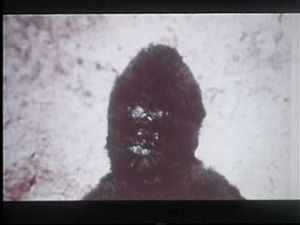
The Legend of Big Foot (dir by Harry Winer)
In this documentary from 1976, a wildlife expert named Ivan Marx rambles on and on about Big Foot while unrelated stock footage plays out on-screen. It’s just as exciting as it sounds. Seriously, I try to make it a point to stick with any film I start watching, no matter how boring it may turn out to be, but the Legend of Big Foot severely tested my patience. Some of the animals in the stock footage are cute, though. Regardless of what he may be discussing at any particular moment during the film, Marx delivers his narration in the most dramatic way possible and that provides a few laughs as well.
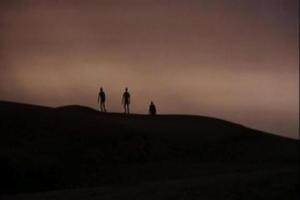
Oasis of the Zombies (dir. by Jess Franco)
In this 1981 Eurocine film, a group of unlikable people come across a lost Nazi treasure in the middle of the African desert. Unfortunately for them, the Nazis are still there, standing guard. Of course, the Nazis have now all been transformed into zombies! As far as Nazi zombie films are concerned, Oasis of the Zombies isn’t as scary as Shock Waves and it’s not as much fun as Zombie Lake. What it is, however, is a Jess Franco film which means that the film features actors in tacky outfits, poorly dubbed dialogue, a zoom lens that just won’t quit, and a few oddly surreal (and occasionally nightmarish) visuals. This is really a pretty shoddy film but it’s enjoyable if you’re a fan of Franco’s “unique” style of filmmaking.

Slashed Dreams (dir. by James Polaskof)
This film was originally released in 1974, under the title Sunburst. It was obviously not meant to be a horror film (though it was clearly meant to appeal to the exploitation market) but instead, it was a painfully sincere, annoyingly naive, and, ultimately, rather offensive attempt to make an important statement about the need to drop out of society and “do your own thing.” However, Robert Englund shows up for the film’s final 10 minutes so, at some point in the 80s, Sunburst was re-released, retitled, and resold as a horror film.
Anyway, this 74 minute film is about two perky and attractive college students (Peter Hooten and Katharine Baumann, both of whom give good performances) who decided to go visit their first Michael who has dropped out of society and is currently living in a cabin out in the middle of the woods. The majority of the film is an endless montage of scenes of Hooten and Baumann hiking through the wilderness while a singer named Roberta Van Dere warbles away on the soundtrack, singing some of the most annoyingly 70s folk songs ever written. I’m sad to say that I got one of them, Animals Are Clumsy Too, stuck in my head. Once they finally reach the cabin, they discover that Michael is off wandering about. They decide to wait around for Michael to show up which leads to them being spotted by two inbred hicks who proceed to rape Baumann before running off. The next morning, Michael shows up and hey, he’s Robert Englund! Michael hears what has happened and, instead of going to the police or, at the very least, getting Baumann to a hospital, he tells her that she just needs to “push the demons out” and get on with living. Which, by the way, is complete bullshit. It’s one thing to discover strength you previously didn’t realize you had as the result of something terrible, it’s another thing to seriously expect a woman to shrug it off after a day or two or to consider rape to be a character-building exercise as this film seems to. Say what you will about I Spit On Your Grave, at least that film understood that rape is an unforgivable violation and more than just a bad thing that might happen in the woods. I swear, just when I think that I can’t hate the late 60s and early 70s anymore than I already do, I see a film like this.

Track of the Moon Beast (dir. by Dick Ashe)
When it comes to bad movies from the 70s, I prefer the likes of 1976’s Track of the Moonbeast to Sunburst/Slashed Dreams. This films takes place in New Mexico and tells the story of Paul (Chase Cordel), a slow-talking mineralogist who gets a chunk of moon rock lodged into his brain. As a result, he turns into a gigantic lizard and goes around killing people. His only hope appears to be his old friend, the stoic Profession Johnny Longbow (Gregorio Sala) who knows all sorts of indian lore. He also knows how to make stew and early on in the film, he gives a world-weary monologue about what ingredients he puts in his stew. (Onions, mostly). Anyway, this is an awful, awful film that’s full of bad acting, bad special effects, and dumb dialogue. It’s also a lot of fun and it features the guy pictured below singing a song called California Lady that got stuck in my head almost as quickly as Animals Are Clumsy Too. I loved Track of the Moon Beast.

So, out of these six, I would definitely recommend Track of the Moon Beast and Dr. Tarr’s Torture Dungeon. The Cold and Oasis of the Zombies should be watched only by people who are already familiar with the work of Bill Rebane and Jess Franco. Legend of Big Foot might be amusing if you’re intoxicated and Slashed Dreams is the one to definitely avoid.

For the past few months, I’ve been attempting to watch and review every film to be found in Mill Creek’s 50 Chilling Classics box set. Here’s are 6 quick reviews of the latest few “chilling classics” that I’ve found the time to watch.
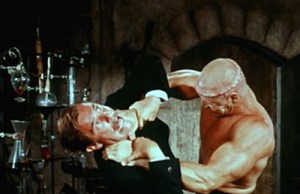
1) Jesse James Meets Frankenstein’s Daughter (Dir by William Beaudine)
This 1966 western/horror hybrid is just about as stupid as you think it is but it’s also a lot of fun if you’re in the right mood. Notorious outlaw Jesse James (John Lupton) attempts to hold up a stagecoach but, in the process, his hulking partner Hank (Cal Bolder) is serious wounded. Some helpful peasants direct Jesse and Hank to the mysterious German doctor who happens to live in a nearby dark and scary house. That doctor is Maria Frankenstein (Narda Onyx) and she’s been conducting experiments to bring dead Mexicans back to life. Imagine her joy when the nearly dead Hank shows up at her laboratory. Anyway, Maria performs a brain transplant on Hank and once Hank comes back to life, she informs him that his new name is “Igor.” Yes, she does. That plot description pretty much tells you everything you need to know about the movie but I vaguely enjoyed vaguely paying attention to it. Maria’s German accent is hilariously overdone, the Frankenstein laboratory is full of pointless electrical things, and a character dies halfway through the film just to later show up again with no explanation. It’s that type of movie.
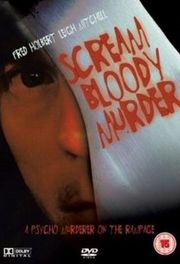
2) Scream Bloody Murder (dir. by Marc Ray)
So Matthew (played by Fred Holbert) is a disturbed young man who murders his father with a tractor and loses a hand in the process. He’s sent off to a mental asylum for a few years and while there, he’s given a sharp and potentially deadly hook as a replacement for his hand. Seriously, why would you give a weapon like that to a mental disturbed person who has just murdered his own father? That’s just one of the many mysteries that goes unexplored in 1973’s Scream Bloody Murder, an occasionally watchable slice of entertainment that is ultimately too slow and predictable to really be effective. Once Matthew is released from the asylum, he goes on the expected murder spree and goes all Collector-like on a prostitute named Vera (played by Leigh Mitchell, who also plays Matthew’s doomed mother in a clever bit of Oedipal casting). Mitchell and Holbert both give surprisingly good performances and director Marc Ray comes up with a few visually inventive scenes of mayhem but, for the most part, this film never quite lives up to the excessive promise of its premise.
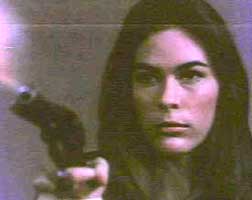
3) Silent Night Bloody Night (dir. by Theodore Gershuny)
Filmed in 1972 and subsequently released in 1974, Silent Night Bloody Night is a real treat, an atmospheric thriller that has a wonderfully complicated plot that will keep you guessing. On Christmas Eve, Jeff Butler (James Patterson) comes to an isolated town to arrange the sell of his grandfather’s home. As we discover through some wonderfully dream-like flashbacks, Jeff’s grandfather died nearly 40 years ago when he was set on fire in his own home. With the help of local girl Diane (Mary Woronov), Jeff investigates his grandfather’s death and discovers that the town is full of secrets and people who are willing to kill to maintain them. Director Theodore Gershuny uses the low budget to his advantage and the sepia-toned flashbacks are truly disturbing and haunting. Ultimately, Silent Night Bloody Night feels like a dream itself and the mystery’s solution is less important than the journey taken to reach it.
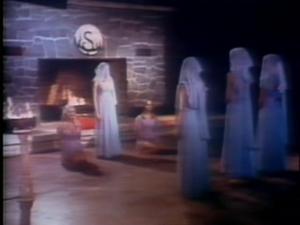
4) Sisters of Death (dir. by Joseph Mazzuca)
Technically, this isn’t the best film to be found in the Chilling Classics box set but it’s still one of my personal favorites. The 1977 film opens with a very baroque sorority initiation that ends with one of the sisters being killed in a game of Russian Roulette. A few years later, the surviving sisters are invited to an isolated and lavish estate where it turns out that the dead girl’s father (well-played by Arthur Franz) is looking for revenge. This film is predictable and a lot of the plot depends on people refusing to use any common sense but Sisters of Death is such a fun little melodrama that I can’t complain too much. The film plays out like a surprisingly violent Lifetime movie and it all ends on a wonderfully cynical note.
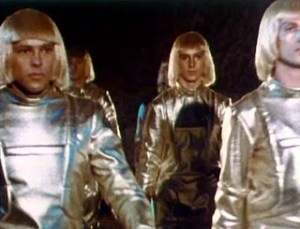
5) War of the Robots (dir. by Alfonso Brescia)
Whatever you do, don’t watch War of the Robots alone. Seriously, you need somebody there — preferably several people — so you can take turns making snarky comments and rude jokes. Otherwise, you’ll just be stuck watching this amazingly bad science fiction film from 1978 and wondering how much more of it you can take. Set in the generic future, War of the Robots tells the story of what happens when two human scientists are kidnapped by a bunch of robots. Capt. John Boyd (Antonio Sabato) is sent to get the scientists back and the end result? A war of the robots. Or something like that. This is one of those films where it’s difficult to really pay that much attention to what’s happening on-screen. However, it’s worth seeing just for the chance to spot the wires that are enabling the model spaceship to hang over the “alien” landscapes. Naturally, since this film was made in the 70s, everyone wears space suits with really wide lapels.

6) Werewolf in a Girls Dormitory (dir. by Paolo Heusch)
First released in 1961, Werewolf in a Girls Dormitory is an Italian/Austrian co-production. It was originally titled Lycanthropus and while Werewolf In A Girls Dormitory is a lot more memorable, it also makes this film sound like a lot more fun than it actually is. This slow and oddly somber film tells the story about a series of murders that occur at a school for delinquent girls. The school’s newest teacher is the obvious suspect but then again, the killer might just be a werewolf. I liked the look of this film — the film is lit to emphasize shadows and it gives the whole thing a very noir-like feel — but, much like Scream Bloody Murder, this movie was just too slow to really be effective.
So, out of this batch of 6, I would definitely recommend that you track down and see Silent Night Bloody Night and Sisters of Death. I would also definitely suggest that you do your best to avoid War of the Robots. As for the other 3, they’re all better than The Wicker Tree.
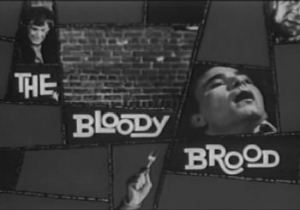
As part of my ongoing mission to see all of the film’s featured in Mill Creek’s 50 Chilling Classics box set, I watched a 65-minute Canadian film called The Bloody Brood last night.
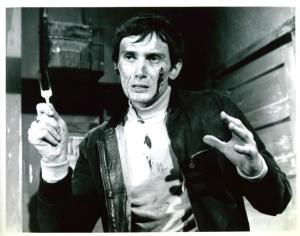
First released in 1959 and filmed in moody, noir-ish black-and-white, The Bloody Brood tells the story of a low-level drug dealer and aspiring beatnik named Nico (Peter Falk). One night, while hanging out at the local coffeehouse and listening to decadent jazz, Nico witnesses a man drop dead of a heart attack. Intrigued by the man’s sudden death, Nico and his nervous friend, a tv director named Francis (Ron Hartmann), decide that they want to experience what it would be like to deliberately kill someone. Before you can say “Leopold and Loeb,” Nico and Francis are feeding a random stranger a hamburger laced with ground glass. That stranger, a hard-working telegram delivery man named Ricky (George Sperdakous), later dies of an intestinal hemorrhage.
Unknown to Nico and Francis, Ricky has an older brother named Cliff (Jack Betts) and Cliff doesn’t believe that his brother’s death was an accident. With the covert help of Detective McLeod (Robert Christie), Cliff starts to investigate his brother’s death. Cliff eventually meets Ellie (Barbara Lord), a disillusioned woman who has fallen in with Nico and his murderous crowd.
The Bloody Brood is an unexpected surprise, a genuinely entertaining B-movie that more than overcomes the confines of its low-budget and limited running time. While Peter Falk is the obvious center of the picture and steals every scene that he’s in with his coldly charismatic style of evil, the entire film is well cast and well acted with Hartmann and Betts both bringing unexpected nuance to their roles. However, the real star of the film is director Julian Roffman who gives the film a shadowy and threatening noir-look.
In many ways, The Bloody Brood represents everything I love about the low-budget, often sordid B-movies of the 50s and 60s. Working with limited resources and a small cast, director Julian Roffman managed to create a genuinely memorable movie. Films like The Bloody Brood continue to serve as proof that you don’t need millions of dollars to make a good film. You just need a strong creative vision and the imagination to make that vision a reality.
Last summer, I decided to watch and review all 50 of the films to be found in Mill Creek’s Chilling Classics box set. Mill Creek, of course, is a company that’s best known for releasing box sets that seem to primarily feature low-budget films that, for whatever reason, have now found themselves in the public domain. If you’re a fan of old school B-movies in general, then you probably know just how fun it can be to read the back of a Mill Creek boxset and discover what obscure films are waiting inside. The thing that I especially love about Mill Creek is the fact that — in the best grindhouse tradition — they describe every film that they distribute (whether it’s George Romero’s Night of the Living Dead or something like Las Vegas Bloodbath) as being a “classic.”
So, anyway, I started to watch and review the films in the Chilling Classics box set but, as 2011 drew to a close, things got rather hectic and busy here at the TSL Bunker. In between covering the Oscar season and keeping the world supplied with weekly trailer posts, I had to set aside my plans to review the entire boxset for another day.
Well, I’m happy to say that day is here! Last night, I dug out the old Chilling Classics box set and I watched a South African slasher film from 1981, The Demon.
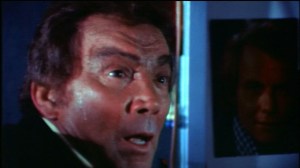
The Demon actually tells two separate but connected stories. In the first story, a teenage girl is kidnapped from her bedroom by a masked killer. Her distraught family calls in a tormented psychic who quickly proves himself to so superfluous and useless that you’d forget all about him except he’s played by the late Cameron Mitchell.
If you’re a fan of old school grindhouse and exploitation films then you’ve undoubtedly seen a handful of films featuring Mr. Mitchell. A former “legitimate” actor who, early on in his career, appeared in things like Death of a Salesman, Mitchell eventually became better known for appearing in low-budget exploitation films. Mitchell could always be counted on to shamelessly overemote and, regardless of the film he was appearing in, he was always a lot of fun to watch. If nothing else, Mitchell always seemed to be rather amused by the films he found himself in. It’s a shame that Cameron Mitchell died before Quentin Tarantino could engineer a comeback for him.
In The Demon, Cameron Mitchell spends most of his limited screen time standing on a rocky cliff while staring down at the ocean below and having psychic visions that don’t really seem to have much to do with anything else happening in the film. Actually, visions is the wrong word. As Mitchell says, “Sometimes…I get these feelings. Vibes, as the kids would say.”
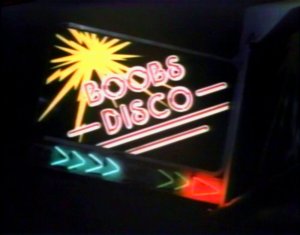
And the kids are in a lot of trouble because our nameless killer has moved on to the city where he spends his time hanging around outside of a place called Boobs Disco and stalking two teachers named Mary (Jennifer Holmes) and Jo (Zoli Markey). This is the film’s second storyline and it mostly consists of Mary spotting the killer out of the corner of her eye and Jo pursuing a relationship with the most boring man on the planet.
Like quite a few films that seem to pop up in various Mill Creek box sets, The Demon is technically a pretty bad film but, once you accept that fact, it’s also an occasionally entertaining mess that delivers a handful of effectively creepy moment.
The scenes featuring Cameron Mitchell are entertaining for exactly the reason that you think they are. These scenes are such obvious filler and were so obviously added as an excuse to get a “name” actor to join the cast that it’s impossible not to admire the nerve of the filmmakers. They weren’t going to let a silly thing like narrative cohesion get in the way of producing a 90 minute film. Playing the world’s worst psychic, Cameron Mitchell delivers his lines with such a truly unfocused intensity that I actually spent the first half of the movie convinced that he was the murderer. The final fate of Mitchell’s character is truly shocking (if just because it kind of comes out of nowhere) and Mitchell plays his final scene as if he’s starring in a dinner theater production of some lost Shakespearean play.
If the scenes featuring Mitchell are mostly entertaining for being so bad, the scenes in which the nameless killer stalks Mary and Jo are actually pretty well done and the final confrontation between the final girl and the killer is handled surprisingly well (though I couldn’t help but roll my eyes at the fact that the film contrives to have the final girl fight for her life while topless). The killer’s lack of personality makes him all the more intimidating and both Jennifer Holmes and Zoli Markey are likable and believable in the roles of Mary and Jo. If nothing else, The Demon proves that even a really poorly produced horror film can be partially redeemed (if not saved) by a likable cast of potential victims.
Finally, and perhaps most importantly, The Demon — like many forgotten exploitation flicks — serves as a valuable time capsule of the society that produced it. To offer up just one example:
Since I previously reviewed two classic horror films from Mario Bava, it now seems like the perfect time to watch a film from Herb Wallerstein, called Snowbeast. Well, no, not really. In fact, to be honest, Snowbeast seems to exist on a totally different planet from either Black Sabbath or Planet of the Vampires. The two latter films are classics of cinema that should be seen by everyone, regardless of the season. Snowbeast, on the other hand, is the epitome of the perfect movie to turn on for background noise. Snowbeast is fun, unthreatening, likable, and ultimately rather forgettable. But sometimes, especially when it comes to finding something safe but appropriate to watch during the Halloween season, that is exactly what’s needed.
Snowbeast was originally made in 1977 and wow, does it show. According to Wikipedia (see, I do to research my claims occasionally), Snowbeast was originally a made-for-tv movie and it has retained a “cult following.” Well, I don’t know if I quite see the film’s cult appeal though it’s certainly better than any 82-minute tv show has any right to be. The film has also entered into the public domain, which, of course, means that it’s been released in a few thousand different Mill Creek box sets. Last time I counted, I actually had four different box sets that featured Snowbeast. So, if nothing else, I’ll always have Snowbeast.
(Incidentally, the version I watched came from the 50 Chilling Classics box set. This is the same box set that featured Cathy’s Curse, The Alpha Incident, The Demons of Ludlow, and my beloved Drive-In Massacre.)
Snowbeast takes place at a ski resort. An unseen monster is killing tourists. The sheriff (Clint Walker) thinks the monster is a yeti. Nobody believes him and the owner of the ski resort — Sylvia Sidney, who once starred in films directed by Josef Von Sternberg — is more interested in making money off of vacationers than in protecting the public safety. Now, if this happened today, I’d imagine there would be an OccupySnowBeast demonstration or something. However, since this film was made in the 70s, this instead just leads to Walker and Bo Svenson going off into the mountains to track down and kill the snowbeast.
Now, the plot of Snowbeast may sound a little familiar and that’s because it’s basically the exact same plot as Jaws except the water has been replaced with snow-capped mountains and the shark is now a Yeti. But otherwise, it’s pretty much the exact same story, right down to the greedy businesspeople going, “Shut down the mountain!? That’ll be bad for tourism!” and the film’s 3 heroes all giving each other knowing looks when the wrong bear is killed and paraded in front of the cheering townspeople. (That said, I have to say that if you love spotting overreacting extras in crowd scenes, this is the film for you.)
So, Snowbeast doesn’t win any points for originality but I’m willing to cut it some slack. Even though it’s a bit before my time, I’ll bet that Snowbeast wasn’t the only low-budget B-movie to rip off Jaws in the 70s and you don’t really watch a movie called Snowbeast for the plot anyway. You watch a movie called Snowbeast because you’re looking for something silly that won’t require too much thought. And that’s a perfect description of Snowbeast. It’s a film that’s done well enough that you won’t hate yourself for watching but, at the same time, is so predictable that you can do about a hundred other things while it’s playing without running the risk of missing anything important. It is literally a movie that you can start watching at any point after it’s started.
Ironically enough, Snowbeast is actually more effective because it was made for television. Yes, you don’t get the gore, sex, or profanity that you would typically expect from one of these films but it also means that you don’t get to see the killer Yeti except for one very brief shot. Otherwise, the Snowbeast of the title is represented by point-of-view shots of the monster about to attack some unsuspecting skier. As I’ve mentioned in other horror reviews, our imaginations will always come up with something scarier than even the most effective of special effects and Snowbeast‘s low budget origins force us to use our imagination more than the typical monster film would. As well, the snowy setting is beautiful to look at and if you’re a fan of watching people ski (and ski and ski and ski) this is the film for you. Seriously.
Last night, as part of my quest/mission/curse to watch all of the movies included in Mill Creek’s 50 Classic Chillers Box Set, I watched a film from 1974 called Drive-In Massacre.
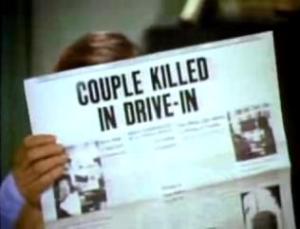
So, what’s Drive-In Massacre about? Well, there’s this drive-in and there’s someone wandering around with a sword which he uses to kill various filmgoers. Now, you might think that the fact that people keep getting hacked to pieces at the drive-in would lead to the establishment either getting closed down or perhaps, at the very least, it would lead to an increased police presence. Well, you would be wrong. Even more people start hanging out at the drive-in and the police presence amounts to two overweight detectives who go undercover to catch the killer. (By undercover, I mean that one of the detectives shows up in drag.)
Since this is a pre-1980, giallo-influenced slasher film, the film is structured as a whodunit. Instead of giving us the wisecracking killer that we usually associate with slasher films, this one presents us with a handful of weirdos and dares us to try to guess whose guilty. Is it the bald guy who manages the drive-in and who is referred to as being “a perfect asshole?” Or is it Orville The Pervert who spends all of his time trying to peep on young lovers and who happens to have some bloody clothes in the back of his car? Then again, it could be Germy, the creepy janitor who is a natural suspect because 1) he’s a former sword swallower and 2) his name is Germy. Then again, it could also be the sweaty guy who pops up out of nowhere during the film’s final 20 minutes and spends all of his time saying things like, “I’m going to cut the bad out of you.”
Of course, there’s always the possibility that the film will end with an out-of-nowhere “surprise” twist that will either piss you off or make you squeal with delight depending on how seriously you take these things. Me, I squealed with delight.
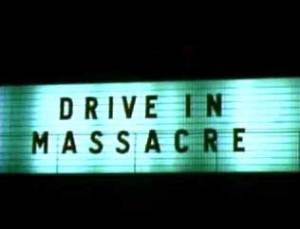
I loved this movie and I make no apologies for it. The plot makes absolutely no sense, the acting is really odd, and the whole film has this wonderful feel to it that leads you to suspect that someone just turned on a camera and yelled, “DO SOMETHING!” The first kill scene is actually rather effective and there’s a few scenes of intentional humor that actually work almost well. As well, the film did manage to capture the feel of a sleazy drive-in (perhaps because it was filmed at a sleazy drive-in). I mean, I’ve never been to a drive-in and I probably never will since I don’t think they exist anymore but, after seeing this film, I feel like I’ve had the drive-in experience.
However, my love of this film truly came down to two things:
1) I loved Germy! Seriously, I’ve seen a lot of movies featuring mentally disturbed janitors and Germy belongs in the Mentally Disturbed Janitor Hall Of Fame. Plus, his name was Germy. That just makes me laugh so much.
2) The movie itself only lasts an hour and 13 minutes. Now, on the one hand, that means that there’s not a lot of time for anything along the lines of coherence. However, on the other hand, it also means that the movie never gets a chance to drag and right when you’re starting to get annoyed with it, it’s over!
As a sidenote, Arleigh might be interested to know that this film was apparently co-written by George “Buck” Flower.
Last night, after I finished with The Alpha Incident, I decided to watch yet another Bill Rebane film from the Mill Creek 50 Chilling Classics box set, 1983’s The Demons of Ludlow.

The Demons of Ludlow
Ludlow is a tiny New England town that is celebrating its 200th birthday. Now, when I say tiny, I mean that there appears to be about 17 people living in the town. Anyway, a mysterious piano is sent to the town as a birthday present and, uh-oh — guess what’s possessed with the angry spirit of a warlock who happened to be murdered by the citizens of Ludlow 200 years ago? Anyway, this warlock has a whole lot of other angry ghosts with him and soon, they’re exacting revenge on the citizens of Ludlow.
Okay, I think I can hear Arleigh going, “Uhmmm…Lisa Marie, remember a little film called The Fog!?” and yes, I guess the plot is a bit similar to John Carpenter’s film. It’s also reminiscent of another 1983 horror film called The Devonsville Terror. While The Devonsville Terror was directed by the infamous Ulli Lommel, Bill Rebane is listed as being one of the “associate producers.” I’m sure there’s probably a story there.
But anyway, back to The Demons of Ludlow. This is very much a horror film of the 80s, which means that it has a real nasty streak. As opposed to The Alpha Incident, where Rebane actually did appear to have a higher purpose in mind, the Demons of Ludlow is pretty much all about killing people. Yet, this lack of higher purpose actually makes Demons of Ludlow a far more entertaining film to watch. It helps that none of the 17 citizens of Ludlow are actually likable enough for you to get too upset once they die.
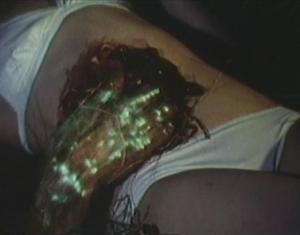
A shocking scene of demonic vengeance...or something.
The demons of Ludlow themselves are far more interesting, if just because they challenge logic by their very existence. As the reviewer known as Scarina pointed out in her own excellent review, the film’s own internal logic states that the ghosts that are helping out the warlock in the piano are the exact same ghosts who ran him out of Ludlow in the first place. So, therefore, why are they helping him? Now, if pressed, I can accept that perhaps he used his warlock powers to take control of their ghosts. I mean, he’s had to kill 200 years doing something, right?
But what’s odd is that we’re told that Ludlow is 200 years old. Seeing as the film came out in 1983, let’s give the movie the benefit of the doubt and say that Ludlow was founded in 1782. Okay, that would mean that Ludlow was established during the final year of the American Revolution. Therefore, why are half the ghosts of Ludlow dressed like pilgrims from a community theater Thanksgiving pageant? I say half because the other half are dressed like decadent nobles from pre-Revolutionary France. Seriously, they’ve got the powdered wigs and the fake moles and everything! And then, to top it off, five pirate ghosts show up at the end of the movie. I mean, my God, I would have loved to have been back in Ludlow in 1782. Apparently, it was like the New Orleans of colonial New England.
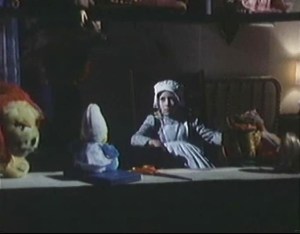
Pilgrims of LudlowPirates of Ludlow

Marquis De Sade of Ludlow
Still, I have to admit I enjoyed the Demons of Ludlow. It doesn’t drag as much as The Alpha Incident and this is a film that definitely has more than enough “What the Fuck” appeal to be watchable. There’s even one sequence — in which one unfortunate citizen ends up getting shot by a musket-holding Pilgrim who suddenly shows up in a mirror — that is actually rather effective. This is one of those films that people like me tend to defend by citing its “dream-like” qualities. That may be going a bit too far in this film’s case but it’s still a definite success d’estime.
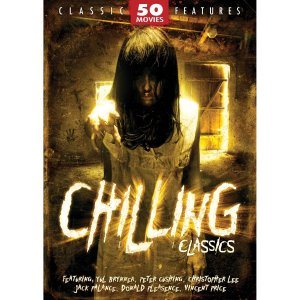
It seems that every film lover owns at least one of those box sets of public domain films that Oak Creek Entertainment puts out. You know which ones I mean — the box sets usually have about 50 to 100 movies crammed onto 12 discs and always have titles like “Astounding Adventure Classics.” Most of the time, you’ll recognize one or two of the movies included (usually Night of the Living Dead) and you’ll end up buying it because they only cost like 6 bucks and that’s pretty good for 50 movies, even if you already know most of those movies are going to suck. I own several of these box sets, including 50 Chilling Classics.
I’ve recently decided to write a review for every single film that I have in my collection and I figured, what better place to start than with the often-forgotten and ignored public domain films that can be found in 50 Chilling Classics? So, let’s get things started by reviewing a little public domain film from Wisconsin called The Alpha Incident.
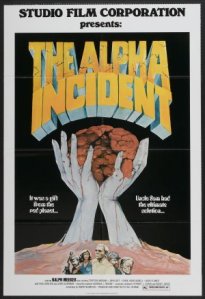
Made in 1977, The Alpha Incident tells us what happens when a train, carrying a deadly virus brought back from Mars, makes a stop over at a small country train station. It seems that Hank (played by George “Buck” Flower, who giggles a lot) had taken it upon himself to inspect that deadly cargo and has accidentally released it into the atmosphere. The train station, and the five people trapped inside, are quarantined by the U.S. government. Trapped in the station are the increasingly crazed Hank, the cold Dr. Sorenson (Stafford Morgan), gruff bully Jack (John F. Goff), neurotic secretary Jenny (Carol Irene Newell), and the shy station agent, Charlie (Ralph Meeker, who was the best-known actor in the cast). The five are told to wait while American scientists try to find a cure for the virus. Under no circumstances can they 1) leave the station and 2) fall asleep because, the minute they do, the virus will cause their brain to literally explode out of the back of their head. For the rest of the film (which, honestly, would probably have worked better as a play), the five fight among themselves, wonder if they’re infected, and above all else, struggle to stay awake.
The Alpha Incident was directed by Bill Rebane, an independent filmmaker who is based up in Wisconsin. Apparently, Rebane’s unique cinematic vision has won him a cult following among fans of low-budget horror and sci-fi films. One term that I’ve often seen used to describe him is “the Ed Wood of Wisconsin.” On the basis of the Alpha Incident, I don’t know if that’s a fair comparison. Yes, the film does drag at time and the editing pretty much defines the term “ragged” but the movie still held my interest and not in a solely “what the fuck am I watching?” sort of way. Yes, the performances are uneven, ranging from histrionic (George “Buck” Flower and John F. Goff) to boring (Stafford Morgan) to adequate (Ralph Meeker) to surprisingly good (Carol Irene Newell) but the characters themselves aren’t the usual stereotypes and, while the dialogue is often a bit clunky, the film’s story is an interesting one and the ending is just so wonderfully cynical and downbeat. With it’s portrayal of common people trying to survive the mistakes of a faceless government, The Alpha Incident is so wonderfully 70s that I it made me want to go to a club, tell my companions, “I’m going to powder my nose,” and then snort someone else’s cocaine.
Like many of the best B-movies, The Alpha Incident was made with more ambition than skill but it’s still a film that, if you truly appreciate the low-budget exploitation movies of the 70s, is more than worth seeing.
 Through the Shattered Lens