 During a reception on the steps of U.S. Capitol, an assassin kills Contra leader Col. Martinez (Geno Silva) and seriously wounds Sen. Terry Fallon (Harry Hamlin), an up-and-coming politician from Texas. An eager media catapults Fallon to national stardom and the beleagued President (James Whitmore), who is facing a tough reelection bid, is pressured to replace the current vice president (Mitchell Ryan) with Fallon.
The FBI only assigns two of their agents to investigate the assassination, a sure sign that someone wants the investigation to just go away. Nick Mancuso (Robert Loggia) is a crusty, hard-drinking veteran agent whose career is nearly at an end. David Ross (Lance Guest) is his young and idealistic partner. When Mancuso and Ross discover that Martinez was injected with the HIV virus just two days before the assassination, it becomes obvious that there is a bigger conspiracy afoot. It all links back to Sally Crain (Linda Kozlowski), who is Fallon’s legislative aide and also his lover. (Fallon has a wife but she’s locked away in a hospital.) Sally has an interest in bondage, as Ross soon finds out.
Favorite Son was originally aired as a 3-night, 4 and a half-hour miniseries. It was later reedited and, with a running time of less than two hours, released theatrically overseas as Target: Favorite Son. As a miniseries, Favorite Son is an exciting conspiracy-themed film that is full of scheming, plotting, interesting performances, and pungent dialogue. Target: Favorite Son, on the other hand, is disjointed and, unless you know the original’s plot, almost impossible to follow. If you’re going to watch Favorite Son, make sure you see the original miniseries. My mom taped it off of NBC when it originally aired. That was the only way that I was able to originally see the film the way that it meant to be seen. The entire miniseries has also been uploaded, in three parts, to YouTube.
Hopefully, the original miniseries will get an official release someday because it’s pretty damn entertaining. Harry Hamlin isn’t really dynamic enough for the role of Fallon but otherwise, the movie is perfectly cast. Robert Loggia is so perfect for the role of Nick Mancuso that it almost seems as if the character was written for him. (Loggia did later star in a one-season drama called Mancuso, FBI.) Linda Kozlowski seems to be destined to be forever known as Crocodile Dundee’s wife but her performance as Sally shows that she was a better actress than she was given credit for. The supporting cast also features good performances from Jason Alexander, Ronny Cox, Tony Goldwyn, John Mahoney, Kenneth McMillian, Richard Bradford, and Jon Cypher.
Favorite Son may be over 30 years old but it’s still relevant today. In the third part, John Mahoney gives a speech about how American voters are often willfully ignorant when it comes to what’s going on behind the scenes in Washington and it’s a killer moment. Melodramatic as Favorite Son may be, with its portrayal of political chicanery and an exploitative national media, it’s still got something to say that’s worth hearing.
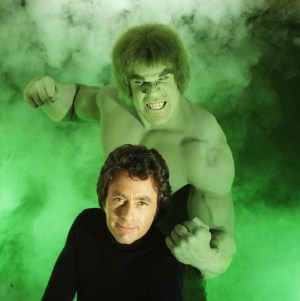 It may seem hard to believe now but there was a time when comic book adaptations were considered to be a risky bet at best. In 1977, Marvel Comics sold the television rights for four of their characters to Universal Productions. This led to three unsuccessful pilots (one for Dr. Strange and two for Captain America), a Spider-Man series that lasted for two seasons, and The Incredible Hulk. As opposed to the other Marvel adaptations, The Incredible Hulk series was popular with fans and (some) critics and ultimately lasted for four seasons.

 Through the Shattered Lens