Horror Film Review: The Strange Case of Dr. Jekyll and Mr. Hyde (dir by Charles Jarrott)


First released in 1968, The Strange Case of Dr. Jekyll and Mr. Hyde is a somewhat loose adaptation of the famous novella by Robert Louis Stevenson.

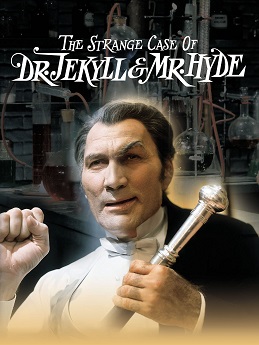
Jack Palance stars as Dr. Henry Jekyll, a mild-mannered and respected doctor who lives in Victorian-era London and who is convinced that there is a good and dark side lurking in every single person.  The dark side is what forces people to break the law and fight with each other.  Jekyll feels that his experiments will allow people to get closer to their dark side and, in doing so, defeat it.  When Dr. Jekyll explains his theories to a medical association, he is violently jeered and booed.  Jekyll returns to his home, enters his laboratory, and takes a drink of the serum that he’s been developing.

The next morning, Dr. Jekyll wakes up with a hangover and no memory of how he spent the previous night.  Trying to retrace his steps, Jekyll finds himself in a dance hall where everyone is talking about a well-dressed but ugly man named Edward Hyde.  Hyde showed up the previous night, spent a lot of money on a woman named Gwyn (Billie Whitelaw), and then got into a fight with two men.  Hyde broke a window to make his escape.  Jekyll, sensing what must have happened, pays for the window on behalf of his “friend,” Edward Hyde.

Jekyll continues to drink the serum and he continues to indulge in all of the forbidden vices as Edward Hyde.  Eventually, we get to see Palance as Hyde.  Unlike a lot of other actors who have played the role, Palance uses a minimum of makeup to suggest his transformation.  Instead, he hunches over, scrunches up his face, and he has a unibrow.  One of the stranger things about this production is that we are continually told that Hyde looks nothing like Jekyll but we know that’s not true.  Instead, Hyde looks exactly like Jekyll making a funny face.

Palance gives one of his more eccentric performances as Jekyll and Hyde.  Somewhat surprisingly, he’s far more convincing as the kindly and troubled Dr. Jekyll than as the villainous Mr. Hyde.  (As Hyde, Palance is often trying to so hard to maintain his facial paralysis that it’s hard to understand exactly what it is that he’s saying.)  With each drink of the serum, Jekyll becomes a bit more confident in himself.  However, he also finds himself losing the ability to control the transformations.  One morning, he wakes up in his bed and is shocked to discover that he is still Hyde.  That same morning, he learns that Hyde is suspected of committing a senseless and brutal murder.  Jekyll has no memory of it but he knows that Hyde is guilty.  And if Hyde is guilty, so is Jekyll.  (Those who make the argument that Dr. Jekyll and Mr. Hyde is ultimately about drug addiction will find plenty to back up that argument in this production,)  Jekyll’s anguish as he realizes what he has become is rather poignant to watch.

Produced by horror impresario Dan Curtis, The Strange Case of Dr. Jekyll and Mr. Hyde can seem a bit creaky today.  It was apparently highly acclaimed when it first aired but, seen today, it can feel rather stagey and talky.  That said, the film has a strong supporting cast, with Denholm Elliott especially giving a good performance as Jekyll’s best friend.  Jack Palance’s performance is so bizarre that it transcends the usual standards used to determine good and bad.    It’s definitely a film worth watching.

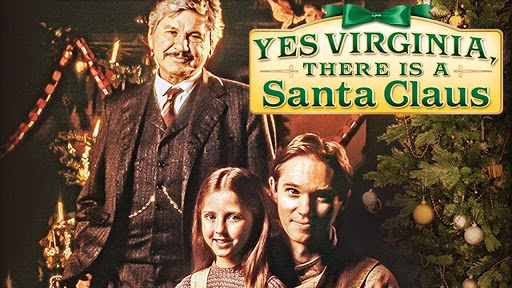
YES VIRGINIA, THERE IS A SANTA CLAUS (1991) – Charles Bronson made a Christmas movie, and it’s a family classic at my house. 


On December 8, 1991, YES VIRGINIA, THERE IS A SANTA CLAUS, starring Charles Bronson, made its world premiere on the ABC Network. I was 18 years old and working at the local grocery store that night so I had to set up my VCR to record the film. I was so nervous that something might happen to mess up my timed recording. In those days, all it took was a quick power flicker and your recording was screwed. I was so happy when I got home that night and everything had gone perfectly. I was a starving Bronson superfan who had not seen anything new from the man since KINJITE: FORBIDDEN SUBJECTS had been released in February of 1989. Since KINJITE’S release, Charles Bronson had faced the most difficult emotional times of his life. The love of his life, Jill Ireland, had fought valiantly against cancer but lost her battle with the disease in May of 1990. When he chose to start working again, his first two films, THE INDIAN RUNNER and YES VIRGINIA, featured him in roles where he was playing a man who is dealing with the pain from having recently lost his wife. These were tough times for the aging star, and it seems he was working out some deep emotional struggles in these two performances. At the time, the prospect of Charles Bronson performing in a heartwarming Christmas movie about a classic newspaper editorial was such a surprising film choice. I was all in! 

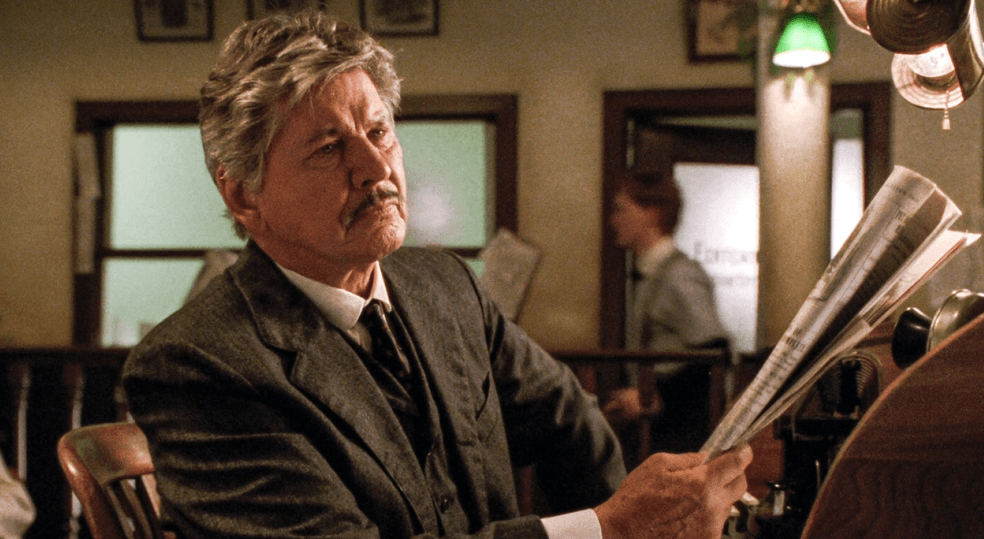
YES VIRGINIA opens with renowned journalist for The New York Sun newspaper, Francis P. Church, cleaning the snow off of his recently deceased wife and daughter’s tombstones. He turns away to take a drink of whiskey out of shame and then walks away. It seems that since they passed away, Church has become a shell of his former self. He has a lot of guilt because he was always away on newspaper business instead of being at home with his family. He’s dealing with that pain by drinking way too much. He’s not working on the stories he’s been assigned by his editor, Edward P. Mitchell (Ed Asner), and it seems he’s lost the will to live. 

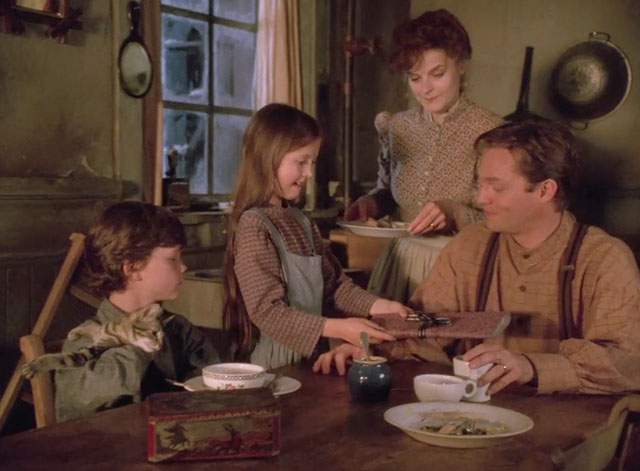
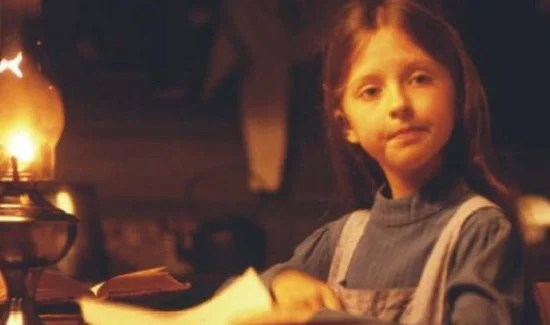
At the same time that Francis Church is dealing with his issues, we’re introduced to the O’Hanlon clan. James O’Hanlon (Richard Thomas) is the head of the family that includes his wife Evie (Tamsin Kelsey), daughter Virginia (Katharine Isabelle), and sons Teddy and Sean. We meet James on the same day that he loses his job for beating up a bigot who was insulting his Irish heritage. We follow him as he attempts to find a job so he can provide for his family. His sweet-natured daughter Virginia is having some issues of her own. One day while playing jump rope at school, some of the other girls decide to tell her that there is no such thing as Santa Claus. This cause’s Virginia a lot of stress, so she asks her dad if it’s true. Holding yesterday’s copy of the New York Sun, he tells her that if he sees it written in The Sun, he knows it’s true. Being a smart young lady, she decides to write her own letter to The Sun. 

And this is where the two stories converge. Editor Mitchell assigns Church the job of answering Virginia’s question. This turns out to be just what he needs to begin seeing the good in the world around him again.  

That night in December of 1991, even after working the late shift at the grocery store, there was no way I was going to wait until the next day to watch a new Charles Bronson movie for the first time in almost 3 years. I pressed play and settled in for a film that is dealing with some really serious subject matter. The main characters are dealing with severe depression, alcoholism, bigotry, extreme poverty, and attitudes of indifference and disbelief towards Santa Claus himself! Sounds like an uplifting story doesn’t it? The truth is that it is a very uplifting story because it features people with good hearts who care about the people around them. Sure, there are some jerks in the movie. This is one of those kinds of movies where those jerks end up getting their asses kicked. James O’Hanlon and his friend Donelli get the opportunity to beat up the bigots who call them potlickers and poured their beer on them. As a fan of Bronson, one of the most satisfying scenes in the movie is when Church punches out the smug, elitist A-hole, Cornelius Barrington (John Novak) who’s being disrespectful about one of Church’s female co-workers. Those scenes are satisfying, but my favorite parts of the movie are the sentimental acts of kindness we get to see throughout the film. We see co-workers taking care of co-workers. We see neighbors taking care of neighbors. We see family members taking care of each other at different times and different ways. It’s so satisfying when we see good things happen to these good people simply because someone cares enough to be kind. 

The cast in this film is so good. Of course Charles Bronson is excellent as Francis P. Church. You can really feel his character’s grief, and you can understand why he runs away to the bottle. And knowing that Bronson had recently lost his wife in real life only adds to the emotional power of the performance. And I think Katharine Isabelle is so good as Virginia. The wrong person in her role could have ruined the film. They got it right with Katharine. Ed Asner is perfect as Edgar P. Mitchell, with just the right combination of toughness and caring. I really enjoy seeing the two grizzled veterans, Bronson and Asner, working together. And finally, I like  Richard Thomas in this movie as well. He plays the highs and lows of his character in a dramatic way without going too far. The main cast had to be good for the movie to work, and they more than fit the bill. 

And what about that famous editorial where Church answers Virginia’s question, “Is there a Santa Claus?” I just love the scene in the movie when the sweet girl gets her answer. I won’t spoil it for you with all the details, but I will say that it features so much thoughtfulness and thankfulness leading up to the reading of the actual editorial that ran in New York Sun in 1897. And the look on Virginia’s face when her dad reads “Yes Virginia, there is a Santa Claus” is priceless. It’s the perfect example of why I love the movie, and therefore, it’s a perfect ending to the film. 

BONUS CONTENT – I had the great privilege to be part of an interview with Lindsay Ireland, Charles Bronson’s and Jill Ireland’s niece, as part of the “This Week in Charles Bronson” podcast. She gives so much insight into her uncle and aunt. She also provides additional context on just how hard Jill’s passing was on Bronson just prior to filming YES VIRGINIA, THERE IS A SANTA CLAUS. I’ve linked the interview below if you want to know more.

Film Review: Lost Horizon (dir by Charles Jarrott)


“Friends forever.  It’s a nice idea.”

With those words, the late Casey Kasem closed out the infamous “Rockumentary” episode of Saved By The Bell.  In this episode, Zack Morris fell asleep in his garage while waiting for his high school friends to arrive for band rehearsal.  While he was asleep, he dreamt about becoming a superstar as the result of Zack Attack’s hit song, Friends Forever.  Later, of course, Zack was led astray by a publicist who tried to sell him as being a “male Madonna.”  Zack didn’t care about the fame.  He was more concerned that the music and the lights at his concert were so excessive that the audience couldn’t even hear his lyrics.  Because, seriously, when you’re coming up with banger lyrics like “We’ll be friends forever/yes we will,” you want to make sure that they can clearly be heard.

It’s easy to make fun of the band and the show but that doesn’t make Casey Kasem’s words any less true.  Friends forever.  It is a nice idea.  It’s also a totally unrealistic and implausible idea.  People grow apart.  People develop new interests.  People move to different towns.  Sometimes, people just decided that they need to take a little break from the same old thing.  Instead of demanding that people remain friends forever, it would perhaps be more realistic to encourage people to enjoy and treasure the time that they have in the present.  But, to be honest, entertainment is not about that type of reality.  No one wants to hear, “Be friends until you get bored.”  Instead, they want to hear “Friends forever!”  It’s a simple idea and the simple ideas are the ones that usually bring us the most comfort.

Take the idea behind Shangri-La, for instance.  Shangri-La was a utopia that was hidden away in the Himalayas.  It was a place where there was no war, no greed, and everyone was in nearly perfect health.  It was a place where it was common for people to live to be well over a hundred years old.  It’s a place where people literally can be friends forever.  And while the place does have one very big drawback — i.e., once you decide to stay there, you can’t return to the outside world for even so much as a brief visit — it’s still easy to see why this idealized existence would appeal to many people.

The lamasery of Shangri-La was first introduced in a 1933 novel called Lost Horizon.  Written by James Hilton, Lost Horizon told the story of a group of westerners who, fleeing from a political uprising in India, find themselves in Shangri-La.  That the novel’s portrayal of a peaceful utopia hidden away from the “modern world” proved to be popular should not come as a surprise.  In 1933, the world was still recovering from the Great War.  Much of Europe was still in ruins, both economically and physically.  The combination of the First World War and the Spanish Flu pandemic had shaken everyone’s faith in the future.  Even as a group of idealistic activists, industrialists, and politicians tried to make war illegal, Mussolini seized power in Italy.  Spain was on the verge of civil war.  In Germany, a fanatical anti-Semite named Adolf Hitler had managed to move from being a fringe politician to being named chancellor.  The U.S. was suffering from the Great Depression.  Even the UK was so mired in political turmoil that it was no longer a reliable bulwark against chaos.  To the readers who were having to deal with all of that on a daily basis, the idea of Shangri-La was an inviting one.

(One of those readers was Franklin D. Roosevelt, who named his presidential retreat Shangri-La.  Years later, Dwight Eisenhower would rename Shangri-La after his son and it’s remained Camp David ever since.)

Not surprisingly, the book’s success led to it being adapted for the movies.  Frank Capra took the first crack at it, release his film version in 1937.  At the time, Capra’s adaptation was the most expensive film to have ever come out of Hollywood.  (It cost $1.6 million dollars!)  It also underperformed at the box office, nearly bankrupting Colombia Pictures.  Even though the film itself was nominated for Best Picture of the year, it still took five years for the film to earn back its cost.  Because Colombia edited the film to shorten its lengthy running time, Capra sued the studio and the end result was that everyone involved lost a good deal of money.  Considering all of the bad luck that befell the first production, one might wonder why Hollywood would even risk making a second version of the film.  And indeed, it would be several decades before any major studio attempted to bring Hilton’s novel back to the screen, despite the fact that the idea behind Shangri-La was probably looking more attractive with each crisis-filled day.

Ross Hunter

In 1973, producer Ross Hunter was sleeping on a mountain of cash.  Well, perhaps he wasn’t but a look at some of the films that he had produced would definitely suggest that he could have if he had so chosen.  Hunter started his career producing melodramas that starred Rock Hudson and were often directed by Douglas Sirk.  He was the type of producer who understood that importance of glitz and glamour, especially with the film industry facing a new competitor named television.  In the 60s, he made films that were totally out-of-touch with the turmoil of the decade but which still appealed to middle-aged viewers who wanted an escape from the hippies and the assassins.  In 1970, he scored his biggest hit of all time when he produced Airport.  As dull as that film seems to us today, it was the biggest hit of 1970 and it also gave birth to the disaster genre.  (It was also the only Ross Hunter production to be nominated for Best Picture.)

It was after the success of Airport that Ross Hunter decided to produce a remake of Lost Horizon.  Following the approach that he used in Airport he gathered an all-star cast.  In fact, George Kennedy appeared in both Airport and Lost Horizon!  Joining Kennedy were Oscar nominees Sally Kellerman, John Gielgud, Charles Boyer, Peter Finch, and Liv Ullmann.  Michael York, fresh off of Cabaret, and Olivia Hussey, who was best-known for playing Juliet in the wildly successful 1968 version of Romeo and Juliet, were cast as rebellious lovers who tried to escape the paradise of Shangri-La.  Larry Kramer, the future playwright and political activist, was hired to write the script.  Charles Jarrott, who specialized in big, glossy films and who had been nominated for Best Director for his work on Anne of a Thousand Days, was brought in to direct.  And Burt Bacharach was enlisted to write the song because, on top of being a literary adaptation with an all-star cast, Lost Horizon was also going to be a musical.

What could go wrong?

What indeed.

The 1973 version of Lost Horizon opens with an endless aerial view of the Himalayas.  In the background, singers sing about peace and love.  “There’s a lost horizon/waiting to be found/where the sound of guns/don’t pound in your ears/anymore,” the singers repeat several times, as if to hammer home the fact that the audience is not about to get Burt Bacharach at his best.

When the opening credits finally end, we find ourselves at an airport.  A very non-musical protest has broken out.  The characters in the film describe it as a revolution but instead, it just looks like a bunch of confused extras standing on a landing strip.  When it comes to an epic film like this, it’s always a good idea to see what the extras are doing.  In a good film, the extras will actually be a part of the world onscreen and you won’t even think of them as being a crowd of paid performers.  In a bad film, like this one, they’ll all stand around in a perfectly organized group and they’ll all do the exact the same thing at the same time, like shaking their fists at a plane.

Despite all of the “drama” at the airport, one airplane does manage to take off.  On the plane are the Conways, diplomat Richard (Peter Finch) and his younger brother, George (Michael York, whose blond prettiness suggests that there’s not a chance he could share any DNA with the much more rough-hewn Peter Finch).  There’s also a Newsweek photographer named Sally Hughes (Sally Kellerman), who pops pills and who suffers from a pronounced case of ennui.  She describes her job as “taking pictures of the headless so that people with heads can look at them in magazines while getting their hair done.”  (Damn, Newsweek apparently used to be  really messed up publication!)  Sam Cornelius (George Kennedy) is an engineer and an embezzler.  And finally, there’s Harry Lovett (Bobby Van), who introduces himself to everyone as being “Harry Lovett, the comedian.”  Harry was playing an USO show when the revolution broke out and apparently, he was abandoned in the country because his act was so bad.  Is the film suggesting that, in 1973, the United States would actually abandon a citizen in a dangerous, war-torn country?  I hope someone impeaches that President Nixon!

Our heroes may think that they’re escaping to freedom but it turns out that the plane is actually being hijacked!  One thing leads to another and eventually, as happens in all good musicals, the plane cashes in a remote area of the Himalayas.  At first, it seems like our heroes are done for but, fortunately, they’re discovered by Chang (the very British John Gielgud) and a group of Shangri-La monks.  Chang leads the party through the snowy mountains and eventually, they arrive at what appears to be a Disney resort but what we’re told is actually Shangri-La, a tropical paradise that sits in the middle of one of the most dangerous places on Earth!

Shangri-La has something for everyone:

Sally gets off drugs and discovers a library that, oddly enough, has every book ever written even though no one knows where Shangri-La is, none of the inhabitants can leave the area without running the risk of rapidly again, and Amazon wasn’t a thing in 1973.

Sam discovers a gold mine but, realizing that money doesn’t matter, he instead uses his engineering skills to help out the farmers of Shangri-La.  It really didn’t appear that the farmers of Shangri-La needed any help but whatever, I guess.  As long as Sam is happy.

Harry Lovett becomes a big star as the children of Shangri-La love his comedy.  Children are well-known for their lack of taste when it comes to comedy.

Richard not only falls in love with the local teacher (Ingmar Bergman’s muse, Liv Ullman) but he also meets the High Lama (the very French Charles Boyer).  It turns out that the High Lama is finally going to die and that he’s determined that Richard is the man who is destined to take over Shangri-Law, despite the fact that Richard has only recently arrived and isn’t even a Buddhist.

In fact, almost everyone is so happy that they start to sing and dance!  It takes 50 minutes for the film to reach its first big musical number.  Unfortunately, there’s a reason why most successful film musicals open with a big number instead of holding off on it.  It’s important to, early on, get the audience used to the idea that they’re watching a film set in a world where it’s perfectly common for people to break out into song.  From West Side Story to La La Land, good musicals have understood the importance of bringing the audience in early.  Lost Horizon waits until everyone has gotten used to the film being a somewhat rudimentary adventure/disaster film before suddenly springing the singing and the dancing on everyone.  It’s a bit jarring.  It wouldn’t matter, of course, if the songs were any good but again, this was not Burt Bacharach’s finest moment.

Unfortunately, one member of the group doesn’t want to stay in Shangri-La and dance and sing.  George Conway does not want to be friends forever.  Instead, he’s fallen in love with the local librarian, Maria (Olivia Hussey).  Maria dreams of seeing New York and London.  George is determined to grant her wish, despite being told that Maria is nearly as old as John Gielgud and will start to age as soon as she leaves Shangri-La.  Richard feels an obligation to accompany his brother.  Needless to say, things don’t go well.  (As Michael York would later put it himself, “There is noooo sanctuary….”)  Will Richard be able to find his way back to Shangri-La?

“Let’s not go to Camelot, ’tis a silly place,” King Arthur famously declared in Monty Python and the Holy Grail.  Lost Horizon suffers the opposite problem.  While Lost Horizon’s Shangri-La is occasionally a silly place, it’s usually just an incredibly boring place.  One can’t help but feel that Maria has a point, regardless how much time Sally spends singing about her hatred of the New York night life.  The film’s downfall is that it argues for Shangri-La being viewed an ideal without making Shangri-La into any place that you would want to visit.  Add in the anemic songs and the confused performances and Charles Jarrot’s inability to maintain any sort of compelling pace and you have a film that’s too dull to really even qualify as a fun bad film.  It’s just bad.

That said, much like friends forever, Shangri-La is a nice idea.

Holiday Film Review: Yes, Virginia, There Is A Santa Claus (dir by Charles Jarrott)


The year is 1897 and eight year-old Virginia O’Hanlan (Katharine Isabelle — yes, that Katharine Isabelle) has a problem.  All of her “little friends” say that there is no Santa Claus!  When she asks her father (Richard Thomas) about whether or not there’s a Santa Claus, he suggests that she write a letter to the New York Sun.  “If you see it in the Sun,” he says, “it must be true!”  The letter ends up on the desk of a gruff editor (Edward Asner) who assigns Virginia’s question to Frank Church (Charles Bronson), an alcoholic who is still mourning the deaths of his wife and child. Conquering his own cynicism and depression, Church writes an editorial reply that goes on to become not just a holiday classic but also the most frequently reprinted editorial in history.  Yes, Virginia, Church begins, there is a Santa Claus….

This 1991 film is a sweet-natured retelling of the famous story of Frank Church’s editorial.  Of course, it takes considerable liberties with the actual story.  Here’s just a few examples.

In real life, the editorial was published in September.  In the movie, it’s published on Christmas Eve.

In real life, Virginia’s father was a doctor and she came from a middle class family.  In the movie, Virginia’s father is an Irish immigrant and laborer who is so poor that the O’Hanlan’s might not be able to afford a Christmas!  They live in a tenement and Virginia’s father is frequently harassed by not only the cops but also corrupt labor officials.

In real life, Frank Church was a notoriously cynical atheist who reportedly had little use for Christmas and specifically didn’t sign his name to his famous editorial because he didn’t think much of it.  At the time that he wrote the editorial, he was also a bachelor.  He did marry shortly after the editorial was published but he never had any children.  In the film, Frank is a widower who rediscovers his zest for life and who smiles broadly while listening to Virginia’s father read it aloud.

And, of course, in real life, it’s very probable that the letter was written by Virginia’s parents because how many eight year olds would actually write something like, “Some of my little friends say there is no Santa Claus.”  In the movie, however, Virginia writes the letter herself.

In other words, this is a nice movie that just happens to be terrible history.  The film does end with a disclaimer that clarifies that “certain events have been fictionalized.”  Actually, the entire story has been fictionalized, with the exception of the content of Church’s editorial.  That said, this is a sweet-natured and generally likable movie.  If nothing else, it’s a film that means well and, as tempting as it may be to roll your eyes at the film’s unabashed sentimentality, it’s sincerity feels right for the holiday season.  It’s a made-for-TV movie from the early 90s so don’t expect any surprises but it’s nicely acted and even Charles Bronson seems to be in a good mood by the end of it.

As far as movies about journalists lying to children are concerned, this is a good one.  Just don’t watch it for a history lesson.

Film Review: The Last Flight of Noah’s Ark (dir by Charles Jarrott)


I recorded the 1980 film, The Last Flight of Noah’s Ark, off of TCM because I looked at the title and the fact that it starred Elliott Gould and I figured that it would be a film about an expedition to recover the actual Noah’s Ark.  I figured that it would feature scenes of Elliott Gould and Christopher Plummer (who I just assumed would be in the movie) climbing Mount Ararat and having comical disagreements about all of the snow.  I also assumed that the movie would end with the real Noah’s Ark sliding down the mountain while Gould and Plummer tried to steer it.

Seriously, it sounded like fun!

Of course, it turned out that I was wrong.

http://www.youtube.com/watch?v=YwA4JZAcmlE

It turns out that The Last Flight of Noah’s Ark is about an out-of-work pilot named Noah Dugan (Elliott Gould) who has a gambling problem and owes a lot of money to the mob.  Normally, you’d be worried that this means Dungan has a contract out on his life but instead, it just means that a bald guy named Benchley (Dana Elcar) keeps popping up and saying that Dugan’s got a week to come up with the money.

Since this film was made before our current socialist moment, Dugan is forced to get a job.  Unfortunately, the only one that he can get involves flying a missionary (Genevieve Bujold) and a bunch of animals to a South Pacific island.  Dugan agrees but, because the plane is an old World War II bomber, he ends up having to make an emergency landing on a remote and uncharted desert isle.

Of course, it quickly turns out that Dugan, the missionary, and the animals aren’t alone!  First off, it turns out that two orphans (played by Ricky Schroder and Tammy Lauren) stowed away on the airplane.  And then, we discover that there are two Japanese soldiers stranded on the island as well!  They’ve been there since World War II!  Fortunately, one of them is named Cleveland (John Fukioka) and can speak English.

(As for Christopher Plummer, he’s nowhere to be seen because he’s not in the movie.)

Anyway, can you guess what happens?  If you think that Noah and the gang turn the plane into a big boat, you’re on the right track.  If you think that cynical Noah turns out to actually have a soft spot when it comes to children, you’re right.  If you think that Noah and the missionary embark on the most chaste romance in movie history …. oh my God, have you seen this movie before!?

Here’s the thing with The Last Flight of Noah’s Ark — the animals are cute.  I mean, the animals really are adorable.  There’s this one duck who has more screen presence than every human in this movie.  And normally, I’d say that cute animals can save just about any movie but this might be the exception to the rule.

I mean, I get it.  This was a movie for kids and that’s great.  But my God, this is a slow movie.  We start with Dugan getting threatened by the gamblers and then it’s another 25 minutes before Dugan even starts the engine on that plane.  I get that this is a family film but I imagine that even families in 1980 would have been bored to death by it.  Elliott Gould certainly seems to be bored, as he gives a performance that all but screams, “Where’s my paycheck!?”

What would have improved The Last Flight of Noah’s Ark?

Christopher Plummer, dammit.

Cleaning Out The DVR, Again #8: Anne of the Thousand Days (dir by Charles Jarrott)


Anne

After I finished writing my review of Rolling Thunder, I continued the process of cleaning out my DVR by watching the 1969 film, Anne of the Thousand Days.  How does a film like Anne of the Thousand Days compare to a film like Rolling Thunder?

They might as well have been conceived, written, directed, and released on different planets.

I recorded Anne of The Thousand Days off of TCM on March 26th.  The main reason that I set the DVR to record it was because Anne was a best picture nominee.  It may seem strange to think that this rather conventional film was nominated the same year as Butch Cassidy and the Sundance Kid, Z, and Midnight Cowboy.  It gets even stranger when you consider what wasn’t nominated that year: Medium Cool, If…, Last Summer, They Shoot Horses, Don’t They?, Alice’s Restaurant, The Wild Bunch, Once Upon A Time In The West, and a long list of other films.  In fact, if I wanted to, I could probably spend this entire review listing all of the 1969 films that feel like a more appropriate best picture nominee than Anne of the Thousand Days.

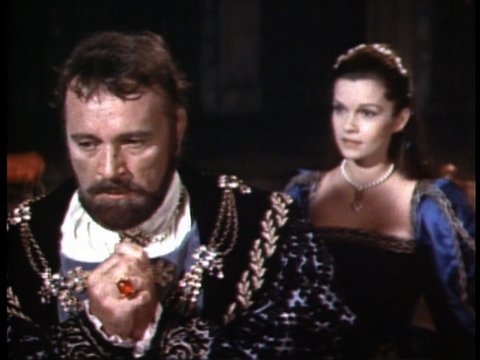
And yet, Anne was nominated for best picture.  In fact, it received a total of 10 Oscar nominations, the most of any film that year.  Tellingly most of the nominations were in the technical categories and the only Oscar that it won was for its costumes.  Genevieve Bujold received a nomination for playing the title character and Richard Burton became the third actor to receive a nomination for playing King Henry VIII.

As for the film, Anne of the Thousand Days tells the oft-told story of King Henry VIII and his marriage to Anne Boleyn.  Told in flashback as both Henry and Anne wait for her to be executed on charges of adultery, the film shows us how middle-aged Henry VIII first met and fell in love with 18 year-old Anne Boleyn.  Standing in the way of Henry’s pursuit of Anne was the fact that 1) Anne intensely disliked him, 2) Anne was already engaged, 3) Anne’s sister was already Henry’s mistress, and 4) Henry was already married to Catherine of Aragon (Irene Papas).

Fortunately, Henry happens to be king and being king comes with its perks.

For instance, as king, he can order Anne and her fiancée to break up.  As king, he can casually dismiss his former mistress.  And, as king, Henry has the power that Anne finds to be the ultimate aphrodisiac.  At first, Anne merely loves the fact that Henry is obsessed with her.  But slowly, she comes to love Henry as a man as well…

The only problem is that Henry is still married and Catherine is still popular with the people.  Even after Henry divorces her and marries Anne, the common people refuse to accept Anne as their queen.  When Sir Thomas More (William Squire) refuses to recognize Anne as queen, Anne demands that More be executed.  When Henry initially shows reluctance, Anne announces that she will not sleep with him until More is dead.

Needless to say, Thomas More is quickly executed.

However, Henry’s attention has already moved on to Jane Seymour (Lesley Paterson) and, desperate to get Anne out of his life, he arranges for Cardinal Cromwell (John Colicos) to frame Anne on charges of adultery and incest.  With Anne facing a humiliating trial and the possibility of execution, Henry makes her an offer.  If she agrees to an annulment, he’ll free her.  However, their daughter — Elizabeth — will lose her claim to the throne…

It’s telling that Charles Jarrott did not receive an Oscar nomination for his work as Anne of the Thousand Day‘s director.  There are a lot of technically good things about Anne of the Thousand Days but, despite all of the melodrama and sex and historical detail to be found in Anne, it never comes to life as a movie.  The costumes are to die for, the sets are impressive, and the cast is full of talented British character actors but the whole movie just feels oddly flat.  Try as it may, it can never convince us that either Henry VIII or Anne Boleyn is worth all the trouble.

Anne of the Thousand Days was obviously a big production, which probably explains all the Oscar nominations.  But otherwise, it’s one of the more forgettable best picture nominees.

Embracing the Melodrama #29: The Other Side of Midnight (dir by Charles Jarrott)


The Other Side of Midnight 1977

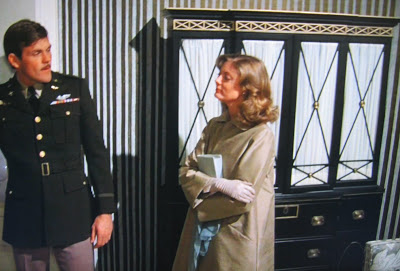
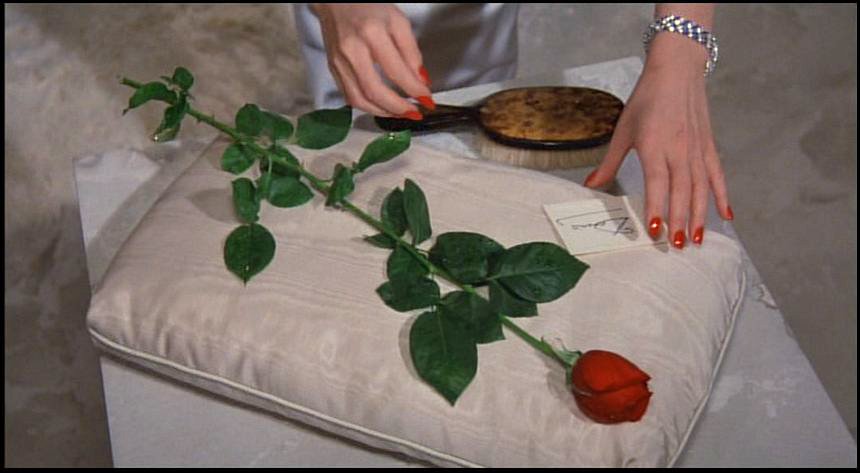
First released in 1977, The Other Side of Midnight is one of those film that literally seems to have everything a viewer could want: sex, love, betrayal, sex, war, melodrama, intrigue, sex, expensive clothes, private island, see-through nightgowns, sex, hurricanes, murder, a surprise twist ending that involves a convent, and sex.  Did I mention that this film has sex in it, because it so does.

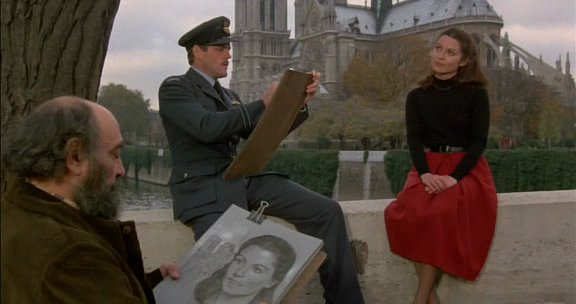
The film opens in Paris during the years leading up to World War II.  Beautiful Noelle (Marie-France Pisier) meets Larry Douglas (John Beck), a handsome American who is serving with the Canadian Air Force.  Noelle agrees to go out on a date with Larry and they get to have the of the movie’s many falling-in-love montages.  Fortunately, they’re in Paris which has a lot of great scenery in front of which they can pose.  Unfortunately, Larry is ordered back to the United States.  He promises Noelle that he’ll return but he never does.  What Larry doesn’t realize is that Noelle’s pregnant — or at least she is until a harrowing scene where she climbs into a bathtub with a wire hanger.

Montage!

Montage!

This is followed by another montage.  Call this the “Out-of-Love-And-Growing-Bitter” montage.  Noelle survives the German occupation by seducing and using every powerful man that she meets.  Along the way, she becomes one of the most glamorous and famous film stars in all of Europe.  Finally, she becomes the mistress of the wealthy and somewhat shady Constantin Demaris (Raf Vallone, doing his best Anthony Quinn impersonation).

Meanwhile, Larry is back in America and, after going through another falling-in-love montage, has ended up married to innocent Catherine Alexander (Susan Sarandon).  What Larry doesn’t realize is that Noelle has hired a detective to keep track of him.  After the war, Larry gets a job as a commercial airline pilot but Noelle secretly arranges for him to lose that job.  Unemployed and desperate, Larry accepts a job to work as the private pilot for Demaris and his mistress.

Montage!

Montage!

Though it takes him a while to recognize her, Larry eventually does realize that his new boss is his former lover, Noelle.  As Larry starts to truly fall in love with Noelle all over again, Noelle starts to pressure him to do something about his new wife.  As is the case with several Hollywood melodramas, it all ends in a courtroom.  The courtroom scenes may not be exactly exciting but they do feature my favorite image from the entire film: at one point, we see that literally every single character who has appeared in the movie up to this point is sitting in that courtroom, all lined up like a bunch of disparate figures in an Edward Hopper painting.

The Other Side of Midnight is one of those big films where a lot of stuff happens but very little of it really seems to add up to anything.  It has a nearly 3 hour running time but it’s story could have just as easily been told in 90 minutes.  Instead, director Charles Jarrott pads out the running time with endless falling-in-love and falling-out-of-love montages.  This is the type of film that never says anything once that it can say an extra three times.

Montage!

Montage!

Susan Sarandon and Marie-France Pisier both give good performances.  Susan Sarandon is likable, even if her character is unbelievably naive while Marie-France Pisier gives a performance worthy of any good film noir but neither one of them has much chemistry with John Beck.  Fortunately, some of the supporting players — like Raf Vallone and Christian Marquand — take full advantage of every chance that they get to chew every piece of scenery that’s available.  Clu Gulager, the father of horror director John Gulager, pops up as well, playing perhaps the only good male in the entire film.

In the end, The Other Side of Midnight (and what the Hell does that title mean anyway?) is a rather silly movie about a bunch of shallow characters wearing beautiful clothes and wandering through wonderfully baroque locations.  Fortunately, I love elaborately decorated locations and glamorous outfits so I enjoyed The Other Side of Midnight despite myself.

Montage!

Montage!

One final thing about The Other Side of Midnight: 20th Century Fox was so sure that The Other Side of Midnight would be a huge success that they used it to blackmail theater owners into agreeing to show an obscure science fiction film called Star Wars.  Theaters would only be allowed to show The Other Side of Midnight if they also agreed to show Star Wars during the week before Midnight opened.

The end result, of course, is that The Other Side of Midnight was a bomb at the box office and Star Wars is still making money.

Below is a behind-the-scenes documentary on the making of The Other Side of Midnight.