The Films of 2024: Reagan (dir by Sean McNamara)


In Reagan, Dennis Quaid stars at the 40th President of the United States.

Framed as a story being told by a former KGB agent (Jon Voight) who is attempting to make a younger politician understand why Russia lost the Cold War, Reagan starts with Reagan’s childhood, includes his time as an actor and as the anti-communist head of the SAG, and then gets into his political career.  Along the way, several familiar faces pop up.  Robert Davi plays a thuggish Russian leader.  Mena Suvari plays Reagan’s first wife while Penelope Ann Miller plays his second.  Xander Berekely plays George Schultz (who was just previously played by Sam Waterston in The Dropout miniseries.)  C. Thomas Howell, Kevin Dillon, Dan Lauria, and Lesley-Anne Down all have small but important roles.  And the usual suspects when it comes to conservative filmmaking — Nick Searcy, Kevin Sorbo, and Pat Boone — are there to compliment Voight and Davi.  I was a little surprised to see that Dean Cain was not present.

As usually happens to films that feature sympathetic Republicans, Reagan was slammed by critic but better-appreciated by the audience for which the film was made.  I wasn’t particularly surprised.  Movie critics tend to be liberal and Reagan is very much not that.  For a professional film critic, a film like Reagan must be met with snark and derision because otherwise, one would risk cancellation.  Don’t get me wrong.  I’m not saying that there aren’t things to criticize about Reagan the film.  I’m just saying that one should always keep in mind that critics have their own individual biases.  One reason why the Rotten Tomatoes score is such an unfortunate development is because it ignores the fact that most films have things that work and things that don’t work and that quality is often in the eye of the beholder.  Instead, it just tells us that a film is either a 90% or a 10%.

As for Reagan, it’s definitely a bit on the heavy-handed side but, then again, I think the same can be said for just about every political film that’s come out over the last few decades.  For those who claim Reagan is somehow more heavy-handed than most, I invite them to sit through Rob Reiner’s LBJ.  Indeed, the only director who has really shown a willingness to admit that a President can be both good and bad was Oliver Stone and when was the last time anyone watched NixonReagan is at its weakness when it tries to recreate Reagan’s time as an actor.  Dennis Quaid gives a good and charming performance throughout the film but he’s also 70 years old and, in the scenes where he plays the youngish Ronald Reagan, all of the soft-lighting and Vaseline on the lens ends up making him look like a wax figure.  Once Reagan gets older, Quaid is allowed to act his age and both he and the film become much more convincing.  I enjoyed the film once Reagan became President, though you should understand that I have biases of my own.  I’m a fan of low taxes and individual freedom, which is why I’m also not a fan of communism or, for that matter, any extreme ideology that attempts to tell people how to live or think.  “Tear down this wall!” Regan says while standing in front of the Berlin Wall and it’s a rousing moment, both in reality and on film.

In the end, Reagan is a film that will be best appreciated by people who already like Ronald Reagan.  Yes, the film is heavy-handed and the framing device is a bit awkward.  But Dennis Quaid’s heartfelt (and, towards the end, heartbreaking) performance carries the film.  The film is not at all subtle but you know what?  I’ve seen a countless number of mediocre films that have portrayed Reagan negatively, often with as little nuance and just as heavy-handed an approach as Reagan uses in its positive portrayal of the man.  I sat through The Butler, for God’s sake.  There’s nothing wrong with having a film that looks at the man from the other side.  Those who like Ronald Reagan will feel vindicated.  Those who don’t will say, “What was up with that Pat Boone scene?”

January Positivity: Escape (dir by Paul Emami)


2012’s Escape tells the story of two men who meet in Thailand.

Paul Jordan (C. Thomas Howell) is a doctor who came to Thailand with his wife, Kim (Anora Lyn).  Paul and Kim are both working in a clinic, trying to bring healthcare to the poor and the downtrodden.  They specifically left America because of the death of their newborn.  Paul says that they need to make a clean break and start new lives for themselves.  Paul is an atheist, both because of the death of his child and all of the misery that he sees around him.  Kim is secretly religious.  Though she doesn’t discuss it with Paul, she brings a bible with her and she regularly asks the people back home to pray for them.

Malcolm Andrews (John Rhys-Davies) is a former tech boss who has retired and has been exploring the world with his wife (Puttaya Chaimongkolepetc).  Malcolm is extremely wealthy but also very humble, a kind man who always tries to treat people with decency.  Unlike Paul, he is very religious and has no problem with accepting the idea the God can exist even when the world itself is a complete mess.

When Paul and Malcolm first meet, Paul initially distrusts Malcolm but that soon changes due to the circumstances of their meeting.  They’ve both been kidnapped by outlaws and they’re being held in a bamboo cage in the middle of an island jungle.  Paul has been kidnapped because one of the outlaws has been wounded and is dying.  Paul is expected to keep the man alive, with the understanding being that if the man dies, Paul dies as well.  Malcolm has been kidnapped because the outlaws are hoping to get a huge ransom for him.  Despite their differing views of the world, Paul and Malcolm become friends because, when you’re stuck in  a bamboo cage with someone, you really don’t have much of a choice but to become friends.  In a situation like that, there’s only so long someone can go without making eye contact.

While Paul and Malcolm debate theology and wait for an opportunity to make their escape, their wives try to get the authorities to search for their husbands.  Unfortunately, it turns out that the authorities are almost as incompetent as the outlaws.

Lately, there have been a lot of faith-based films that have attempted to duplicate Hollywood gerne films.  Escape has a religious message but it’s also a thriller about two men trapped in the middle of the jungle.  It’s fairly well-done, though the action does occasionally drag.  (There’s only so many ways that you can film two men talking in a cage.)  The film makes good use of C. Thomas Howell’s bland niceness and the jungle scenery is both beautiful and ominous.  That said, John Rhys-Davies is the main attraction here and he gives a strong and compelling performance as Malcolm.  Regardless of whether you agree with his beliefs or not, you really do want to see him make it back to his wife.

Escape ends on a bit of an abrupt note but it’s still an effective thriller.

#SundayShorts with THE HITCHER!


Since Sunday is a day of rest for a lot of people, I present #SundayShorts, a weekly mini review of a movie I’ve recently watched.

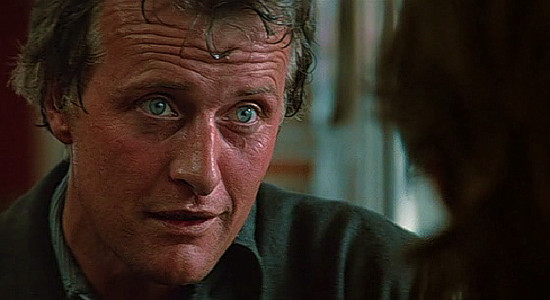
Jim Halsey (C. Thomas Howell) is driving a car across the country to San Diego. Tired and needing some help staying awake, he makes the major mistake of picking up a hitchhiker, the psychotic John Ryder (Rutger Hauer). Through a stroke of luck, he’s able to knock the “Hitcher” out of his car and keep going. Unfortunately, John Ryder isn’t content with being dumped by young Jim Halsey. Rather, he decides to stalk Jim and frame him for a cross-country murder spree.

I first saw THE HITCHER at a friend’s house when I was in the 4th grade. It scared the ever living crap out of me. I have never even pondered the possibility of picking up a hitchhiker because there’s always a chance that it could be a psycho like John Ryder. The genius of THE HITCHER is how it taps into the horror of everyday life. We pass by strangers every day. Who’s to know if there’s a John Ryder in our presence just waiting for us to invite them into our lives?! 

What can I say about Rutger Hauer as John Ryder?! He absolutely owns the film. There’s no wonder his roles in BLADE RUNNER and THE HITCHER would come to define his career. He was one of the great artists, and I’ve missed him ever since I learned of his death while I was sitting on the beach in Perdido Key, FL in 2019. C. Thomas Howell & Jennifer Jason Leigh are excellent as well. As a big-time Rutger Hauer fan, THE HITCHER is an intense film that I watch at least once a year. 

Five Fast Facts:

  1. C. Thomas Howell admitted that he was actually afraid of Rutger Hauer on and off the set because of Hauer’s general intensity.
  2. Writer, producer, and director Christopher Nolan (THE DARK KNIGHT, OPPENHEIMER) has listed THE HITCHER as one of his favorite movies.
  3. Entertainment Weekly ranked THE HITCHER as the nineteenth scariest movie of all time.
  4. Gene Davis, the psycho killer from Charles Bronson’s 10 TO MIDNIGHT plays Trooper Dodge in this movie. Based on my love of the Bronson Cannon classic, I love seeing Davis in any film. 
  5. President George W. Bush served on the board of the company that lent money to HBO to finance this movie. During the 2000 presidential election, Bush’s critics used his involvement in this film to discredit his stance on “family values” and his criticism of pervasive violence in Hollywood movies.

Scenes That I Love: The Traitor Scene From Red Dawn


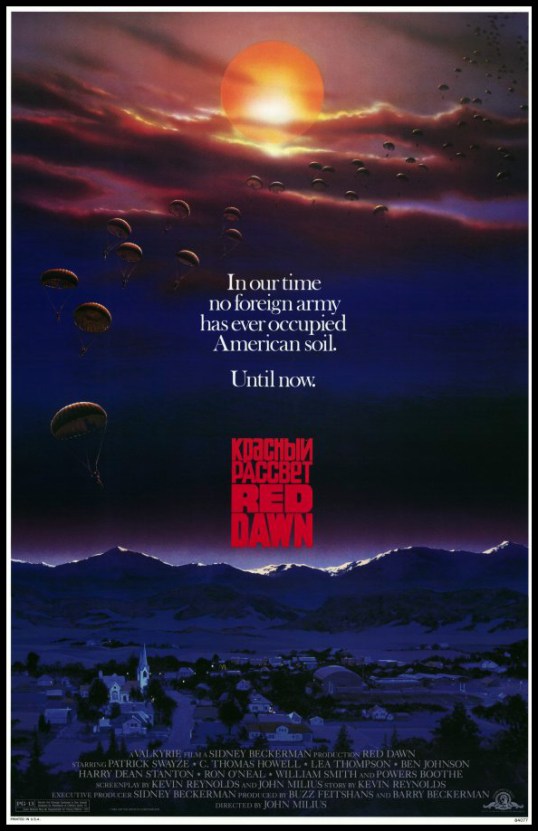
The original Red Dawn doesn’t get as much credit as it deserves.

It’s often described as just being an anti-communist film but actually, it’s a lot more complex than that.  Yes, it’s about a group of teenagers who wage guerilla warfare against communist invaders.  But it’s also about how those teenagers lose their innocence as a result and how they all come to realize that war is not as simple as they thought it was.  The movie celebrates the Wolverines while also mourning that they were put in the position to have to risk and sacrifice their lives in the first place.

That’s what today’s scene that I love is all about.  After they are tracked down and attacked by a group of Russian soldiers, the Wolverines discover that one of the original members of the group visited his father in town and was forced to swallow a tracking device.  In this scene, the group is forced to deal with the reality of war.  The fact that the traitor was a friend to all of them and popular enough to be president of his class just adds to the difficulty of emotionally processing with his betrayal.  Patrick Swayze can’t bring himself to pull the trigger.  C. Thomas Howell, on the other hand, is so quick to shoot his former friend that you realize just how consumed by hate he has become.

Today’s scene was directed by the brilliant John Milius.

October True Crime: The Hillside Strangler (dir by Chuck Parello)


2004’s The Hillside Strangler opens with a woman stepping into a dressing room with several tops.  She removes all of the tags.  Then she puts all of them on and finally covers them with the sweater that she was wearing when she first stepped into the dressing room.

What she doesn’t realize is that she’s being watched by a security guard named Kenneth Bianchi (played by C. Thomas Howell, with a thin mustache).  Bianchi isn’t the type of security guard who relies on cameras.  Instead, he sneaks around in the store’s heating ducts and stares down into the dressing room.  Bianchi manages to get out of the duct quickly enough to stop the woman as she walks out of the store.  He takes her back to his office and orders her to remove each layer of stolen clothing while he watches.

Agck!  Seriously, as a former teen shoplifter, this scene totally freaked me out.  Beyond the creepiness of seeing Bianchi in the air ducts, this scene also captures the authoritarian mindset.  As soon as we see Bianchi, we know that his job is about more than just a paycheck to him.  His job is about wielding power and giving orders.  Wearing his uniform, Bianchi feels that he’s untouchable.

Bianchi dreams of being a real cop but the Rochester Police Department rejects his application to join because his test scores were too low.  Sick of having to listen to him whine, Bianchi’s mother sends him to Los Angeles so that he can stay with his cousin, Angelo Buono (Nicholas Turturro).  Maybe Angelo can knock some sense into him.  Maybe Angelo can teach him about being a man.

Instead, Angelo soon gets as tried of Bianchi as everyone else.  Still, he is impressed when Bianchi orders a fake diploma from Colombia University and sets up a practice as a sex therapist.  When Angelo attempts to set himself up as a pimp, he makes Bianchi is partner.  When Angelo and Bianchi fail at being pimps, they start picking up women and strangling them.  Angelo and Bianchi start out by stalking sex workers but soon, they’re using a fake LAPD badge to prey on anyone that catches their interest.

Based on the true crimes of Angelo Buono and Kenneth Bianchi, The Hillside Strangler is a grim and frequently trashy film, a portrait of two misogynists who can only feel confident when they’re hurting others.  Bianchi is the type who wears a t-shirt that reads, “Official Local Sex Instructor.”  Buono has a doormat that reads, “Italian Stallion” and a sign on his wall that announces, “Candy is Dandy But Sex Won’t Rot Their Teeth.”  Turturro and Howell give two disturbing performances as two losers who feed on each other’s sadism and anger.  Bianchi is desperate for Bouno’s approval.  Buono finds Bianchi to be annoying but he still enjoys being the younger man’s idol.  Would Bianchi and Buono have committed their crimes if they had never met?  The film leaves you wondering.  As a viewing experience, it’s effective and disturbing.

In real life, Angelo Buono died in prison in 2002.  Kenneth Bianchi continues to serve his life sentence.

The Shadow People (2017, directed by Brian T. Jaynes)


On a rainy night and after nearly crashing their car into a ditch, Andrew (Bug Hall) and Megan (Kat Steffens) arrive at their new country home.  Andrew is a writer.  Megan is a painter.  At first, their new home seems like the perfect place for both of them to practice their art and work on starting a family but then Megan starts to see strange people standing around the house.  She fears that they could be the Shadow People, evil spirits that her grandfather told her about.  After Megan realizes that she’s lost her necklace, her visions start to get more extreme and violent.

The Shadow People starts out as a really good haunted house film with a good performance from Kat Steffens and a lot of effective jump scares.  It works up until a scene where Megan suddenly speaks in a demonic voice, as if she’s been possessed.  Later, some of the spirits speak in the same voice and it sounds so much like autotune that it takes you right out of the movie.  The spirits are much more effective before they start talking but the movie still has a good twist ending and Kat Steffens’s performance is never less than great so The Shadow People is still worth it.

Top-billed on The Shadow People‘s poster is C. Thomas Howell.  Howell actually only has a few minutes of screen time, playing a mysterious minster whose role in the story only become apparent in the film’s final moments.

The Terror Experiment (2010, directed by George Mendeluk)


At the Houston Federal Building, a disgruntled domestic terrorists sets off a bomb that not only rocks the building but also unleashes a government-designed nerve gas that turns anyone exposed to it into an animalistic, rage-fueled zombie who attacks everyone that they see.  Soon, the building is full of former friends and co-workers who are now obsessed with ripping each other to shreds.  The few people who were not exposed to the nerve gas are hiding on the top floor.  Under the reluctant leadership of Cale (Jason London), they try to figure out how to escape from the building.

Meanwhile, on the outside, Police Chief Grosso (C. Thomas Howell) and Fire Chief Lohan (Lochlyn Munro) attempt to rescue as many people as they can before the building is blown up.  The scientist on the scene (Robert Carradine) sees all of this as a research opportunity while a sinister government agent (Judd Nelson) conspires to keep word about what has happened from reaching the public.

With its images of suit-and-tie wearing madmen trying to kill everyone in the building, The Terror Experiment may seem like it would have much in common with The Belko Experiment (which came out a few years after Terror Experiment) but actually, The Terror Experiment is mash-up of Die Hard and 28 Days Later, with Jason London and Lochlyn Munro filling in for Bruce Willis and Reginald Veljohnson.  With its frequent scenes of formerly normal people suddenly going mad and turning into homicidal maniacs, The Terror Experiment has its effective moments and Jason London does the best that anyone probably could with the role of the film’s reluctant hero.  But the film also suffers because you never really get to know who any of these people were before they were trapped in the building and there aren’t really any emotional stakes to whether or not they’ll manage to get out.  As well, the scenes outside the building often fill like filler that was included so that some “name” actors could be recruited to appear in the film.  Howell, Carradine, and Nelson are all fine in their roles but the only thing they add to the movie is an opportunity to recreate the one of the most crowd-pleasing moments from the finale of Die Hard.

The Terror Experiment is occasionally diverting but it’s hard not to feel that it never really reaches its potential.

Film Review: Spirit Riders (dir by Brian T. Jaynes)


One of the main reasons why I love living where I do is because, any time I get in my car, I have a choice to make. I can drive for 20 minutes in one direction and soon find myself in downtown Dallas. Or, I can drive 20 minutes in the opposite direction and find myself out in the country, driving past horse ranches. I’ve always had a weakness for horses, which are not only majestic in appearance but also very loyal in personality.

Considering that, it probably shouldn’t come as a surprise that I’ve always had a weakness for movie about people who learn about responsibility by taking care of a horse. Apparently, I’m not alone in that because there are like hundreds of movies that feature that exact plot. These films always seem to tell the same basics story, i.e. out-of-control teen is sent to a horse ranch and spends the first half of the movie trying to run away and the second half of the movie learning how to ride. And I have to admit that, despite how predictable they may be, I end up enjoying just about everyone of these films that I see.

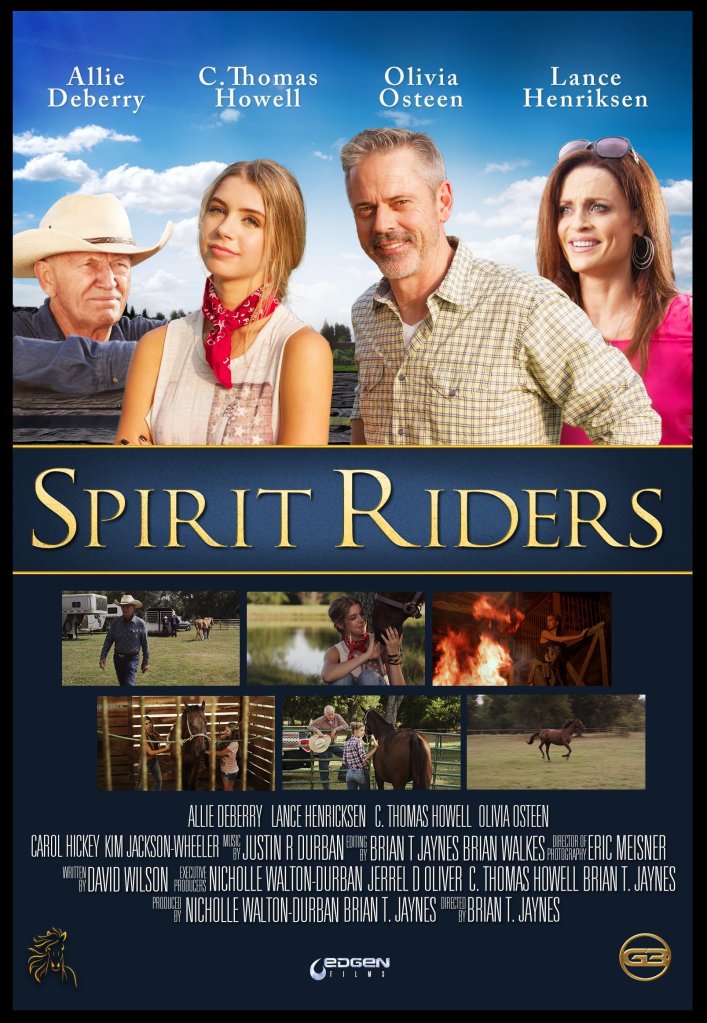
For example, consider the 2015 film, Spirit Riders. 17 year-old Kacie (Alexandria DeBerry) is a rebellious teen who gets in trouble with the law and who is sentenced to a work-release program at Spirit Riders, an equine therapy camp for disabled and physically challenged young people. At first, she struggle with all of the rules. She wants to smoke. She wants to fight. She wants to sneak off with her boyfriend, who is a total loser despite bearing a slight resemblance to Eric Balfour. She doesn’t want to make friends. She certainly doesn’t want to take care of a horse.

However, she soon meets Rex (Lance Henriksen), who is the owner of the ranch. Rex is tough but compassionate. He’s been around for a while and he’s heard all of the excuses. Rex tells her to stop feeling sorry for herself and to take care of her horse. Rex is stern but it’s obvious that he cares. Rex, in short, is the type of character that Lance Henriksen was born to play. A lesser actor would have just played Rex as being a serious-minded hardass but Henriksen does a good job of projecting the compassion that lurks underneath Rex’s no-nonsense exterior. Henriksen is one of those actors who sometimes seems as if he’ll appear in any film that’s offered to him. I mean, there aren’t many actors who can brag about appearing in everything from Pumpkinhead to Dog Day Afternoon to Near Dark to Spirit Riders to countless direct-to-video actions films. And yet, no matter what the role or the film, Henriksen always gives a good performance. Along with his undeniable physical presence, he just projects a certain integrity, the type that we usually associate with actors from Hollywood’s Golden Age of westerns and war films. Even when he’s playing a villain, you respect him. In Spirit Riders, he’s playing a good man and he makes that compelling.

I don’t want to oversale Spirit Riders, of course. It’s a fairly predictable film, one that will play best with people who already like horses and who can tolerate some occasionally heavy-handed plotting. But Alexandra DeBerry gives a good performance as Kacie and Lance Henriksen turns Rex into a monument to decency. The ranch itself is lovely to look at and so are the horses. It’s a pleasant film, one that’s won’t change the world but which I still enjoyed watching.

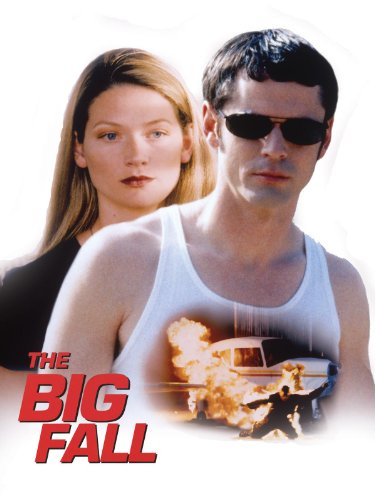
Cinemax Friday: The Big Fall (1997, directed by C. Thomas Howell)


Directed by C. Thomas Howell!?

You read that right!  After spending years as a straight-to-video mainstay, C. Thomas Howell finally stepped up from just starring in these films to directing one.  Of course, Howell still stars in The Big Fall as well as directing it.  What better way to make sure that your star takes your direction than by casting yourself in the lead role?  It makes sense.  The end result is a lot better than anyone would probably expect it to be.

Howell plays Blaise Rybeck, a self-described “private dick,” who works in modern Los Angeles with his protege (Sam Seder) and his secretary (Kathy Griffin, whose role is thankfully small).  Rybeck talks and dresses like a hard-boiled, 1940s P.I., right down to wearing a trench coat and a fedora while delivering his lines in a Bogart-style rasp.  The decor of his office is straight from the 40s as well.  Despite this, the movie takes place in modern times, with people using cell phones and bungee jumping off of bridges.  That no one comments on how out-of-time Rybeck seems to be indicates that Howell knew exactly what he was doing with his directorial debut.  The Big Fall is a tone perfect send-up of the neo-noirs that Howell spent most of the 90s appearing in.  His direction shows far more wit than you might expect from the star of Soul Man.

Rybeck is hired by sultry Emma Roussell (Sophie Ward) to find her brother.  It turns out that her brother has gotten involved with a bunch of extreme sports-obsessed bungee jumpers.  (This film attempts to do for bungee jumping what Point Break did for surfing and it actually succeed because the bungee jumping scenes are pretty damn cool.)  It all has to do with a criminal named Axe Roosevelt, played by the great Jeff Kober.  Of course, it also turns out that there’s more to Emma than meets the eye because this is a noir and there always is.

As a director, Howell does a good job of spoofing the material while still playing it straight enough that the movie doesn’t just become one big inside joke.  Jeff Kober and Titus Welliver are great as the bad guys, Sophie Ward is sexy as the femme fatale, and C. Thomas Howell keeps things moving both in front of and behind the camera.  This is an unexpected straight-to-video gem.

Cinemax Friday: Dangerous Indiscretion (1995, directed by Richard Kletter)


Jim Lomax (C. Thomas Howell) is an up-and-coming advertising executive who, one night, picks up the sultry Caroline Everett (Joan Severance) in a grocery store.  What starts out as a one night stand between two attractive people who both buy their own groceries turns into a full-fledged affair with Caroline asking Jim, “Who are you?” after they sleep together and Jim struggling to define his own identity.

Unfortunately, Caroline is married to Roger Everett (Malcolm McDowell), a wealthy and ruthless businessmen who likes to quote the Art of War.  Unlike Jim, Roger knows who he is and what he believes.  He’s an evil businessman who enjoys destroying other people and who gets a kick out of fooling the world into thinking that he’s actually a compassionate philanthropist.  When Roger finds out that Caroline has been cheating on him, he sets out to destroy both her and Jim.  Because Roger is an arrogant bastard, he not only plots to ruin Jim’s life but he brags about it too.  He tells Jim that he’s going to make his life unbearable and he also says tells him that there’s not a thing that he can do to stop him.  It’s not as if Jim has ever read Suz Tzu and, largely due to the commercials that have been produced by Jim’s own firm, the public sees Roger as being a benevolent and sympathetic figure.  Jim and Caroline will have to team up to figure out a way to reveal Roger for being the monster that he is.

The main problem with Dangerous Indiscretion is that it asks us to accept the idea that C. Thomas Howell could be an equal opponent to Malcolm McDowell.  Howell was one of the better actors to regularly appear in straight-to-video and Skinemax films but he’s till no Malcolm McDowell.  As played by McDowell, Roger comes across as someone who eats his enemies for breakfast while Jim is just a callow ad exec who looks like the star of The Outsiders.  It’s Caligula vs. Soul Man and there’s not much debate about who would win that match-up in the real world.  It’s unfortunate that McDowell, who played a variety of different characters at the beginning of his career, later got typecast in purely villainous roles but he’s still charismatic enough as Roger that you know there’s no way that Jim and Caroline could ever outsmart him.  Whenever Jim and Caroline do pull one over him, it doesn’t feel right.

Fortunately, Dangerous Indiscretion is better directed than the average straight-to-video neo-noir and, even if they are outclassed by McDowell, both C. Thomas Howell and Joan Severance give good enough performances that you don’t get bored when they’re on-screen.  (This was actually the second erotic thriller that Howell made with Severance and it’s a definite step-up from Payback.)  As previously stated, McDowell’s the perfect villain.  By the proud standards of late night 90s Cinemax, Dangerous Indiscretion is an entertaining film with a great bad guy.