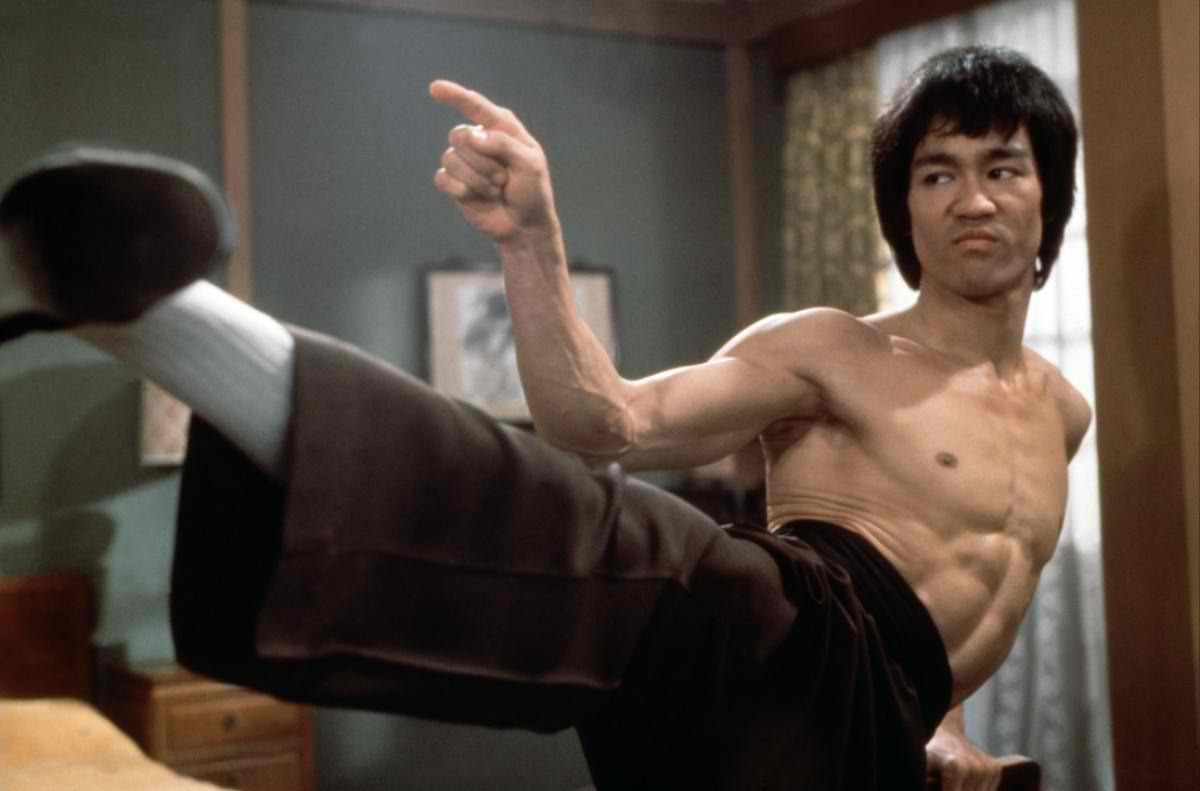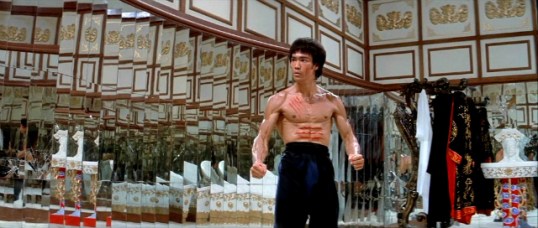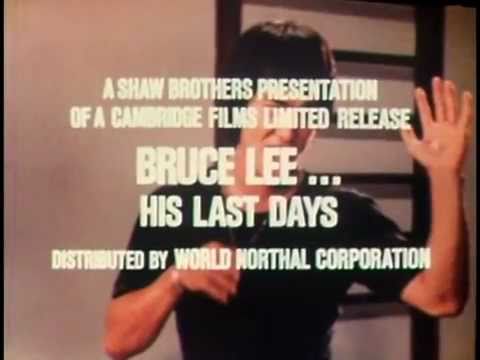
Bruce Lee: His Last Days, His Last Nights (1976, directed by John Law Ma)


Also known as Bruce Lee & I, this films stars Betty Ting Pei as herself.  At the time that the film was made, Betty was one of the most vilified women in the world.  An actress who was best known for appearing in softcore sexploitation, Betty was a “friend” of Bruce Lee’s.  It was while visiting Betty in her apartment that Bruce announced that he had a terrible headache.  Betty gave Bruce Equagesic, a powerful type of aspirin, to help him deal with his headache.  Bruce then fell asleep and, as we all know, never woke up.

Not surprisingly, after Bruce’s death, Betty was at the subject of a lot of unfavorable speculation and unsavory rumors.  Some Bruce fans accused her of poisoning Bruce, either accidentally or on the orders of the organized crime figures who wanted to take over Bruce’s career.  There was also speculation as to the nature of Bruce’s relationship with Betty.  Bruce was married and had two children and, after he died, he was recast as almost a saintly figure.  Betty’s claim that she was Bruce’s mistress did not fit in with that new reputation.

Bruce Lee: His Last Days, His Last Nights opens with Bruce (played by Danny Lee, who later won a critical respect by appearing in several John Woo films) filming a fight scene before then going to Betty’s apartment where, after the first of the movie’s many sex scenes, Bruce ends up dead in Betty’s bed.  With both the press and even people in the streets accusing Betty of being evil, Betty goes to a bar and, while drowning her sorrows, tells the bartender about her life with Bruce Lee.

In Betty’s telling, she knew and loved Bruce long before he became a star.  She met him when she was just an innocent schoolgirl and he saved her from some thugs in the streets.  Later, they both met again while pursuing their film careers and they became lovers.  Betty felt guilty about carrying on an affair with a married man but Bruce didn’t care.  Bruce mostly cared about smoking weed, getting into fights, and getting laid.

This is one of the stranger Bruceploitation films.  Most Bruceploitation films presented Bruce as being a real-life super hero who was either killed by his enemies or who faked his death so he could protect his family.  This one presents Bruce as essentially being a petulant and cocky asshole who didn’t really care about anyone but himself.  Some of that may be because the film was produced by the Shaw Brothers, with whom Bruce famously refused to work with early in his career.  (It’s rumored, though, that Bruce was thinking of leaving Golden Harvest for the Shaw Brothers at the time of his death.)  The other reason why Bruce comes across as being so unlikable in this movie is that it’s told from the point of view of Betty, who was often accused of having corrupted Bruce and of not being worthy of him.  This film makes the argument that Bruce was not worthy of Betty.

Once you get past all of the controversy about how this film presents Bruce Lee and his relationship with Betty Ting Pei, it’s still not a very good movie.  It’s too slow and they’re aren’t enough big fights.  (When Bruce does fight, it’s usually to protect Betty from an unwanted admirer.)  Bruce does don the yellow track suit but it’s just so he can debate philosophy with Betty.  We expect more from our Bruceploitation films.
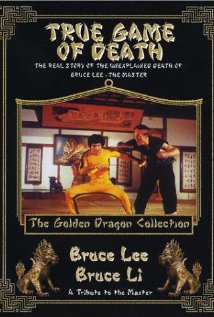
The True Game of Death (1979, directed by Steve Harries and Chen Tien-Tai)


After the death of Bruce Lee, the world cries out for another great martial arts film star.  Fortunately, Hsao Lung (Lung Tien-Hsiang) answers the call.  Hsao Lung bears a passing resemblance to Bruce and whenever he trains or looks at a magazine, he imagines stock footage from old Bruce Lee movies, suggesting that Bruce Lee’s spirit has possessed Hsao Lung’s body.

The mafia, led by George (George Stephens), wants a piece of Hsao Lung’s films but Hsao Lung refuses.  The mob then forces George’s wife, Alice (Alice Meyer), to slip a powerful drug into his coffee.  They say that it will only put Hsao Lung into a coma.  Instead, it kills him!

Soon, a new chef comes to work for Alice.  The chef looks, sounds, and moves exactly like Hsao Lung but he wears a fake beard and oversized eye glasses.  After Alice explains the circumstances of what led to Hsao Lung’s death (which means that the audience watches a flashback to a scene that happened ten minutes prior), the chef removes his beard and glasses.  It’s Hsao Lung!  He’s not dead!  Everyone is stunned except for the people watching the movie because, after all, Hsao Lung’s entire disguise consisted of glasses and a fake goatee.

The bad guys kidnap Alice and this, of course, leads to Hsao Lung putting on a yellow track suit and fighting several villains in a pagoda.  It’s basically just the end of The Game of Death all over again, except there’s no Kareem Abdul-Jabbar this time.  It should be noted that the final fight scenes are well-staged and a hundred times better than anything else in this movie.  Hsao Lung fights four motorcyclists, two sumo wrestlers, and a boxer.  The boxer and Hsao Lung discuss the philosophy of combat before fighting, just like Bruce Lee and Kareem did.

Even by the standards of the Bruceploitation genre, The True Game of Death is a shoddy production.  The plot makes no sense and Lung Tien-Hsiang is good in the fight scenes but otherwise, he can’t come close to matching Bruce Lee’s screen presence.  It’s not a good sign that the best part of The True Game of Death is an almost shot-for-shot rip-off of the best part of the original Game of Death.  Outside of the closing fight scenes, my favorite part of The True Game of Death is that, before Alice gives Hsao Lung the poison, random gangsters keep showing up everywhere she goes and reminding her to do it.  Even though he’s usually no more than a few feet away, Hsao Lung never picks up on it.

The main thing that The True Game of Death has going for it is that it’s a Bruceploitation film and will therefore only be seen by fans of that very specific genre, the majority of whom will probably have a good idea of what they’re about to get even before the movie starts.  Bruceploitation is a genre that is built on some very specific tropes and The True Game of Death doesn’t waver from a single one of them.  It doesn’t demand much from its audience and if you stick with it, you’ll get a pretty cool fight at the end of the movie.

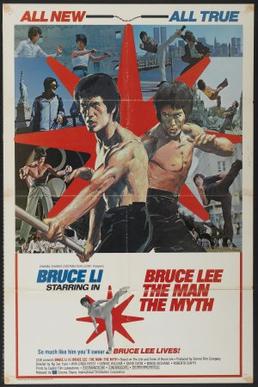
Bruce Lee: The Man, The Myth (1976, directed by Ng See-yuen)


In 1958, a Hong Kong teenager named Bruce Lee (played by Ho Chung-tao, credited under the name Bruce Li) is upset that his mother is forcing him to go to college in America.  His martial arts instructor assures Bruce that he is meant for great things and encourages him to bring his philosophy of life to all of the people of the world.

In America, Bruce finds fame as a martial arts instructor and he pursues a career as an actor.  However, everywhere he goes, he’s told that no major American studio would ever be willing to invest money in an “unknown Chinese actor.”  Bruce finds brief fame with a supporting role on The Green Hornet but his Hollywood prospects sputters when he announces that he refuses to play any demeaning stereotypes.  Taking control of his own career, Bruce returns to Hong Kong and produces his own films.  He becomes an international superstar before dying under mysterious circumstances at the age of 32.

Following the death of the real-life Bruce Lee, there were hundreds of martial arts films released that featured look-alike actors who were credited with names like Bruce Ly, Bruce Lei, Bruce Lai, and Bruce Le.  These films often featured Lee either fighting the Tongs or some other sort of international conspiracy.  Many of them also speculated about the cause of his death or flat out presented Lee as having faked his death in order to escape from his enemies.  (Typically, these films would feature at least some footage of Lee’s funeral and the real Bruce Lee lying in his coffin.)  So many of these films were released that they eventually were grouped under their own genre, Bruceploitation.

Of the faux Bruces who appeared in Bruceploitation films, Ho Chung-tao was the most successful.  Credited as Bruce Li, he not only bore a strong physical resemblance to Bruce Lee but he was also one of the few Bruce imitators to have any on-screen charisma as well.  Bruce Li may not have been Bruce Lee but, of the imitators, he was the best.  (He was also one of the most frequently frustrated, retiring from acting at the age of 40 because he was sick of only being allowed to play Bruce Lee.)

Bruce Lee, The Man, The Myth is a generally straight-forward biopic.  It covers all of the big events of Lee’s life and, unlike a lot of other Bruceploitation films, it mostly sticks to the facts.  That doesn’t mean that there aren’t a lot of fights to be found in this film.  Lee is constantly getting into fights but, for the most part, they’re just with people who want to challenge the great Bruce Lee and see if he’s really as impressive as everyone says that he is.  Other than a strange but fun scene where Bruce is approached by the daughter of a mafia boss, this film does not portray Lee as being a crime fighter or a secret agent.  Like many Bruceploitation film, this movie hints that Lee faked his own death but, in the version I saw, a narrator dismisses the reports of Lee’s survival as just being rumors.  (The narrator also says that if Bruce is still alive, he’ll emerge from hiding in 1983.  Draw your own conclusions.)

Bruce Lee, The Man, The Myth is an entertaining biopic.  When it comes to a Bruceploitation flick, all that most people really ask for is that the Bruce imitator be convincing and that the fights be exciting.  On both counts, Bruce Lee, The Man, The Myth delivers.

Bruce Lee vs. The Star Whackers: Game of Death (1978, directed by Robert Clouse)


Billy Lo (played by archival footage of Bruce Lee and two stand-ins) is the world’s biggest film star and the Syndicate (represented by Dean Jagger and Hugh O’Brian) want a piece of the action.  When Billy refuses to allow the Syndicate to take control of his career, the Syndicate responds by threatening both Billy and his girlfriend (Colleen Camp).  After a Syndicate hitman sneaks onto the set of Billy’s latest film and shoots him in the face, Billy allows the world to believe that he’s dead.  Using a variety of disguises, Billy seeks revenge on the Syndicate and all of its assassins, including the 7 foot tall Hakim (Kareem Abdul-Jabbar).

Lee’s original plan for the Game of Death was that it would feature him as a retired martial artist who, in order to save the lives of his family, had to make his way up a five-level pagoda, defeating a different guardian on each floor.  Each guardian would represent a different fighting style and the journey up the pagoda would allow Lee to discuss his beliefs regarding the principles of martial arts.  Serving as both director and star, Lee did during the making of the film, of cerebral edema though some said Lee was either murdered or that he had faked his own death.

Released seven years after his death, the final version Game of Death has little in common with Lee’s original vision.  Only about 11 minutes of footage from the original film was used in the revised version and most of Lee’s philosophical concerns were abandoned for a plot that, today, feels like it could have been lifted from Randy Quaid’s twitter timeline.  (Also, when watching the film today, it’s also impossible to watch the Syndicate’s assassins disguise Billy Lo’s shooting as an on-set accident without being reminded of what would happen to Brandon Lee on the set of The Crow.)  Game of Death opens with footage lifted from Lee’s battle with Chuck Norris at the end of Way of the Dragon and the other fight scenes are full of close-ups of Lee that were obviously lifted from other films.  There’s even a scene in Billy’s dressing room where a cardboard cut-out of Lee’s face has obviously been taped onto a mirror.  After Billy fakes his own death, footage of Bruce Lee’s actual funeral is shown, including a shot of Lee in his coffin.

If you can overlook the ethical issues of making a Bruce Lee film without the actual participation of Bruce Lee, Game of Death is actually a pretty entertaining movie.  Director Robert Clouse had previously directed Enter the Dragon and obviously knew how to direct a fight scene while even stock footage of Bruce Lee has more charisma than the average action star.  Best of all, Bruce Lee battles Kareem Adbul-Jabbar, in an epic scene that Lee himself directed for the original version of Game of Death.  When the 7’2 Kareem Abdul Jabber plants his foot in the middle of Bruce Lee’s chest, Game of Death achieves pop cultural immortality.

Thorny ethical concerns aside, Game of Death proves that Bruce Lee will live forever.

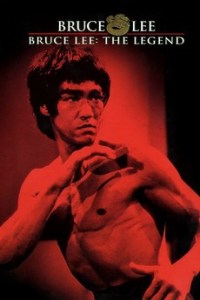
A Movie A Day #242: Bruce Lee, the Legend (1984, directed by Leonard Ho)


From Golden Harvest comes this tribute to their biggest star, Bruce Lee.
Starting with Lee’s birth and early film career and ending with Lee’s mysterious death and posthumous fame, Bruce Lee, The Legend is a breezy documentary about the world’s greatest martial arts star.  Since it was made by Golden Harvest and designed to serve as a tribute to both Bruce’s life and his continuing fame, do not expect to hear a negative word about Bruce in Bruce Lee, The Legend.  Then again, I don’t think I have ever come across anything negative about Bruce Lee.  While Bruce Lee probably was not as saintly as he’s portrayed in this documentary, every thing that I’ve read about Lee indicates that there was little difference between who Lee was in real life and who Lee was in the movies.

For fans of Bruce Lee, the most interesting part of this documentary will be the clips of Bruce as a young actor, often playing juvenile delinquents in films that were never widely released in the United States or Europe.  Judging from the clips shown, Lee’s movie star charisma was present even when he was a teenager.  The documentary also provides details about Bruce’s father, a stage actor who was well-known for his work in what the documentary describes as being Hong Kong’s “version of vaudeville.”  Of course, this documentary also contains clips from Lee’s better-known films, like Enter the Dragon, Way of the Dragon, and The Big Boss.  Even in brief and out-of-context clips, Lee is always exciting to watch.

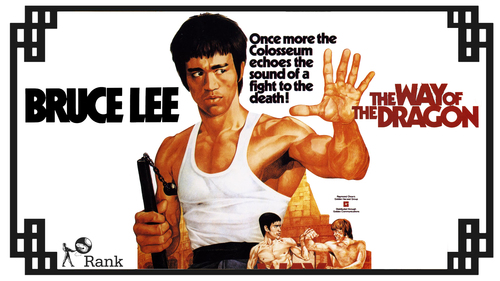
A Movie A Day #161: The Way of the Dragon (1972, directed by Bruce Lee)


Bruce Lee vs. Chuck Norris in a battle to the death!

That alone makes The Way of The Dragon worth seeing.  This was Bruce Lee’s only completed directorial effort and it was the last of his films to be released during his lifetime.  (Lee’s best known film, Enter the Dragon, was released 6 days after Lee’s death.  When Lee died, he was directing Game of Death.)  In Way of the Dragon, Lee plays Tang Lung, a martial artist who travels from Hong Kong to Rome to help protect the owners of a restaurant from the Mafia.  At first, everyone dismisses Tang Lung as being an unsophisticated bumpkin and he does little to convince them otherwise.  But when the Mafia tries to intimidate him, Tang reveals how dangerous it is to underestimate him.

The only version of Way of the Dragon that I have seen is the badly dubbed version that was released in the United States so it’s hard for me to judge either the script or the acting, through Bruce Lee was a natural-born movie star and, even when dubbed, as charismatic as ever.  During the first half of the film, there is so much humor that it almost seems like a comedy but, unless you find Bruce Lee begging someone to tell him where the bathroom is, a lot of that humor falls flat.  Far more interesting is the scene where Tang and a waiter debate the merits of Japanese vs Chinese martial arts.  This scene reveals that Lee was just as serious about the philosophy behind the martial arts as he was about the actual fighting.

Most people who watch The Way of the Dragon will do so for the fighting and the film does not disappoint.  The Way of the Dragon features some of the best martial arts action ever captured on film.  The Mafia hires three martial artists to take on Tang, which means that, along with the usual collection of Mafia thugs, Bruce Lee also fights Bob Wall, Hwang In-shik, and Chuck Norris.

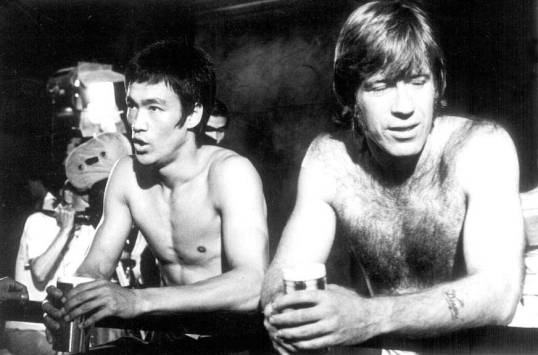
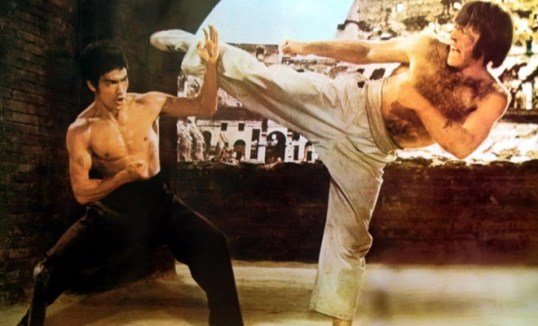
Bruce Lee’s final battle with Chuck Norris is The Way of the Dragon’s most famous scene and perhaps one of the greatest scenes in the history of world cinema.  Both Norris and Lee are in top physical form and the two real-life friends held nothing back.  The fight was filmed in the Roman Colosseum, confirming that Norris and Lee are meant to be modern-day gladiators, battling to the death but never viewing each other with anything less than respect.  Neither Norris nor Lee say a word during their climatic face-off.  They let their fists and their feet do the talking.  It’s a brutal battle between not just two men but also two different philosophies of fighting.

The Way of the Dragon was Lee’s biggest hit during his lifetime.  A modest success when first released in the west, it was re-released following Lee’s death and was retitled The Return of the Dragon.  While the American co-production Enter The Dragon is a bigger and slicker production, The Way of the Dragon is the best of Lee’s Hong Kong films and his final battle with Chuck Norris remains the perfect showcase for his skill as a fighter.

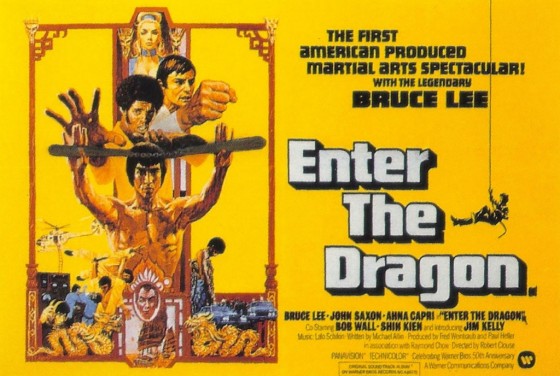
Fast & Furious: Bruce Lee in ENTER THE DRAGON (Warner Brothers 1973)


gary loggins's avatarcracked rear viewer

enter1

Haai-ya! The Seventies was the era of kung-fu cinema, and nobody did ’em better than the great Bruce Lee. Probably the biggest martial arts star ever, Lee came to prominence in the USA as Kato in the 60’s series THE GREEN HORNET. He acted and trained Hollywood stars in the art of kung fu, including James Coburn and Steve McQueen. When the kung fu craze hit the screens, Lee’s Hong Kong films THE BIG BOSS and FISTS OF FURY were released here to packed houses. ENTER THE DRAGON was Lee’s first American starring film, and unfortunately his last due to his untimely death shortly after the films’ release.

enter2

The plot’s pretty simple: Shaolin martial arts master Lee is sent to thwart the evil Han, a Shaolin gone rogue, involved with the drug and white slavery trades. Han is the ruler of his own island, and he’s holding a martial-arts tournament there. Americans Roper…

View original post 289 more words

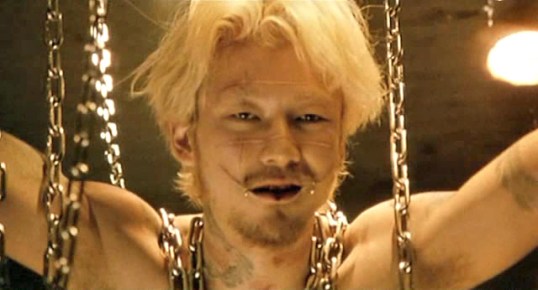
4 Shots From 4 Films: Enter the Dragon, Drive Angry 3D, The A-Team, Ichi the Killer


Tis November 27, 2015 and all 4 Shots from 4 Films are dedicated to four actors who share the same birth date. A date which all will have now figured out as being November 27. One comes from the Master of the Martial Arts himself, another a veteran character actor, a third who became a prawn and, lastly, the one who made the Glasgow Smile cooler before Heath Ledger.

4 SHOTS FROM 4 FILMS

Enter the Dragon (dir. by Robert Clouse)

Enter the Dragon (dir. by Robert Clouse)

The A-Team (dir. by Takashi Miike)

Ichi the Killer (dir. by Takashi Miike)

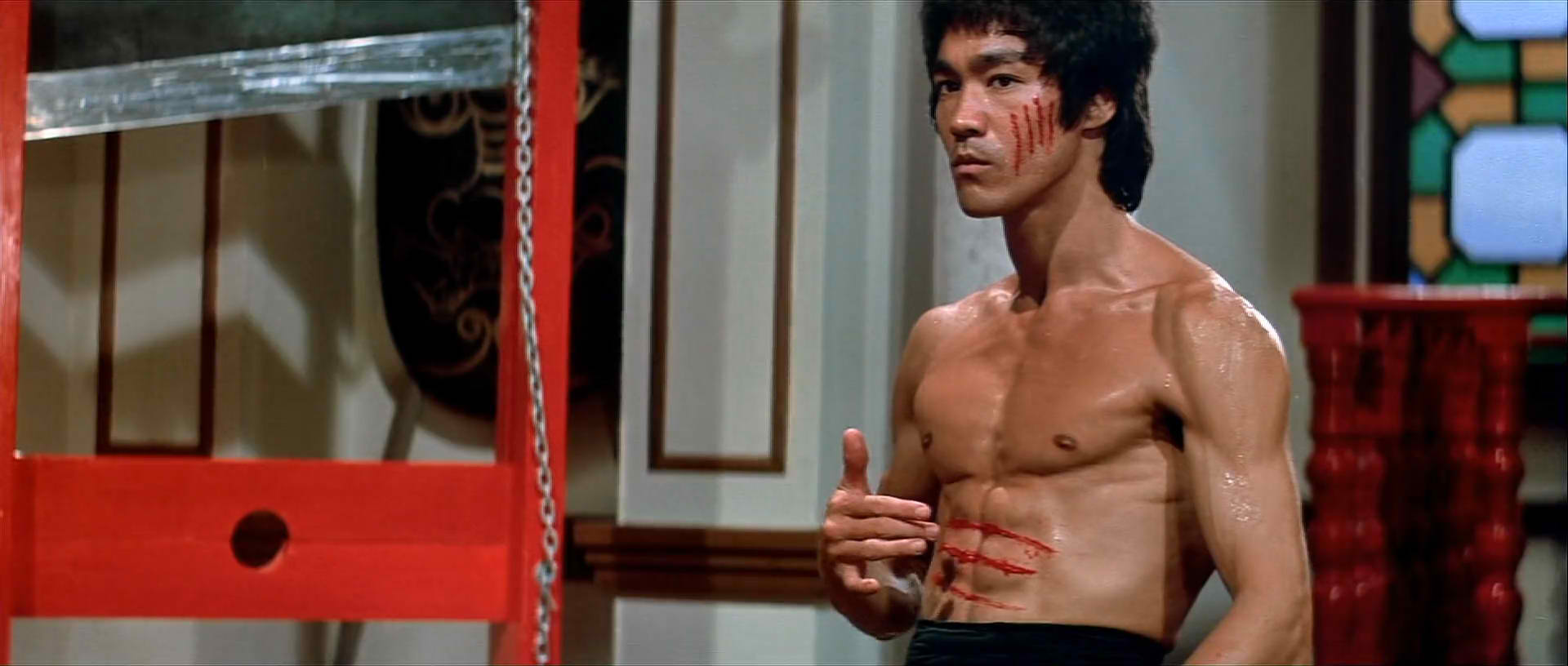
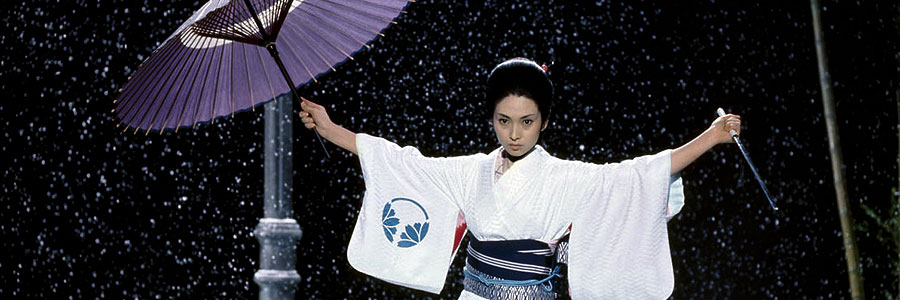
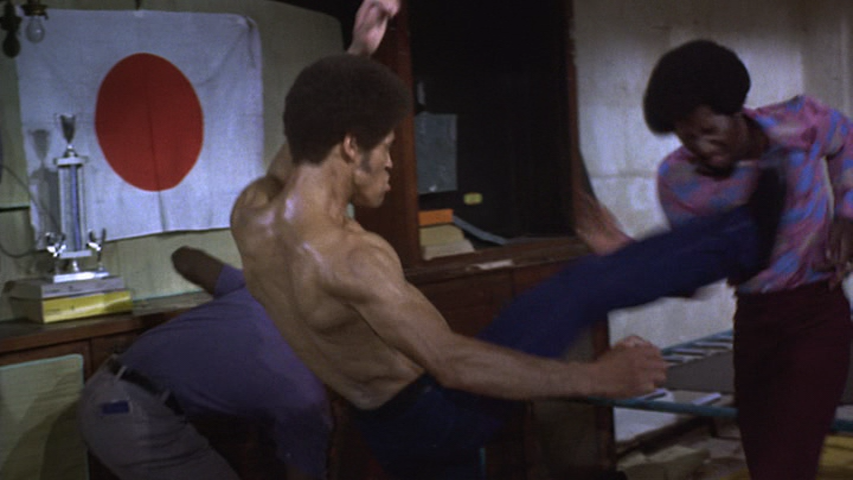
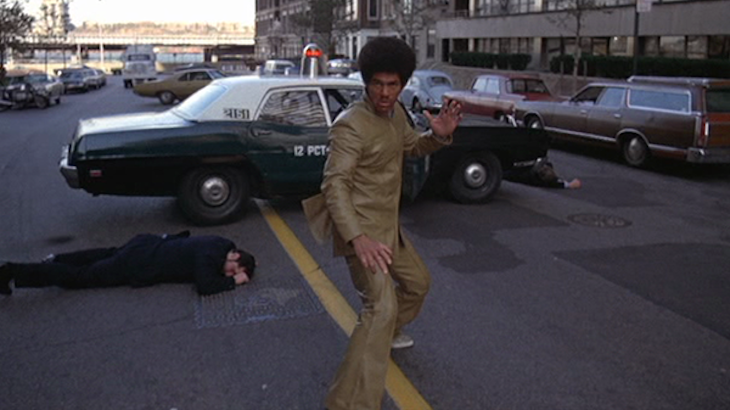
4 Shots From 4 Films: Enter the Dragon, Lady Snowblood, Black Belt Jones, Three The Hard Way


Everyone, at some point in his life, has wanted to learn karate.  The films featured below are a big reason why.

4 SHOTS FROM 4 FILMS

Enter the Dragon (directed by Robert Clouse, 1973)

Enter the Dragon (directed by Robert Clouse, 1973)

Lady Snowblood (directed by Toshiya Fujita, 1973)

Lady Snowblood (directed by Toshiya Fujita, 1973)

Black Belt Jones (directed by Robert Clouse, 1974)

Black Belt Jones (directed by Robert Clouse, 1974)

Three The Hard Way (directed by Gordon Parks, Jr., 1974)

Three The Hard Way (directed by Gordon Parks, Jr., 1974)