Retro Television Review: The Love Boat 6.16 “Doc’s Big Case/Senior Sinners/A Booming Romance”


Welcome to Retro Television Reviews, a feature where we review some of our favorite and least favorite shows of the past!  On Wednesdays, I will be reviewing the original Love Boat, which aired on ABC from 1977 to 1986!  The series can be streamed on Paramount Plus!
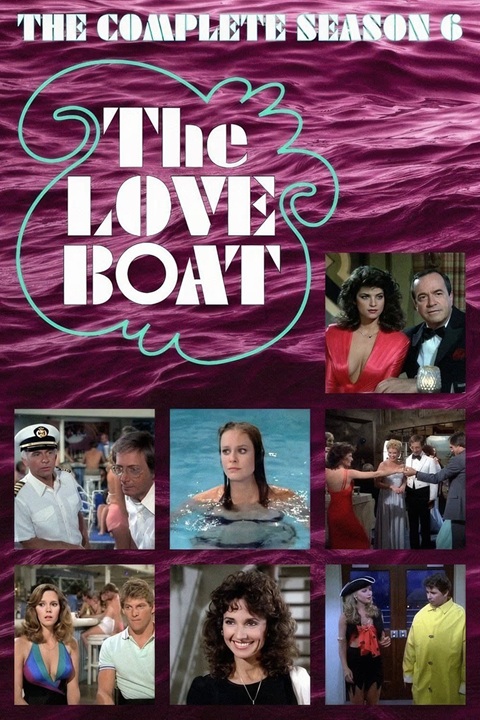
Love won’t hurt anymore….

Episode 6.16 “Doc’s Big Case/Senior Sinners/A Booming Romnace”

(Dir by Bob Sweeney, originally aired on January 22nd, 1983)

As usual, this episode has three stories.  However, this week, only one of the stories really works.

Dr. Elliott Norton (James Noble) attended medical school with Doc.  He is a world-renowned surgeon who has written a best-selling book and, as soon as he boards the boat, ol’ Doc Bricker starts to feel insecure.  It’s easy to see why.  Dr. Norton performs life-saving surgery on a daily basis.  Doc Bricker helps people recover from severe sun tan.  The fact that everyone on board wants Norton’s autograph doesn’t help.  Vicki is supposed to be writing a report on Doc but even Doc is like, “You should probably do it on Elliott.”

However, when a little girl (played by Tori Spelling, in what must have been one of the first roles that Aaron Spelling demanded she be cast in) asks Doc to diagnose what’s wrong with her doll, Bricker quickly figures out that both the doll and the girl are depressed because they’re not spending enough time with their father.  Norton may be getting the groupies but Doc Bricker gets invited to a tea party with the girl, her father, and the doll.

I’m sorry, are you smirking?

Okay, it is pretty silly.  Normally, I would smirk too but you know what?  Bernie Kopell really makes this story work.  In many ways, Doctor Adam Bricker was a bit of silly character, a supposed swinger who always came across as being rather mild-mannered and kind of conservative.  But Bernie Kopell was so likable in the role that it didn’t matter that the character often didn’t make much sense.  In this episode, Kopell does such a good job of playing up the character’s insecurities and regrets that my heart actually broke for the poor guy.  Was the tea party silly?  Yes.  But I still cheered when he was invited.

As for the other two stories, one featured Raymond St. Jacques and Theresa Merritt playing an elderly couple who were living together without being married.  Their children (played Brian Stokes Mitchell and Thelma Hopkins) were scandalized!  It was pretty boring.  The children weren’t particularly likable so I was kind of hoping the parents would just toss them overboard.

The final story …. I don’t even know how to describe it other than to say it was dumb.  Ross (Alan Young) wants to impress Kathy (Holland Taylor) and keep her from running off with Bob (Adam West, who was severely underused).  So, Ross builds a fake bomb, hides it in the engine room, pretends to discover it, and then defuses it while Kathy watches.  I mean, how am I supposed to care about someone who would do something that stupid?  And then, when Ross confesses the truth to her, Kathy laughs it off and forgives him.  I mean, it seems like he’s an obvious sociopath to me.  Run, Kathy, run!

This was an uneven episode but seriously, the story with Doc Bricker got to me.  This show was very lucky to have Bernie Kopell.

The Films of 2024: Shirley (dir by John Ridley)


In 1972, a New York Congressperson named Shirley Chisholm made history when, in January of that year, she announced that she would be a candidate for the Democrat presidential nomination.  Chisholm, who had already made history when she became the first Black woman to be elected to Congress, was also the first Black woman to run for a major party’s presidential nomination.

(For the record, U.S. Senator Margaret Chase Smith of Maine and the Rev. Channing Phillips were, respectively, the first woman and the first Black to run for a major party’s presidential nomination.  Smith lost the Republican nomination to Barry Goldwater in 1964.  In 1968, Phillips was the first Black to have his name officially put into nomination at a major party political convention.)

Of course, Chisholm did not win in 1972.  She was one of many liberal candidates who declared that they were running as an alternative to the presumed front runner, U.S. Sen. Edmund Muskie.  When Muskie’s campaign stalled in New Hampshire, it was George McGovern (and not Shirley Chisolm, John Lindsay, Eugene McCarthy, or Fred Harris) who benefitted.  For the most part, the media viewed Chisholm as being a protest candidate, one who had a small but loyal activist base but which couldn’t compete with candidates like McGovern and Hubert Humphrey.  Still, Chisholm went into the convention with a handful of delegates and, with McGovern not having enough pledged delegates to win outright, it was expected that Shirley Chisholm would at least be able to get some concessions from him in return for her support.

Political conventions being what they are, things didn’t work out that way.  Due to several backroom deals, George McGovern was able to secure the nomination during the first round of voting.  McGovern went on to suffer a landslide defeat and for years, his general election campaign would be held up as an example of how not to run for President.  Chisholm returned to the U.S. Congress, where she served for another ten years.

Featuring Regina King in the title role, Shirley is a dramatization of that primary campaign.  In many ways, it’s a typical Netflix docudrama.  It’s well-made and it’s tasteful and occasionally, it’s a little bit boring.  Political junkies will enjoy it, particularly if they’ve studied the 1972 presidential election.  My inner history nerd was thrilled as largely forgotten historical figures were casually mentioned in the dialogue.  Who would have guessed that a film released in 2024 would have featured characters talking about the presidential campaigns of Sam Yorty, John Lindsay, and Walter Fauntroy?  Sadly, no mention is made of Patsy Mink.  While Shirley Chisholm was making history as the first Black woman to run for president, U.S. Rep. Patsy T. Mink of Hawaii was doing the same as the first Asian-American woman to run.

It’s an uneven film, one that takes it time getting started.  Filmmaker John Ridley is a better writer than director.  Some of the scenes, like the ones of Chisholm mentoring a young Barbara Lee (Christina Jackson), felt a bit too much on the nose.  (That said, Barbara Lee did start her career as a volunteer with the Chisholm campaign and, while in Congress, she regularly cited Chisholm as an inspiration.)  But then there were other scenes that worked wonderfully, like Chisholm visiting segregationist George Wallace (W. Earl Brown) after Wallace had been shot.  The film is at its best when it reaches the Democrat Convention and Chisholm goes from being elated to disappointed as one of her strongest allies goes from supporting her to announcing that it’s time for all the black delegates to line up behind McGovern.  Regina King’s performance, especially towards the end of the film, captures both Shirley Chisholm’s strength and her vulnerability.  It’s not always easy being a trailblazer.

Finally, if you want to learn more about Shirley Chisholm’s 1972 presidential campaign, I suggest the 2005 documentary, Shirley Chisholm ’72: Unbought and Unbossed.