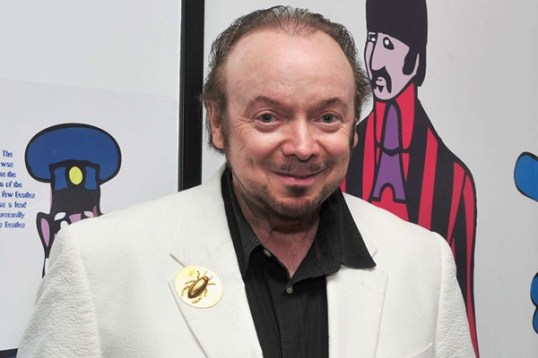
A Late Tribute To Bud Cort


Bud Cort died on February 11th, at the age of 77.  He was a beloved character actor, one who had a real skill for bringing eccentric characters to life.  He became a star briefly with films like Brewster McCloud and especially Harold and Maude but Hollywood never really knew what to do with him.  After he was nearly killed in a car accident in 1979, his momentum stalled.  Smart directors still cast him because he always gave good performances but he spent most of his career in small roles.  (In Heat, he was the obnoxious restaurant manager who drove Dennis Haysbert back into a life of crime.)

When Cort died, most of the stories focused on his performance in Harold and Maude.  That was understandable.  That said, I’ve always been touched by Cort’s performance in 1970’s MASH and I wanted to take a moment to just express how wonderful I thought he was in the role of Private Boone.

Though he had previously appeared in two earlier films, Cort got an “introducing” credit for his role in MASH.  He played Boone, a usually quiet corpsman who speaks with a slight stutter.  When a patient in Post-Op develops complications, Major Frank Burns (Robert Duvall) tells Boone to get a cardiac needle.  Boone obviously isn’t sure what Burns needs but Burns snaps at him to get it.  When Boone comes back with a needle, the patient has already died.  Burns calls Boone an idiot for getting the wrong needle.  Burns offers to get a nurse.  “It’s too late, Boone,” Burns says, motioning at the dead man, “you killed him.”  Burns walks away as Boone, a look of shock on his face, tries not to cry.
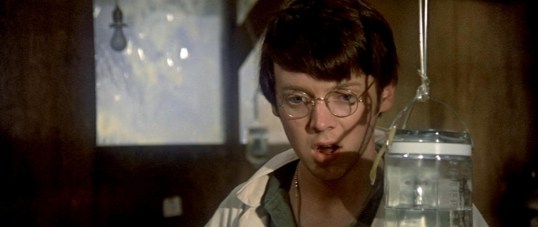
And I have to admit that I want to cry with him.  It’s one of the more shocking scenes in Altman’s film and it works because of not only Robert Duvall’s memorably nasty turn as Burns but also Bud Cort’s emotional vulnerability of Boone.  Boone, who is in Korea because he was drafted, has not only seen a man die but he’s been told that he’s responsible.  With just the slightly cocking of his head and the sniffling of a young man who doesn’t want to cry on duty, Bud Cort shows us just how devastated Boone is.

And, of course, Boone was not responsible.  Trapper John (Elliott Gould) takes one look at the patient’s chart and sees that it was Burns’s own incompetence that is to blame.  When Trapper punches out Burns, it’s a cathartic moment.  The only thing you regret is that Boone wasn’t in the room to see it.

That was Bud Cort’s big moment in MASH, though he appears throughout the film.  Indeed, if you watch carefully, there’s a subplot in which Boone starts dating one of the nurses and eventually becomes much more confident in himself.  We don’t know much about Boone but we do see that he’s become a member of the gang.  Unlike Burns or David Arkin’s Sgt. Vollmer, Boone is accepted by the inhabitants of the Swamp.

He even gets to attend the mock suicide of Painless..  Reportedly, Boone’s line of “You’re throwing away your whole education,” was improvised on the spot by Bud Cort.

Ah, Bud Cort.  Rest in peace, you wonderful actor.

Icarus File No. 18: Brewster McCloud (dir by Robert Altman)


First released in 1970, Brewster McCloud takes place in Houston.

A series of murders have occurred in the city.  The victims have all been older authority figures, like decrepit landlord Abraham Wright (Stacy Keach, under a ton of old age makeup) or demanding society matron Daphne Heap (Margaret Hamilton, who decades earlier had played The Wicked Witch in The Wizard Of Oz).  The victims all appear to have been killed by strangulation and all of them are covered in bird droppings.  Perplexed, the Houston authorities call in Detective Frank Shaft (Michael Murphy) from San Francisco.  Shaft only wears turtlenecks and he has piercing blue eyes.  He looks like the type of guy you would call to solve a mystery like this one.  It’s only later in the film that we discover his blue eyes are due to the contact lenses that he’s wearing.  Frank Shaft is someone who very much understands the importance of appearance.  As one detective puts it, when it comes to Shaft’s reputation, “The Santa Barbara Strangler turned himself in to him.  He must have really trusted him.”

Perhaps the murders are connected to Brewster McCloud (Bud Cort), who lives in a bunker underneath the Astrodome and who seems to be fascinated with birds.  Brewster dreams of being able to fly just like a bird and he’s spent quite some time building himself a set of artificial wings.  A mysterious woman (Sally Kellerman) who wears only a trenchcoat and who has scars on her shoulder blades that would seem to indicate that she once had wings continually visits Brewster and encourages him to pursue his dream.  However, she warns him that he will only be able to fly as long as he remains a virgin.  If he ever has sex, he will crash to the ground.

Brewster thinks that he can handle that.  Then he meets a tour guide named Suzanne Davis (Shelley Duvall, in her film debut) and things start to change….

Brewster McCloud is a curious film.  The story is regularly interrupted by a disheveled lecturer (Rene Auberjonois) who is very much into birds and who, over the course of the film, starts to more and more resemble a bird himself.  The film is full of bird-related puns and there are moments when the characters seem to understand that they’re in a movie.  Frank Shaft dresses like Steve McQueen in Bullitt and his blue contact lenses feel like his attempt to conform to the typical image of a movie hero.  (A lengthy car chase also feels like a parody of Bullitt’s famous chase scene.)  When the old woman played by Margaret Hamilton dies, the camera reveals that she’s wearing ruby slippers and a snippet of Somewhere Over The Rainbow is heard.  As played by Bud Cort, Brewster is the perfect stand-in for the lost youth of middle class America.  He knows that he’s rebelling against something but he doesn’t seem to be quite sure what.  Brewster, like many idealists, is eventually distracted by his own desires and his once earnest plans come cashing down.  Brewster becomes an Icarus figure in perhaps the most literal way possible, even if he doesn’t come anywhere close to reaching the sun.  As with many of Altman’s films, Brewster McCloud is occasionally a bit too esoteric for its own good but it’s always watchable and it always engages with the mind of the viewer.  One gets the feeling that many of the film’s mysteries are not necessarily meant to be solved.  (Altman often said his best films were based on dreams and, as such, used dream logic.)  With its mix of plain-spoken establishmentarians and quirky misfits, Brewster McCloud is not only a classic counterculture film but it’s also a portrait of Texas on the crossroads between the cultures of the past and the future.

Though it baffled critics when it was released, Brewster McCloud has gone on to become a cult film.  It’s a bit of a like-it-or-hate-it type of film.  I like it, even if I find it to be a bit too self-indulgent to truly love.  Quentin Tarantino, for his part, hates it.  Brewster McCloud was released in 1970, the same year as Altman’s Oscar-nominated M*A*S*H.  (Both films have quite a few cast members in common.)  Needless to say, the cheerfully and almost defiantly odd Brewster McCloud was pretty much ignored by the Academy.

Previous Icarus Files:

  1. Cloud Atlas
  2. Maximum Overdrive
  3. Glass
  4. Captive State
  5. Mother!
  6. The Man Who Killed Don Quixote
  7. Last Days
  8. Plan 9 From Outer Space
  9. The Last Movie
  10. 88
  11. The Bonfire of the Vanities
  12. Birdemic
  13. Birdemic 2: The Resurrection 
  14. Last Exit To Brooklyn
  15. Glen or Glenda
  16. The Assassination of Trotsky
  17. Che!