Lisa Watches An Oscar Winner: The Best Years Of Our Lives (dir by William Wyler)


The_Best_Years_of_Our_Lives_film_poster

I’ve seen The Best Years Of Our Lives on TCM a few times.  There’s a part of me that always wishes that this film was dull, in the way that many best picture winners can be when watched through modern eyes, or in any other way overrated.  The Best Years Of Our Lives won the Academy Award for Best Picture of 1946 and in doing so, it defeated one of my favorite films of all time, It’s A Wonderful Life.  A part of me would love to be able to say that this was one of the greatest injustices of cinematic history but, honestly, I can’t.    The Best Years Of Our Lives is an excellent film, one that remains more than worthy of every award that it won.

Best_Years_of_Our_Lives_01_bar

The film deals with veterans returning home from World War II and struggling to adjust to life in peacetime.  That’s a topic that’s as relevant today as it was back in 1946.  If there’s anything that remains consistent about human history it’s that there is always a war being fought somewhere and the man and women who fight those wars are often forgotten and abandoned after the final shot has been fired.  The returning veterans in The Best Years Of Our Lives deal with the same issues that our soldiers have to deal with today as they return from serving in Iraq and Afghanistan.

The Best Years Of Our Lives follows three veterans as they return home to Boone City, Ohio.  As they try to adjust to civilian life, their loved ones struggle to adjust to them.

 Teresa Wright and Dana Andrews

Teresa Wright and Dana Andrews

Fred Derry (played by Dana Andrews) is a self-described former soda jerk.  (To be honest, I’m really not sure what a soda jerk was but it doesn’t sound like a very fun job.)  During the war, he was a captain in the air force.  He returns home with several decorations and few marketable skills.  During the war, he was good at bombing cities but there’s not much that can be done with that skill during peacetime.  Nearly penniless, Fred takes a job selling perfume at a department store.  He spends his days trying to control her temper and not give into his frustration.  At night, he’s haunted by nightmares of combat.

Teresa Wright and Virginia Mayo

Teresa Wright and Virginia Mayo

Meanwhile, his wife, Marie (Virginia Mayo), finds herself resenting the fact that Fred has come home.  She married him while he was in flight training and, as quickly becomes obvious, she’s less enamored of Fred now that he’s just another civilian with a low-paying job.  (She continually begs him to wear the uniform that he can’t wait to take off.)  The Best Years Of Our Lives is a film full of great performances but Virginia Mayo really stands out.  I have to admit that, whenever I watch this film, I find myself envious of her ability to both snarl and smile at the same time.

Teresa Wright, Myrna Loy, Fredric March, and Michael Hall

Teresa Wright, Myrna Loy, Fredric March, and Michael Hall

Al Stephenson (Fredric March) was a bank loan officer who served as an infantry sergeant.  (It’s interesting to note that the educated and successful Al was outranked by Fred during the war.)  Al returns home to his loving wife, Milly (Myrna Loy), his daughter Peggy (the beautiful Teresa Wright), and his son, Rob (Michael Hall).  At first, Al struggles to reconnect with his family and he deals with the tension by drinking too much.  Rehired by the bank, he approves a risky loan to a fellow veteran.  After the bank president (Ray Collins, a.k.a. Boss Jim Gettys from Citizen Kane) admonishes Al, Al gives a speech about what America owes to its returning veterans.

Meanwhile, Peggy has fallen in love with Fred.  When Milly and Al remind her that Fred is (unhappily) married, Peggy announces, “I am going to break that marriage up!”  It’s a wonderful line, brilliantly delivered by the great Teresa Wright.

Harold Russell

Harold Russell

Marriage is also on the mind of Homer Parrish (Harold Russell).  A former high school quarterback, Homer was planning on marrying Wilma (Cathy O’Donnell) as soon as he finished serving in the Navy.  During the war, he lost both his hands and now he’s returned home with metal hooks.  Homer locks himself away from the world.  When he finally does talk to Wilma, it’s to show her how difficult life with him will be.  Wilma doesn’t care but Homer does.

Harold Russell won an Academy Award for his performance here.  Russell was not a professional actor.  Instead he was a veteran and a real-life amputee.  Watching his performance today, it’s obvious that Russell was not an experienced actor but the natural charm that enchanted the Academy still shines through.

Harold Russell, Dana Andrews, and Fredric March

Harold Russell, Dana Andrews, and Fredric March

It’s been nearly 70 years since The Best Years Of Our Lives was first released but it remains a powerfully honest and surprisingly dark film.  All three of the veterans deal with very real issues and, somewhat surprisingly, the film refuses to provide any of them with the type of conventional happy ending that we tend to take for granted when it comes to movies made before 1967.  As the film concludes, Fred is still struggling financially.  Homer is still adjusting to life as an amputee.  Al is still drinking.   All three have a long road ahead of them but they’re all making progress.  None of them will ever be the same as they were before the war but, at the same time, they’re all working on making new lives for themselves.  They haven’t given up.  They haven’t surrendered to despair and, the film suggests, that is triumph enough.

The Best Years Of Our Lives is a great film and a great best picture winner.  It’s just a shame that it had to be released the same year as It’s A Wonderful Life.

http://www.youtube.com/watch?v=o_TJuLRjQCM

4 Shots From 4 Films: Planet of Dinosaurs, Real Genius, Switch, Some Girls


Since I’m new here, it was suggested that I cut my teeth on one of these 4 shots from 4 films posts. Also, because I’m new, I thought I would go with 4 films that have a special place in my heart. An introduction of sorts.

Of course, that means telling a little story behind each one.

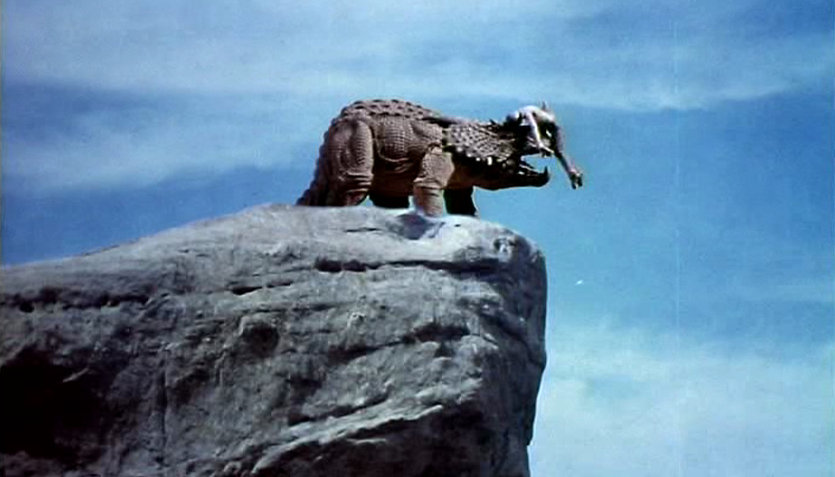
Planet of Dinosaurs (dir. by James K. Shea)

Planet of Dinosaurs (dir. by James K. Shea)

Planet of Dinosaurs (1977) is a simple one. My Mom recorded it off of TV when I was a kid and I watched it over and over and over again. It’s a classic bit of Sci-fi B-Movie making. I watched this so many times that I can even recall the commercials. There was one for some compilation of hit songs. I was so young that when Gloria by Van Morrison played I thought he was saying the word Tijuana.

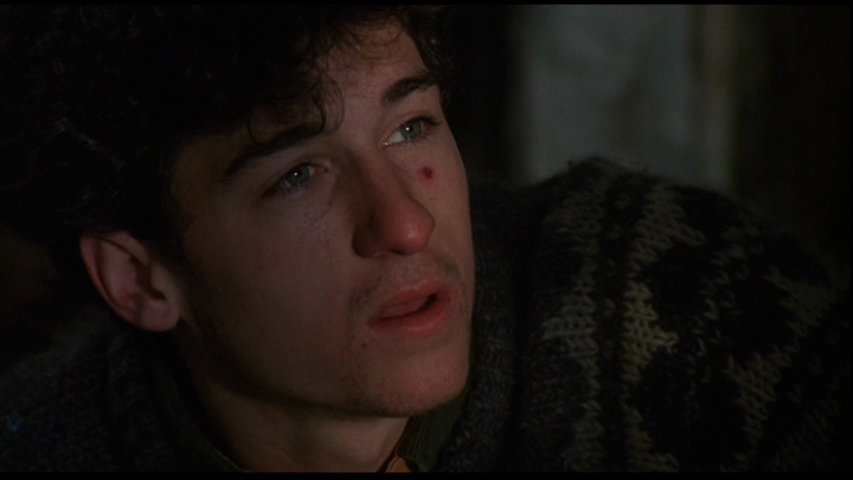
Real Genius (dir. Martha Coolidge)

Real Genius (dir. Martha Coolidge)

Real Genius (1985) is just a great movie, but it especially resonated with someone like myself who always felt out of place because I was so into computers at such a young age.

Switch (dir. by Blake Edwards)

Switch (dir. by Blake Edwards)

Switch (1991) is the easiest to tell the story behind. I’m transgender. I found it on cable one night as a kid and it became one of my favorites.

Some Girls (dir. by Michael Hoffman)

Some Girls (dir. by Michael Hoffman)

Some Girls (1988) is a tough one. When I first got a TiVo I put the Wishlist feature to use in order to see all the movies by actresses such as Angelina Jolie, Julianne Moore, and Jennifer Connelly. One day this movie popped up. I’m still not sure why, but it managed to bore a hole into my heart. It can still make me sad watching it.

Horror On The Lens: Strangler Of The Swamp (dir by Frank Wisbar)


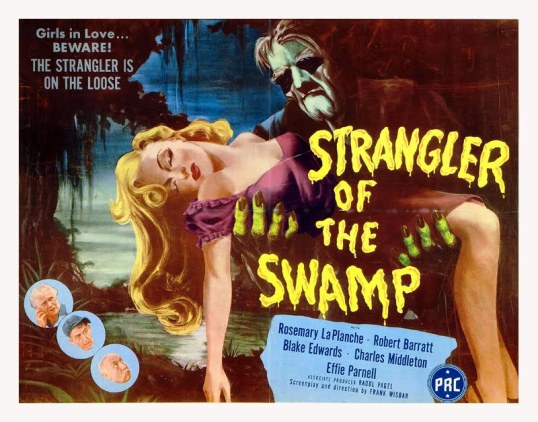
strangler_of_swamp_poster_02

Traditionally, October is a very special month here at the Shattered Lens.  October is the month that we devote the majority of our attention to the horror genre.  This month, along with all of the reviews that you’ve come to expect from the Shattered Lens, I will also be attempting to share a horror movie a day with all of our wonderful readers.

Let’s start things off with an odd little B-movie from 1946, Strangler Of The Swamp, a story of love, revenge, and ghosts.  A group of swamp men hanged an innocent man.  Now, the ghost of that man is having his revenge by strangling the descendents of the people who killed him.  One of those descendents is Chris Sanders (played by future director Blake Edwards) who just happens to be in love with Maria (Rosemary La Planche), the granddaughter of the vengeful ghost.

Clocking in at little less than an hour, Strangler Of The Swamp tells a familiar story but it’s still worth watching.  Charles Middleton is effective as the strangler and the German-born director Frank Wisbar deals with the restrictions imposed by a minsicule budget by emphasizing the film’s expressionistic atmosphere.  While it would be a mistake to call Strangler Of The Swamp a lost masterpiece (as some critics have done), it’s still an interesting example of low-budget, B-filmmaking.

Jean Rollin, la clef à mes désirs secrets, R.I.P.


My favorite film director, France’s Jean Rollin, passed away on December 15th at the age of 72. 

There are three types of people in the world: those who love Rollin, those who will eventually love Rollin once their eyes are opened, and those who just don’t matter.

When I first told Arleigh that Rollin had passed, he mentioned that the American director Blake Edwards had died as well.  Oddly enough, I sometimes think of my favorite Rollin film — Night of the Hunted (which I reviewed on this site) — as being a rather grim, Grindhouse version of another one of my favorite films, Breakfast at Tiffany’s.  The main difference, of course, is that Edwards’ Holly Golightly is allowed to triumph at the end while Rollin’s version is destroyed by an embarrassed mainstream establishment.  History, I think, has given us little room for doubt concerning which vision is closer to the truth.

In his best films (Night of the Hunted, The Living Dead Girl, Two Orphan Vampires, Requiem For A Vampire, The Grapes of Death, Fascination, Lost In New York, The Sidewalks of Bangkok, Shiver of the Vampires), Rollin proved himself to be a cinematic poet with an eye for dream-like imagery and a special skill for capturing the mysteries, ambiguities, and ultimate beauty of female friendship and sisterhood.

Je ne crois pas au bon. Je ne crois pas au mal. Je ne crois pas en Dieu. Je crois seulement à l’amour et au Rollin.