Days of Paranoia: Serpico (dir by Sidney Lumet)


In 1973’s Serpico, Al Pacino plays a cop who doesn’t look like a cop.

Indeed, that’s kind of the start of Frank Serpico’s problems.  He’s a New York cop who doesn’t fit the stereotype.  When we see him graduating from the Academy, he’s clean-shaven and wearing a standard patrolman uniform and he definitely looks like a new cop, someone who is young and enthusiastic and eager to keep the streets safe.  However, Serpico is an outsider at heart.  The rest of the cops have their homes in the suburbs, where they spend all of their time with their cop buddies and where they go also go out of their way not to actually live among the people that they police.  Serpico has an apartment in Greenwich Village and, as a plainclothes detective, he dresses like a civilian.  He has a beard.  He has long hair.  He has a succession of girlfriends who don’t have much in common with the stereotypical (and there’s that word again) cop’s wife.  Serpico is an outsider and he likes it that way.  In a world and a career that demands a certain amount of conformity, Frank Serpico is determined to do things his own way.

However, the real reason why Serpico is distrusted is because he refuses to take bribes.  While he’s willing to silently accompany his fellow officers while they collect their payoffs from not only the people that they’re supposed to be arresting but also from the storeowners that they’re meant to be protecting, Serpico refuses to take a cut.  Serpico understands that the small, everyday corruption is a way of forcing his silence.  The corruption may help the cops to bond as a unit but it also ensures that no one is going to talk.  Serpico’s refusal to take part makes him untrustworthy in the eyes of his fellow cops.

Serpico and Bob Blair (Tony Roberts), a politically-connected detective, both turn whistleblower but it turns out that getting people to listen to the truth is not as easy as Serpico thought it would be.  The Mayor’s office doesn’t want to deal with the political fallout of a police conspiracy.  Serpico finds himself growing more and more paranoid, perhaps with good reason.  When words gets out that Serpico has attempted to turn into a whistleblower, his fellow cops start to turn on him and, during a drug bust, Serpico finds himself deserted and in danger.

Serpico opens with its title character being rushed to the hospital after having been shot in the face.  This actually happened to the real Serpico as well.  What the film leaves out is that hundreds of New York cops showed up at the hospital, offering to donate blood during Serpico’s surgery.  That’s left out of the film, which at times can be more than a little heavy-handed in its portrayal of Serpico as an honest cop surrounded by nonstop corruption.  Filmed just three years after Serpico testified before New York’s Knapp Commission (which was the five-man panel assigned to investigate police corruption in the city), Serpico the movie can sometimes seem a bit too eager to idealize its title character.  (Vincent J. Cannato’s excellent look at the mayorship of John V. Lindsay, The Ungovernable City, presents far more nuanced look at the NYPD corruption scandals of the early 70s and Serpico’s role as a whistleblower.)  Director Sidney Lumet later expressed some dissatisfaction with the film and even made other films about police corruption — The Prince of the City, Q & A, Night Falls On Manhattan — that attempted to take a less heavy-handed approach to the subject.

That said, as a film, Serpico works as a thriller and as a portrait of a man who, because he refuses to compromise his ideals, finds himself isolated and paranoid.  Al Pacino, fresh from playing the tightly-controlled Michael Corleone in The Godfather, gives an intense, emotional, and charismatic performance as Serpico.  (One can see why the image of a bearded, hippie-ish Pacino was so popular in the 1970s.)  Sidney Lumet brings the streets of New York to vibrant and dangerous life and he surrounds Pacino with an excellent supporting cast, all of whom bring an authentic grit to their roles.  Serpico may not be a totally accurate piece of history but it is a good work of entertainment, one that works as a time capsule of New York in the 70s and as a portrait of bureaucratic corruption.  It’s also the film in which Al Pacino announced that he wasn’t just a good character actor.  He was also a movie star.
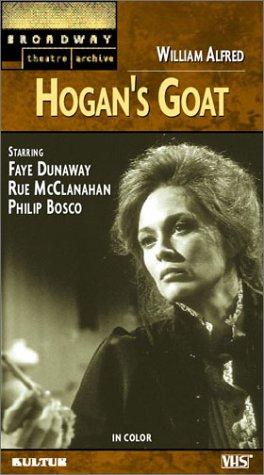
Made-For-Television Film Review: Hogan’s Goat (dir by Glenn Jordan)


1971’s Hogan’s Goat opens in Brooklyn in the 1890s.  This was when Brooklyn itself was still a separate city, before it become a borough of the unified New York City.  If you’ve watched the video that I include with most of my Welcome Back Kotter reviews, you’ll notice the boast: “Fourth largest city” on the Welcome to Brooklyn sign.  And indeed, if Brookyln had remained independent, it would now be the fourth most populated city in America, behind New York, Los Angeles, and Chicago.  Sorry, Brooklyn.

(However, Houston thanks you.)

Local ward boss Matt Stanton (Robert Foxworth) heads home with what he thinks is exciting news.  He tells his wife, Kathleen (Faye Dunaway), that he is finally going to be mayor of Brooklyn.  The current mayor, a man named Quinn (George Rose), has been caught up in some sort of corruption and the Democratic political machine is ready to abandon him.  Matt Stanton is about to become one of the most powerful men in New York.  That’s not bad for a relatively young man who came to America from Ireland in search of a better life.  Adding to Stanton’s happiness is the fact that he’ll be defeating Quinn, a canny politician towards whom Stanton holds a grudge.  Kathleen, however, is worried.  An immigrant herself, Kathleen met Stanton while the latter was in London.  They were married in a civil ceremony and, ever since Stanton brought her back to Brooklyn, she has been lying and telling everyone that they were married in a church.  Kathleen feels that she and Stanton have been living in sin and she wants to have a convalidation ceremony.  Stanton refuses because doing so would mean admitting the lie in the first place and he can’t afford to lose the support of the Irish Catholic voters of Brooklyn.

However, it turns out that there are even more secrets in Stanton’s past, ones that Kathleen doesn’t know about but Quinn does.  When those secrets start to come out, Kathleen comes to realize that there’s much that she doesn’t know about her husband.  Stanton, with political power in his grasp, desperately tries to hold on to the image that he’s created of himself and Kathleen, leading to tragedy.

Hogan’s Goat was an Off-Broadway hit when it premiered in the mid-60s and its success led to Faye Dunaway getting her first film offers.  The made-for-television version of Hogan’s Goat, which premiered on PBS and featured Dunaway recreating her stage role, is essentially a filmed play.  Little effort was made to “open up” the story and, as a result, the film is undeniably stagy.  It’s clear from the start the film was mostly shot to record Faye Dunaway’s acclaimed performance for posterity.  Indeed, she’s the only member of the theatrical cast to appear in the film version.  Dunaway does give a strong performance, easily dominating the film with her mix of nervous intensity and cool intelligence.  The rest of the cast is a mixed bag.  Robert Foxworth is appropriately driven and ambitious as Stanton but his Irish accent comes and goes.  Philip Bosco does well as a sympathetic priest and George Rose is appropriately manipulative as Quinn.

In the end, the story of Hogan’s Goat is probably of the greatest interest to Irish-American history nerds like me, who have read and studied how Irish immigrants, especially in the 19th century, faced tremendous prejudice when coming to the United States and how they reacted by building their own political machines and dispensing their own patronage.  In Hogan’s Goat, the conflict is less between more Stanton and Quinn and more between Kathleen’s traditional views and her devout Catholicism and Stanton’s own very American ambition.  Whereas Kathleen still fights to retain her faith, pride, and her commitment to who she was before she married Stanton, Stanton fights for power and to conquer the man who Stanton feels has everything that he desires.  In the end, Stanton’s hubris is not only his downfall but Kathleen’s as well.

Shattered Politics #32: The Werewolf of Washington (dir by Milton Moses Ginsberg)


Werewolf of Washington (1973)

First released in 1973, The Werewolf of Washington is one of those obscure films that always seems to pop up in Mill Creek box sets.  That’s largely because Werewolf of Washington has slipped into the public domain and anyone can release and sell a copy of it.  (It’s also been uploaded to YouTube by a few hundred different users.)  It’s a film that I’ve actually watched quite a few times, largely because it is so easily available.

Which doesn’t necessarily mean that it’s any good.  I have to admit that, in between viewings, I always seem to convince myself that The Werewolf of Washington is a better film than it actually is.  The idea behind the film sounds clever.  The President’s press secretary (played by Dean Stockwell) is a werewolf.  When the full moon shines, he transforms and wrecks havoc on the streets on D.C.  Stockwell still wears his suit, even when he’s a wolfman.  The President (played by Biff McGuire) is a total idiot who spends a lot of time bowling.  The Attorney General (Clifton James) is a paranoid fascist who is quick to blame the werewolf’s murders on outside agitators.  For no particular reason, a dwarf mad scientist (Michael Dunn) shows up.

Yes, the idea is clever but the execution … actually, the execution is not terrible.  Dean Stockwell gives a good performance and there’s a funny scene where he starts to turn into a werewolf while bowling with the President.  Stockwell’s fingers swell up and get stuck in the bowling ball and Stockwell totally freaks out.  And then there’s a scene where the werewolf attacks a woman in a phone booth and it’s actually rather suspenseful and almost scary.  Plus, Biff McGuire is great and all too plausible as the vapid President.

And yet, overall, the film itself is never as good as you want it to be.  I think a large part of the problem is that the film opens with a long voice over from Dean Stockwell, which explains why his character ended up in Budapest (that would be where he gets bitten by the werewolf) and why the President subsequently named him press secretary.  It’s so much backstory that you get the feeling that the opening narration must have been added in post production in order to cover up scenes that either did not work or that the film’s director never got a chance to shoot.

And really, the entire film is like that.  The film is a collection of scenes that never really flow together or establish any sort of steady pace.  And, when it comes to both horror and comedy, pace is key.

The Werewolf of Washington is a clever idea.  I just wish the execution had been just as clever.

And I’ll probably continue to wish that the next time that I rewatch it.

The_Werewolf_of_Washington_FilmPoster


Shattered Politics #11: The Phenix City Story (dir by Phil Karlson)


PhenixCityPoster

If A Man Called Peter was the epitome of a stereotypical 1950s film, The Phenix City Story is the exact opposite.  Like A Man Called Peter, The Phenix City Story was released in 1955.  And like A Man Called Peter, The Phenix City Story is based on a true story.  However, beyond that, A Man Called Peter and The Phenix City Story might as well have been taking place on different planets.

And, in many ways, they were.  The Phenix City Story not only takes place in Phenix City, Alabama but it was filmed there as well and featured a few actual citizens in the cast.  Not only was The Phenix City Story telling a true story but the story was being told by some of the same people who actually lived through it.  That makes The Phenix City Story brutally realistic, with brutal being the key word.

And, just in case we have any doubt about the film’s authenticity, it actually opens with a 15 minute documentary in which Clete Roberts (who was an actual news reporter) interviews several citizens of the town.  All of them, speaking in thick Alabama accents and nervously eyeing the camera, assure us that what we are about to see is true.  Quite a few of them also tells us that they still live in fear of losing their lives as a result of everything that happened.

What’s amazing is that, once the actual film does get started, it manages to live up to all of that build up.  The Phenix City Story is a shocking film that remains powerful even 60 years after it was initially released.

As the film opens, we’re informed that Phenix City, Alabama is home to some of the most dangerous and violent criminals in the state.  From his club, crime boss Rhett Tanner (Edward Andrews) runs a shadowy organization that not only controls Phenix City but the entire state of Alabama as well.  The police ignore his crimes.  The majority of the town’s citizens are too scared to stand up to him.  When a returning veteran of the Korean War, John Patterson (Richard Kiley), tries to stand up to Tanner, the result is even more violence.  A young black girl is kidnapped and murdered, her body tossed on John’s front lawn as a warning.  John’s best friend is killed but Tanner uses his influence to have the death ruled accidental.

Finally, John and a group of other reformers convince John’s father — Albert Patterson (John McIntire) — to run for Attorney General.  Albert runs on a reform platform and exposes both the corruption of Phenix City and how Tanner’s power extends through the rest of the state as well.  When Albert wins the Democratic primary, he’s gunned down in the street and it’s up to John to avenge his death…

To say that The Phenix City Story is intense would be an understatement.  As directed by Phil Karlson, there’s not a single frame of The Phenix City Story that’s not full of menace and danger.  The stark black-and-white cinematography is full of shadows and the camera moves almost frantically from scene to scene, occasionally catching glimpses of dark figures committing acts of violence and cars speeding away from who knows what outage.  It’s a dark film but, ultimately, it’s also a hopeful one.  It suggests that evil will triumph when good men do nothing but that sometimes you can depend on good men — like Albert and John Patterson — to actually step up.

The Phenix City Story shows up on TCM occasionally and you should keep an eye out for it.  It’s one of the best B-movies ever made.