This October, I’m going to be doing something a little bit different with my contribution to 4 Shots From 4 Films. I’m going to be taking a little chronological tour of the history of horror cinema, moving from decade to decade.
Today, we take a look at the first half of the 1920s.
4 Shots From 4 Horror Films
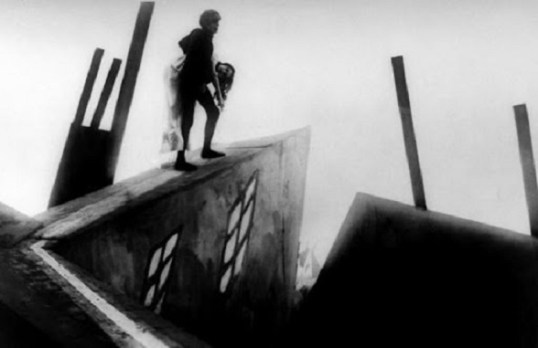
The Cabinet of Dr. Caligari (1920, dir by Robert Wiene)
4 (or more) Shots From 4 (or more) Films is just what it says it is, 4 (or more) shots from 4 (or more) of our favorite films. As opposed to the reviews and recaps that we usually post, 4 (or more) Shots From 4 (or more) Films lets the visuals do the talking.
The horror genre has been around ever since people struggled to explain their fears and horror films were a feature of cinema from the time of the earliest movies. Today, we pay tribute to some of the early entries in the horror genre with….
4 Shots From 4 Horror Films
The Cabinet of Dr. Caligari (1920, dir by Robert Wiene, DP: Willy Hameister)
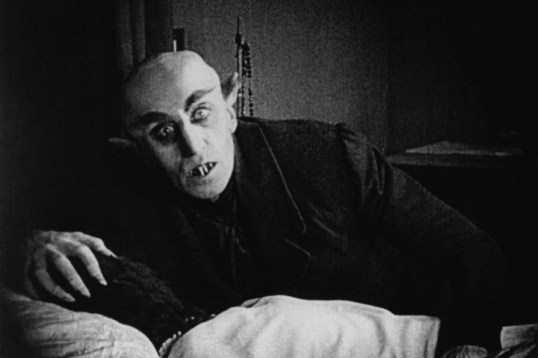
Nosferatu (1922, dir by F.W. Murnau, DP: Fritz Arno Wagner and Günther Krampf)
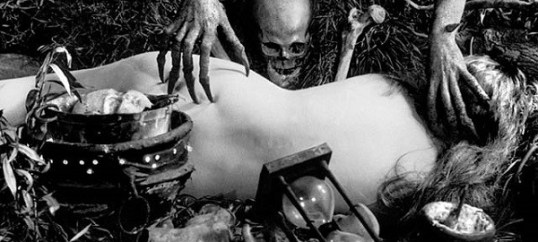
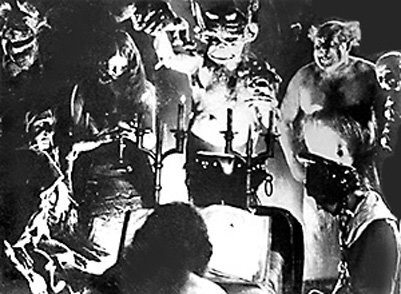
Haxan (1922, dir by Benjamin Christesen, DP: Johan Ankerstjerne)
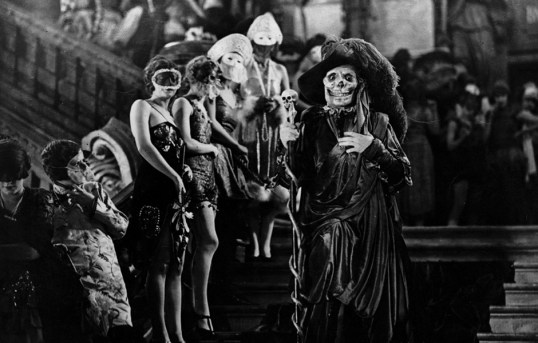
The Phantom of the Oepra (1925, dir by Rupert Julian, DP: Milton Bridenbecker, Virgil Miller, Charles Van Enger)
It’s always interesting to watch Haxan with someone who has never seen it before.
Because this Swedish film was made in 1920 and released in 1922, it’s a silent film. Because it’s sold as being a documentary, it can be a bit of a hard sell among people who 1) hate to read subtitles and 2) instantly recoil at the idea of watching anything might be a educational. Even the fact that the film is subtitled “Witchcraft Through The Ages” might not be enough to get some people to set aside their prejudices.
So, what you do is you beg. You offer to give them popcorn and a Coke if they watch the movie. You stretch out on the couch, arch an eyebrow and suggest that there might be another reward waiting for them at the end of the film. You do whatever you have to do and you get them to watch.
Now admittedly, the first part of Haxan does come across as being a bit slow. The intertitles, which explain that this film was made to examine witchcraft throughout the ages, can come across as being a bit dry. The numerous scenes about how people used to think that the universe revolved around the Earth and that stars were merely lights hanging in the sky goes on for quite some time. Personally, I like these scenes. I enjoy the fact that director Benjamin Christensen actually uses a pointer, as if he’s a lecturer at a university. But they’re not for everyone.
But here’s the thing, skeptical viewers: KEEP WATCHING!
Because eventually, the film moves on from discussing ancient and medieval astronomy and it starts to discussing why people used to believe in witches and how witchcraft used to be punished and suddenly …. OH MY GOD, IS THAT THE DEVIL BURSTING UP OUT OF NOWHERE!? Yes, it is. And yes, that woman is buying a love potion and that monk has become possessed and that witch is flying through the air!
Haxan is an interestingly constructed film. At the start of the film, it proudly declares itself to be the work of a skeptic. Haxan is a film that, in its own scholarly way, ridicules superstition. Those who once believed in witchcraft are compared to those who once believed that the world was flat and that the stars revolved around the Earth. And yet, the film’s greatest moments are the ones that feature scenes of witches and the devil. I don’t think this is accidental. Instead, I think that Benjamin Christensen understood what D.W. Griffith, Ceceil B. DeMille, and Roger Corman understood. Audiences may want to pat themselves on the back for being pure or rational or whatever but, at the same time, they also want that taste of sin and the indulgence of superstition. Haxan makes the argument for science but not before indulging in some old time religion.
And it’s a lot of fun. Haxan is such a visually striking film with it’s taunting devils and its flying witches that one can hardly be shocked that it was initially banned in many countries and, even when it was released, it was often in a heavily censored form. Watching the film, you can also understand why it influenced future horror directors. The images are frequently the stuff of nightmares and the fact that the images are silent just makes them all the more ominous.
Haxan is definitely a film that every horror fan needs to see. Luckily, there’s a Criterion edition for that! Oh Criterion. What would we do without you?
Today’s scene that I love comes from the 1922 silent film, Haxan!
Haxan is a documentary, one that recreates the history of witchcraft throughout the ages. In this scene, the film examines the belief that the devil is everywhere. Apparently, the Devil has a lot of free time on his hands.
Directed by Benjamin Christensen, Haxan was a Swedish film that was released in its native country in 1922 but which took 7 years to make it over the United States. Though contemporary audiences were a bit confused by it, it was popular with the surrealists and it quickly became one of the first true cult movies. It was even re-released in 1967 with a narration provided by Beat writer William S. Burroughs.
Haxan, like many silent films, exists in many different forms. Needless to say, the censors were not kind when this film originally made its way over to the United States. It wasn’t until 2001 that Haxan was fully restored and released as a part of the Criterion Collection.
4 Shots From 4 Films is just what it says it is, 4 shots from 4 of our favorite films. As opposed to the reviews and recaps that we usually post, 4 Shots From 4 Films lets the visuals do the talking.
Horror is one of the oldest genres around and just to prove it, here are….
4 Shots From 4 Silent Horror Films
The Golem (1920, dir by Paul Wegener)
Haxan (1922, dir by Benjamin Christensen)
The Student of Prague (1926, dir by Henrik Galeen)
The Fall of the House of Usher (1928, dir by Jean Epstein)
I previously shared Haxan back in October of 2013. A day later, YouTube removed the video and turned my post into a tease.
Well, the video has been uploaded again so I’m sharing Haxan again!
To quote what I wrote the last time that I shared this particular film:
Directed by the Danish director Benjamin Christensen, Haxan is a quasi-documentary that, over the course of four separate sections, documents the history of witchcraft and superstition in Europe. Along with making a potent case that religion and superstition are largely the same thing, Haxan is best known for dramatizing various old folk tales. Though the film was made in 1922, its images of lustful devils and dark magic remain powerful to this day.
This October, I’m going to be doing something a little bit different with my contribution to 4 Shots From 4 Films. I’m going to be taking a little chronological tour of the history of horror cinema, moving from decade to decade.
Today, we take a look at the first half of the 1920s.
4 Shots From 4 Films
The Cabinet of Dr. Caligari (1920, dir by Robert Wiene)
Only four more days to go until Halloween so what better time to feature one the greatest horror films of all time, 1922’s Haxan: Witchcraft Through The Ages?
Directed by the Danish director Benjamin Christensen, Haxan is a quasi-documentary that, over the course of four separate sections, documents the history of witchcraft and superstition in Europe. Along with making a potent case that religion and superstition are largely the same thing, Haxan is best known for dramatizing various old folk tales. Though the film was made in 1922, its images of lustful devils and dark magic remain powerful to this day.




 Through the Shattered Lens