Retro Television Review: 3 By Cheever 1.2 “O Youth And Beauty!” (dir by Jeff Bleckner)


Welcome to Retro Television Reviews, a feature where we review some of our favorite and least favorite shows of the past!  On Saturdays, I will be reviewing 3 By Cheever, which ran on PBS in 1979.  The entire show can be purchased on Prime and found on YouTube.
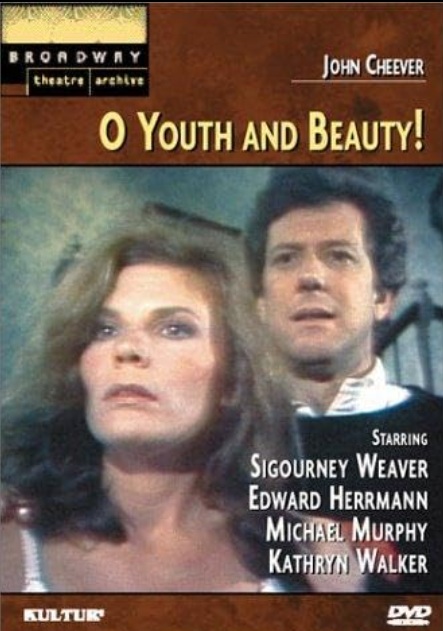
Episode 1.2 “O Youth and Beauty!”

(Dir by Jeff Bleckner, originally aired on October 31st, 1979)

Back in the day, Cash Bentley (Michael Murphy) was an athletic marvel.  He was a track star who could jump the hurdles with ease and who everyone in high school looked up to.  Now, however, he’s 40 years old and he feels lost.  He’s aging and a new generation of young people have come along.  They certainly have no idea who Cash Bentley used to be.

At drunken neighborhood parties, Cash insists on recreating his youth by having his hosts set up their furniture like an obstacle course.  Giving them a starter’s pistol that he insists be fired to signify the start of the race, Cash will run through the house, jumping over chairs and couches and tables while everyone cheers.  Unfortunately, Cash’s luck runs out and he ends up breaking his leg during one of his demonstrations.

Forced to get around on crutches, Cash feels isolated from the rest of the world.  He doesn’t get a promotion because his bosses say they need someone who can start traveling immediately.  When all of his neighbors get on the train that is heading into the city at the usual morning time, a hobbled Cash arrives late and is forced to wait alone for the next one.  His wife, Louise (Kathryn Walker), gets a job working at a boutique to help pay the bills.  She says that maybe she’ll make enough that they’ll be able to take a vacation.  At the neighborhood parties, no one wants to deal with Cash and his broken leg.  His athleticism was all he had left.  It was what he was known for.  It was the source of all his confidence.  Now that he doesn’t have that, he’s lost.

Eventually, his legs comes out of the cast and he insists that Louise set up all the furniture in the house so that he can run another obstacle race.  He gives Louise the starter’s pistol and insists that she fire it when it’s time for him to start.  The scene cuts to the outside of their suburban home.  The sound of one gunshot upsets the calm.  Later, Louise and her children are seen moving out of the house.  Cash is nowhere to be seen.

The episode ends ambiguously.  Those who are familiar with the original John Cheever short story know that Louise shot Cash and that no one was sure whether she meant to do it or not.  The movie cuts away before the gun is actually fired.  For all we know, Cash did the obstacle course and then just never returned home.

O Youth and Beauty is one of John Cheever’s most acclaimed short stories.  The screen adaptation features an excellent performance from Kathryn Walker but the scenes of Cash running the furniture obstacle course are probably something that worked better on the page and in the reader’s imagination than when actually presented on film.  Michael Murphy is almost too confident and handsome as Cash.  The role calls for a former jock slowly going to seed and desperately trying to hold onto his youth whereas Murphy looks like he’s still in peak athletic form.  Murphy does a good job portraying Cash’s depression and his alienation after he breaks his leg but, physically, he still seems miscast in the role.

Edward Herrmann and Sigourney Weaver, who were the center of last week’s episode, make a brief appearance in this one, hovering in the background of the neighborhood’s endless parties.

Next week, we finish up 3 By Cheever.
Film Review: …. And Justice For All (Dir by Norman Jewison)


First released in 1979, ….And Justice For All will always be remembered for one scene.

Yell it with me, “YOU’RE OUT OF ORDER!  THE WHOLE TRIAL IS OUT OF ORDER!  THEY’RE OUT OF ORDER!”

When attorney Arthur Kirkland (Al Pacino) starts screaming in the middle of the courtroom, it’s a cathartic moment.  We’ve spent nearly two hours watching as Arthur deals with one insane situation after another.  One of Arthur’s partners, Warren (Larry Bryggman), cares more about his car than actually delivering the right documents to a judge.  Another of Arthur’s partners, Jay (Jeffrey Tambor), has a nervous breakdown and, after shaving his head, ends up throwing cafeteria plates at people in the courthouse.  Arthur has three clients, one of whom is indigent, one of whom is innocent, and one of whom is a wealthy and despised judge (John Forsythe) who has been accused of a rape that Arthur suspects he committed.  The system offers no mercy for Arthur’s innocent (or, at the very least, harmless) clients while going out of it’s way to defend the judge.  Meanwhile, another judge (Jack Warden), is driven to take suicidal risks, like flying a helicopter until it runs out of fuel and comes down in a nearby harbor.  The assistant district attorney (Craig T. Nelson) only cares about his political ambitions and finally, after one incident after another, Arthur snaps.  And it’s cathartic because we’re all on the verge of snapping as well.

That final moment, with its signature Al Pacino rant, is such a strong and iconic scene that it’s easy to forget that the film itself is actually rather uneven.  The script, by Barry Levinson and Valerie Curtin, owes a good deal to the work of Paddy Chayefsky.  Just as Chayefsky often wrote about men being driven mad by institutional failure, ….And Justice For All features character after character snapping when faced with the screwed-up realities of the American justice system.  The final “out of order” speech is obviously meant to be this film’s version of Howard Beale’s “I’m as mad as Hell and I’m not going to take it!” speech from Network and, much like George C. Scott in the Chayefsky-written The Hospital, Arthur spends a lot of time talking about what he doesn’t like about his job.  The thing that sets ….And Justice For All apart from the best works of Chayefsky is that Levinson, Curtin, and director Norman Jewison all take Arthur Kirkland at his word while one gets the feeling that Chayefsky would have been a bit more willing to call out Arthur on his self-righteousness.  Arthur has every right to be angry when Warren forgets to give a judge an important document while Warren is substituting for him in court.  At the same time, Arthur is the one who trusted Warren to do it.  In the end, the document was not about one of Warren’s client.  In fact, Warren knew absolutely nothing about the case or Arthur’s client.  The document was about Arthur’s client and Arthur was the one who decided trust someone who had consistently shown himself to not be particularly detailed-orientated.  One gets the feeling that Chayefsky would not have let Arthur off the hook as easily as Levinson, Curtin, and Jewison do.  Arthur’s perpetual indignation can sometimes be a little hard to take.

It’s a very episodic film.  Arthur goes from one crisis to another and sometimes, you do have to wonder if Arthur has ever had any human or legal interactions that haven’t ended with someone either going insane or dying.  There’s no gradual build-up to the film’s insanity, it’s right there from the beginning.  And while this means the narrative often feels heavy-handed, it also makes that final speech all the more cathartic.  It’s an uneven film and, of all of the characters that Pacino played in the 70s, Arthur is probably the least interesting.  But that final rant makes up for a lot and, fortunately, Pacino was just the actor to make it memorable.  For all it’s flaws, the final few minutes of ….And Justice For All make the film unforgettable.


Retro Television Review: 3 By Cheever 1.1 “The Sorrows of Gin” (dir by John Hofsiss)


Welcome to Retro Television Reviews, a feature where we review some of our favorite and least favorite shows of the past!  On Saturdays, I will be reviewing 3 By Cheever, which ran on PBS in 1979.  The entire show can be purchased on Prime and found on YouTube.

In 1979, PBS aired 3 By Cheever, three short films that were all based on stories by the American author, John Cheever.  The stories all took place in the same suburban milieu and featured characters in common.  The first episode was an adaptation of one of Cheever’s earlier stories, The Sorrows of Gin.

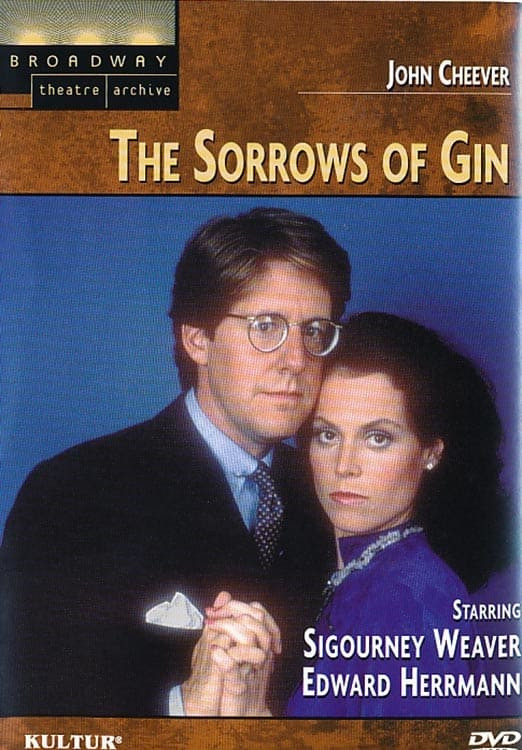
Episode 1.1 “The Sorrows of Gin”

(Dir by Jack Hofsiss, originally aired on October 24th, 1979)

Taking place in the New England suburb of Shady Hill, The Sorrows of Gin deals with the Lawton family.  The Lawtons have got a nice house, lovely neighbors, and enough loyal servants that they don’t ever have to really worry about taking care of their eight year-old daughter, Amy (Mara Hobel).  Kip (Edward Herrmann) and Marcia Lawton (Sigourney Weaver) are youngish, successful, athletic (they play tennis, of course), and they’re also alcoholics.  They don’t realize they’re alcoholics and they’re both far more refined than the stereotypical image of the boozy drunk but they’re alcoholics nonetheless.

They’re also hypocrites.  When Amy’s babysitter, Rosemary (Eileen Heckart), comes to work with booze on her breath, Kip fires her.  Amy, realizing that the alcohol is causing her parents to fight, starts to secretly pour out all of the gin, a little at a time.  Kip and Marcia assume that the servants are sneaking drinks and they go on a firing rampage.  Amy finally decides to run away from home, just to be found by Kip who, at the very least, seems like he’s willing to try to be a better father and husband.

Wow, what a depressing story!  Cheever’s original short story, which was one of the first American stories to really explore suburban alcoholism, was written with a good deal of wit and social satire.  The PBS adaptation takes a far more literal approach.  It captures Cheever’s story but not his voice and, as a result, you kind of find yourself why you should care about any of these people.  Even taking alcohol out of the equation, Kip and Marcia are shallow, self-absorbed, and terrible parents.  Maybe Amy should run away.

On the plus side, the film does feature Edward Herrmann and Sigourney Weaver, both giving excellent performances as the Lawtons.  The same year in which this aired, Weaver also starred as Ripley in Alien and it is a bit odd to see Weaver playing someone who would probably never in a thousand years see that film.  That said, Weaver does a good job and is totally believable as the clueless Marcia.  Meanwhile, Edward Herrmann has just the right WASP-y style to play Kip Lawton.  One of the most effective things about this film is how Kip is just a goofy suburban husband until he thinks someone is drinking his gin.  Then, he becomes outraged.  This film ends with a hint of redemption for Kip, a suggestion that Kip has finally realized how much his drinking is upsetting his daughter.  But, honestly, Kip doesn’t really seem like he has it in him to change.  Hopefully, he’ll just stop firing people.

This was an uneven production.  The story wasn’t quite as shocking as perhaps it was when Cheever first wrote about the Lawtons.  But the performances of Herrmann and Weaver kept me watching.