Retro Television Review: Miami Vice 5.6 “Line of Fire”


Welcome to Retro Television Reviews, a feature where we review some of our favorite and least favorite shows of the past!  On Mondays, I will be reviewing Miami Vice, which ran on NBC from 1984 to 1989.  The entire show can be purchased on Prime!

This week, Crockett and Tubbs are assigned to protect a witness.

Episode 5.6 “Line Of Fire”

(Dir by Richard Compton, originally aired on December 16th, 1988)

Carlos Cantero (Aharon Ipalé) is on trial for murdering Ian Sims, one of Crockett’s confidential informants.  Crockett is the number one witness against him, which is a problem because Crockett just spent the last few months under the impression that he was Sonny Burnett, one of Miami’s biggest drug dealers.  Cantero’s defense attorney dismantles Crockett’s testimony by pointing out that Crockett had a “psychotic breakdown.”

(And you know what?  The attorney is actually very correct about that.  Crockett acts shocked when his mental health history is brought up but why wouldn’t it be?)

Luckily, there is an eyewitness to the murder of Ian Sims.  The FBI asks Crockett and Tubbs to keep an eye on Keith (Justin Lazard), a heavy metal fan who is willing to testify against Cantero.

I have to admit that I nearly gave up on this episode because my first impression of Keith was that he was the most annoying character to ever appear on a television show.  However, I’m glad that I didn’t because this episode actually introduced a very clever twist.  Keith is not actually Keith.  Instead, he’s DEA agent Joey Hardin, who has been assigned to pretend to be Keith to keep Cantero from going after the real Keith.  It turns out that FBI Agent Bates (Kevyn Major Howard, the “Do you believe in Jesus?” guy from Death Wish II) is crooked and he’s giving information to Cantero.

Unfortunately, Crockett doesn’t find out the truth until Joey has already been shot multiple times by Bates.  (Tubbs and Crockett proceed to gun down Bates.)  Joey nearly dies while the prosecutor chortles about how all of this is actually going to help him get a conviction.  It turns out that the prosecutor doesn’t know what he’s talking about.  The real Keith is now too terrified to testify against Cantero, leading to Cantero going free.  Joey does recover from being shot but, at the end of this episode, it’s hard not to feel that it was all for nothing.

This is one cynical episode!  But that’s okay.  Miami Vice was always at its best when it was being cynical and this episode is a throwback to old school Vice, back when the emphasis was on how no one could trust anyone and the government was often its own worst enemy.  Miami Vice was definitely a left-wing show but occasionally, it did reveal a libertarian streak.  That was certainly the case with this episode, in which the war on drugs is portrayed as being unwinnable because the government is naturally incompetent.  Young idealists like Joey Hardin are sent off to battle and are ultimately abandoned once they’re no longer needed.

This was a good episode.  I’m still having a hard time buying that Crockett could just go back to being a cop after being Miami’s top drug lord but whatever.  It’s the final season.  I’ll suspend my disbelief a little.
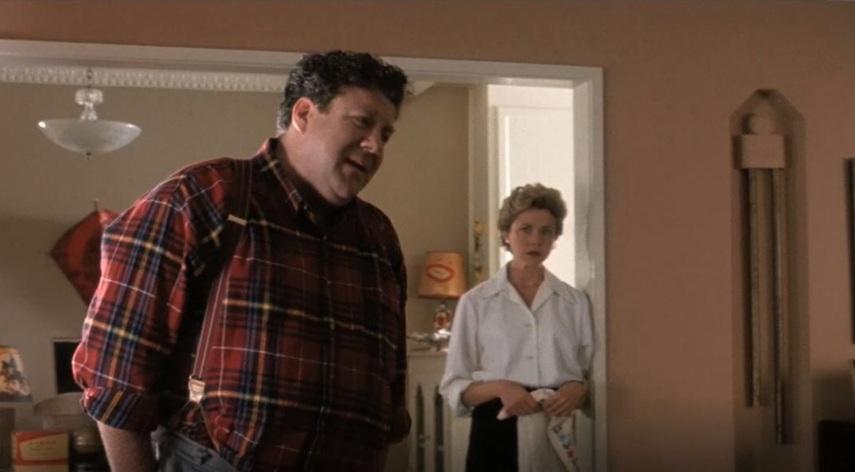
RIP, George Wendt: Guilty By Suspicion (1991, directed by Irwin Winkler)


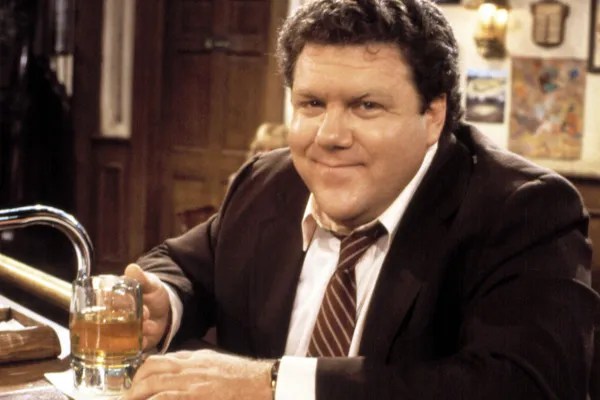
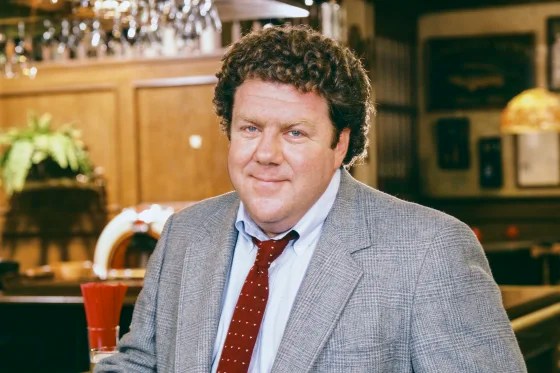
George Wendt passed away in his sleep earlier today.  He was 76 years old.

If you’re old enough to have watched Cheers when it originally aired or to have caught it in reruns, George Wendt will always be Norm Peterson, the beer-drinking accountant who spent all of his time at the show’s titular bar.  One of the show’s trademarks was that, whenever he entered the bar, everyone greeted him by shouting, “Norm!”  “How’s the world treating you?” a bartender would ask.  “It’s a dog eat world and I’m wearing milkbone underwear,” Norm once replied.

(One of my favorite joke from the series was when Norm went into a steakhouse and everyone inside was heard to yell, “Norm!” as the door closed behind him.)

If we’re going to be really honest, Norm was probably a high-functioning alcoholic and terrible husband.  (Wife Vera was often-mentioned but never seen.)  Wendt was so likable in the role and was so good at delivering those one-liners that it didn’t matter.  Watching the show, you never wondered why Norm was in the bar.  You were just glad he was.

George Wendt was also an accomplished stage actor.  (I saw him on stage when he was co-starring with Richard Thomas in 12 Angry Men.)  He appeared in several movies, usually playing the comedic sidekick or the hero’s best friend.  His film roles often didn’t ask him to do much other than be likable but one exception was his performance in 1991’s Guilty By Suspicion.

Guilty By Suspicion is a film about the McCarthy era, starring Robert De Niro as film director David Merrill, who is threatened with being blacklisted unless he names four of his colleagues as being communists.  George Wendt plays screenwriter Bunny Baxter, a childhood friend of David’s who attended a few communist rallies when he was younger, failed to mention it to the FBI, and who is now being investigated as a subversive.  The studio argues that David should name Baxter because his name is already out there.  When David refuses, he finds himself blacklisted and unable to make a living.  Bunny Baxter, meanwhile, is offered a similar deal.  Baxter can save his own career but only if he names David as a communist.  Unlike David, Baxter considers betraying his friend because it’s the only way that he can ever hope to work again.  “Your dead anyway,” Baxter says to David.

Guilty By Suspicion suffers from Irwin Winkler’s plodding direction but De Niro gives a good performance, as does Martin Scorsese who is cast as a director based on Joseph Losey.  The film is full of actors who would later become better-known, like Chris Cooper, Tom Sizemore, and Annette Bening.  Wendt, however, gives the film’s best performance as the screenwriter who is torn between protecting his career and maintaining his integrity.  The scene where he asks permission to name Merrill as a communist is powerful and it shows how good an actor George Wendt could be.  Bunny Baxter is asking his best friend to allow himself to be stabbed in the back.  Baxter is that desperate.  That he’s played by George Wendt, an actor who was everyone’s favorite likable barfly in the 80s, makes the scene all the more powerful.

George Wendt, RIP.  Thanks for the memories.

Film Review: Avalanche (dir by Corey Allen)


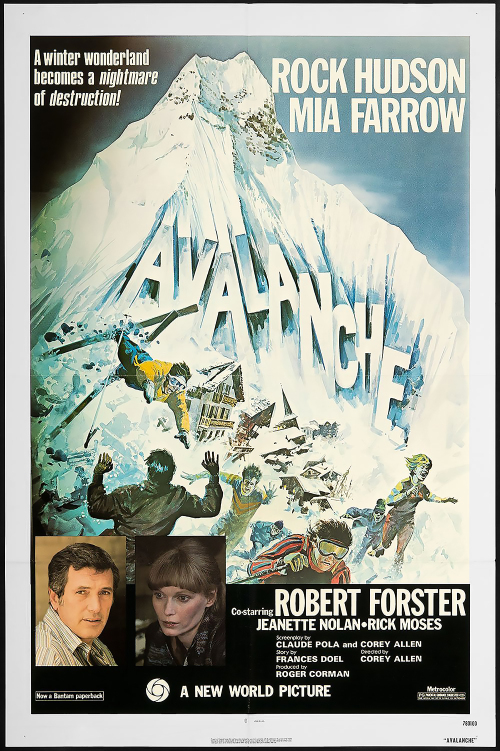
The 1978 film Avalanche tells the story of a beautiful resort that’s been built in the mountains of Colorado.  Self-righteous photographer and activist Nick Thorne (Robert Forster) keeps insisting that it’s not environmentally safe to build a resort up in the mountains.  According to him, there’s too much snow building up and it’s inevitably going to lead to an avalanche.

The owner of the resort, David Shelby (Rock Hudson), insists that Nick doesn’t know what he’s talking about.  Sure, David may have had to cut a few ethical corners to get his resort built and he may currently be under criminal investigation but that doesn’t make David a bad guy.  All he wants is to have a nice and expensive resort located in the most beautiful and dangerous place on Earth.  Does that make him a bad guy?

Unfortunately, if David was watching the film with the rest of us, he would be aware of all the shots of snow ominously building up on the side of the mountain.  However, David would still probably be distracted by the presence of his ex-wife, Caroline (Mia Farrow).  David would love to get back together with Caroline but Caroline finds herself growing attracted to Nick.  When David isn’t chasing after Caroline, he’s trying to keep his mother, Florence (Jeanette Nolan), from drinking all of the liquor in the resort.  Good luck with that!  Florence is an eccentric old person in a disaster film so, of course, she’s going to be drunk off her ass for the majority of the run time.

There are other dramas occurring at the resort, of course.  TV personality Mark Elliott (Barry Primus) is upset because his ex, Tina (Cathey Paine), is hooking up with arrogant skier Bruce Scott (Rick Moses).  Bruce is upset because Tina expects him not to cheat on her.  Ice skater Cathy Jordan (Pat Egan) is hoping to conquer her insecurities.  Rival ice skater Annette River (Peggy Browne) is …. well, she’s there.  To be honest, I’m not really sure what the whole point of the ice skating rivalry was since they all end getting buried in snow regardless.  Then again, maybe that is the point.  An avalanche doesn’t care about your personal dramas.  All it cares about is destroying tacky resorts that overuse wood paneling.

Yes, the avalanche does come crashing down the mountain eventually.  It takes a while, though.  There’s almost an hour of Rock Hudson walking around with a pained look on his face before the snow finally comes crashing down.  For all of Nick’s talk about how the avalanche would probably be the result of too many people skiing, it actually happens because someone crashes a plane into one of the mountains.

Obviously, the avalanche is the main reason why anyone would want to watch a movie called Avalanche.  Anyone with any knowledge of the disaster genre knows that no one watches these movies for the human drama.  They watch them because they want to see at least 10 minutes of solid destruction.  A disaster movie can get away with almost anything as long as the disaster itself looks good.

The disaster in Avalanche does not look particularly good.  This film was directed by Roger Corman and, despite being one of the most expensive films that Corman ever produced, the avalanche effects are definitely a bit cut-rate.  At the same time, the cheapness of the special effects does provide the film with its own odd charm.  Just consider the scene where one of the ice skaters gets covered in snow while spinning around with a triumphant smile on her face.  (Sure, she might be dead and she’ll certainly never make it to the Olympics but at least she finally mastered a fairly basic skating move.)  The avalanche effects are super imposed over the image of the skater spinning but it’s obvious that it didn’t occur to anyone to tell the skater, “Hey, act like there’s a gigantic amount of snow crashing down on you!”  It’s so inept as to be charming, like when a child draws a really ugly picture but it’s cute because at least they tried and, as a result, you wait until the child leaves your house before you throw it away.

The thing I love about Avalanche is how everyone is even more ineffectual after the avalanche than they were before it.  Usually, in a movie like this, the disaster leads to unexpected heroism and the villains getting the comeuppance.  In this one, the avalanche just inspires more stupidity.  Fire trucks and ambulances literally collide with each other while heading for the resort.  At one point, a group of fireman set up a net directly underneath someone falling out of a ski ramp chair just for the person to somehow land a few inches to the left of them.  Though the film sets David Shelby up to be the villain, it’s hard not to feel that everyone at the resort is just an idiot.

Listen, I love Avalanche.  It’s terrible but it’s a lot of fun and the less-than special effects go along perfectly with the overheated (or, in some cases, underheated) performances.  Rock Hudson wanders through the movie with a strained smile on his face that has to be seen to be believed while Mia Farrow and Robert Forster both try so hard to make their underwritten characters credible that you can’t help but kind of appreciate their devotion to a lost cause.  If nothing else, the shots extras reacting to superimposed shots of the avalanche makes this film worth a look.  This is a cheap and silly movie and if you don’t enjoy it, I don’t know what’s wrong with you.

Roger of the Skies: VON RICHTOFEN AND BROWN (United Artists 1971)


gary loggins's avatarcracked rear viewer

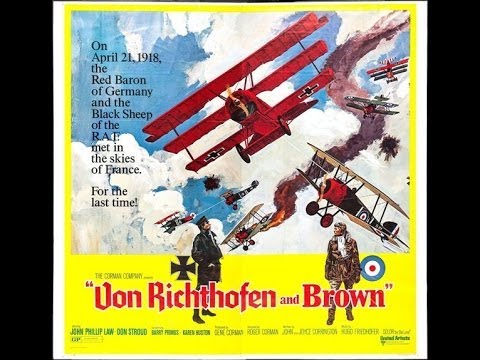
Producer/director Roger Corman finally cut ties with American-International Pictures after they butchered his apocalyptic satire GAS-S-S! Striking out on his own, Corman’s next movie was VON RICHTOFEN AND BROWN, a World War I epic about famed German aerial ace The Red Baron and the Canadian pilot who shoots his down Roy Brown. There are grand themes, as Corman sought to make a statement on the futility of war, the end of chivalry, and the mechanized savagery of what was to be “the last war”. The film looks good, shot in Ireland, with exciting aerial footage, but despite all the outer trappings VON RICHTOFEN AND BROWN is still a Corman drive-in movie.

John Philip Law also looks good as Baron Manfred von Richtofen, the aristocrat/warrior who became the feared Red Baron. Law was always great to watch, whether as the blind angel in BARBARELLA, the black-clad supervillain in DANGER: DIABOLIK, sexy Robin Stone in…

View original post 346 more words