Today’s song of the day comes from David Bowie and it’s about Bowie’s fascination with Andy Warhol. Warhol himself apparently didn’t care for this song but Bowie meant it as a tribute.
This song came out in 1971. 25 years later, Bowie would play Andy Warhol in Basquiat.
4 Or More Shots From 4 Or More Films is just what it says it is, 4 shots from 4 of our favorite films. As opposed to the reviews and recaps that we usually post, 4 Shots From 4 Films lets the visuals do the talking!
On this date, 97 years ago, Andy Warhol was born. Today, we mark this occasion with….
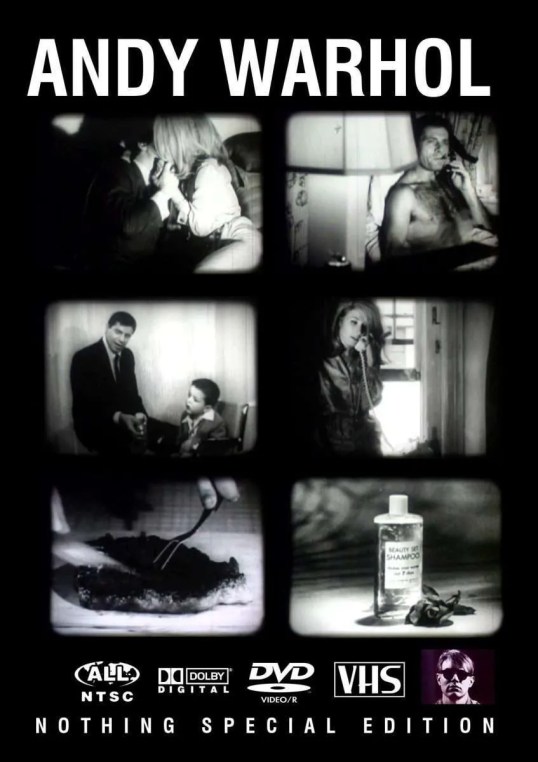
4 Shots From 4 Andy Warhol Films
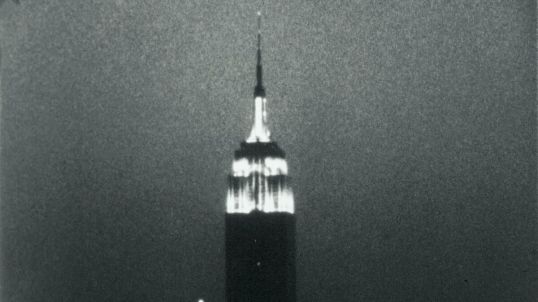
Empire (1965, dir by Andy Warhol)
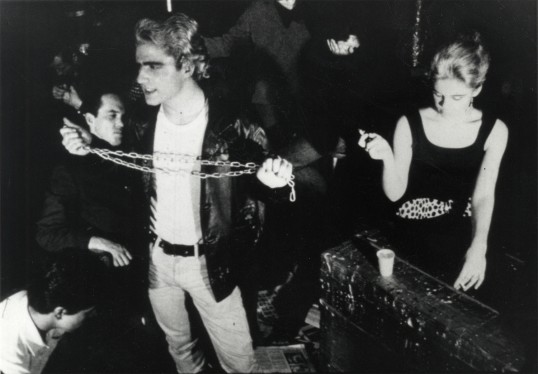
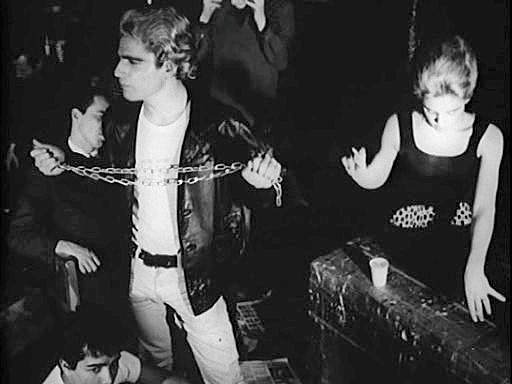
Vinyl (1965, dir by Andy Warhol)
Poor Little Rich Girl (1965, dir by Andy Warhol)
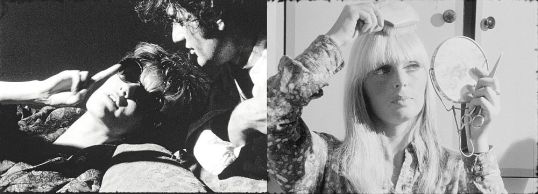
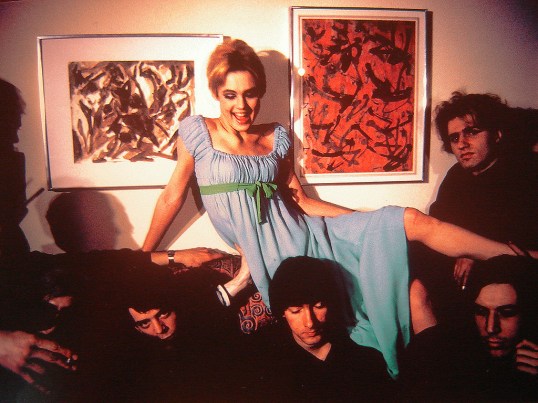
Chelsea Girls (1966, dir by Andy Warhol and Paul Morrissey)
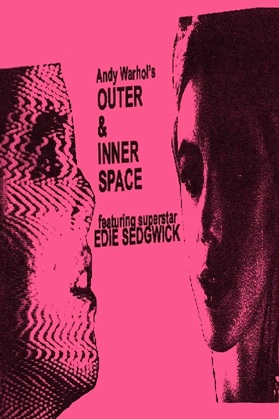
In this 33-minute short film, we watch as Edie Sedgwick appears to have a conversation with herself. She’s not, of course. Instead, she’s sitting next to a television monitor that is showing a video of Edie having a conversation with an off-screen someone who was to the right of her. Meanwhile, the “live” Edie is having a conversation with an unseen person who is sitting to the left of her. This creates the illusion of the two Edies having a disjointed conversation with each other whereas, in reality, we’re really not sure who either Edie is talking to or what they’re even talking about. As was typical with Andy Warhol’s Factory films, the soundtrack is notably muddy. As well, the video below is actually a film of the film, which I think Warhol perhaps would have appreciated as long as he got paid.
Okay, it’s not for everyone. Obviously, if you’re not a fan of Warhol’s films, this experimental piece is not going to change your mind. In fact, it’ll probably make you a little bit angry. But, for me, it’s a fascinating time capsule, a true product of the era from which it came. Warhol’s experiments might not seem spectacular today but that’s because we’ve grown use to experimentation. Experimentation has become a mainstream concept. Warhol, on the other hand, was making his underground films at a time when the term “underground” actually meant something.
As well, this film features Edie at the height of her fame. It’s a bit sad to watch now, knowing how fleeting her obvious happiness would be. Warhol’s films always framed Edie as being just slightly out of reach, from both the viewers and the filmmaker. With the muddy soundtrack, one watches the multiple Edies in this film and wonders what is going through their mind, This is a film that embraces the enigma of existence and image.
Today’s song of the day comes from Lou Reed. Andy Warhol reportedly asked Lou Reed to write a song about how Edie Sedgwick was a femme fatale. It’s a song that captures the fascination that Edie inspired amongst artists in the 60s and beyond. It may not be the most positive portrait of Edie as a person but at least it’s not quite as bitter as Bob Dylan’s Like A Rolling Stone.
Here she comes, You’d better watch your step, She’s going to break your heart in two, It’s true.
It’s not hard to realize, Just look into her false colored eyes, She’ll build you up to just put you down, What a clown.
‘Cause everybody knows She’s a femme fatale The things she does to please She’s a femme fatale She’s just a little tease She’s a femme fatale See the way she walks Hear the way she talks.
You’re written in her book, You’re number thirty-seven, have a look. She’s going to smile to make you frown, What a clown.
Little boy, she’s from the street. Before you start you’re already beat. She’s going to play you for a fool, Yes, it’s true.
‘Cause everybody knows She’s a femme fatale The things she does to please She’s a femme fatale She’s just a little tease She’s a femme fatale See the way she walks, Hear the way she talks.
‘Cause everybody knows She’s a femme fatale The things she does to please She’s a femme fatale She’s just a little tease She’s a femme fatale Oh, oh, oh, oh, oh She’s a femme fatale Oh, oh, oh, oh, oh She’s a femme fatale Oh, oh, oh, oh, oh She’s a femme fatale
Today’s scene that I love comes to use from an underground 1965 film called Vinyl! This film, believe it or not, was actually an adaptation of the novel A Clockwork Orange, one that was filmed six years before the better-known Stanley Kubrick version.
In this scene below, Gerard Malanga and Edie Sedgwick dance to Nowhere to Run by Martha and The Vandellas. Malanga is playing the role that would later be made famous by Malcom McDowell. Edie is playing …. well, Edie is basically playing herself. No one smoked a cigarette with as much style as Edie Sedgwick.
Watching her in this scene, it’s sad to think that, in just six years (and at the same time that Stanley Kubrick was releasing his version of A Clockwork Orange), Edie Sedgwick would die at the age of 28. Like all of us, she deserved much better than what the world was willing to give her.
4 Shots From 4 Films is just what it says it is, 4 shots from 4 of our favorite films. As opposed to the reviews and recaps that we usually post, 4 Shots From 4 Films lets the visuals do the talking!
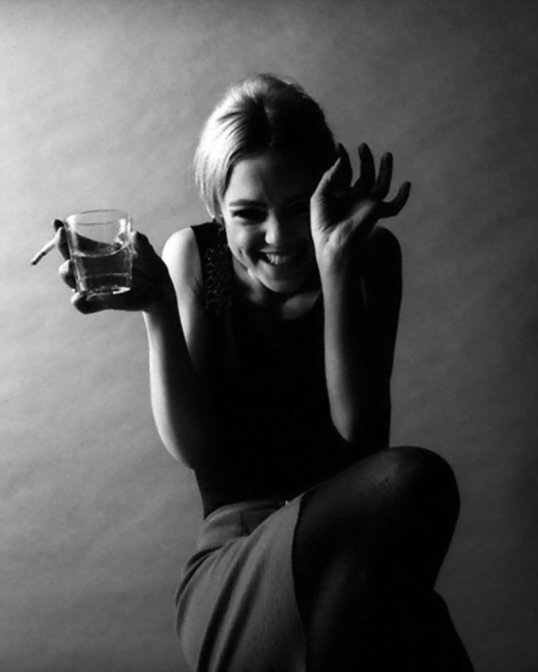
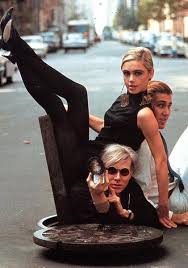
Today would have been Edie Sedgwick’s 82bd birthday. Unfortunately, she died under tragic circumstances in 1971, after having briefly found fame as a model, a “youthquaker” (as some in the media called her), an actress, and Andy Warhol’s muse. Her tragic life is often held up as a cautionary tale and perhaps it is. For all of her talent and her appeal (not to mention that sharp wit that made her an outsider in the 60 but which would have made her a fascinating interview subject in 2025), Edie was far too often exploited by those who should have been protecting her. She was too beautiful not to be famous but, at the same time, too sensitive not be hurt by the experience. She’s truly a tragic figure but, because she also epitomizes everything that the New York underground art scene in the 60s represents in the popular imagination, she’s also an inspiring one. Edie lives forever as a symbol and a muse. Personally, I’ve been fascinated by her life for as long as I can remember.
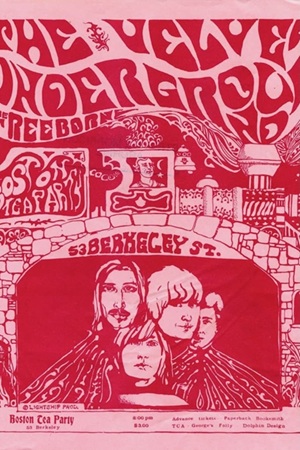
In the late 60s, The Velvet Underground often performed at the Boston Tea Party, a concert venue in — you guessed it! — Boston. Lou Reed described the Boston Tea Party as being the band’s favorite place to play and the Velvets’ performances at the venue would eventually become legendary. The Velvet Underground would attract an audience made up of bikers, Harvard students, MIT Students, Northeastern Students, celebrities, and a young Jonathan Richman.
In 1967, artist Andy Warhol attended a performance and filmed the show. He got 33 minutes of footage, one that doesn’t quite work as a concert film but which does work marvelously as a time capsule. While the music itself is often distorted (and this is not the film to watch if you’re wanting to hear your favorite songs performed live), Warhol’s camera does capture the feel of the psychedelic 60s, complete with strobe lights, sudden zoom shots, and an audience that alternates between moving to the music and standing still in a state of stoned contemplation. Warhol films like someone who has just gotten his first camera and can’t wait to experiment and see what it can do. The end result is actually rather likable, even if it is often incoherent. The enthusiasm and the excitement of filmmaking and capturing history comes through. When you’re first learning and experimenting with film, there’s nothing cooler than a sudden close-up or a sudden pull back to reveal the size of the crowd. The film finds Warhol having fun with the camera and the footage is ultimately rather hypnotic.
It’s a true time capsule. Here is The Velvet Underground in Boston.
Directed by Andy Warhol, 1964’s Soap Opera features a plot that largely plays out in silence.
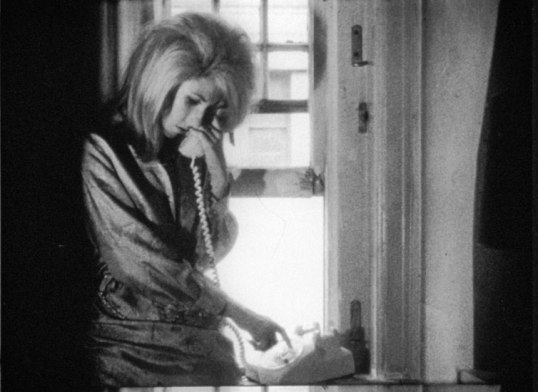
The silent, grainy black-and-white footage depicts what appears to be a love triangle between Warhol associate Rufus Collins, Sam Green, Ivy Nicholson, Gerard Malanga, and “Baby Jane” Holzer. There’s a lot of kissing. There’s a lot of slapping. There’s a lot of scenes of our nameless characters giving each other suspicious and meaningful looks. At one point, Jane Holzer makes what appears to be a very important phone call. We don’t know who these people are or how they’re related but they certainly do seem to be intensely obsessed with each other. The situations grow progressively more and more sexual and one gets the feeling that, if we could only hear the dialogue, we would have a chance to vicariously take part in a great melodrama. Of course, the footage itself is so grainy that it’s sometimes hard to tell who is who. Indeed, the characters often seem to be interchangeable. That’s certainly true of real soap operas as well. With new actors regularly stepping into old roles and one story’s hero becoming the next story’s villain, soap operas were all about accepting whatever was presented on the screen. In real life, drama has real consequences. In Warhol’s film and on television, melodrama is just something that happens without any real repercussions.
Janes Holzer in Soap Opera
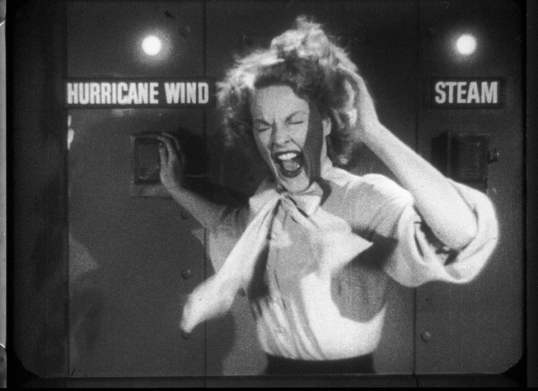
Fortunately, the film provides a few breaks from the repetitive cycle of nonstop, grainy drama. Sprinkled throughout the film are commercials breaks, featuring actual commercials that were supplied to Warhol by Lester Persky, an advertising executive who later found greater fame as a Broadway producer. (He produced Hair, amongst other productions.) In between scenes of Ivy Nicholson kissing Sam Green and Rufus Collins looking shocked, we get a serious of very happy and very loud commercials. Indeed, after watching the silent and grainy soap opera footage, it’s a bit jarring to have an expertly staged commercial suddenly blare forth in crisp black-and-white. An obnoxious salesman tries to sell us things to make our home better and our meals tastier. Jerry Lewis shows up with a child and tells us to be sure to contribute money to his telethon. Model Rosemary Kelly is introduced by an announcer who tells us that Rosemary is going to tell us about the greatest adventure of her life. That adventure? Not conditioning her hair for five days. Amazingly, her hair is still full and lustrous! Even after swimming and sleeping on it! Not even a broken steam valve can make her hair look bad! This commercial is so effective that it’s actually featured twice and why not? Even I want to know Rosemary’s secrets and my hair always looks good!
Rosemary Kelly in Soap Opera
Warhol subtitled this film The Lester Persky Story, both to thank Persky for supplying the commercials but also to point out that the commercials were really the whole point of the show. The plot of any show, whether it’s a real one or the one in Warhol’s film, really only exists to keep you watching long enough to see the commercials. And it must be said that the commercials are the most interesting part of this film. After watching the Soap Opera actors for ten minutes, it’s a relief when Rosemary Kelly appears and, with a big smile on her face, starts enthusiastically talking about her hair. We all complain about commercials but we still accept them as a fact of life and, in the end, it’s usually the commercials that people remember and try to pattern their lives after. I mean, there’s a reason why I’m still singing that “Nothing is everything” song from the Skyrizi commercials.
And now, let’s check out how Rosemary Kelly’s hair is doing in hurricane winds!
Judging from the lyrics, this song was written after Warhol’s death in 1987 but before Solanas’s death in 1988. Needless to say, Reed did not have much use or sympathy for those who attempted to turn Solanas into a revolutionary icon or who claimed that her action could be explained by her mental illness. Reed demanded retribution and, with this brilliantly angry song, he got a little.
This song comes from Songs For Drella, a 15-song cycle about the life and art of Andy Warhol.
Valerie Solanas took the elevator got off at the 4th floor Valerie Solanas took the elevator got off at the 4th floor She pointed the gun at Andy saying you cannot control me anymore
I believe there’s got to be some retribution I believe an eye for an eye is elemental I believe that something’s wrong if she’s alive right now
Valerie Solanas took three steps pointing at the floor Valerie Solanas waved her gun pointing at the floor From inside her idiot madness spoke and bang Andy fell onto the floor
I believe life’s serious enough for retribution I believe being sick is no excuse and – I believe I would’ve pulled the switch on her myself
When they got him to the hospital his pulse was gone they thought that he was dead His guts were pouring from his wounds onto the floor they thought that he was dead Not until years later would the hospital do to him what she could not what she could not
Where were you, you didn’t come to see me Andy said, I think I died, why didn’t you come to see me Andy said, It hurt so much, they took blood from my hand
I believe there’s got to be some retribution I believe there’s got to be some retribution I believe we are all the poorer for it now
Visit me, visit me Visit me, visit me Visit me, why didn’t you visit me visit me, why didn’t you visit me Visit me, visit me visit me, why didn’t you visit me
4 Shots From 4 Films is just what it says it is, 4 shots from 4 of our favorite films. As opposed to the reviews and recaps that we usually post, 4 Shots From 4 Films lets the visuals do the talking!
Happy Pop Art Day! It’s time for….
4 Shots From 4 Pop Art Films
Empire (1965, dir by Andy Warhol)
Vinyl (1965, dir by Andy Warhol)
Lupe (1966, dir by Andy Warhol)
Chelsea Girls (1966, dir by Andy Warhol and Paul Morrissey)






 Through the Shattered Lens