Japan’s three-piece prodigy Boris have played every style of music in the books over the years, and they do it all well. “Intro” appears fairly early in their discography, on the 2005 reissue of Akuma No Uta. (The original 2003 release features a much shorter intro track.) If you had any question about the sort of diversity Boris brought to the table even this early on, you could look at Akuma No Uta‘s multiple album covers. One was a play on the cover art of Bryter Layter by Nick Drake. Another, Welcome to Hell by Venom.
This track also made my mix after I used it in a game. The task I set for myself when I purchased a copy of RPGMaker was to take an incongruous cyberpunk story written by a bunch of kids in the 90s and make it work. It was in pretty bad shape. Apparently being chaotic evil made you a great candidate for leadership; the CEO calling the shots was supposedly some genius who had carefully crafted his rise to power, but then he’d turn and do crafty things like scream “bwahahaha” and murder his advisers. It was the sort of nonsense only a bunch of children or Joseph McCarthy could dream up. I wanted to retain the basic progression of events–I was doing this for fun and nostalgia, after all–but the opening sequence, where the leader shoots a passenger airline out of the sky in order to sense the euphoric death rattle of hundreds of innocents burning in unison, was uh…. yeeeeah….
When I listened to “Intro” by Boris, the scene rewrote itself. The plane was suddenly slowly drifting over a scene of urban anarchy, where police stations and hospitals barely hung on behind walls of garbage and broken glass. Casinos and brothels lit up the night sky. The pilot commits a minor breach in security protocol while requesting permission to land, and a culture of paranoia spirals the situation out of control. Ultimately, a general authorizes force with a hint of satisfaction, and the plane explodes. Wata’s high pitched, siren-like guitar seems to simulate ambulances rushing to the scene. Boris set the tone for how I would rewrite the entire script. The foreboding, dystopian vibe of this instrumental song was powerful enough alone to create a setting I couldn’t handle with graphics and dialogue at my disposal.
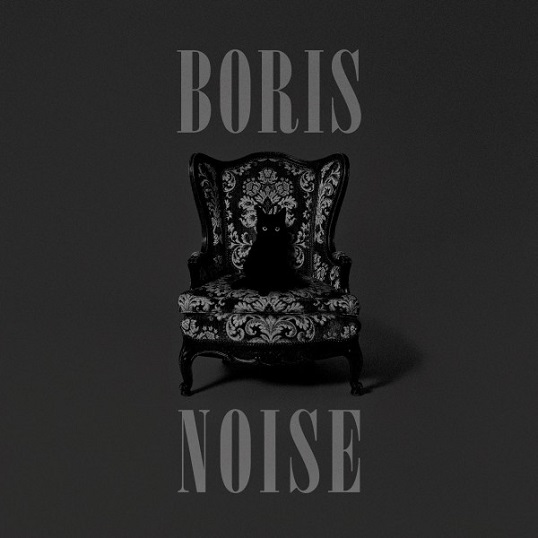
But you shouldn’t have been looking at that. You should have been looking at the two words surrounding it, because it suggests something we haven’t heard much of in quite a while. Beginning with Japanese Heavy Rock Hits Vol. 1, Atsuo Mizuno, Takeshi Ohtani, and Wata have spent a lot of time playing at pop stars. Their really quality works of late have mostly been pop oriented, and in the world of metal they’ve been mostly playing around. Heavy Rocks 2011 felt like a joke–a quick fun studio session to take some of the stress off of recording New Album and Attention Please. Präparat offered us the total mindfuck known as “Elegy”, but “Method of Error” and “Bataille Suere” could hardly be taken seriously. We got the long-overdue Boris performing “flood” and a rerelease of The Thing Which Solomon Overlooked, but that wasn’t new material.
Boris deserved a break from their old traditions. Christ, they have 78 releases to their name, and like 95% of that has been beyond fabulous. But as good as their pop and chillout sounds of late have been, we’ve all been itching for some good old Boris noise. Not Absolutego drone. I mean I want to hear some “Heavy Friends”, some “Akuma No Uta”, some “Farewell”, some “My Neighbor Satan”, something to make my brain turn inside out and hug itself. Well, Boris did deliver. They did it last year, in the easily overlooked The Thing Which Solomon Overlooked Extra. In fact, it was so easily overlooked that I am only just now skimming through its tracks for the first time! I can already tell it is awesome, but that will have to wait. Tonight I spin Noise for the first time.
Boris – Melody, from Noise
If you are a Boris fan, this opening track needs no commentary. I suppose no track on the album does, really. But if you are not a Boris fan, picture yourself in our shoes for a minute: You have ridiculous, irrationally high expectations for this album. You can justify it, because the band has never let you down before. But you don’t have a clue what’s in store for you. The graceful drone in the opening 40 seconds could go on for the entire track, and it would not be out of character. Suddenly we’ve got a pretty, shoegaze guitar, and for a brief six or seven seconds your mind wonders whether they might be trying something akin to Alcest. At 47 seconds, a techno beat comes in, and we are on pace for something totally novel. Is it going to be some weird psychedelic technogaze? I wouldn’t put it past them, and I just might like it. But things are picking up… something is about to give….. and bam, at the 1 minute mark Boris unleashes everything I could have ever hoped for and more.
Takeshi slamming out a crushing stoner metal groove under Wata’s wailing blur of blissful noise, and in five seconds we find that techno beat wasn’t just an intro. What IS this amalgamation of mutually exclusive genre standards into an inexplicably majestic whole? This is Boris, doing what Boris always do: taking everything they’ve done before and making it even better. This is a band that remains totally aware of everything going on in music at large and has had twenty three years playing together to master their class. Wata has one of the most beatiful guitar sounds in the world. She slides around the neck with a grace that puts Billy Corgan to shame and rocks the effect pedals so keenly that “Paranoid Android” sounds amateur. Atsuo drums with a persistent intensity that rivals Jimmy Chamberlin (I’ve always felt a bizarre connection between Boris and The Smashing Pumpkins–two bands that defy all categorization.) Takeshi’s mastery of bass and distortion is as good as any stoner band on the market, and his vocal control has come miles from Smile and earlier works.
Stonergaze techno pop? Yeah, we can do that.
Boris – Vanilla, from Noise
The next track, “Vanilla”, is just as fascinating. For the first 40 seconds (55 in the official video) we get a vocal melody and beat that wouldn’t have been out of place in a mid-90s up-tempo rock track–it bizarrely made me think of the Foo Fighters–layered of course with Wata and Takeshi’s constant motion. Then we hit a deep, brooding pause with haunting synth, doomy bass crunch, and a spooky arpeggio loop that says this song is going nowhere near where we expected. The song quickly move back into rock mode, but now we’re expecting something. The guitars embrace a rhythmic metal crunch, and the hard shift to a bassy stoner/doom beatdown for six notes at 1:20 (1:35) makes your brain jitter. No other band would even THINK to do something like that. We’re back into the opening motion, then another break and… is Takeshi playing a death metal riff? Mmhmm. And it’s not like the trashy games they were playing on Heavy Rocks 2011 and a few Präparat tracks. It’s fully immersed and totally appropriate. Wata goes wild, and I am in bliss.
Boris – Heavy Rain, from Noise
I could narrate every track on this album and never be at a loss for commentary. “Ghost of Romance” might offer the fewest surprises–a traditional Boris chillout song with a pensive undercurrent brought to life with haunting guitar tones and a breath effect that suit the title. It offers a modest post-rock build-up to louder levels of chill, but never at the expensive of a full break from the main vibe of the song. “Heavy Rain”, my personal favorite on first listen, virtually demands you crank the speakers up to 11. Despite the tempo never changing and Takeshi’s heaviest tones coming out within the first minute, this song accomplishes a mindblowing progression. They manage to accomplish the build-up in reverse, putting forth a bunch of sound at once and increasing the suspense by slowly peeling it back. The moment we reach the point of dead silence, the explosion hits, and the rest is all driven by Wata’s ever-growing layers of noise and Atsuo’s knack for making every single percussion count.
“Taiyo No Baka” is a bizarre, sugary, initially minimalistic pop ditty that should confound anyone unfamiliar with the band. But far from filler, it’s quite delightful and has a lot of really interesting effects going on throughout. If I am going to keep the Pumpkins comparisons rolling, this might equate to Mellon Collie‘s move from “X.Y.U.” to “We Only Come Out at Night”. “Angel” is the traditional post-rock track of the album, with six minutes of minimalistic build-up to a crushing guitar plod spiced with Atsuo’s hyper-intense slow drumming and a crooning Wata solo. This in turn serves as build-up to a spirited, meaty rock-out at 9:30 peppered by a highly mobile bass line and some good old post-rock tremolo. We’ve still got over 7 minutes to go as this part winds down, and the rest of the track plays out with a lot of eclectic, melodic experimentation that has to stand among Boris’s best. I’ll be surprised if “Angel” doesn’t grow into my favorite track on the album once I’ve given it a good dozen listens.
Boris – Quicksilver, from Noise
“Quicksilver”, the second to last track, might be where Noise gets its name. Dirty, wild crust with classic tremolo solos encase a sad and pleasing heavy punk chorus. Takeshi’s sung vocals run totally counter to what you might expect in this style of music, and Atsuo’s accompanying screams are out of this world. This is only the beginning. The song is ten minutes long, and while I’ll humor the possibility that it does drag on without much variation at times–it could go on for an hour and I wouldn’t complain–this is the most punk song Boris has pumped out in years. I would die if I saw them play it live–possibly literally. At 6:20, the main thrust of the song climaxes with a monotone tremolo wail, a crusty three chord repeat from Takeshi, and a total Atsuo explosion that for all its collective simplicity doesn’t sound quite like anything I’ve ever heard in metal before. The last 3 minutes of the song are weird to the point of being a little creepy–totally out of character with the seven minutes preceding them and featuring a bubbling static sound that makes your hair stand on end.
The closing track is “Siesta”, and I have to think it was inspired by Atsuo and Michio Kurihara’s recent collaboration with Stephen O’Malley from Sunn O))) and Bill Herzog: Ensemble Pearl. It’s a slow, echoed, jazzy chill-out that wraps Noise up nicely. I would feature it here, but I couldn’t find a version on youtube.
So what do I think of this album? Do you even need to ask? It’s everything I could hope for. Sure, it doesn’t offer a killer stand-alone track like “Elegy” from Präparat or “Farewell” from Pink, but it just feels so complete. There is absolutely zero twiddling around, zero wasted time, just 58 action-packed minutes of every technique and style Boris has incorporated into their sound across their illustrious 23 year history. It is a really mature work–perhaps their most mature album to date–and I think it’s the most start-to-finish shear brilliance they have offered on a full-length cd since at least Akuma No Uta–maybe even since Flood. It doesn’t get much more original and imaginative than this.
Doing a major 180 degrees the latest Song of the Day come from the Land of the Rising Sun. This song was first introduced to me by site music writer necromoonyeti and from the first time the song began to it’s final note it became one of my favorite songs. My last.fm profile will attest to this as I’ve played it a couple hundred times since hearing it for the first time.
I speak of Naki Kyoku by the Japanese power trio, Boris.
It’s difficult to describe the band Boris. They’re definitely s rock band, but other than that simplistic description they’re not a band to be pegged into any particular genre of rock. Their albums have ranged from early hardcore punk and crust. They’ve dabbled in drone metal, sludge metal and ambient. The song Naki Kyoku comes from their 2003 full-lenght album, Akuma no Uta (means “The Devil’s Song”). This particular album and, especially, this song brings to mind an eclectic blending of stoner rock with its cousin, psychedelic and noise rock.
Just like the band which birthed the song, Naki Kyoku can’t be labeled under any particular subgenre of rock as it seems to sound differently for each listener. Don’t know exactly who and what Boris is as a band and especially this particular song of theirs, but I know what I like and this song is one I definitely fell in love with at first listen.
 Through the Shattered Lens